

Soup, chicken broth, ready-to-serve
Whole food · Soups, Sauces, and Gravies
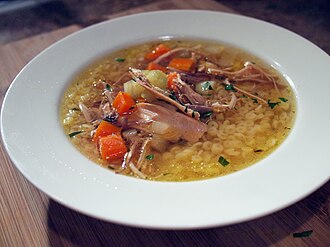
Photo: Wikipedia
A clear, golden liquid simmered from chicken bones and aromatics, it offers a clean, savory umami flavor with a light, watery texture. Nutritionally, it's extremely low in calories (6 kcal per 100g) and provides a modest amount of protein. It's a foundational, hydrating base rather than a substantial meal.
Calorie split: 41% protein · 28% carbs · 30% fat
↓ Full nutrition💚 Why it's loved
People cherish it as a comforting, warming staple that forms the soul of countless soups and sauces. Its versatility makes it a kitchen workhorse, perfect for sipping plain or as a flavor foundation.
⚠️ Watch-outs & how to enjoy it better
The primary concern is often high sodium content in store-bought versions, which can contribute to fluid retention. To counteract this, choose low-sodium varieties, dilute with water, or pair with potassium-rich foods like leafy greens. It also lacks significant fiber or nutrients on its own, so it's best used as a component, not a complete meal.
Key benefits
- Excellent low-calorie hydration source
- Provides a base for adding vegetables and proteins
- Contains electrolytes like sodium and potassium
- Easy to digest for sensitive stomachs
- Can enhance the flavor of other dishes without adding fat
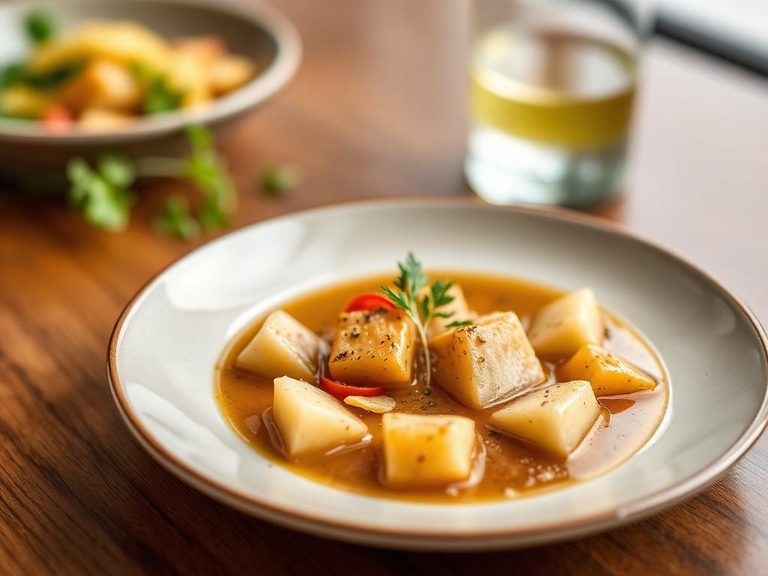
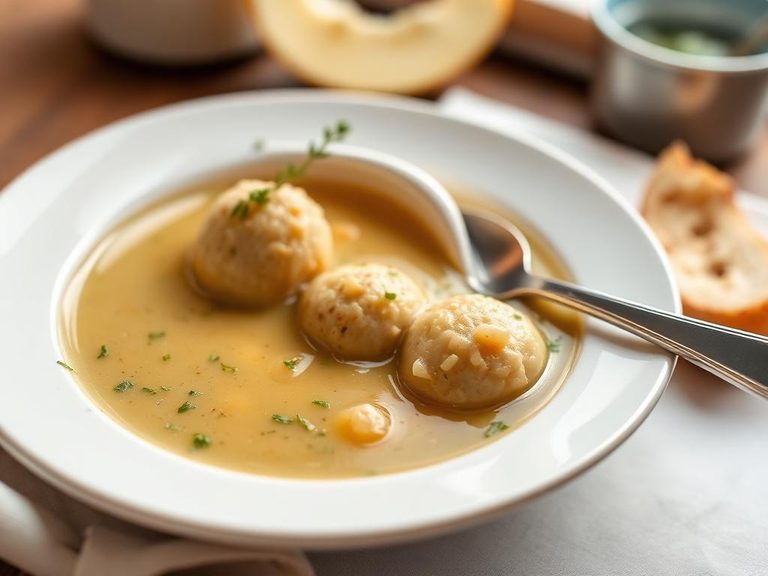
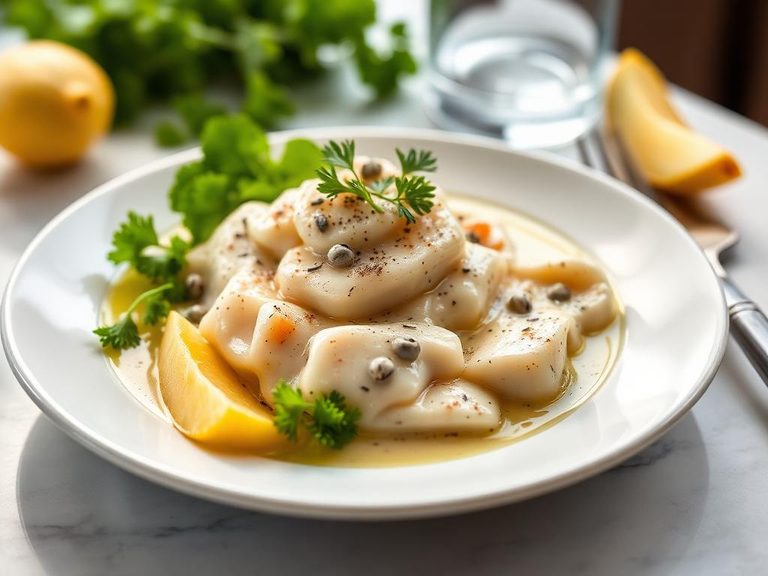
🍽️ Popular dishes
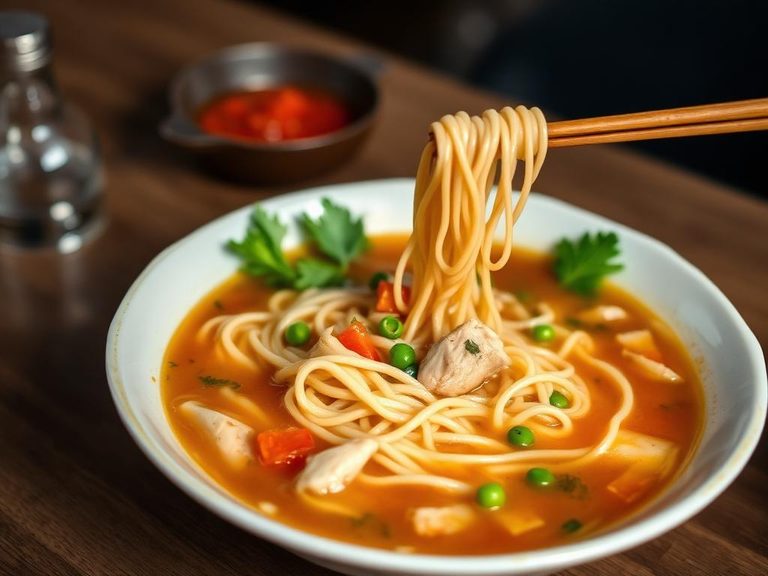
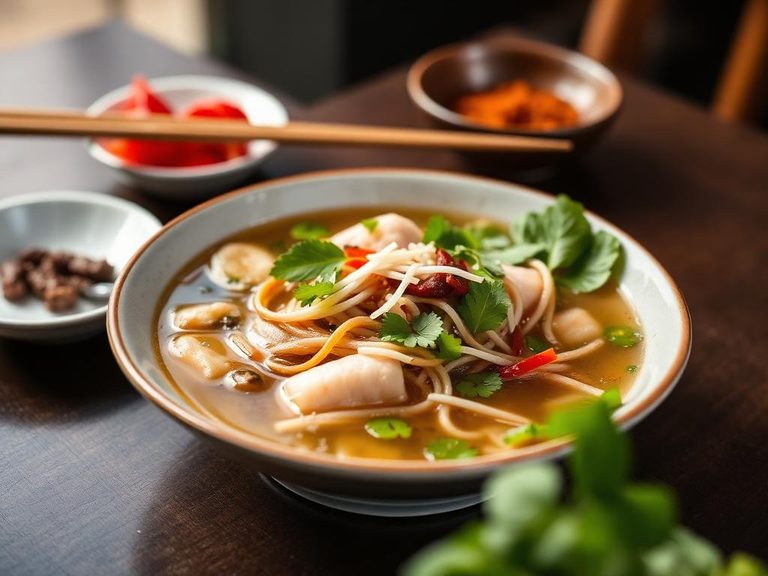
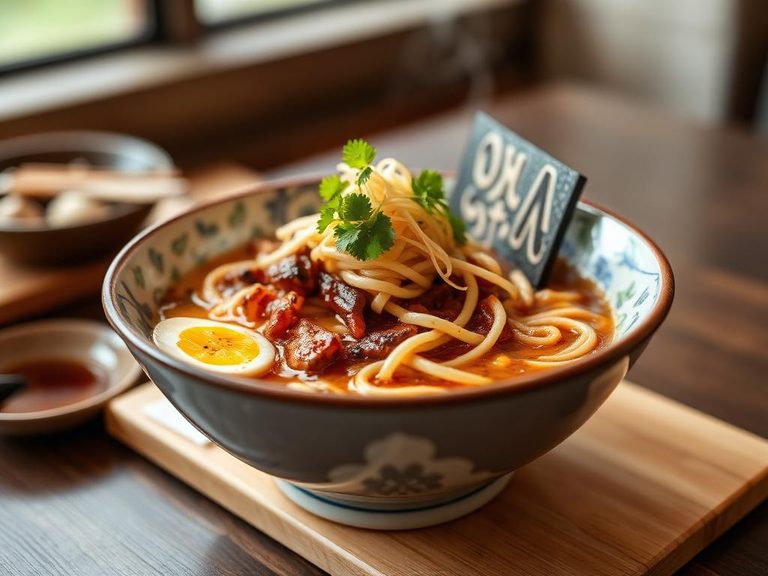
🌍 Where it's eaten
💡 Did you know?
The classic French technique of making a clear, refined broth is called 'consommé,' which involves a 'raft' of egg whites and ground meat to clarify the liquid, a process that can take over 4 hours.
Full nutrition (USDA data · scales with serving)
| Water | 97.8 g |
| Energy | 6.0 kcal |
| Energy | 26.0 kj |
| Protein | 0.64 g |
| Total lipid (fat) | 0.21 g |
| Ash | 0.90 g |
| Carbohydrate, by difference | 0.44 g |
| Fiber, total dietary | 0.00 g |
| Total Sugars | 0.43 g |
| Calcium, Ca | 4.0 mg |
| Iron, Fe | 0.07 mg |
| Magnesium, Mg | 1.0 mg |
| Phosphorus, P | 4.0 mg |
| Potassium, K | 18.0 mg |
| Sodium, Na | 371 mg |
| Zinc, Zn | 0.07 mg |
| Copper, Cu | 0.01 mg |
| Manganese, Mn | 0.01 mg |
| Selenium, Se | 0.40 ug |
| Vitamin C, total ascorbic acid | 0.00 mg |
| Thiamin | 0.02 mg |
| Riboflavin | 0.06 mg |
| Niacin | 0.22 mg |
| Pantothenic acid | 0.00 mg |
| Vitamin B-6 | 0.00 mg |
| Folate, total | 0.00 ug |
| Folic acid | 0.00 ug |
| Folate, food | 0.00 ug |
| Folate, DFE | 0.00 ug |
| Choline, total | 1.0 mg |
| Betaine | 1.2 mg |
| Vitamin B-12 | 0.02 ug |
| Vitamin B-12, added | 0.00 ug |
| Vitamin A, RAE | 0.00 ug |
| Retinol | 0.00 ug |
| Carotene, beta | 1.0 ug |
| Carotene, alpha | 0.00 ug |
| Cryptoxanthin, beta | 0.00 ug |
| Vitamin A, IU | 2.0 iu |
| Lycopene | 0.00 ug |
| Lutein + zeaxanthin | 0.00 ug |
| Vitamin E (alpha-tocopherol) | 0.04 mg |
| Vitamin E, added | 0.00 mg |
| Tocopherol, beta | 0.00 mg |
| Tocopherol, gamma | 0.00 mg |
| Tocopherol, delta | 0.00 mg |
| Tocotrienol, alpha | 0.00 mg |
| Tocotrienol, beta | 0.00 mg |
| Tocotrienol, gamma | 0.00 mg |
| Tocotrienol, delta | 0.00 mg |
| Vitamin D (D2 + D3), International Units | 0.00 iu |
| Vitamin D (D2 + D3) | 0.00 ug |
| Vitamin K (phylloquinone) | 0.00 ug |
| Alcohol, ethyl | 0.00 g |
| Caffeine | 0.00 mg |
| Theobromine | 0.00 mg |
Fat & fatty acid profile (per 100g)
| Fatty acids, total saturated | 0.01 g |
| SFA 4:0 | 0.00 g |
| SFA 6:0 | 0.00 g |
| SFA 8:0 | 0.00 g |
| SFA 10:0 | 0.00 g |
| SFA 12:0 | 0.00 g |
| SFA 14:0 | 0.00 g |
| SFA 16:0 | 0.01 g |
| SFA 18:0 | 0.00 g |
| Fatty acids, total monounsaturated | 0.02 g |
| MUFA 16:1 | 0.00 g |
| MUFA 18:1 | 0.02 g |
| MUFA 20:1 | 0.00 g |
| MUFA 22:1 | 0.00 g |
| Fatty acids, total polyunsaturated | 0.01 g |
| PUFA 18:2 | 0.01 g |
| PUFA 18:3 | 0.00 g |
| PUFA 18:4 | 0.00 g |
| PUFA 20:4 | 0.00 g |
| PUFA 20:5 n-3 (EPA) | 0.00 g |
| PUFA 22:5 n-3 (DPA) | 0.00 g |
| PUFA 22:6 n-3 (DHA) | 0.00 g |
| Cholesterol | 2.0 mg |
Amino acid profile (per 100g)
Estimated from Soup, bean with pork, canned, condensed — USDA does not publish this profile for Soup.
| Tryptophan | 0.06 g |
| Threonine | 0.24 g |
| Isoleucine | 0.29 g |
| Leucine | 0.48 g |
| Lysine | 0.40 g |
| Methionine | 0.07 g |
| Cystine | 0.07 g |
| Phenylalanine | 0.33 g |
| Tyrosine | 0.18 g |
| Valine | 0.32 g |
| Arginine | 0.31 g |
| Histidine | 0.15 g |
| Alanine | 0.29 g |
| Aspartic acid | 0.66 g |
| Glutamic acid | 1.1 g |
| Glycine | 0.28 g |
| Proline | 0.27 g |
| Serine | 0.29 g |
FAQ
Is chicken broth the same as chicken stock?
Traditionally, broth is made from simmering meat and bones, resulting in a lighter flavor, while stock is made primarily from bones, yielding a richer, more gelatinous product. However, the terms are often used interchangeably in modern cooking.
Can I drink chicken broth on its own?
Absolutely. It's a common, soothing beverage, often consumed warm for comfort or as part of a clear liquid diet. For a more satisfying drink, add herbs, a squeeze of lemon, or a dash of pepper.
How long does opened, store-bought chicken broth last?
Once opened, it should be transferred to a sealed container and refrigerated. It will typically stay good for 4-5 days. For longer storage, freeze it in portions for up to 3 months.
Nutrient density (calculated · NRF9.3)
Nutrient Rich Foods index: beneficial nutrients (protein, fiber, vitamins, minerals) minus saturated fat, added sugar & sodium, per 100 kcal.
NRF9.3 index — Fulgoni, Keast & Drewnowski, 2009. Computed from USDA nutrients.
Weight-loss friendliness (composite index)
Energy density 0.06 kcal/g · 43% calories from protein · 0.0 g fiber · 0.4 g sugar per 100 g.
Composite of energy density (Rolls et al., 1999), protein & fiber satiety, minus sugar. A calculated heuristic — ranks satiety-per-calorie, not a clinical measure.
Dietary load (calculated from USDA values)
Potential renal acid load. Positive = acid-forming, negative = alkaline-forming.
Sodium-to-potassium ratio: 20.61 (lower is better — aim for ≤ 1)
Sodium:potassium per WHO potassium guidance. Computed from USDA nutrients.