

Salad dressing, blue or roquefort cheese dressing, fat-free
Whole food · Fats and Oils

Photo: Wikipedia
This is a tangy, creamy, and surprisingly light condiment that delivers the bold, pungent flavor of blue or Roquefort cheese without the fat. Its texture is smooth and pourable, with a distinct savory-salty profile and a hint of sharpness. Nutritionally, it's a low-fat, low-calorie way to add significant flavor, though it is primarily a source of carbohydrates.
Calorie split: 5% protein · 87% carbs · 8% fat
↓ Full nutrition💚 Why it's loved
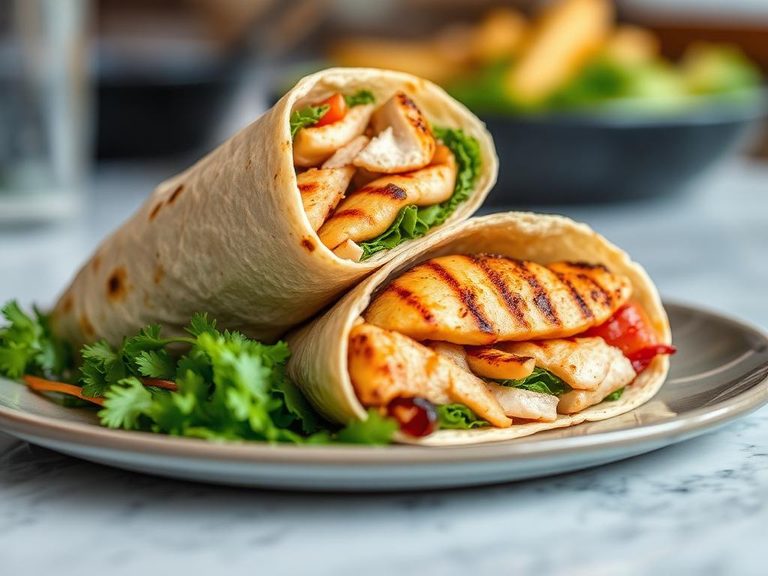
People love it for delivering the complex, umami-rich taste of blue cheese in a guilt-free, pourable format. It's incredibly versatile, instantly elevating simple salads, wraps, and even baked potatoes with its signature tang.
⚠️ Watch-outs & how to enjoy it better
The primary downside is its high carbohydrate content (25.6g), mostly from added sugars (7.44g), which can cause blood-sugar spikes if consumed in large quantities. It may also be high in sodium. To counteract this, use it sparingly as a flavor accent, pair it with protein and healthy fats (like grilled chicken or avocado) to slow sugar absorption, or choose it for meals lower in other carbohydrates.
Key benefits
- Very low in fat (1.01g per 100g)
- Low in calories (115 kcal per 100g)
- Provides a small amount of dietary fiber (1.8g)
- Adds intense flavor without significant fat calories
- Good source of quick energy from carbohydrates
🍽️ Popular dishes
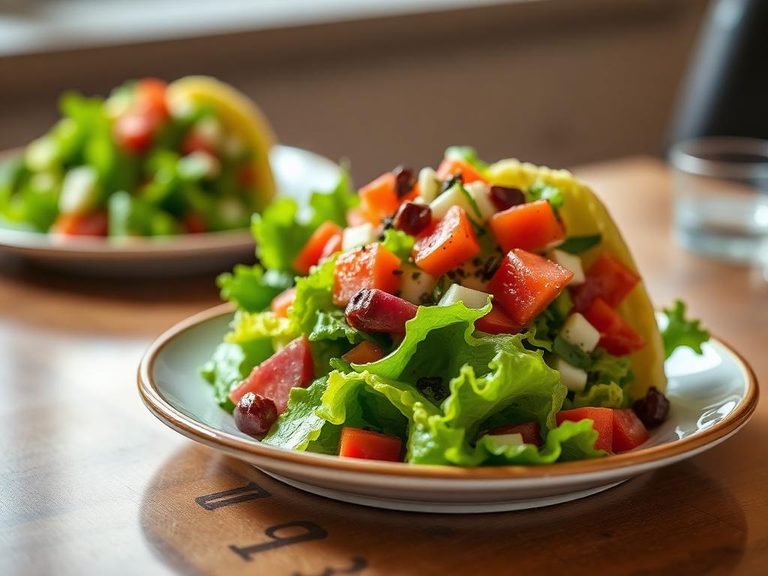
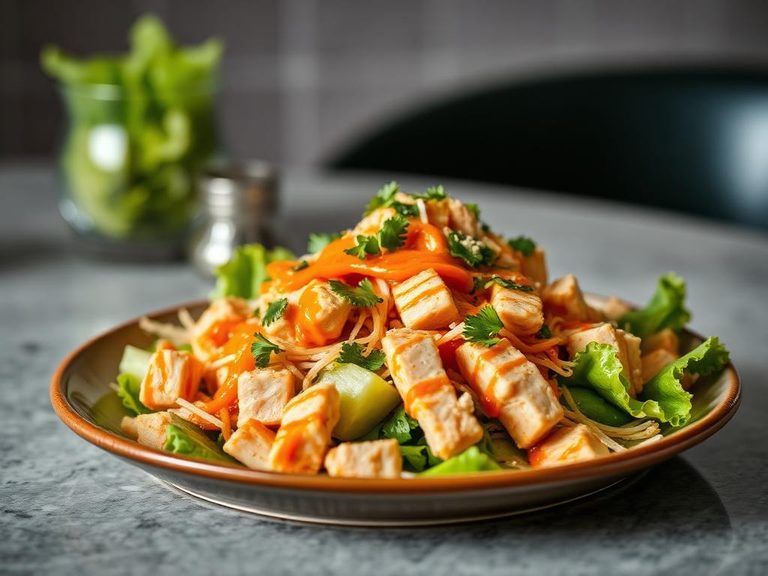
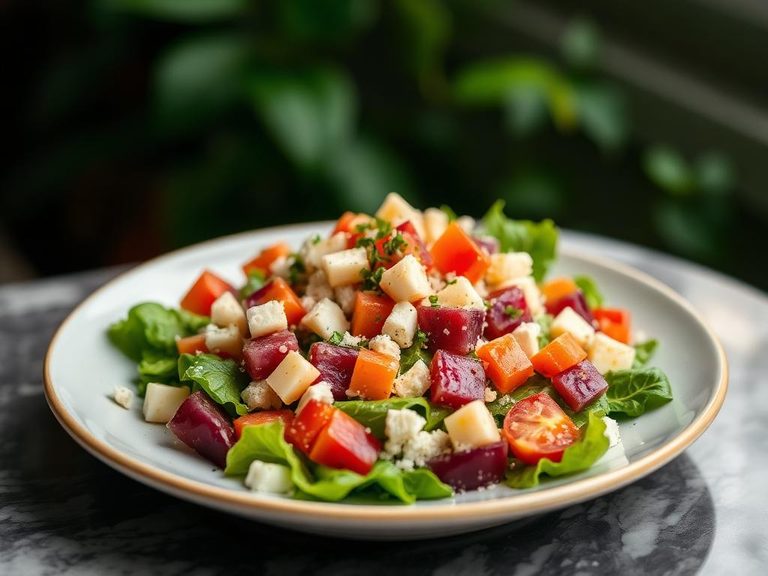

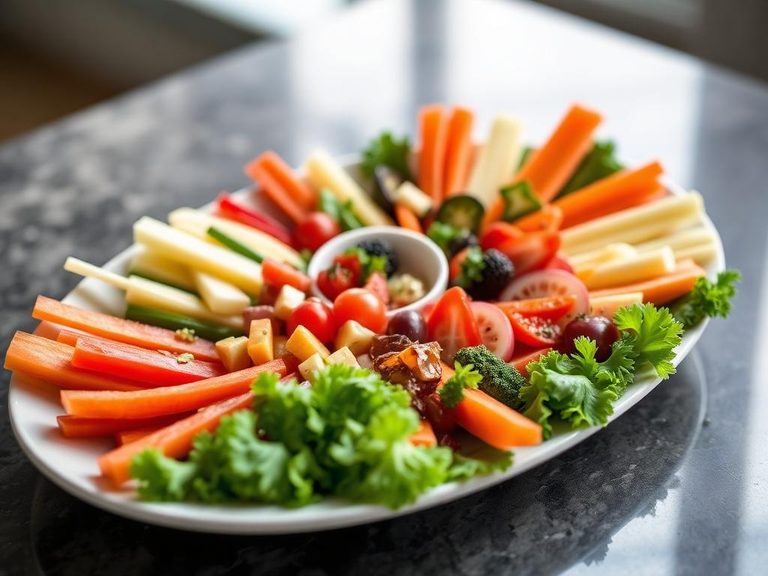
🌍 Where it's eaten
💡 Did you know?
The 'fat-free' version often achieves its creamy texture using thickeners like modified food starch, xanthan gum, or cellulose gel, which replace the mouthfeel of fat.
Full nutrition (USDA data · scales with serving)
| Water | 68.0 g |
| Energy | 115 kcal |
| Energy | 481 kj |
| Protein | 1.5 g |
| Total lipid (fat) | 1.0 g |
| Ash | 3.4 g |
| Carbohydrate, by difference | 25.6 g |
| Fiber, total dietary | 1.8 g |
| Total Sugars | 7.4 g |
| Calcium, Ca | 51.0 mg |
| Iron, Fe | 0.12 mg |
| Magnesium, Mg | 15.0 mg |
| Phosphorus, P | 107 mg |
| Potassium, K | 194 mg |
| Sodium, Na | 814 mg |
| Zinc, Zn | 0.21 mg |
| Copper, Cu | 0.01 mg |
| Manganese, Mn | 0.01 mg |
| Selenium, Se | 1.6 ug |
| Vitamin C, total ascorbic acid | 0.50 mg |
| Thiamin | 0.04 mg |
| Riboflavin | 0.17 mg |
| Niacin | 0.11 mg |
| Pantothenic acid | 0.44 mg |
| Vitamin B-6 | 0.04 mg |
| Folate, total | 2.0 ug |
| Folic acid | 0.00 ug |
| Folate, food | 2.0 ug |
| Folate, DFE | 2.0 ug |
| Choline, total | 16.4 mg |
| Betaine | 0.00 mg |
| Vitamin B-12 | 0.26 ug |
| Vitamin B-12, added | 0.00 ug |
| Vitamin A, RAE | 5.0 ug |
| Retinol | 5.0 ug |
| Carotene, beta | 2.0 ug |
| Carotene, alpha | 0.00 ug |
| Cryptoxanthin, beta | 0.00 ug |
| Vitamin A, IU | 18.0 iu |
| Lycopene | 0.00 ug |
| Lutein + zeaxanthin | 0.00 ug |
| Vitamin E (alpha-tocopherol) | 0.04 mg |
| Vitamin E, added | 0.00 mg |
| Vitamin D (D2 + D3), International Units | 0.00 iu |
| Vitamin D (D2 + D3) | 0.00 ug |
| Vitamin K (phylloquinone) | 0.10 ug |
| Alcohol, ethyl | 0.00 g |
| Caffeine | 0.00 mg |
| Theobromine | 0.00 mg |
Fat & fatty acid profile (per 100g)
| Fatty acids, total saturated | 0.45 g |
| SFA 4:0 | 0.01 g |
| SFA 6:0 | 0.01 g |
| SFA 8:0 | 0.01 g |
| SFA 10:0 | 0.01 g |
| SFA 12:0 | 0.01 g |
| SFA 14:0 | 0.07 g |
| SFA 16:0 | 0.22 g |
| SFA 18:0 | 0.10 g |
| SFA 20:0 | 0.00 g |
| SFA 22:0 | 0.00 g |
| Fatty acids, total monounsaturated | 0.44 g |
| MUFA 16:1 | 0.02 g |
| MUFA 18:1 | 0.40 g |
| MUFA 20:1 | 0.00 g |
| MUFA 22:1 | 0.00 g |
| Fatty acids, total polyunsaturated | 0.07 g |
| PUFA 18:2 | 0.05 g |
| PUFA 18:3 | 0.01 g |
| PUFA 18:4 | 0.00 g |
| PUFA 20:4 | 0.00 g |
| PUFA 20:5 n-3 (EPA) | 0.00 g |
| PUFA 22:5 n-3 (DPA) | 0.00 g |
| PUFA 22:6 n-3 (DHA) | 0.00 g |
| Fatty acids, total trans | 0.10 g |
| Cholesterol | 2.0 mg |
Amino acid profile (per 100g)
Estimated from Salad dressing, sesame seed dressing, regular — USDA does not publish this profile for Salad dressing.
| Tryptophan | 0.05 g |
| Threonine | 0.05 g |
| Isoleucine | 0.05 g |
| Leucine | 0.08 g |
| Lysine | 0.14 g |
| Methionine | 0.03 g |
| Cystine | 0.00 g |
| Phenylalanine | 0.09 g |
| Tyrosine | 0.10 g |
| Valine | 0.07 g |
| Arginine | 0.40 g |
| Histidine | 0.03 g |
| Alanine | 0.00 g |
| Aspartic acid | 0.00 g |
| Glutamic acid | 0.46 g |
| Glycine | 0.00 g |
| Proline | 0.00 g |
| Serine | 0.00 g |
FAQ
How does the taste differ from regular blue cheese dressing?
It has the same sharp, tangy, and savory blue cheese flavor but lacks the rich, creamy mouthfeel of a full-fat version. The taste is more concentrated and often slightly sweeter to balance the texture.
Is it a good choice for a low-carb diet?
Generally, no. With over 25g of carbohydrates per 100g (mostly from sugar), it is not suitable for strict low-carb or ketogenic diets. A full-fat, traditional blue cheese dressing is typically much lower in carbs.
Can I use it as a dip?
Yes, it works well as a dip for raw vegetables, chicken wings, or pizza crusts. Be mindful of portion size due to the sugar content, and consider mixing it with plain Greek yogurt to add protein and reduce the carb load per serving.
Nutrient density (calculated · NRF9.3)
Nutrient Rich Foods index: beneficial nutrients (protein, fiber, vitamins, minerals) minus saturated fat, added sugar & sodium, per 100 kcal.
NRF9.3 index — Fulgoni, Keast & Drewnowski, 2009. Computed from USDA nutrients.
Weight-loss friendliness (composite index)
Energy density 1.15 kcal/g · 5% calories from protein · 1.8 g fiber · 7.4 g sugar per 100 g.
Composite of energy density (Rolls et al., 1999), protein & fiber satiety, minus sugar. A calculated heuristic — ranks satiety-per-calorie, not a clinical measure.
Dietary load (calculated from USDA values)
Potential renal acid load. Positive = acid-forming, negative = alkaline-forming.
Sodium-to-potassium ratio: 4.20 (lower is better — aim for ≤ 1)
Sodium:potassium per WHO potassium guidance. Computed from USDA nutrients.