

Rye flour, light
Whole food · Cereal Grains and Pasta

Photo: Wikipedia
Light rye flour is a finely milled, pale flour from the outer part of the rye kernel, offering a mildly tangy, earthy flavor and a tender, slightly dense texture. Nutritionally, it's a standout for its high fiber content and notable protein, making it more substantial than many refined flours.
Calorie split: 11% protein · 86% carbs · 3% fat
↓ Full nutrition💚 Why it's loved
People love it for the distinctive, complex sourdough flavor it imparts to breads and its ability to create moist, tender baked goods. It's a cornerstone of traditional European baking, celebrated for its rustic character.
⚠️ Watch-outs & how to enjoy it better
Its gluten structure is weak, making it challenging to use alone for light, airy loaves; it's often blended with wheat flour. For those monitoring blood sugar, its carbohydrates can still cause a spike, so pairing it with protein or fat (like in a sandwich with cheese) is advisable.
Key benefits
- Excellent source of dietary fiber for digestive health.
- Provides a good amount of plant-based protein.
- Lower in fat compared to many whole-grain flours.
- Contains more micronutrients than refined wheat flour.
🍽️ Popular dishes
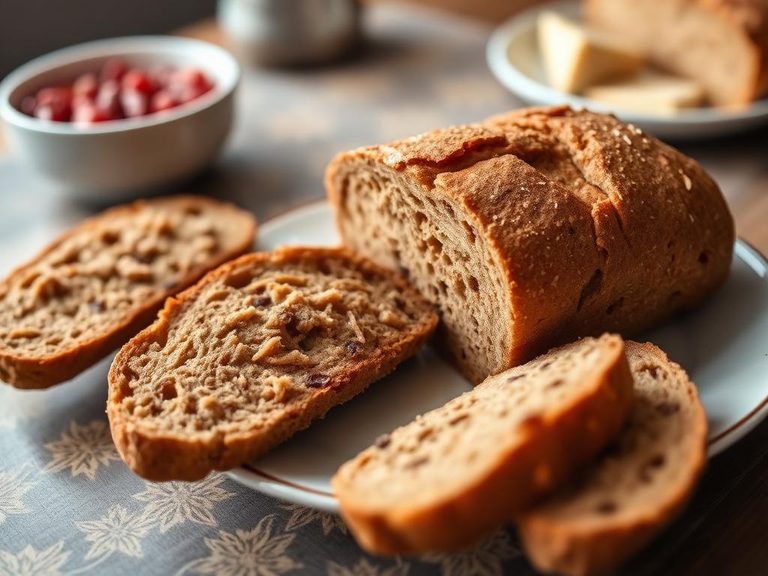
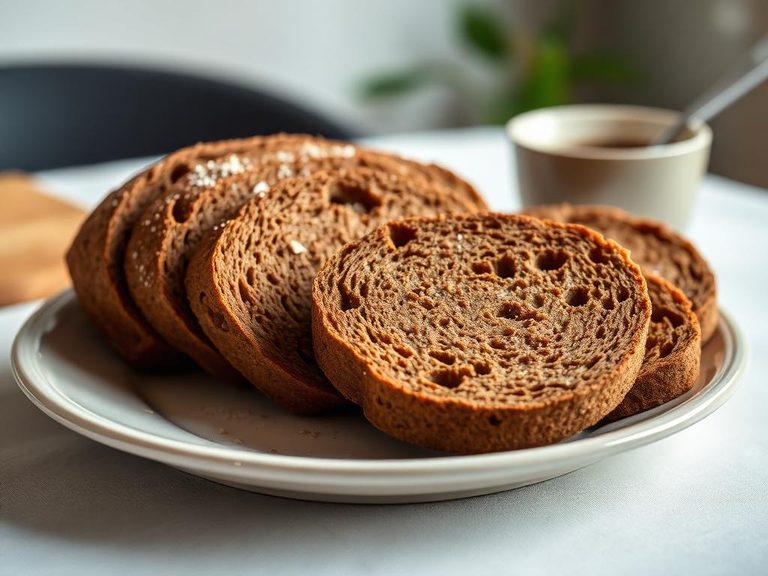
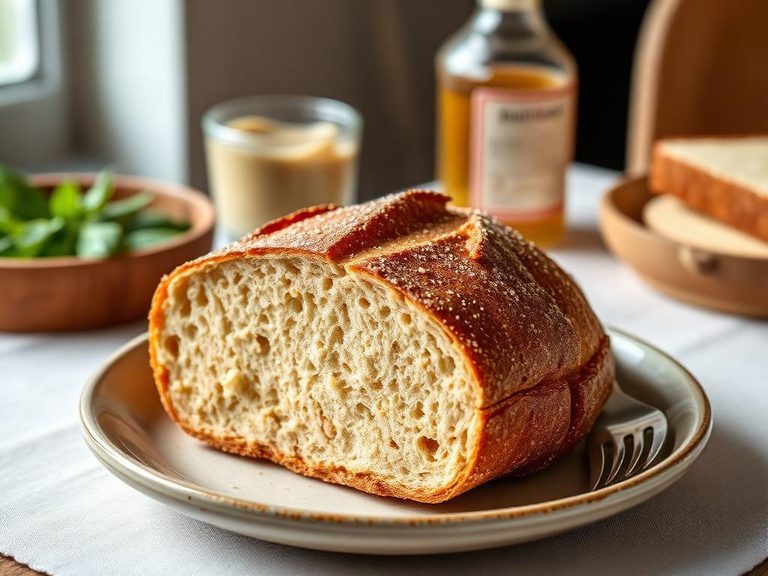
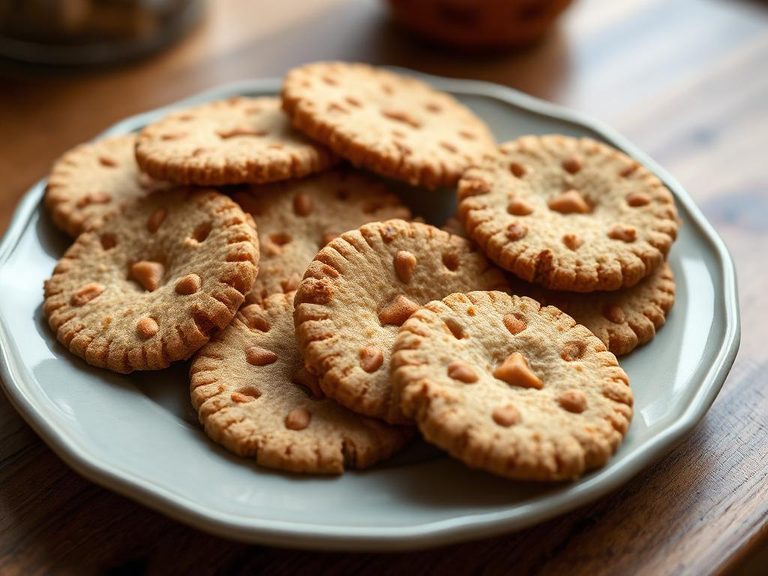
🌍 Where it's eaten
💡 Did you know?
The characteristic sour taste in traditional rye bread often comes not from the flour itself, but from a long fermentation using a sourdough starter teeming with wild yeast and lactic acid bacteria.
Full nutrition (USDA data · scales with serving)
| Water | 11.4 g |
| Energy | 357 kcal |
| Energy | 1492 kj |
| Protein | 9.8 g |
| Total lipid (fat) | 1.3 g |
| Ash | 0.78 g |
| Carbohydrate, by difference | 76.7 g |
| Fiber, total dietary | 8.0 g |
| Total Sugars | 0.93 g |
| Sucrose | 0.57 g |
| Glucose | 0.14 g |
| Fructose | 0.09 g |
| Lactose | 0.00 g |
| Maltose | 0.13 g |
| Galactose | 0.00 g |
| Calcium, Ca | 13.0 mg |
| Iron, Fe | 0.91 mg |
| Magnesium, Mg | 32.0 mg |
| Phosphorus, P | 130 mg |
| Potassium, K | 224 mg |
| Sodium, Na | 2.0 mg |
| Zinc, Zn | 1.3 mg |
| Copper, Cu | 0.21 mg |
| Manganese, Mn | 1.2 mg |
| Selenium, Se | 17.6 ug |
| Vitamin C, total ascorbic acid | 0.00 mg |
| Thiamin | 0.33 mg |
| Riboflavin | 0.09 mg |
| Niacin | 0.80 mg |
| Pantothenic acid | 0.67 mg |
| Vitamin B-6 | 0.23 mg |
| Folate, total | 23.0 ug |
| Folic acid | 0.00 ug |
| Folate, food | 23.0 ug |
| Folate, DFE | 23.0 ug |
| Choline, total | 10.8 mg |
| Vitamin B-12 | 0.00 ug |
| Vitamin B-12, added | 0.00 ug |
| Vitamin A, RAE | 0.00 ug |
| Retinol | 0.00 ug |
| Carotene, beta | 0.00 ug |
| Carotene, alpha | 0.00 ug |
| Cryptoxanthin, beta | 0.00 ug |
| Vitamin A, IU | 0.00 iu |
| Lycopene | 0.00 ug |
| Lutein + zeaxanthin | 210 ug |
| Vitamin E (alpha-tocopherol) | 0.83 mg |
| Vitamin E, added | 0.00 mg |
| Vitamin D (D2 + D3), International Units | 0.00 iu |
| Vitamin D (D2 + D3) | 0.00 ug |
| Vitamin K (phylloquinone) | 5.9 ug |
| Alcohol, ethyl | 0.00 g |
| Caffeine | 0.00 mg |
| Theobromine | 0.00 mg |
Fat & fatty acid profile (per 100g)
| Fatty acids, total saturated | 0.15 g |
| SFA 4:0 | 0.00 g |
| SFA 6:0 | 0.00 g |
| SFA 8:0 | 0.00 g |
| SFA 10:0 | 0.00 g |
| SFA 12:0 | 0.00 g |
| SFA 14:0 | 0.00 g |
| SFA 16:0 | 0.14 g |
| SFA 18:0 | 0.01 g |
| Fatty acids, total monounsaturated | 0.16 g |
| MUFA 16:1 | 0.01 g |
| MUFA 18:1 | 0.15 g |
| MUFA 20:1 | 0.01 g |
| MUFA 22:1 | 0.00 g |
| Fatty acids, total polyunsaturated | 0.58 g |
| PUFA 18:2 | 0.50 g |
| PUFA 18:3 | 0.08 g |
| PUFA 18:4 | 0.00 g |
| PUFA 20:4 | 0.00 g |
| PUFA 20:5 n-3 (EPA) | 0.00 g |
| PUFA 22:5 n-3 (DPA) | 0.00 g |
| PUFA 22:6 n-3 (DHA) | 0.00 g |
| Fatty acids, total trans | 0.00 g |
| Cholesterol | 0.00 mg |
Amino acid profile (per 100g)
| Tryptophan | 0.11 g |
| Threonine | 0.28 g |
| Isoleucine | 0.23 g |
| Leucine | 0.56 g |
| Lysine | 0.21 g |
| Methionine | 0.11 g |
| Phenylalanine | 0.45 g |
| Tyrosine | 0.20 g |
| Valine | 0.32 g |
| Arginine | 0.38 g |
| Histidine | 0.15 g |
| Alanine | 0.34 g |
| Aspartic acid | 0.50 g |
| Glutamic acid | 2.5 g |
| Glycine | 0.33 g |
| Proline | 0.96 g |
| Serine | 0.43 g |
FAQ
Can I use light rye flour as a 1:1 substitute for all-purpose wheat flour?
No, not directly. Rye has less gluten-forming protein, so using it 100% will result in a very dense, gummy product. It's best used in a blend, typically starting with 25-50% rye flour combined with bread flour.
What's the difference between light, medium, and dark rye flour?
The difference is primarily the amount of the rye kernel's outer bran included. Light rye is the most refined, medium includes more bran, and dark rye (or wholemeal rye) uses the entire kernel, resulting in a stronger flavor and darker color.
Is rye flour gluten-free?
No, rye flour contains gluten (specifically a protein called secalin). It is not safe for individuals with celiac disease or gluten sensitivity.
Nutrient density (calculated · NRF9.3)
Nutrient Rich Foods index: beneficial nutrients (protein, fiber, vitamins, minerals) minus saturated fat, added sugar & sodium, per 100 kcal.
NRF9.3 index — Fulgoni, Keast & Drewnowski, 2009. Computed from USDA nutrients.
Weight-loss friendliness (composite index)
Energy density 3.57 kcal/g · 11% calories from protein · 8.0 g fiber · 0.9 g sugar per 100 g.
Composite of energy density (Rolls et al., 1999), protein & fiber satiety, minus sugar. A calculated heuristic — ranks satiety-per-calorie, not a clinical measure.
Dietary load (calculated from USDA values)
Potential renal acid load. Positive = acid-forming, negative = alkaline-forming.
Sodium-to-potassium ratio: 0.01 (lower is better — aim for ≤ 1)
Sodium:potassium per WHO potassium guidance. Computed from USDA nutrients.