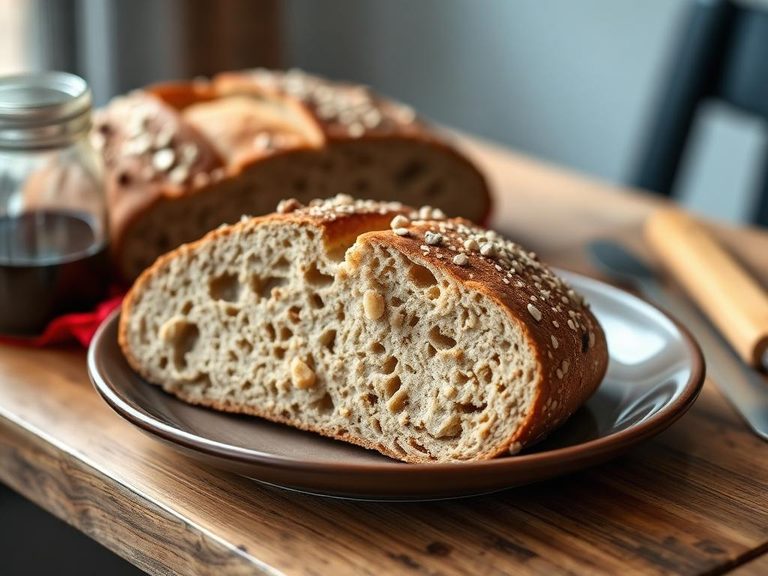
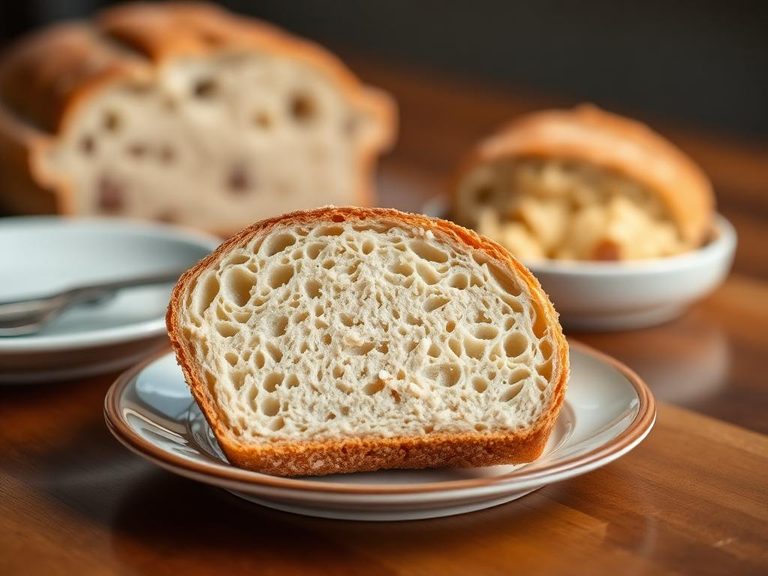
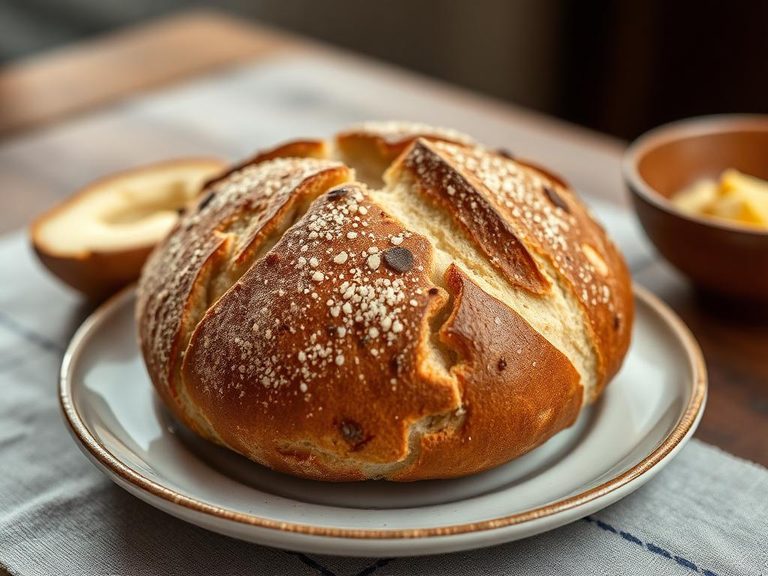
Sourdough rye
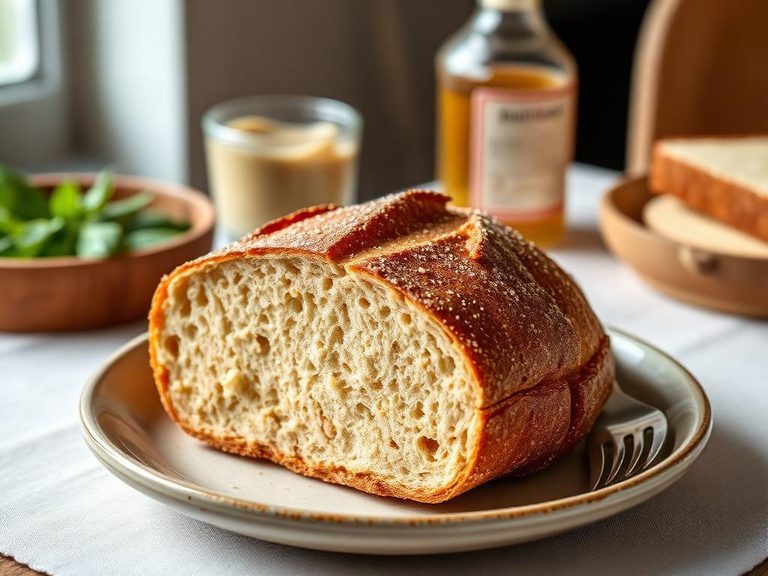
Sourdough rye is a hearty, tangy bread made by fermenting rye flour with a sourdough starter instead of commercial yeast. It typically features rye flour, water, salt, and the starter culture, and is a staple in Northern and Eastern European cuisines. The long fermentation process gives it a distinct flavor and a dense, moist texture.
🍽️ Nutrition at a glance
This bread is a good source of complex carbohydrates and dietary fiber, with a moderate amount of protein and very little fat. A standard slice provides around 80-100 calories, along with essential minerals like iron, magnesium, and selenium.
Nutrition breakdown
| Calories | 120 kcal |
| Protein | 4 g |
| Carbs | 22 g |
| Fat | 1.5 g |
| Fiber | 3 g |
| Sugar | 1 g |
| Sodium | 230 mg |
| Iron | 1.5 mg |
| Magnesium | 30 mg |
| Phosphorus | 60 mg |
| Potassium | 100 mg |
| Selenium | 8 µg |
| Thiamin (B1) | 0.1 mg |
| Niacin (B3) | 1.5 mg |
| Folate | 30 µg |
Per 1 slice (50 g) · estimated, varies by recipe
💡 What's interesting
Sourdough rye is culturally significant as a traditional bread in countries like Germany, Poland, and Russia, often served with hearty meals. Its unique sourdough fermentation process not only enhances flavor but also improves digestibility and nutrient absorption compared to quick-rise breads.