

Pork, fresh, loin, whole, separable lean and fat, cooked, braised
Whole food · Pork Products

Photo: Wikipedia
This is a whole pork loin, braised to tender perfection, with its lean meat and a thin cap of fat cooked together. The result is a succulent, fork-tender cut with a rich, savory flavor and a melt-in-your-mouth texture from the slow cooking. Nutritionally, it's a protein powerhouse, delivering over 27 grams of high-quality protein per 100 grams with zero carbohydrates.
Calorie split: 47% protein · 0% carbs · 53% fat
↓ Full nutrition💚 Why it's loved
People love braised pork loin for its deep, comforting umami flavor and incredibly tender texture that practically falls apart. It's a versatile centerpiece that absorbs the flavors of its braising liquid, making it a staple in hearty, home-cooked meals across many cultures.
⚠️ Watch-outs & how to enjoy it better
The primary downside is its saturated fat content from the marbling and fat cap, which those monitoring heart health should consider. To counteract this, you can trim the fat before cooking or skim it from the braising liquid after cooking. Serving it with fiber-rich vegetables like roasted broccoli or a vinegar-based slaw can also help balance the meal.
Key benefits
- Excellent source of complete protein for muscle maintenance.
- Provides essential B vitamins, especially thiamine (B1) and B6.
- Rich in minerals like selenium and phosphorus.
- Zero carbohydrates, suitable for low-carb and ketogenic diets.
- Braising makes tough connective tissue tender and digestible.
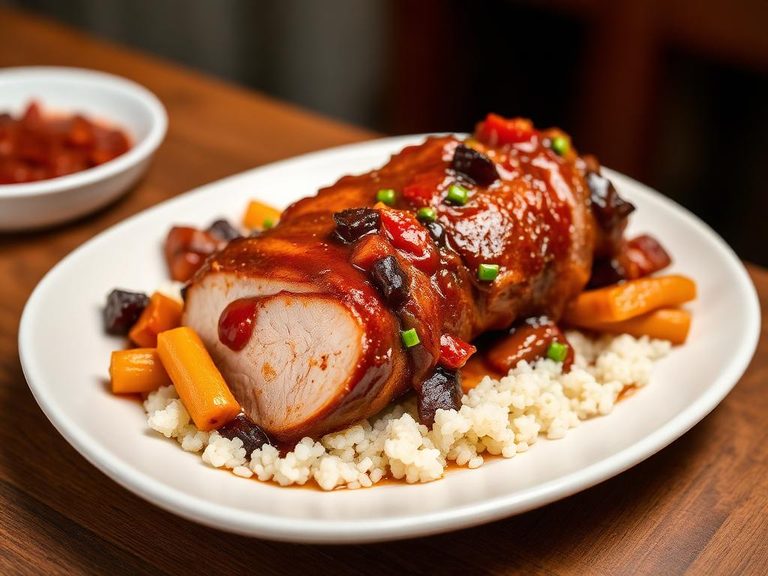
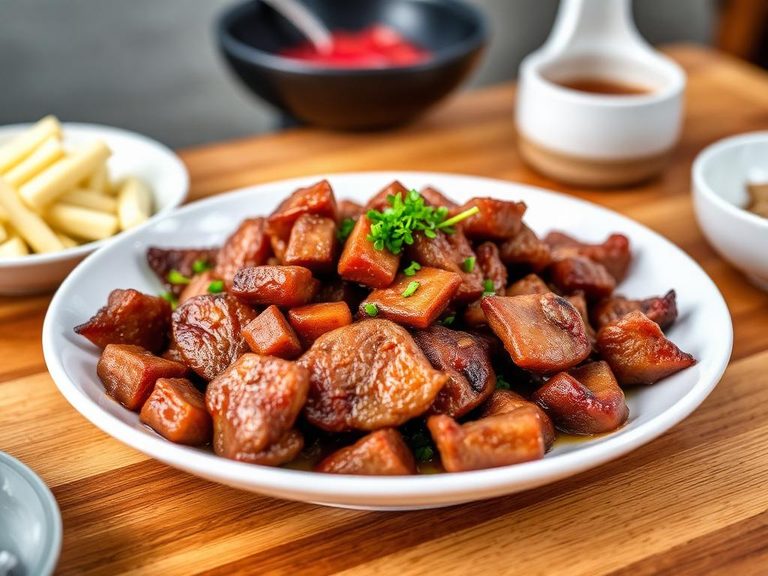
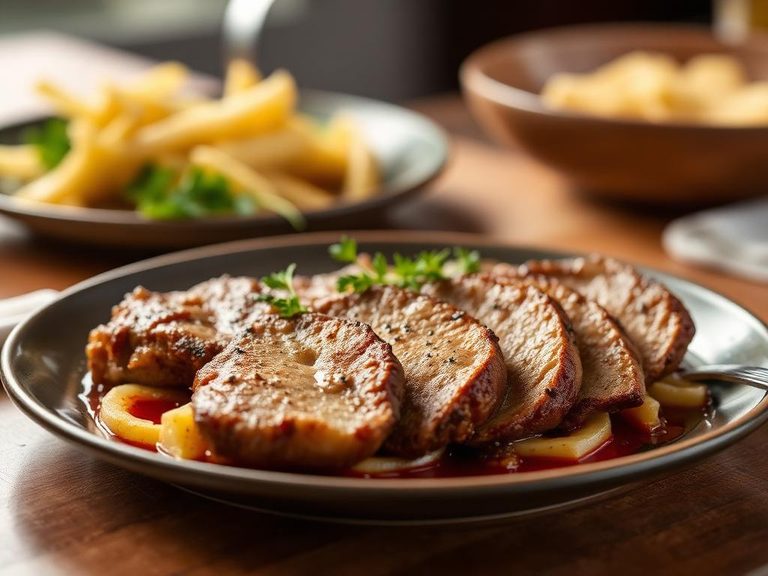
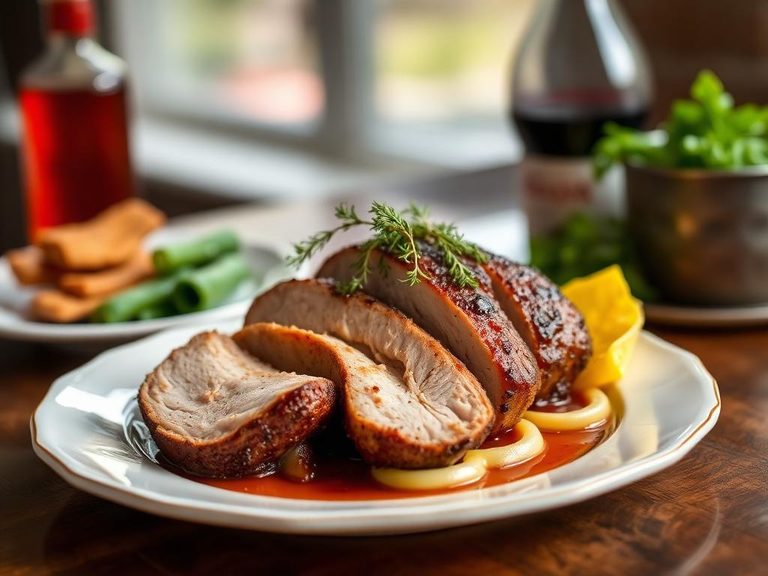
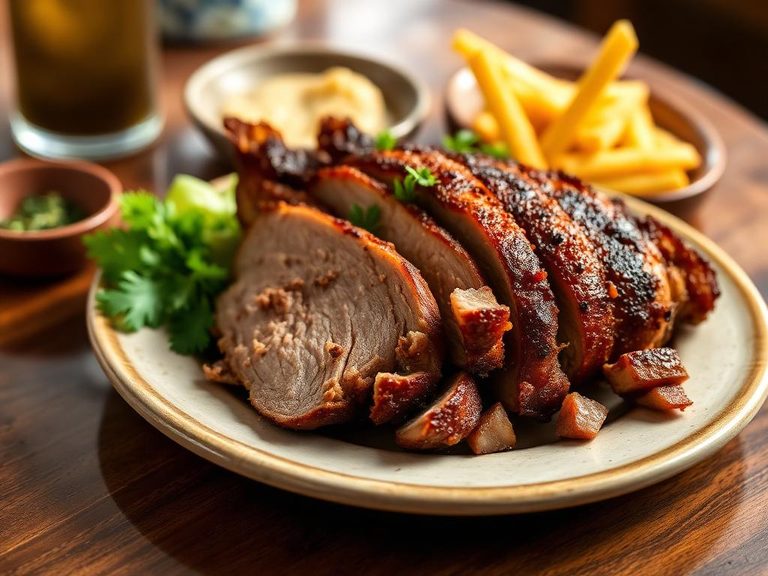
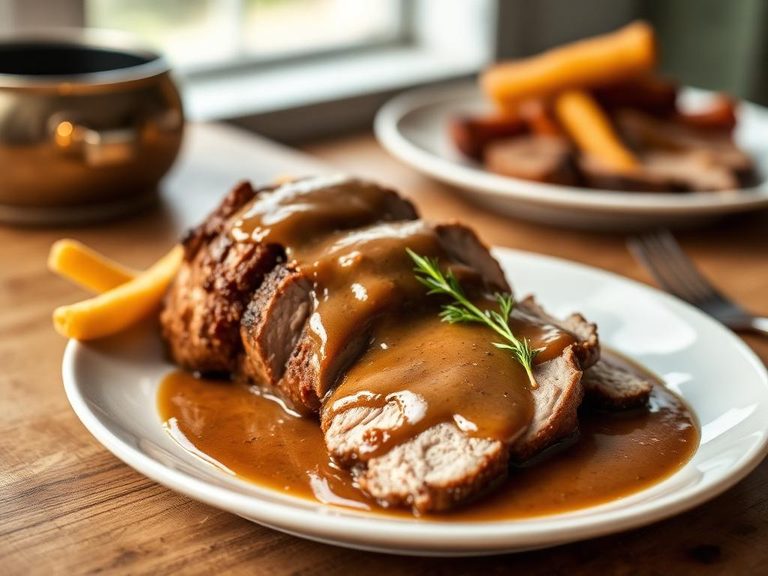
🍽️ Popular dishes
🌍 Where it's eaten
💡 Did you know?
The 'loin' is actually the back muscle of the pig, and braising the whole piece with its fat cap is a technique used to prevent this very lean cut from drying out during the long, slow cook.
Full nutrition (USDA data · scales with serving)
| Water | 58.3 g |
| Energy | 239 kcal |
| Energy | 1000 kj |
| Protein | 27.2 g |
| Total lipid (fat) | 13.6 g |
| Ash | 1.4 g |
| Carbohydrate, by difference | 0.00 g |
| Fiber, total dietary | 0.00 g |
| Total Sugars | 0.00 g |
| Calcium, Ca | 21.0 mg |
| Iron, Fe | 1.1 mg |
| Magnesium, Mg | 19.0 mg |
| Phosphorus, P | 181 mg |
| Potassium, K | 374 mg |
| Sodium, Na | 48.0 mg |
| Zinc, Zn | 2.4 mg |
| Copper, Cu | 0.08 mg |
| Manganese, Mn | 0.01 mg |
| Selenium, Se | 45.3 ug |
| Vitamin C, total ascorbic acid | 0.60 mg |
| Thiamin | 0.63 mg |
| Riboflavin | 0.25 mg |
| Niacin | 4.4 mg |
| Pantothenic acid | 0.65 mg |
| Vitamin B-6 | 0.37 mg |
| Folate, total | 3.0 ug |
| Folic acid | 0.00 ug |
| Folate, food | 3.0 ug |
| Folate, DFE | 3.0 ug |
| Choline, total | 93.6 mg |
| Betaine | 3.6 mg |
| Vitamin B-12 | 0.54 ug |
| Vitamin B-12, added | 0.00 ug |
| Vitamin A, RAE | 2.0 ug |
| Retinol | 2.0 ug |
| Carotene, beta | 0.00 ug |
| Carotene, alpha | 0.00 ug |
| Cryptoxanthin, beta | 0.00 ug |
| Vitamin A, IU | 7.0 iu |
| Lycopene | 0.00 ug |
| Lutein + zeaxanthin | 0.00 ug |
| Vitamin E (alpha-tocopherol) | 0.24 mg |
| Vitamin E, added | 0.00 mg |
| Vitamin D (D2 + D3), International Units | 47.0 iu |
| Vitamin D (D2 + D3) | 1.2 ug |
| Vitamin D3 (cholecalciferol) | 1.2 ug |
| Vitamin K (phylloquinone) | 0.00 ug |
| Vitamin K (Dihydrophylloquinone) | 0.00 ug |
| Alcohol, ethyl | 0.00 g |
| Caffeine | 0.00 mg |
| Theobromine | 0.00 mg |
Fat & fatty acid profile (per 100g)
| Fatty acids, total saturated | 5.1 g |
| SFA 4:0 | 0.00 g |
| SFA 6:0 | 0.00 g |
| SFA 8:0 | 0.00 g |
| SFA 10:0 | 0.01 g |
| SFA 12:0 | 0.01 g |
| SFA 14:0 | 0.18 g |
| SFA 16:0 | 3.1 g |
| SFA 18:0 | 1.7 g |
| Fatty acids, total monounsaturated | 6.1 g |
| MUFA 16:1 | 0.42 g |
| MUFA 18:1 | 5.5 g |
| MUFA 20:1 | 0.11 g |
| MUFA 22:1 | 0.00 g |
| Fatty acids, total polyunsaturated | 1.2 g |
| PUFA 18:2 | 1.0 g |
| PUFA 18:3 | 0.04 g |
| PUFA 18:4 | 0.00 g |
| PUFA 20:4 | 0.04 g |
| PUFA 20:5 n-3 (EPA) | 0.00 g |
| PUFA 22:5 n-3 (DPA) | 0.00 g |
| PUFA 22:6 n-3 (DHA) | 0.00 g |
| Cholesterol | 80.0 mg |
Amino acid profile (per 100g)
| Tryptophan | 0.34 g |
| Threonine | 1.2 g |
| Isoleucine | 1.3 g |
| Leucine | 2.2 g |
| Lysine | 2.4 g |
| Methionine | 0.71 g |
| Cystine | 0.34 g |
| Phenylalanine | 1.1 g |
| Tyrosine | 0.93 g |
| Valine | 1.5 g |
| Arginine | 1.7 g |
| Histidine | 1.1 g |
| Alanine | 1.6 g |
| Aspartic acid | 2.5 g |
| Glutamic acid | 4.2 g |
| Glycine | 1.4 g |
| Proline | 1.2 g |
| Serine | 1.1 g |
FAQ
What's the difference between braised and roasted pork loin?
Braising involves searing the meat then cooking it slowly in a covered pot with liquid (like broth or wine), resulting in very tender, moist meat. Roasting uses dry heat in an oven, which can create a crispier exterior but requires careful timing to avoid drying out this lean cut.
How do I know when braised pork loin is done?
It's done when it's 'fork-tender,' meaning a fork slides in and out with little resistance. For safety, use a meat thermometer; the internal temperature should reach at least 145°F (63°C) followed by a 3-minute rest.
Can I use the braising liquid as a sauce?
Absolutely! The braising liquid is packed with flavor. After cooking, you can strain it, skim off excess fat, and reduce it on the stove to make a rich, flavorful gravy or sauce to serve over the pork and sides.
Nutrient density (calculated · NRF9.3)
Nutrient Rich Foods index: beneficial nutrients (protein, fiber, vitamins, minerals) minus saturated fat, added sugar & sodium, per 100 kcal.
NRF9.3 index — Fulgoni, Keast & Drewnowski, 2009. Computed from USDA nutrients.
Weight-loss friendliness (composite index)
Energy density 2.39 kcal/g · 46% calories from protein · 0.0 g fiber · 0.0 g sugar per 100 g.
Composite of energy density (Rolls et al., 1999), protein & fiber satiety, minus sugar. A calculated heuristic — ranks satiety-per-calorie, not a clinical measure.
Dietary load (calculated from USDA values)
Potential renal acid load. Positive = acid-forming, negative = alkaline-forming.
Sodium-to-potassium ratio: 0.13 (lower is better — aim for ≤ 1)
Sodium:potassium per WHO potassium guidance. Computed from USDA nutrients.