

Pork, fresh, loin, country-style ribs, separable lean only, bone-in, cooked, broiled
Whole food · Pork Products
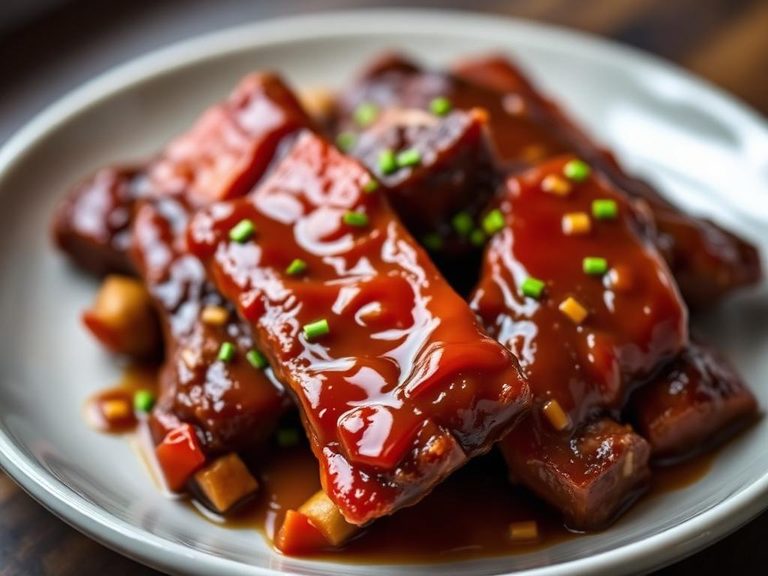
These are bone-in, country-style ribs cut from the pork loin, broiled to a savory, caramelized finish. They offer a satisfying, meaty chew with a clean, lean flavor profile, boasting an impressive 27.83g of protein per 100g serving with virtually no carbohydrates.
Calorie split: 51% protein · 0% carbs · 49% fat
↓ Full nutrition💚 Why it's loved
People love country-style ribs for their hearty, satisfying texture that's more tender than a chop but more substantial than a typical rib. Their robust pork flavor makes them a versatile canvas for dry rubs, marinades, and glazes, fitting perfectly into casual American barbecue culture.
⚠️ Watch-outs & how to enjoy it better
Being a lean cut, they can dry out quickly if overcooked, leading to a tough, chewy texture. To counteract this, use a meat thermometer to pull them at 145°F (63°C), and consider a brief rest period or a quick sear with a sauce to add moisture and flavor.
Key benefits
- High-quality complete protein for muscle maintenance
- Very low in carbohydrates, suitable for low-carb diets
- Good source of B vitamins, especially thiamine (B1) and niacin (B3)
- Contains essential minerals like selenium and phosphorus
- Broiling allows excess fat to drip away, reducing overall fat content
🍽️ Popular dishes
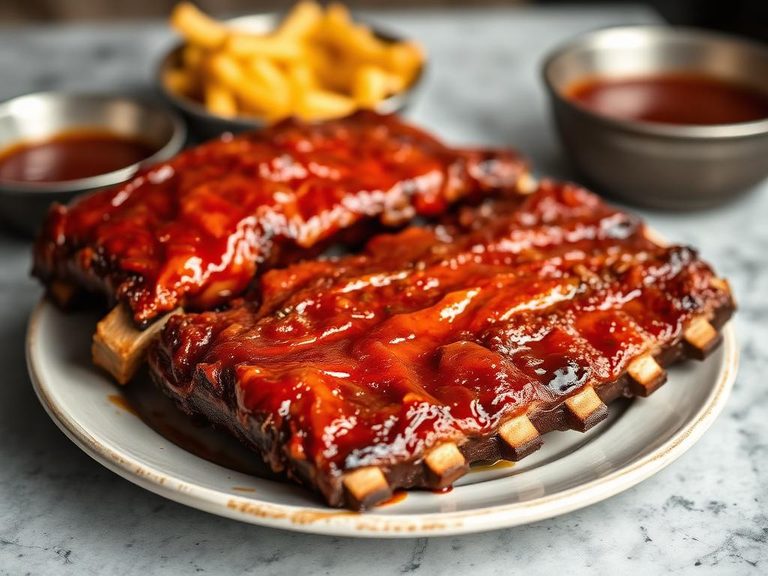
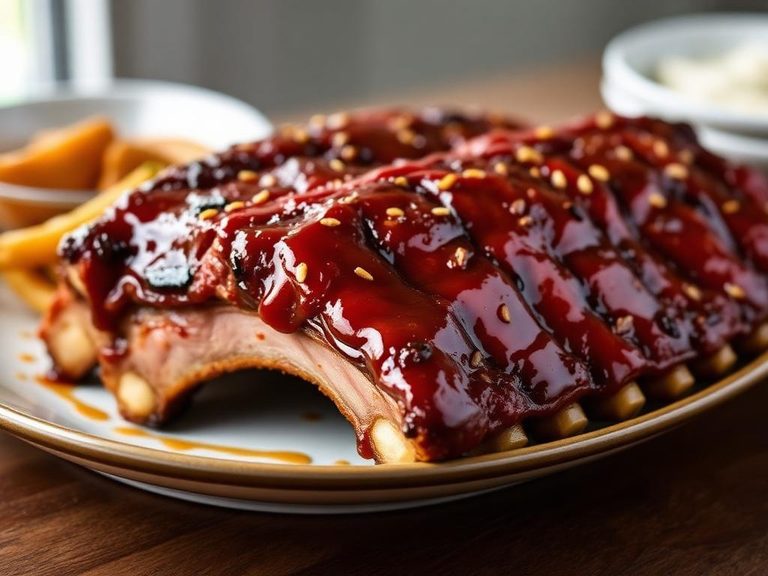
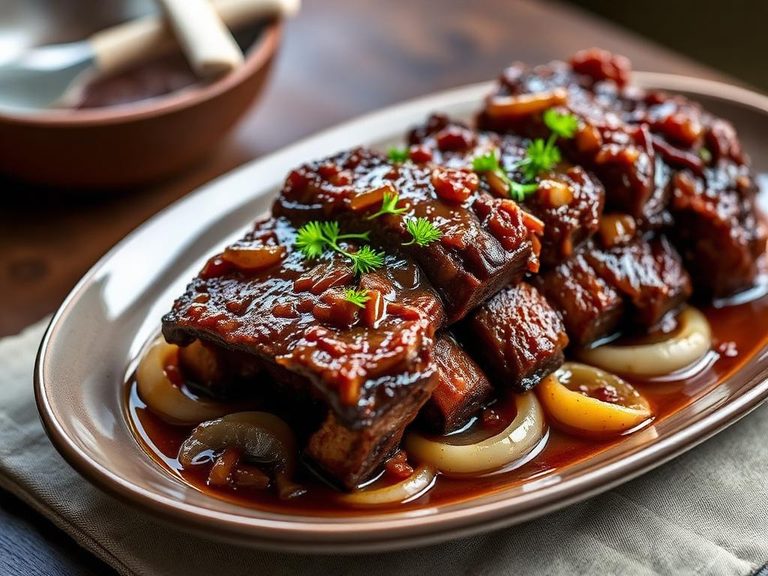
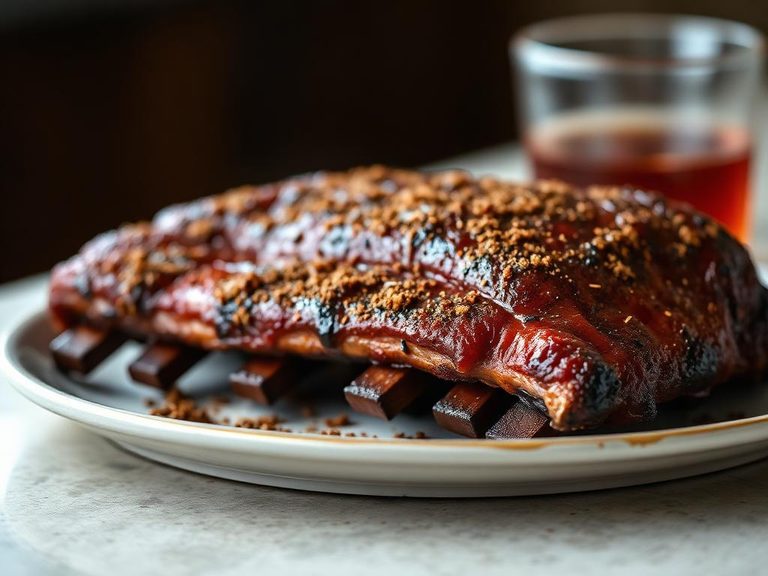
🌍 Where it's eaten
💡 Did you know?
Despite their name, country-style ribs are not actually cut from the rib section of the pig; they are sliced from the blade end of the loin, near the shoulder.
Full nutrition (USDA data · scales with serving)
| Water | 60.0 g |
| Energy | 216 kcal |
| Energy | 905 kj |
| Protein | 27.8 g |
| Total lipid (fat) | 11.7 g |
| Ash | 1.1 g |
| Carbohydrate, by difference | 0.00 g |
| Fiber, total dietary | 0.00 g |
| Total Sugars | 0.00 g |
| Calcium, Ca | 61.0 mg |
| Iron, Fe | 1.0 mg |
| Magnesium, Mg | 24.0 mg |
| Phosphorus, P | 284 mg |
| Potassium, K | 370 mg |
| Sodium, Na | 84.0 mg |
| Zinc, Zn | 3.7 mg |
| Copper, Cu | 0.12 mg |
| Manganese, Mn | 0.01 mg |
| Selenium, Se | 42.9 ug |
| Vitamin C, total ascorbic acid | 0.00 mg |
| Thiamin | 0.57 mg |
| Riboflavin | 0.37 mg |
| Niacin | 9.2 mg |
| Pantothenic acid | 1.3 mg |
| Vitamin B-6 | 0.57 mg |
| Folate, total | 0.00 ug |
| Folic acid | 0.00 ug |
| Folate, food | 0.00 ug |
| Folate, DFE | 0.00 ug |
| Choline, total | 79.1 mg |
| Betaine | 2.9 mg |
| Vitamin B-12 | 0.73 ug |
| Vitamin B-12, added | 0.00 ug |
| Vitamin A, RAE | 3.0 ug |
| Retinol | 3.0 ug |
| Carotene, beta | 0.00 ug |
| Carotene, alpha | 0.00 ug |
| Cryptoxanthin, beta | 0.00 ug |
| Vitamin A, IU | 9.0 iu |
| Lycopene | 0.00 ug |
| Lutein + zeaxanthin | 0.00 ug |
| Vitamin E (alpha-tocopherol) | 0.26 mg |
| Vitamin E, added | 0.00 mg |
| Vitamin D (D2 + D3), International Units | 44.0 iu |
| Vitamin D (D2 + D3) | 1.1 ug |
| Vitamin D3 (cholecalciferol) | 1.1 ug |
| Vitamin K (phylloquinone) | 0.00 ug |
| Vitamin K (Dihydrophylloquinone) | 0.00 ug |
| Alcohol, ethyl | 0.00 g |
| Caffeine | 0.00 mg |
| Theobromine | 0.00 mg |
Fat & fatty acid profile (per 100g)
| Fatty acids, total saturated | 3.1 g |
| SFA 4:0 | 0.00 g |
| SFA 6:0 | 0.00 g |
| SFA 8:0 | 0.00 g |
| SFA 10:0 | 0.01 g |
| SFA 12:0 | 0.01 g |
| SFA 14:0 | 0.11 g |
| SFA 16:0 | 1.9 g |
| SFA 18:0 | 1.0 g |
| Fatty acids, total monounsaturated | 3.6 g |
| MUFA 16:1 | 0.21 g |
| MUFA 18:1 | 3.3 g |
| MUFA 20:1 | 0.06 g |
| MUFA 22:1 | 0.00 g |
| Fatty acids, total polyunsaturated | 1.3 g |
| PUFA 18:2 | 1.1 g |
| PUFA 18:3 | 0.04 g |
| PUFA 18:4 | 0.00 g |
| PUFA 20:4 | 0.10 g |
| PUFA 20:5 n-3 (EPA) | 0.00 g |
| PUFA 22:5 n-3 (DPA) | 0.01 g |
| PUFA 22:6 n-3 (DHA) | 0.00 g |
| Cholesterol | 89.0 mg |
Amino acid profile (per 100g)
| Tryptophan | 0.33 g |
| Threonine | 1.2 g |
| Isoleucine | 1.3 g |
| Leucine | 2.3 g |
| Lysine | 2.5 g |
| Methionine | 0.76 g |
| Cystine | 0.31 g |
| Phenylalanine | 1.2 g |
| Tyrosine | 1.1 g |
| Valine | 1.4 g |
| Arginine | 1.8 g |
| Histidine | 1.1 g |
| Alanine | 1.6 g |
| Aspartic acid | 2.6 g |
| Glutamic acid | 4.3 g |
| Glycine | 1.3 g |
| Proline | 1.1 g |
| Serine | 1.2 g |
| Hydroxyproline | 0.10 g |
FAQ
What's the difference between country-style ribs and spare ribs?
Country-style ribs are a meatier cut from the pork loin/shoulder area, usually bone-in but not curved around a rib bone. Spare ribs are true ribs from the belly, with a distinct bone structure and a higher fat-to-meat ratio.
Are country-style ribs a fatty cut of meat?
The 'separable lean only' designation means the nutritional data reflects the lean meat after visible fat is removed. While the raw cut has some marbling, broiling allows much of the fat to render and drip off, resulting in a relatively lean cooked product.
What's the best way to ensure they stay tender?
Avoid overcooking. High-heat methods like broiling or grilling are ideal. Marinating beforehand can add moisture and flavor, and letting the meat rest for 5 minutes after cooking helps the juices redistribute.
Nutrient density (calculated · NRF9.3)
Nutrient Rich Foods index: beneficial nutrients (protein, fiber, vitamins, minerals) minus saturated fat, added sugar & sodium, per 100 kcal.
NRF9.3 index — Fulgoni, Keast & Drewnowski, 2009. Computed from USDA nutrients.
Weight-loss friendliness (composite index)
Energy density 2.16 kcal/g · 52% calories from protein · 0.0 g fiber · 0.0 g sugar per 100 g.
Composite of energy density (Rolls et al., 1999), protein & fiber satiety, minus sugar. A calculated heuristic — ranks satiety-per-calorie, not a clinical measure.
Dietary load (calculated from USDA values)
Potential renal acid load. Positive = acid-forming, negative = alkaline-forming.
Sodium-to-potassium ratio: 0.23 (lower is better — aim for ≤ 1)
Sodium:potassium per WHO potassium guidance. Computed from USDA nutrients.