

Pork, fresh, belly, raw
Whole food · Pork Products

Photo: Wikipedia
Pork belly is a rich, fatty cut from the underside of the pig, prized for its distinct layers of meat and creamy fat. When raw, it has a firm, dense texture with a pale pink to white color and a mild, clean pork flavor. Nutritionally, it is an energy-dense food, providing over 500 calories and more than 50 grams of fat per 100 grams, with minimal protein and no carbohydrates.
Calorie split: 7% protein · 0% carbs · 93% fat
↓ Full nutrition💚 Why it's loved
People adore pork belly for its unparalleled richness and the melt-in-your-mouth texture it achieves when cooked properly, delivering deep, savory flavor. It is a beloved canvas for global cuisines, from crispy Chinese roast pork to tender Korean samgyeopsal, making it a centerpiece of celebratory and comfort meals.
⚠️ Watch-outs & how to enjoy it better
Its extremely high fat content makes it a very calorie-dense food, which can be a concern for those managing weight or cardiovascular health. To enjoy it mindfully, practice strict portion control, trim excess external fat before cooking, and pair it with large servings of fibrous vegetables or a vinegar-based side dish to balance the meal.
Key benefits
- Excellent source of energy-dense calories.
- Provides essential B vitamins like thiamine and niacin.
- Contains minerals such as selenium and phosphorus.
- High in dietary fat, which aids in the absorption of fat-soluble vitamins.
- A versatile cut that can be prepared in numerous ways.
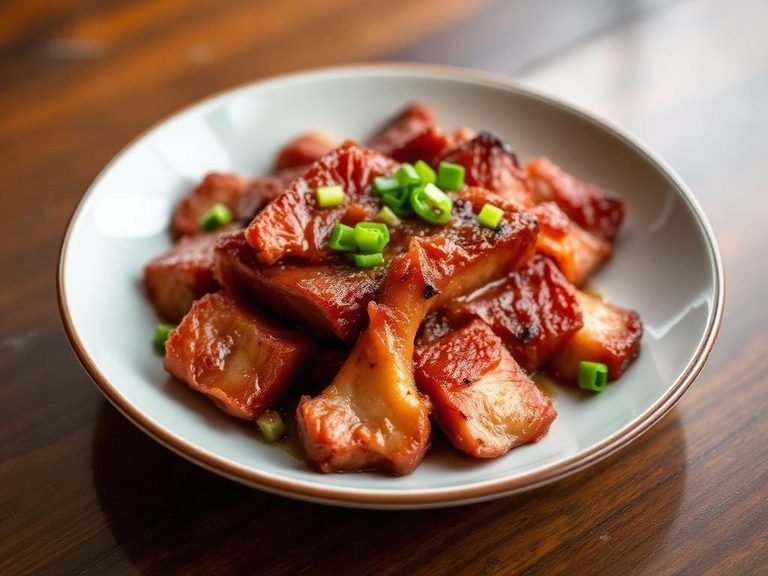
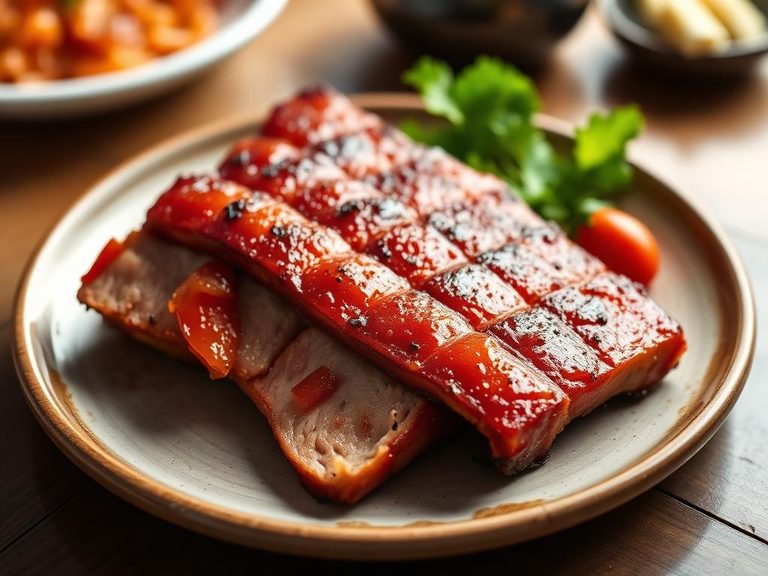
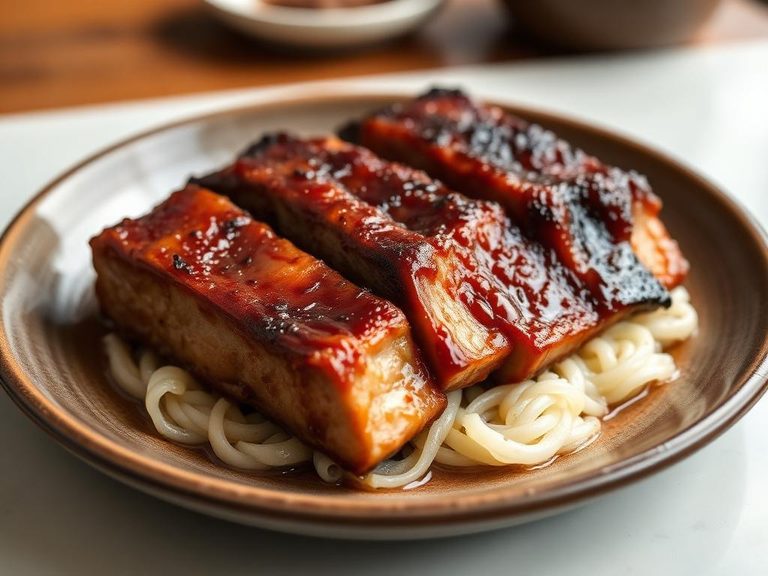
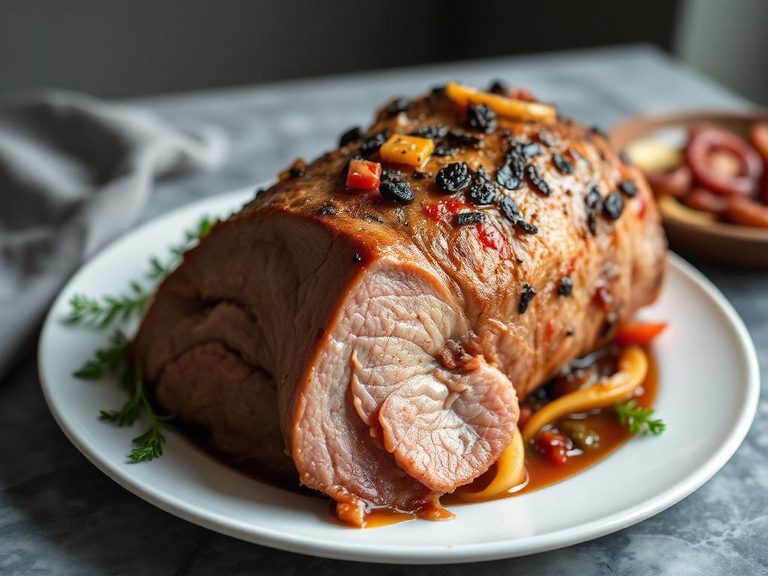
🍽️ Popular dishes
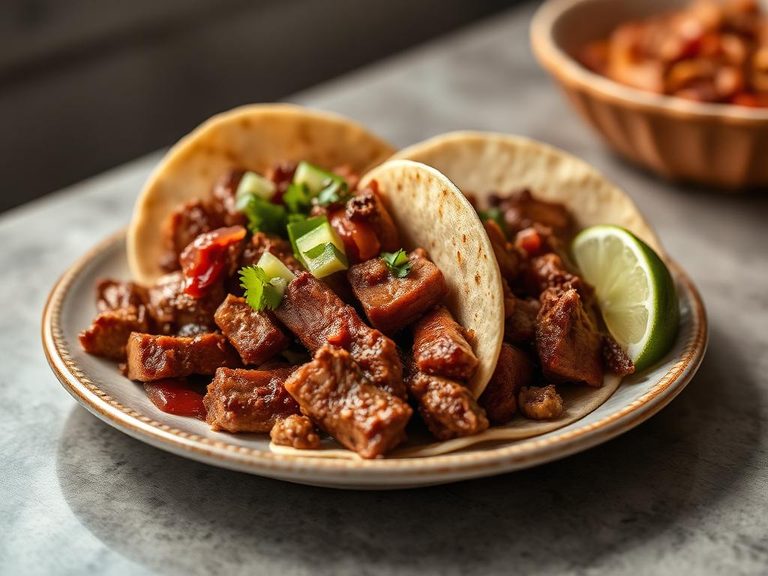
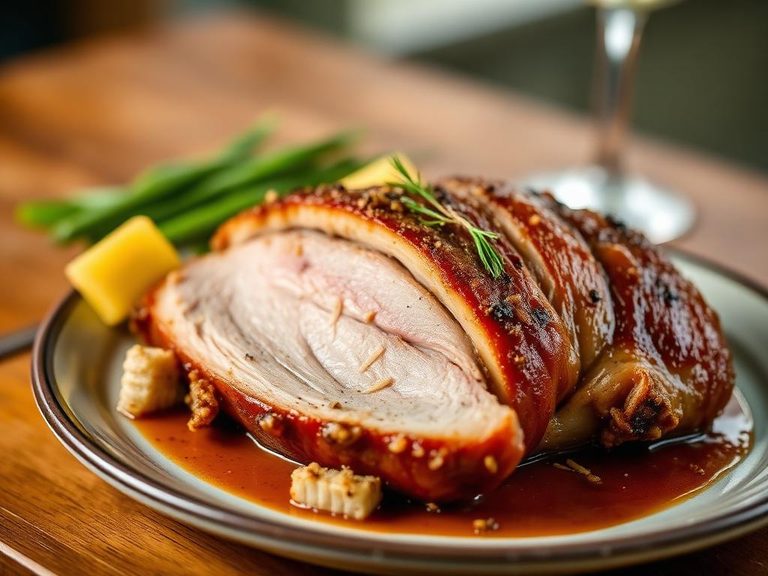
🌍 Where it's eaten
💡 Did you know?
The coveted crispy skin on roasted pork belly, known as 'crackling,' requires the skin to be completely dry and often pricked with hundreds of tiny holes to render fat and puff up during high-heat cooking.
Full nutrition (USDA data · scales with serving)
| Water | 36.7 g |
| Energy | 518 kcal |
| Energy | 2167 kj |
| Protein | 9.3 g |
| Total lipid (fat) | 53.0 g |
| Ash | 0.49 g |
| Carbohydrate, by difference | 0.00 g |
| Fiber, total dietary | 0.00 g |
| Total Sugars | 0.00 g |
| Calcium, Ca | 5.0 mg |
| Iron, Fe | 0.52 mg |
| Magnesium, Mg | 4.0 mg |
| Phosphorus, P | 108 mg |
| Potassium, K | 185 mg |
| Sodium, Na | 32.0 mg |
| Zinc, Zn | 1.0 mg |
| Copper, Cu | 0.05 mg |
| Manganese, Mn | 0.01 mg |
| Selenium, Se | 8.0 ug |
| Vitamin C, total ascorbic acid | 0.30 mg |
| Thiamin | 0.40 mg |
| Riboflavin | 0.24 mg |
| Niacin | 4.6 mg |
| Pantothenic acid | 0.26 mg |
| Vitamin B-6 | 0.13 mg |
| Folate, total | 1.0 ug |
| Folic acid | 0.00 ug |
| Folate, food | 1.0 ug |
| Folate, DFE | 1.0 ug |
| Vitamin B-12 | 0.84 ug |
| Vitamin B-12, added | 0.00 ug |
| Vitamin A, RAE | 3.0 ug |
| Retinol | 3.0 ug |
| Carotene, beta | 0.00 ug |
| Carotene, alpha | 0.00 ug |
| Cryptoxanthin, beta | 0.00 ug |
| Vitamin A, IU | 10.0 iu |
| Lycopene | 0.00 ug |
| Lutein + zeaxanthin | 0.00 ug |
| Vitamin E (alpha-tocopherol) | 0.39 mg |
| Vitamin E, added | 0.00 mg |
| Tocopherol, beta | 0.00 mg |
| Tocopherol, gamma | 0.08 mg |
| Tocopherol, delta | 0.00 mg |
| Tocotrienol, alpha | 0.02 mg |
| Tocotrienol, beta | 0.00 mg |
| Tocotrienol, gamma | 0.00 mg |
| Tocotrienol, delta | 0.00 mg |
| Vitamin K (phylloquinone) | 0.00 ug |
| Vitamin K (Dihydrophylloquinone) | 0.00 ug |
| Alcohol, ethyl | 0.00 g |
| Caffeine | 0.00 mg |
| Theobromine | 0.00 mg |
Fat & fatty acid profile (per 100g)
| Fatty acids, total saturated | 19.3 g |
| SFA 4:0 | 0.00 g |
| SFA 6:0 | 0.00 g |
| SFA 8:0 | 0.00 g |
| SFA 10:0 | 0.04 g |
| SFA 12:0 | 0.06 g |
| SFA 14:0 | 0.70 g |
| SFA 16:0 | 11.9 g |
| SFA 18:0 | 6.5 g |
| Fatty acids, total monounsaturated | 24.7 g |
| MUFA 16:1 | 1.5 g |
| MUFA 18:1 | 22.8 g |
| MUFA 20:1 | 0.43 g |
| MUFA 22:1 | 0.00 g |
| Fatty acids, total polyunsaturated | 5.7 g |
| PUFA 18:2 | 5.0 g |
| PUFA 18:3 | 0.48 g |
| PUFA 18:4 | 0.00 g |
| PUFA 20:4 | 0.14 g |
| PUFA 20:5 n-3 (EPA) | 0.00 g |
| PUFA 22:5 n-3 (DPA) | 0.00 g |
| PUFA 22:6 n-3 (DHA) | 0.00 g |
| Cholesterol | 72.0 mg |
Amino acid profile (per 100g)
Estimated from Pork, cured, salt pork, raw — USDA does not publish this profile for Pork.
| Tryptophan | 0.02 g |
| Threonine | 0.17 g |
| Isoleucine | 0.13 g |
| Leucine | 0.35 g |
| Lysine | 0.42 g |
| Methionine | 0.07 g |
| Cystine | 0.04 g |
| Phenylalanine | 0.19 g |
| Tyrosine | 0.08 g |
| Valine | 0.24 g |
| Arginine | 0.52 g |
| Histidine | 0.06 g |
| Alanine | 0.28 g |
| Aspartic acid | 0.42 g |
| Glutamic acid | 0.69 g |
| Glycine | 0.36 g |
| Proline | 0.27 g |
| Serine | 0.19 g |
FAQ
Is pork belly the same as bacon?
Not exactly. Bacon is typically cured, smoked, and sliced pork belly. Pork belly is the fresh, uncured, and unsmoked cut itself.
How do I render the fat properly when cooking?
Start pork belly in a cold pan over low to medium heat. This allows the fat to slowly melt (render) out, resulting in crispier meat and less greasiness.
Can I eat the skin?
Yes! When cooked until crispy, the skin (crackling) is a delicious and textural highlight. It is very high in collagen and fat.
Nutrient density (calculated · NRF9.3)
Nutrient Rich Foods index: beneficial nutrients (protein, fiber, vitamins, minerals) minus saturated fat, added sugar & sodium, per 100 kcal.
NRF9.3 index — Fulgoni, Keast & Drewnowski, 2009. Computed from USDA nutrients.
Weight-loss friendliness (composite index)
Energy density 5.18 kcal/g · 7% calories from protein · 0.0 g fiber · 0.0 g sugar per 100 g.
Composite of energy density (Rolls et al., 1999), protein & fiber satiety, minus sugar. A calculated heuristic — ranks satiety-per-calorie, not a clinical measure.
Dietary load (calculated from USDA values)
Potential renal acid load. Positive = acid-forming, negative = alkaline-forming.
Sodium-to-potassium ratio: 0.17 (lower is better — aim for ≤ 1)
Sodium:potassium per WHO potassium guidance. Computed from USDA nutrients.