

Japanese Kakuni
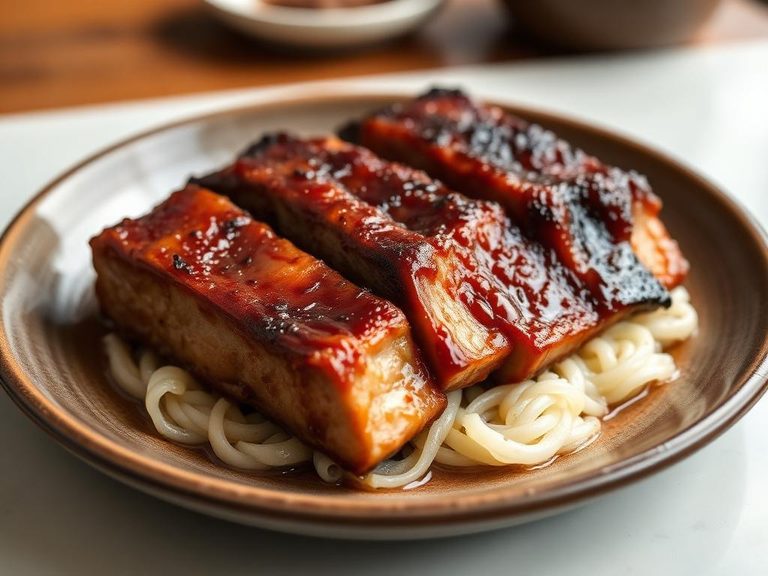
Japanese Kakuni is a classic Nagasaki dish featuring thick cubes of pork belly that are first seared, then slowly braised in a sweet and savory mixture of soy sauce, mirin, sake, and sugar. The long, gentle cooking process transforms the pork into incredibly tender, melt-in-your-mouth morsels that are deeply infused with the rich, caramelized flavors of the braising liquid.
🍽️ Nutrition at a glance
As a pork belly-based dish, Kakuni is high in fat and protein, with a notable calorie count per serving, typically around 400-600 calories depending on portion size and sweetness. It provides significant amounts of B vitamins, zinc, and iron from the pork, though the braising sauce adds considerable sodium and sugar.
Nutrition breakdown
| Calories | 420 kcal |
| Protein | 22 g |
| Carbs | 8 g |
| Fat | 34 g |
| Fiber | 0.5 g |
| Sugar | 6 g |
| Sodium | 850 mg |
| Iron | 1.8 mg |
| Zinc | 3.5 mg |
| Vitamin B1 (Thiamine) | 0.4 mg |
| Vitamin B6 | 0.4 mg |
| Vitamin B12 | 0.8 mcg |
| Selenium | 25 mcg |
| Phosphorus | 180 mg |
| Niacin (B3) | 5 mg |
Per 3 pieces (approx. 150 g) · estimated, varies by recipe
💡 What's interesting
Culturally, Kakuni is a beloved example of *Nagasaki Ryori* (Nagasaki cuisine), which reflects historical trade and cultural exchanges with China and the West. Its unique cooking method, which involves a long simmer to break down collagen, results in a texture that is distinctly different from Western braised pork, often described as 'spoon-tender' or 'like pork candy'.
🍽️ Related dishes

AI estimate may be inaccurate · Terms