

Japanese Gyūdon
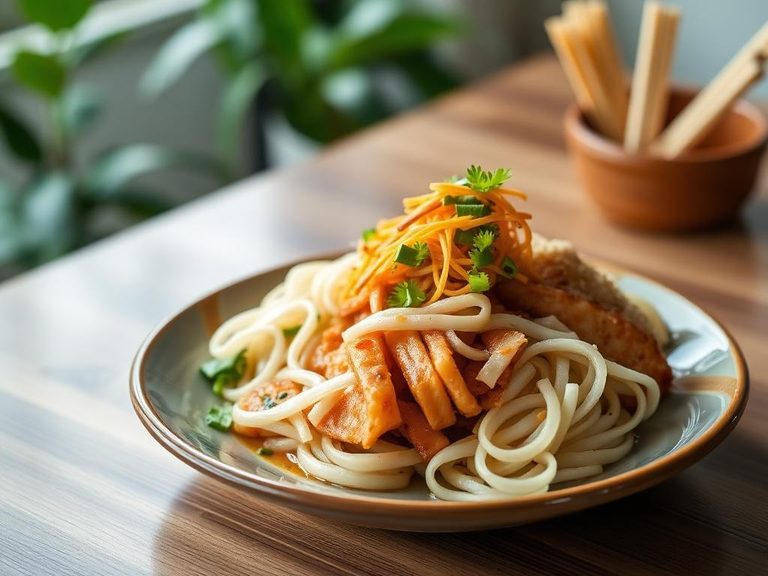
Gyūdon is a popular Japanese rice bowl dish featuring thinly sliced beef and onions simmered in a savory-sweet broth, then served over a bed of steamed white rice. Originating in the late 19th century during Japan's Meiji era, it is a quintessential example of yoshoku (Western-influenced Japanese cuisine) and is widely available at fast-food chains and casual restaurants across Japan.
🍳 View the full Japanese Gyūdon recipe →
🍽️ Nutrition at a glance
A typical serving is high in carbohydrates from the rice and provides a good amount of protein from the beef, with a moderate amount of fat. It is a calorie-dense meal, generally ranging from 600 to 800 calories per serving, and offers key nutrients like iron from the meat and B vitamins.
Nutrition breakdown
| Calories | 615 kcal |
| Protein | 28 g |
| Carbs | 75 g |
| Fat | 22 g |
| Fiber | 3 g |
| Sugar | 10 g |
| Sodium | 1050 mg |
| Iron | 4.5 mg |
| Potassium | 450 mg |
| Vitamin B12 | 2.8 µg |
| Niacin (B3) | 10 mg |
| Zinc | 5 mg |
| Phosphorus | 280 mg |
| Selenium | 40 µg |
| Manganese | 1.2 mg |
Per 1 bowl (350 g) · estimated, varies by recipe
💡 What's interesting
Culturally, gyūdon is a symbol of Japan's fast-food culture and affordability, with major chains like Yoshinoya and Sukiya competing fiercely. Its unique simmering technique, using a dashi-based broth with soy sauce and mirin, creates a deeply umami flavor that has made it a beloved comfort food nationwide.
🍽️ Related dishes





AI estimate may be inaccurate · Terms