

Pork, fresh, backfat, raw
Whole food · Pork Products
Pork backfat is the thick, pristine white layer of fat from along the pig's spine, prized for its incredibly rich, clean pork flavor and smooth, creamy texture when rendered. Nutritionally, it is a near-pure source of dietary fat, delivering a massive 88.69 grams of fat per 100g with virtually no protein or carbohydrates. It's a foundational ingredient for adding unparalleled depth and mouthfeel to dishes.
Calorie split: 1% protein · 0% carbs · 99% fat
↓ Full nutrition💚 Why it's loved
People love it for its ability to transform dishes, providing a luxurious, savory richness that lean meats cannot. Its cultural significance in making everything from flaky pie crusts to crispy cracklings makes it a cherished staple in many cuisines.
⚠️ Watch-outs & how to enjoy it better
As a concentrated animal fat, it is very high in calories and saturated fat, making it unsuitable for low-fat diets. To enjoy it mindfully, use it as a potent flavoring agent rather than a main ingredient, and balance meals with plenty of fiber-rich vegetables and lean proteins.
Key benefits
- Excellent source of dietary fat for energy and satiety.
- Provides fat-soluble vitamins like Vitamin D and K2.
- A key component for making traditional lard and schmaltz.
- Adds rich flavor and moisture to lean meat mixtures.
- High smoke point when rendered, suitable for frying.
🍽️ Popular dishes
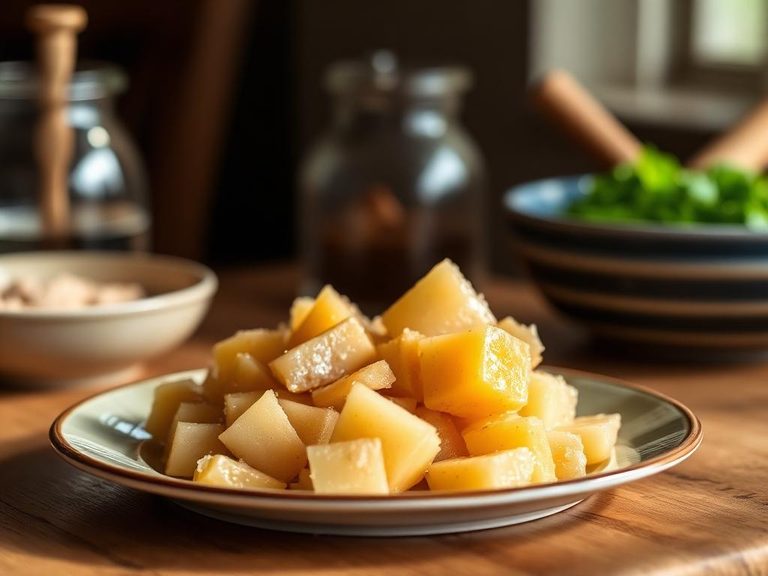
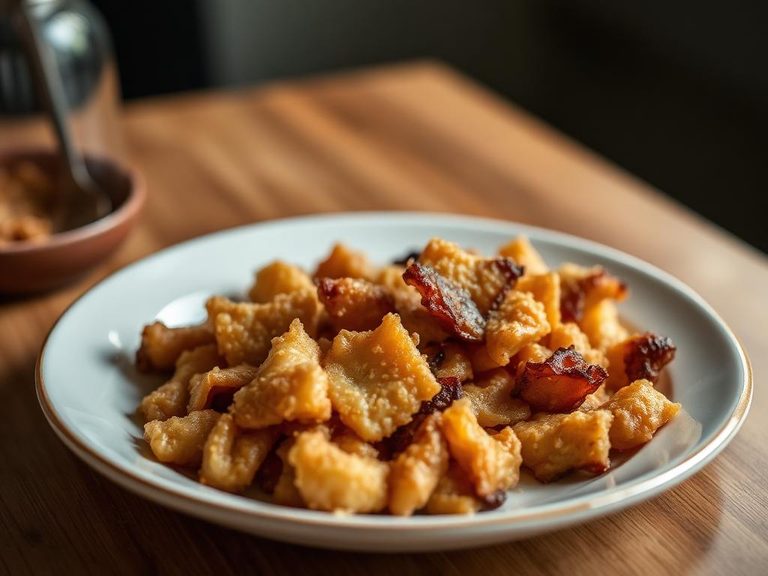
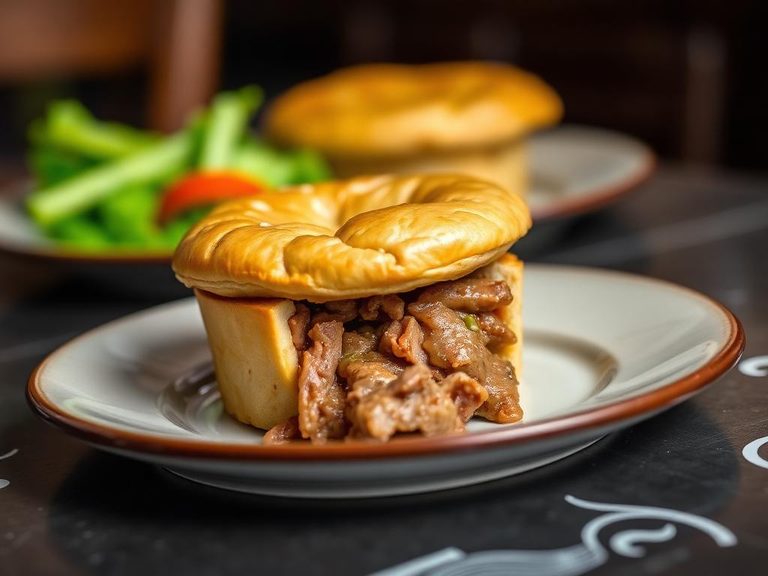
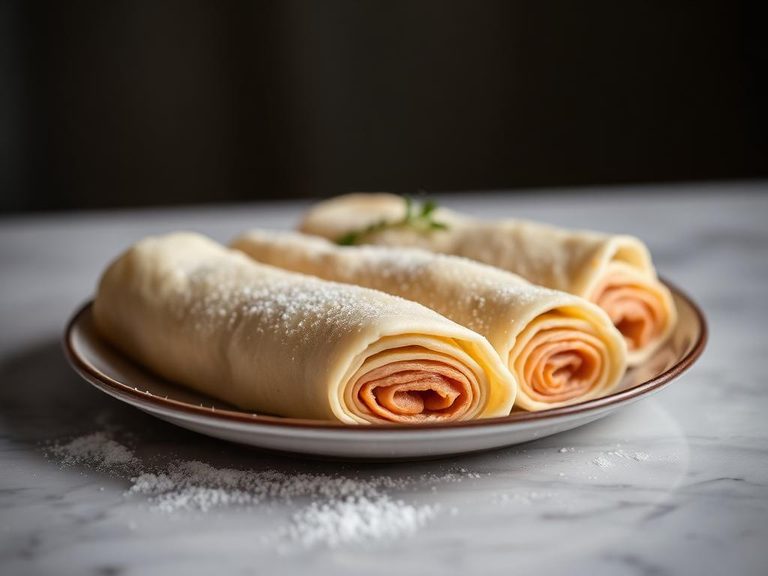
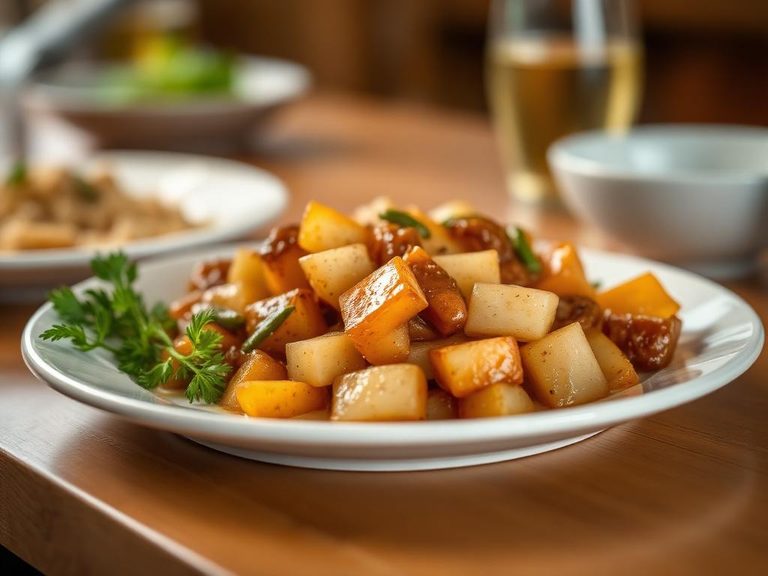
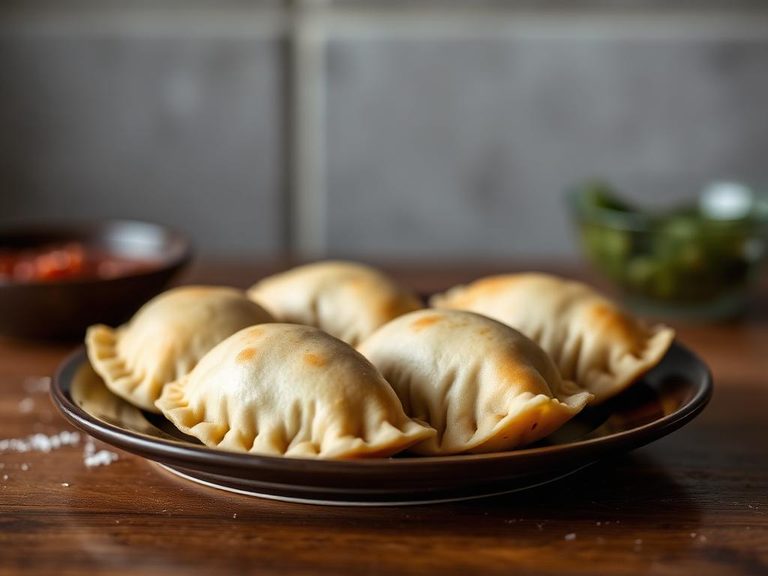
🌍 Where it's eaten
💡 Did you know?
Properly rendered and stored lard (from pork fat) has a surprisingly long shelf life and was the primary cooking fat in American kitchens until the early 20th century, when it was displaced by vegetable shortening.
Full nutrition (USDA data · scales with serving)
| Water | 7.7 g |
| Energy | 812 kcal |
| Energy | 3397 kj |
| Protein | 2.9 g |
| Total lipid (fat) | 88.7 g |
| Ash | 0.70 g |
| Carbohydrate, by difference | 0.00 g |
| Fiber, total dietary | 0.00 g |
| Total Sugars | 0.00 g |
| Calcium, Ca | 2.0 mg |
| Iron, Fe | 0.18 mg |
| Magnesium, Mg | 2.0 mg |
| Phosphorus, P | 38.0 mg |
| Potassium, K | 65.0 mg |
| Sodium, Na | 11.0 mg |
| Zinc, Zn | 0.37 mg |
| Copper, Cu | 0.02 mg |
| Manganese, Mn | 0.00 mg |
| Selenium, Se | 8.0 ug |
| Vitamin C, total ascorbic acid | 0.10 mg |
| Thiamin | 0.08 mg |
| Riboflavin | 0.05 mg |
| Niacin | 0.98 mg |
| Pantothenic acid | 0.12 mg |
| Vitamin B-6 | 0.04 mg |
| Folate, total | 1.0 ug |
| Folic acid | 0.00 ug |
| Folate, food | 1.0 ug |
| Folate, DFE | 1.0 ug |
| Choline, total | 15.4 mg |
| Betaine | 0.60 mg |
| Vitamin B-12 | 0.18 ug |
| Vitamin B-12, added | 0.00 ug |
| Vitamin A, RAE | 5.0 ug |
| Retinol | 5.0 ug |
| Carotene, beta | 0.00 ug |
| Carotene, alpha | 0.00 ug |
| Cryptoxanthin, beta | 0.00 ug |
| Vitamin A, IU | 15.0 iu |
| Lycopene | 0.00 ug |
| Lutein + zeaxanthin | 0.00 ug |
| Vitamin E (alpha-tocopherol) | 0.00 mg |
| Vitamin E, added | 0.00 mg |
| Vitamin D (D2 + D3), International Units | 122 iu |
| Vitamin D (D2 + D3) | 3.1 ug |
| Vitamin D3 (cholecalciferol) | 3.1 ug |
| Vitamin K (phylloquinone) | 0.00 ug |
| Vitamin K (Dihydrophylloquinone) | 0.00 ug |
| Alcohol, ethyl | 0.00 g |
| Caffeine | 0.00 mg |
| Theobromine | 0.00 mg |
Fat & fatty acid profile (per 100g)
| Fatty acids, total saturated | 32.2 g |
| SFA 4:0 | 0.00 g |
| SFA 6:0 | 0.00 g |
| SFA 8:0 | 0.00 g |
| SFA 10:0 | 0.06 g |
| SFA 12:0 | 0.19 g |
| SFA 14:0 | 1.1 g |
| SFA 16:0 | 19.4 g |
| SFA 18:0 | 11.4 g |
| Fatty acids, total monounsaturated | 42.0 g |
| MUFA 16:1 | 2.8 g |
| MUFA 18:1 | 38.5 g |
| MUFA 20:1 | 0.72 g |
| MUFA 22:1 | 0.00 g |
| Fatty acids, total polyunsaturated | 10.3 g |
| PUFA 18:2 | 9.5 g |
| PUFA 18:3 | 0.74 g |
| PUFA 18:4 | 0.00 g |
| PUFA 20:4 | 0.11 g |
| PUFA 20:5 n-3 (EPA) | 0.00 g |
| PUFA 22:5 n-3 (DPA) | 0.00 g |
| PUFA 22:6 n-3 (DHA) | 0.00 g |
| Cholesterol | 57.0 mg |
Amino acid profile (per 100g)
| Tryptophan | 0.04 g |
| Threonine | 0.13 g |
| Isoleucine | 0.14 g |
| Leucine | 0.23 g |
| Lysine | 0.26 g |
| Methionine | 0.08 g |
| Cystine | 0.04 g |
| Phenylalanine | 0.12 g |
| Tyrosine | 0.10 g |
| Valine | 0.16 g |
| Arginine | 0.18 g |
| Histidine | 0.12 g |
| Alanine | 0.17 g |
| Aspartic acid | 0.27 g |
| Glutamic acid | 0.46 g |
| Glycine | 0.14 g |
| Proline | 0.12 g |
| Serine | 0.12 g |
FAQ
What's the difference between pork backfat and leaf lard?
Backfat is from along the spine and is firmer with a more pronounced pork flavor. Leaf lard comes from the visceral fat around the kidneys and is softer, with a neutral, delicate flavor, making it the premium choice for baking.
How do I render pork backfat at home?
Cut the fat into small pieces, place in a heavy pot over very low heat with a splash of water to prevent burning. Cook slowly, stirring occasionally, until the fat has melted and the solids are golden and crisp. Strain through a fine mesh sieve.
Is pork backfat the same as pork belly?
No. Pork belly is a cut of meat that includes layers of skin, fat, and meat. Pork backfat is the pure, separated fat layer from the back, without the attached meat and skin.
Nutrient density (calculated · NRF9.3)
Nutrient Rich Foods index: beneficial nutrients (protein, fiber, vitamins, minerals) minus saturated fat, added sugar & sodium, per 100 kcal.
NRF9.3 index — Fulgoni, Keast & Drewnowski, 2009. Computed from USDA nutrients.
Weight-loss friendliness (composite index)
Energy density 8.12 kcal/g · 1% calories from protein · 0.0 g fiber · 0.0 g sugar per 100 g.
Composite of energy density (Rolls et al., 1999), protein & fiber satiety, minus sugar. A calculated heuristic — ranks satiety-per-calorie, not a clinical measure.
Dietary load (calculated from USDA values)
Potential renal acid load. Positive = acid-forming, negative = alkaline-forming.
Sodium-to-potassium ratio: 0.17 (lower is better — aim for ≤ 1)
Sodium:potassium per WHO potassium guidance. Computed from USDA nutrients.