

Sautéing or Confit
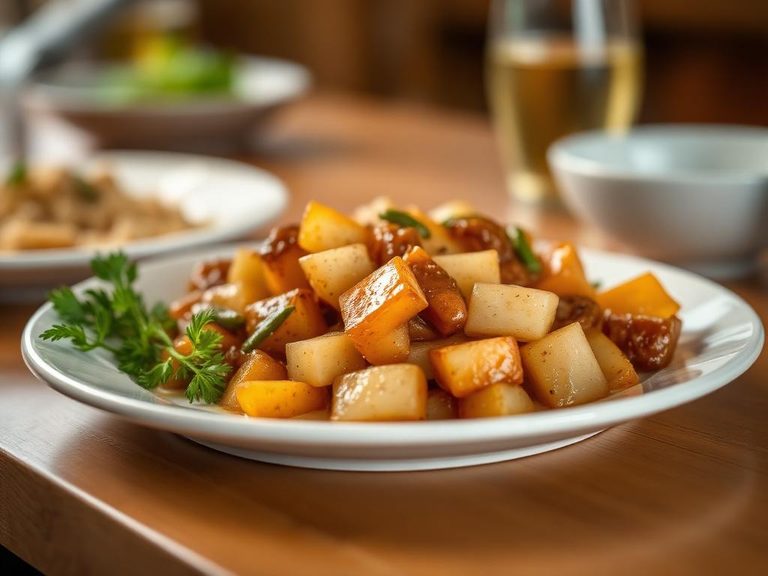
Sautéing and confit are two distinct French cooking techniques. Sautéing involves quickly cooking small pieces of food in a small amount of fat over high heat, while confit is a slow-cooking method where food (traditionally duck) is submerged and preserved in its own fat. Both are foundational methods in French cuisine, used to develop deep flavor and texture in meats, vegetables, and fruits.
🍽️ Nutrition at a glance
These are cooking methods, not a single dish, so nutrition varies widely. A sautéed vegetable medley would be lower in fat and higher in fiber, while a duck confit dish is very high in fat and protein, providing a rich source of calories and energy.
Nutrition breakdown
| Calories | 550 kcal |
| Protein | 35 g |
| Carbs | 0 g |
| Fat | 45 g |
| Fiber | 0 g |
| Sugar | 0 g |
| Sodium | 850 mg |
| Iron | 3.5 mg |
| Zinc | 5 mg |
| Selenium | 30 mcg |
| Niacin (B3) | 8 mg |
| Vitamin B12 | 1.5 mcg |
| Phosphorus | 250 mg |
| Monounsaturated Fat | 20 g |
| Cholesterol | 120 mg |
Per 1 serving (approx. 150 g) of classic Duck Confit with skin · estimated, varies by recipe
💡 What's interesting
Confit is an ancient preservation technique from Southwest France, predating refrigeration, where salt-cured meat was slowly cooked in fat and stored submerged in it. Sautéing, from the French 'sauter' meaning 'to jump,' is prized for its speed and ability to create a flavorful sear while retaining food's freshness.
🍽️ Related dishes

AI estimate may be inaccurate · Terms