

Empanada Dough
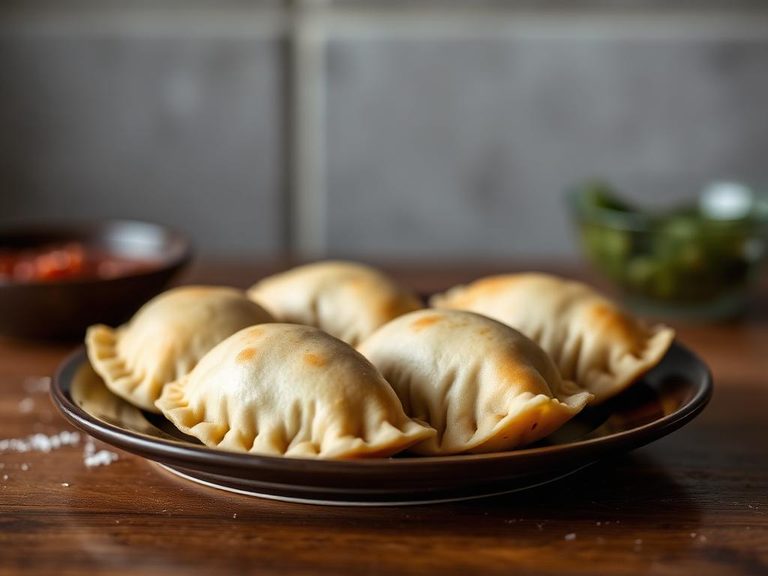
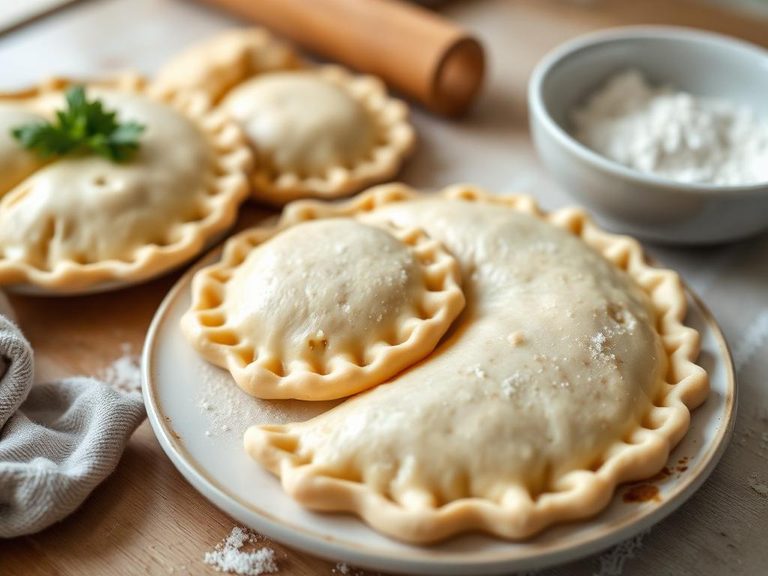
Empanada dough is a versatile, pliable pastry used to encase savory or sweet fillings, forming the iconic Latin American empanada. It is typically made from a simple mixture of all-purpose flour, fat (like butter, lard, or shortening), water, and a pinch of salt. While originating from Spain, it has become a beloved staple across Latin America, with each country and region boasting its own signature dough and filling variations.
🍽️ Nutrition at a glance
This dough is primarily a source of carbohydrates for energy, with a significant amount of fat contributing to its tender, flaky texture. A single, medium-sized raw dough disc (about 60g) provides roughly 150-180 calories, mostly from refined flour and fat.
Nutrition breakdown
| Calories | 165 kcal |
| Protein | 2.5 g |
| Carbs | 22 g |
| Fat | 7.5 g |
| Fiber | 1 g |
| Sugar | 0.5 g |
| Sodium | 120 mg |
| Iron | 1.5 mg |
| Thiamin (B1) | 0.2 mg |
| Niacin (B3) | 1.8 mg |
| Folate | 45 µg |
| Selenium | 8 µg |
| Phosphorus | 30 mg |
| Magnesium | 6 mg |
| Manganese | 0.2 mg |
Per 1 medium raw dough disc (60 g) · estimated, varies by recipe
💡 What's interesting
The texture of empanada dough is a point of culinary pride; the goal is a crust that is sturdy enough to hold the filling but becomes tender and flaky when baked or fried. Nutritionally, it acts as a neutral, calorie-dense vehicle, allowing the nutritional profile of the final empanada to be defined almost entirely by its filling.
🍽️ Related dishes


AI estimate may be inaccurate · Terms