

Empanada, beef
Common food

Photo: Wikipedia
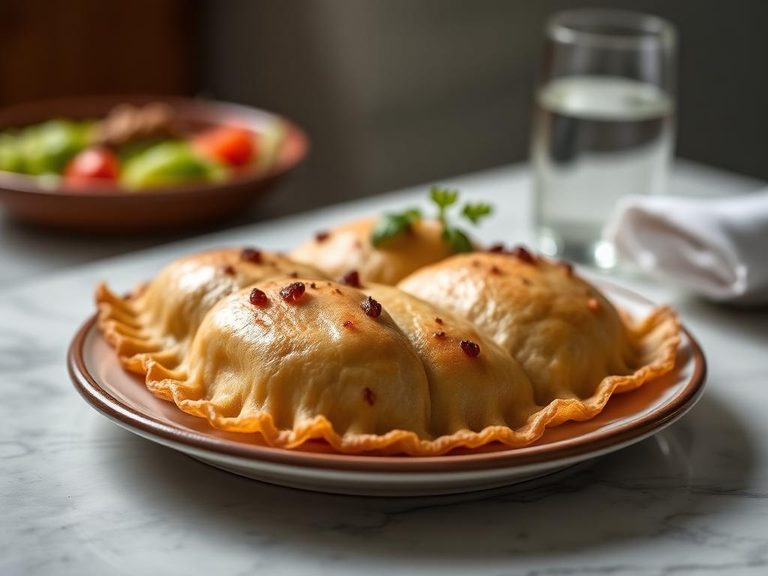
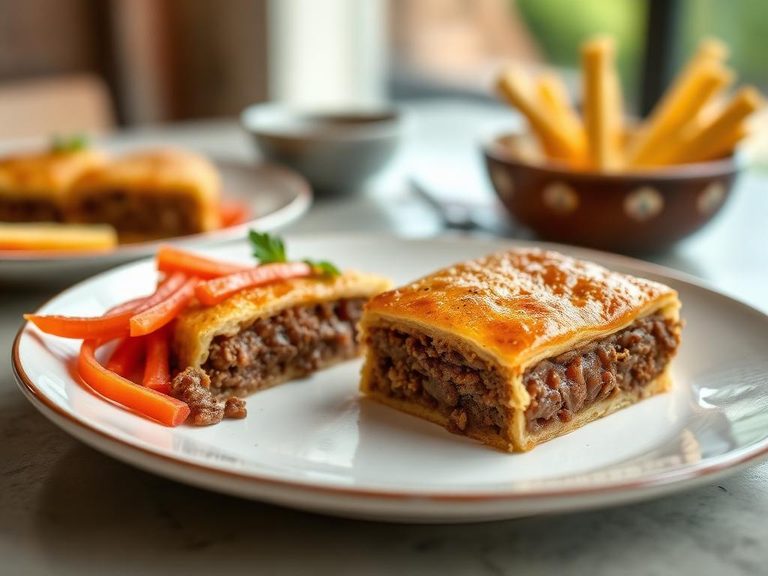
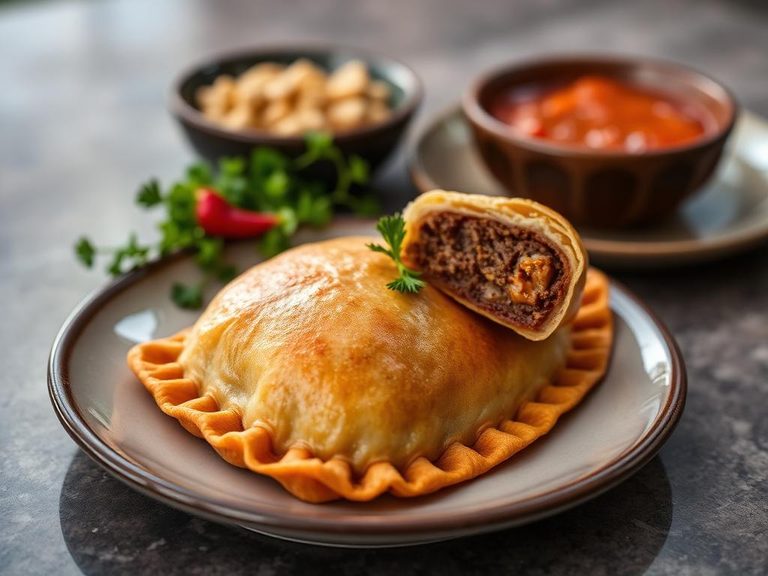
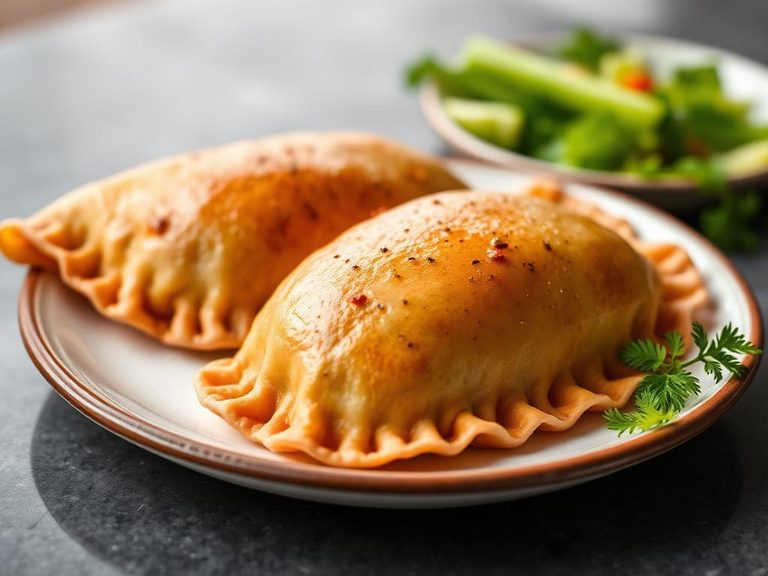
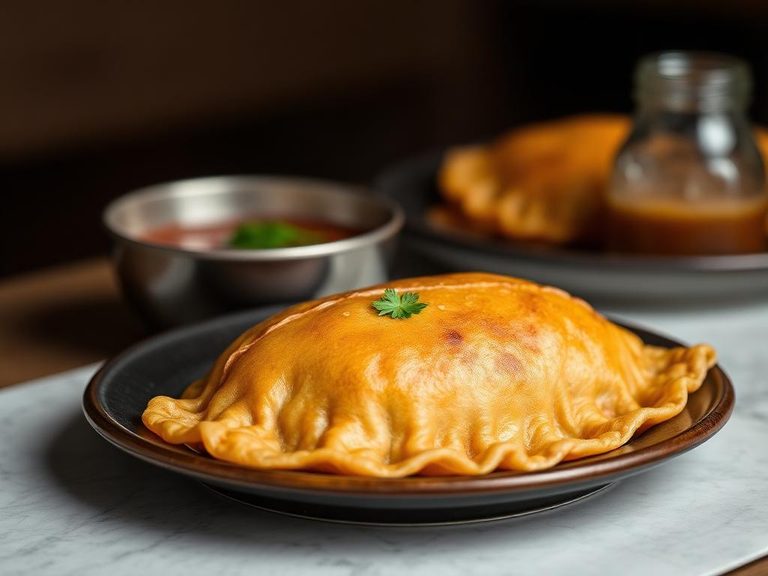
A golden, flaky pastry pocket crimped shut and baked or fried until shatteringly crisp, encasing a savory, spiced beef filling that's juicy and aromatic. Each bite delivers a satisfying crunch followed by a burst of rich, seasoned meat. At 333 kcal per 100g, it's a calorie-dense but protein-packed handheld meal.
Calorie split: 15% protein · 33% carbs · 52% fat
↓ Full nutrition💚 Why it's loved
People love empanadas for the perfect marriage of a buttery, flaky crust and a deeply savory, often spiced beef filling. They're a beloved comfort food and a staple at gatherings, celebrations, and street food stalls across many cultures.
⚠️ Watch-outs & how to enjoy it better
The combination of refined flour crust and fatty filling can lead to blood-sugar spikes and is high in calories and sodium. To counteract, pair with a fiber-rich side salad or pickled vegetables, practice portion control by having one as part of a balanced plate, and look for baked versions to reduce fat content.
Key benefits
- Provides a solid 12g of protein per 100g for muscle maintenance.
- Portable and self-contained, ideal for on-the-go meals or packed lunches.
- The fat content (19.2g) contributes to satiety and flavor carrying.
- Versatile base for various fillings beyond beef.
🍽️ Popular dishes
🌍 Where it's eaten
💡 Did you know?
The tradition of crimping the empanada edge isn't just decorative; different crimping patterns historically signified the specific filling inside, allowing identification without cutting it open.
Full nutrition (USDA data · scales with serving)
| Water | 39.6 g |
| Energy | 333 kcal |
| Protein | 12.1 g |
| Total lipid (fat) | 19.2 g |
| Carbohydrate, by difference | 27.4 g |
| Fiber, total dietary | 1.6 g |
| Total Sugars | 2.1 g |
| Calcium, Ca | 50.0 mg |
| Iron, Fe | 2.0 mg |
| Magnesium, Mg | 18.0 mg |
| Phosphorus, P | 125 mg |
| Potassium, K | 187 mg |
| Sodium, Na | 459 mg |
| Zinc, Zn | 2.3 mg |
| Copper, Cu | 0.09 mg |
| Selenium, Se | 11.3 ug |
| Vitamin C, total ascorbic acid | 1.3 mg |
| Thiamin | 0.16 mg |
| Riboflavin | 0.14 mg |
| Niacin | 3.3 mg |
| Vitamin B-6 | 0.18 mg |
| Folate, total | 35.0 ug |
| Folic acid | 22.0 ug |
| Folate, food | 13.0 ug |
| Folate, DFE | 50.0 ug |
| Choline, total | 33.9 mg |
| Vitamin B-12 | 0.82 ug |
| Vitamin B-12, added | 0.00 ug |
| Vitamin A, RAE | 12.0 ug |
| Retinol | 12.0 ug |
| Carotene, beta | 0.00 ug |
| Carotene, alpha | 0.00 ug |
| Cryptoxanthin, beta | 0.00 ug |
| Lycopene | 0.00 ug |
| Lutein + zeaxanthin | 0.00 ug |
| Vitamin E (alpha-tocopherol) | 0.32 mg |
| Vitamin E, added | 0.00 mg |
| Vitamin D (D2 + D3) | 0.00 ug |
| Vitamin K (phylloquinone) | 4.1 ug |
| Alcohol, ethyl | 0.00 g |
| Caffeine | 0.00 mg |
| Theobromine | 0.00 mg |
Fat & fatty acid profile (per 100g)
| Fatty acids, total saturated | 6.9 g |
| SFA 4:0 | 0.04 g |
| SFA 6:0 | 0.02 g |
| SFA 8:0 | 0.01 g |
| SFA 10:0 | 0.04 g |
| SFA 12:0 | 0.05 g |
| SFA 14:0 | 0.40 g |
| SFA 16:0 | 3.9 g |
| SFA 18:0 | 2.3 g |
| Fatty acids, total monounsaturated | 8.6 g |
| MUFA 16:1 | 0.40 g |
| MUFA 18:1 | 8.1 g |
| MUFA 20:1 | 0.09 g |
| MUFA 22:1 | 0.00 g |
| Fatty acids, total polyunsaturated | 1.8 g |
| PUFA 18:2 | 1.7 g |
| PUFA 18:3 | 0.09 g |
| PUFA 18:4 | 0.00 g |
| PUFA 20:4 | 0.02 g |
| PUFA 20:5 n-3 (EPA) | 0.00 g |
| PUFA 22:5 n-3 (DPA) | 0.00 g |
| PUFA 22:6 n-3 (DHA) | 0.00 g |
| Cholesterol | 31.0 mg |
Amino acid profile (per 100g)
Estimated from Restaurant, Latino, empanadas, beef, prepared — USDA does not publish this profile for Empanada.
| Tryptophan | 0.12 g |
| Threonine | 0.41 g |
| Isoleucine | 0.46 g |
| Leucine | 0.90 g |
| Lysine | 0.61 g |
| Methionine | 0.21 g |
| Cystine | 0.16 g |
| Phenylalanine | 0.50 g |
| Tyrosine | 0.31 g |
| Valine | 0.51 g |
| Arginine | 0.58 g |
| Histidine | 0.31 g |
| Alanine | 0.58 g |
| Aspartic acid | 0.82 g |
| Glutamic acid | 2.5 g |
| Glycine | 0.57 g |
| Proline | 0.85 g |
| Serine | 0.45 g |
FAQ
What is the difference between baked and fried empanadas?
Baked empanadas have a drier, more bread-like crust and are lower in fat. Fried empanadas have a crispier, bubblier, and richer crust due to the oil absorption.
Can beef empanadas be made ahead and frozen?
Yes, they freeze exceptionally well. Assemble the empanadas, freeze them on a tray until solid, then transfer to a bag. Bake from frozen, adding a few extra minutes to the cooking time.
What spices are typically used in the beef filling?
Common spices include cumin, paprika (sweet or smoked), oregano, and garlic. Some recipes also use a touch of chili powder or red pepper flakes for heat, and hard-boiled eggs or olives are frequent additions.
Nutrient density (calculated · NRF9.3)
Nutrient Rich Foods index: beneficial nutrients (protein, fiber, vitamins, minerals) minus saturated fat, added sugar & sodium, per 100 kcal.
NRF9.3 index — Fulgoni, Keast & Drewnowski, 2009. Computed from USDA nutrients.
Weight-loss friendliness (composite index)
Energy density 3.33 kcal/g · 15% calories from protein · 1.6 g fiber · 2.1 g sugar per 100 g.
Composite of energy density (Rolls et al., 1999), protein & fiber satiety, minus sugar. A calculated heuristic — ranks satiety-per-calorie, not a clinical measure.
Dietary load (calculated from USDA values)
Potential renal acid load. Positive = acid-forming, negative = alkaline-forming.
Sodium-to-potassium ratio: 2.45 (lower is better — aim for ≤ 1)
Sodium:potassium per WHO potassium guidance. Computed from USDA nutrients.