

Empanada, beef, with vegetables
Common food

Photo: Wikipedia
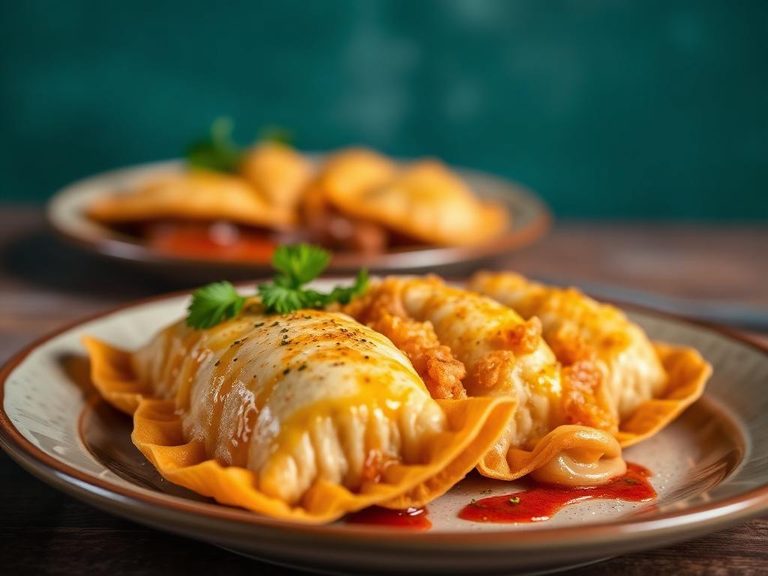
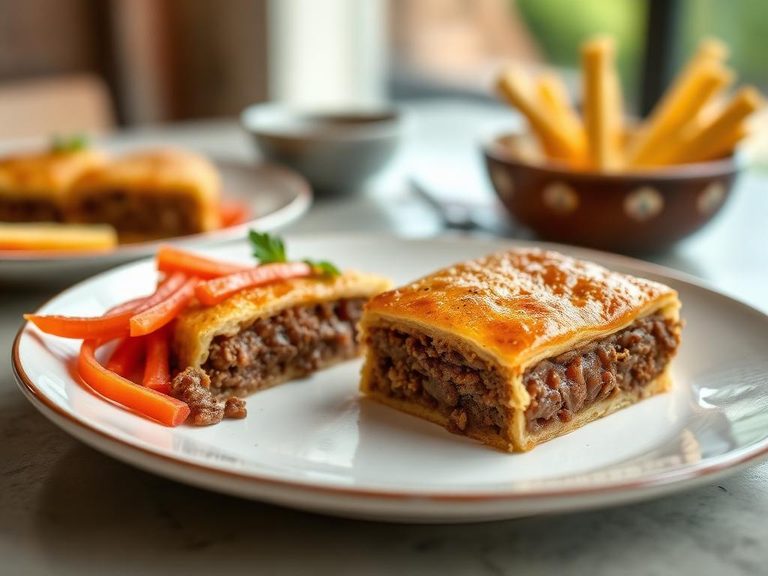
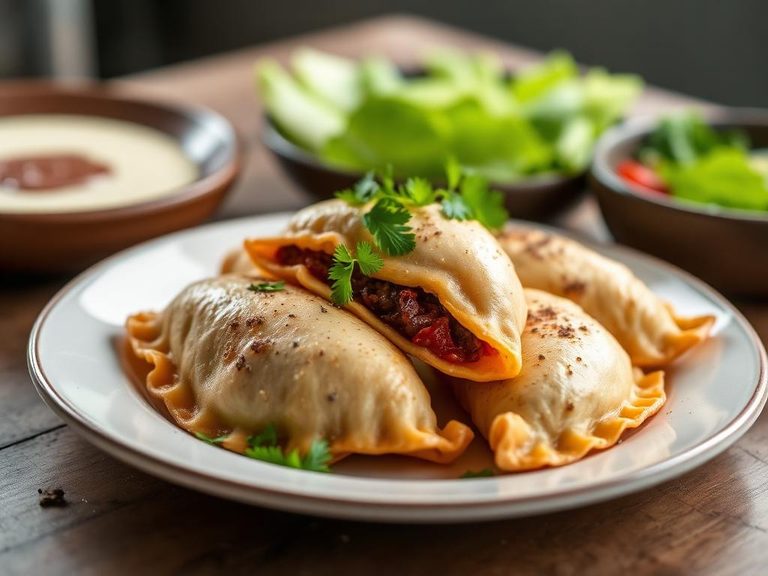
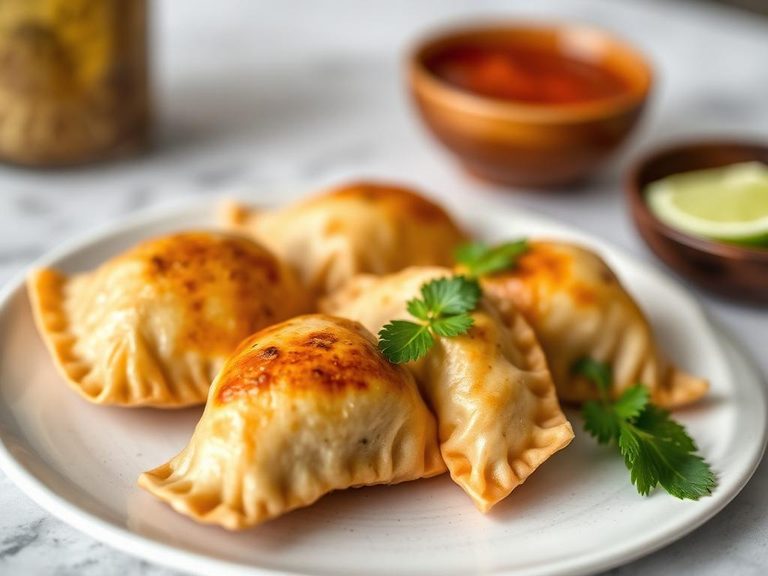
A golden, flaky pastry pocket cradling a savory filling of seasoned ground beef and diced vegetables. Each bite delivers a satisfying crunch followed by a juicy, umami-rich center. At 291 kcal per 100g, it offers a balanced mix of protein and carbohydrates for a substantial snack or meal.
Calorie split: 10% protein · 41% carbs · 49% fat
↓ Full nutrition💚 Why it's loved
People adore the empanada for its perfect handheld format and the comforting contrast between the crisp, buttery dough and the hot, flavorful filling. It's a beloved staple in social gatherings and street food scenes across Latin America and beyond, symbolizing shared culture and tradition.
⚠️ Watch-outs & how to enjoy it better
The combination of refined flour and fat can lead to blood sugar spikes and is high in calories if over-consumed. Those watching sodium or saturated fat intake should be mindful. To counteract, pair a single empanada with a large, vinegar-dressed green salad to add fiber and slow digestion, and choose baked versions over fried when possible.
Key benefits
- Provides a good source of protein (7.19g) for muscle maintenance.
- Offers a convenient, portable meal or snack option.
- Contains carbohydrates (29.91g) for quick energy.
- Can incorporate vegetables for added vitamins and minerals.
- Versatile base for various regional flavor profiles.
🍽️ Popular dishes
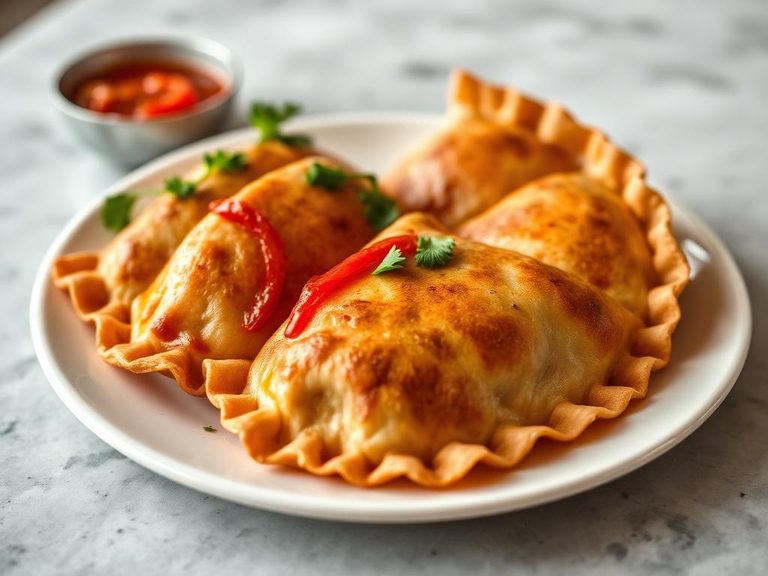
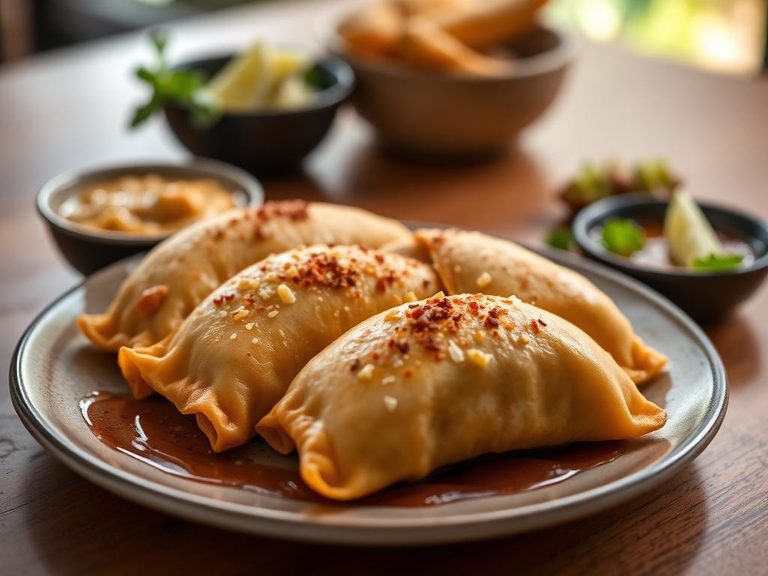
🌍 Where it's eaten
💡 Did you know?
The word 'empanada' comes from the Spanish verb 'empanar', meaning 'to wrap or coat in bread', and the dish is so iconic that Argentina has a National Empanada Day on the first Sunday of April.
Full nutrition (USDA data · scales with serving)
| Water | 45.3 g |
| Energy | 291 kcal |
| Protein | 7.2 g |
| Total lipid (fat) | 16.0 g |
| Carbohydrate, by difference | 29.9 g |
| Fiber, total dietary | 2.0 g |
| Total Sugars | 2.8 g |
| Calcium, Ca | 47.0 mg |
| Iron, Fe | 1.6 mg |
| Magnesium, Mg | 18.0 mg |
| Phosphorus, P | 95.0 mg |
| Potassium, K | 176 mg |
| Sodium, Na | 446 mg |
| Zinc, Zn | 1.1 mg |
| Copper, Cu | 0.09 mg |
| Selenium, Se | 6.6 ug |
| Vitamin C, total ascorbic acid | 3.5 mg |
| Thiamin | 0.16 mg |
| Riboflavin | 0.12 mg |
| Niacin | 2.4 mg |
| Vitamin B-6 | 0.12 mg |
| Folate, total | 38.0 ug |
| Folic acid | 22.0 ug |
| Folate, food | 16.0 ug |
| Folate, DFE | 53.0 ug |
| Choline, total | 19.7 mg |
| Vitamin B-12 | 0.32 ug |
| Vitamin B-12, added | 0.00 ug |
| Vitamin A, RAE | 16.0 ug |
| Retinol | 11.0 ug |
| Carotene, beta | 51.0 ug |
| Carotene, alpha | 12.0 ug |
| Cryptoxanthin, beta | 12.0 ug |
| Lycopene | 258 ug |
| Lutein + zeaxanthin | 83.0 ug |
| Vitamin E (alpha-tocopherol) | 0.35 mg |
| Vitamin E, added | 0.00 mg |
| Vitamin D (D2 + D3) | 0.00 ug |
| Vitamin K (phylloquinone) | 4.7 ug |
| Alcohol, ethyl | 0.00 g |
| Caffeine | 0.00 mg |
| Theobromine | 0.00 mg |
Fat & fatty acid profile (per 100g)
| Fatty acids, total saturated | 5.7 g |
| SFA 4:0 | 0.04 g |
| SFA 6:0 | 0.02 g |
| SFA 8:0 | 0.01 g |
| SFA 10:0 | 0.03 g |
| SFA 12:0 | 0.05 g |
| SFA 14:0 | 0.30 g |
| SFA 16:0 | 3.2 g |
| SFA 18:0 | 1.9 g |
| Fatty acids, total monounsaturated | 7.1 g |
| MUFA 16:1 | 0.28 g |
| MUFA 18:1 | 6.8 g |
| MUFA 20:1 | 0.08 g |
| MUFA 22:1 | 0.00 g |
| Fatty acids, total polyunsaturated | 1.8 g |
| PUFA 18:2 | 1.6 g |
| PUFA 18:3 | 0.08 g |
| PUFA 18:4 | 0.00 g |
| PUFA 20:4 | 0.01 g |
| PUFA 20:5 n-3 (EPA) | 0.00 g |
| PUFA 22:5 n-3 (DPA) | 0.00 g |
| PUFA 22:6 n-3 (DHA) | 0.00 g |
| Cholesterol | 13.0 mg |
Amino acid profile (per 100g)
Estimated from Restaurant, Latino, empanadas, beef, prepared — USDA does not publish this profile for Empanada.
| Tryptophan | 0.12 g |
| Threonine | 0.41 g |
| Isoleucine | 0.46 g |
| Leucine | 0.90 g |
| Lysine | 0.61 g |
| Methionine | 0.21 g |
| Cystine | 0.16 g |
| Phenylalanine | 0.50 g |
| Tyrosine | 0.31 g |
| Valine | 0.51 g |
| Arginine | 0.58 g |
| Histidine | 0.31 g |
| Alanine | 0.58 g |
| Aspartic acid | 0.82 g |
| Glutamic acid | 2.5 g |
| Glycine | 0.57 g |
| Proline | 0.85 g |
| Serine | 0.45 g |
FAQ
What's the difference between baked and fried empanadas?
Fried empanadas have a crispier, bubblier crust and higher fat content, while baked versions are lighter, often with a smoother, more pastry-like finish.
Can I freeze uncooked beef empanadas?
Yes, assemble them, place on a baking sheet to freeze solid, then transfer to a bag. Bake directly from frozen, adding a few extra minutes to the cooking time.
What is the traditional dough for beef empanadas?
It varies by region, but classic dough is made with flour, fat (beef suet, lard, or butter), salt, and warm water, rolled thin to create flaky layers.
Nutrient density (calculated · NRF9.3)
Nutrient Rich Foods index: beneficial nutrients (protein, fiber, vitamins, minerals) minus saturated fat, added sugar & sodium, per 100 kcal.
NRF9.3 index — Fulgoni, Keast & Drewnowski, 2009. Computed from USDA nutrients.
Weight-loss friendliness (composite index)
Energy density 2.91 kcal/g · 10% calories from protein · 2.0 g fiber · 2.8 g sugar per 100 g.
Composite of energy density (Rolls et al., 1999), protein & fiber satiety, minus sugar. A calculated heuristic — ranks satiety-per-calorie, not a clinical measure.
Dietary load (calculated from USDA values)
Potential renal acid load. Positive = acid-forming, negative = alkaline-forming.
Sodium-to-potassium ratio: 2.53 (lower is better — aim for ≤ 1)
Sodium:potassium per WHO potassium guidance. Computed from USDA nutrients.