

Strudel Dough
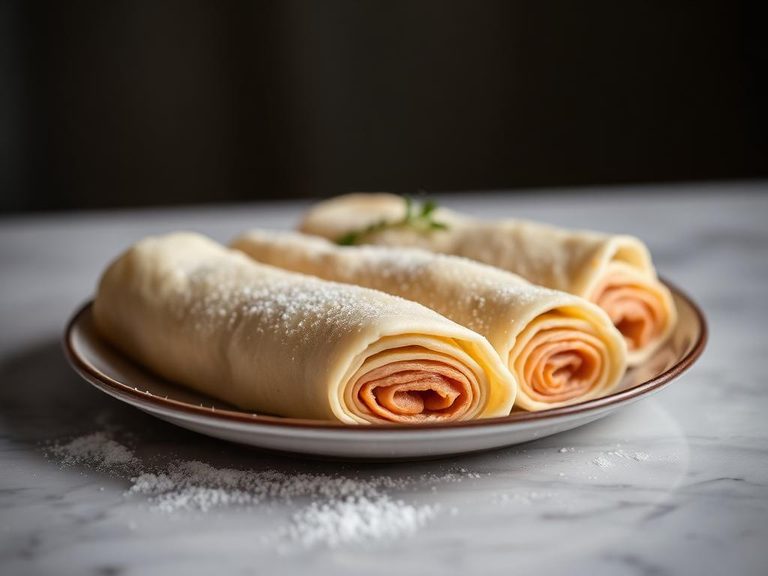
Strudel dough is a paper-thin, elastic pastry sheet used as the base for traditional Central European strudels, such as the iconic Apfelstrudel. Its primary ingredients are simple—flour, water, oil, and sometimes a touch of vinegar or egg—but it requires skillful stretching to achieve its signature delicate, flaky texture. Originating in the Austro-Hungarian Empire, it remains a staple in the cuisines of Austria, Germany, Hungary, and the Czech Republic.
🍽️ Nutrition at a glance
Strudel dough is primarily a source of carbohydrates, providing energy through refined flour, with a moderate amount of fat from the oil or butter used in its preparation. A typical serving offers a moderate calorie count, along with small amounts of iron and B vitamins from the flour.
Nutrition breakdown
| Calories | 320 kcal |
| Protein | 5 g |
| Carbs | 48 g |
| Fat | 12 g |
| Fiber | 2 g |
| Sugar | 1 g |
| Sodium | 150 mg |
| Iron | 2.5 mg |
| Thiamin (B1) | 0.3 mg |
| Niacin (B3) | 3.0 mg |
| Folate | 80 mcg |
| Selenium | 15 mcg |
| Manganese | 0.5 mg |
| Magnesium | 15 mg |
| Phosphorus | 60 mg |
Per 1 sheet (approx. 100 g) · estimated, varies by recipe
💡 What's interesting
The cultural significance of strudel dough lies in the traditional 'tablecloth method,' where the dough is stretched by hand over a large table until it is so thin it becomes translucent. Nutritionally, the dough itself is relatively low in protein, but its ability to encase rich fillings like apples, nuts, or cheese makes the final dish a complex balance of textures and flavors.
🍽️ Related dishes


AI estimate may be inaccurate · Terms