

Pork, cured, ham, extra lean and regular, canned, roasted
Whole food · Pork Products
This is a lean, savory protein powerhouse: canned, roasted ham that's been cured for preservation and flavor. Its texture is tender and slightly firm, with a deep, salty-smoked taste that's less fatty than fresh ham. With nearly 21g of protein and less than 1g of carbs per 100g, it's a quintessential low-carb, high-protein staple.
Calorie split: 52% protein · 1% carbs · 47% fat
↓ Full nutrition💚 Why it's loved
People love it for its robust, salty-savory flavor that instantly elevates sandwiches, salads, and breakfast plates. Its convenience and long shelf life make it a reliable, no-fuss protein for quick meals.
⚠️ Watch-outs & how to enjoy it better
The curing process makes it very high in sodium, which can be a concern for blood pressure. It may also contain nitrates/nitrites as preservatives. To counteract, rinse slices before using, pair with potassium-rich foods like leafy greens or tomatoes, and use it as a flavor accent rather than the main bulk of a meal.
Key benefits
- Excellent source of complete protein for muscle maintenance.
- Very low in carbohydrates and sugars, suitable for low-carb diets.
- Convenient, shelf-stable protein source requiring minimal preparation.
- Provides essential B vitamins, particularly thiamine (B1).
🍽️ Popular dishes
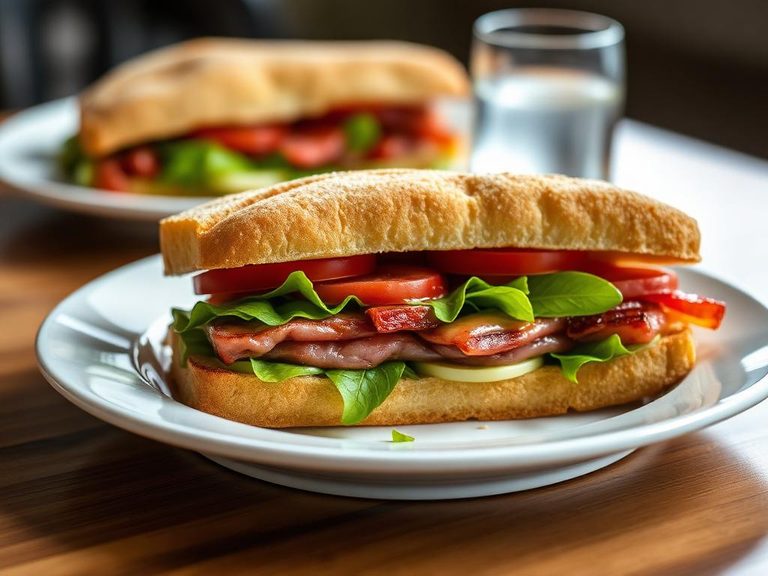
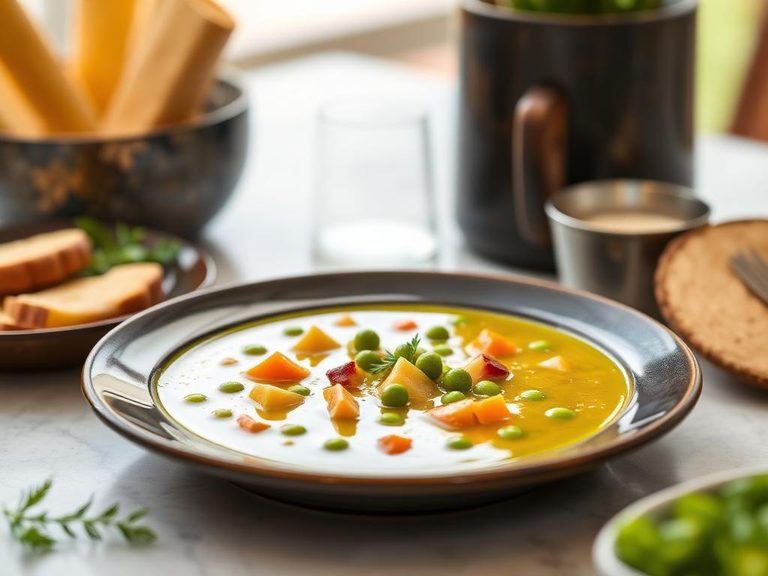


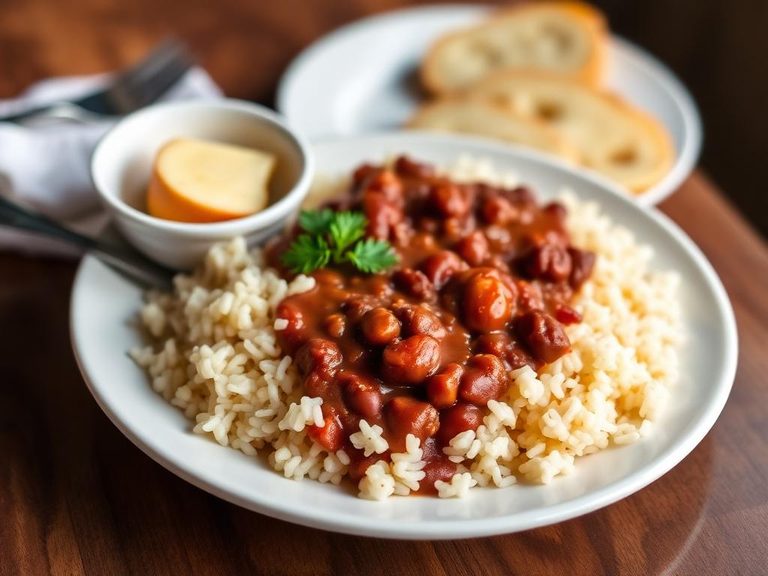
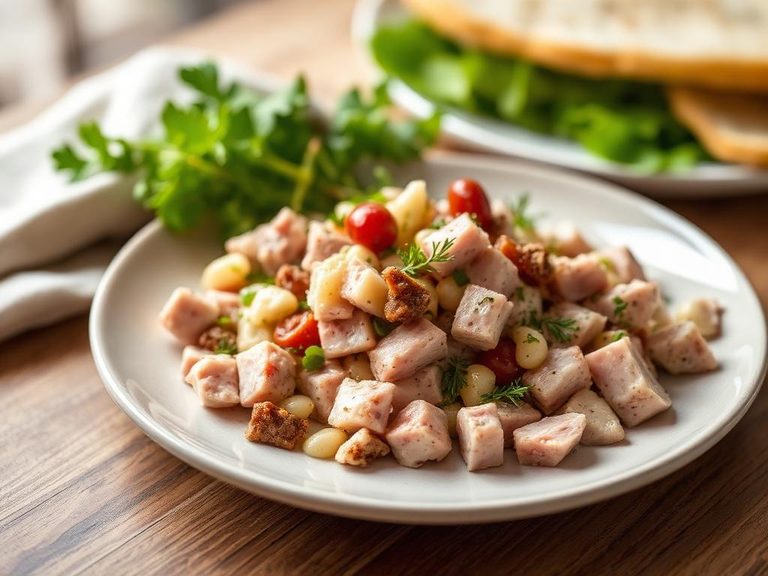
🌍 Where it's eaten
💡 Did you know?
The 'roasted' label on canned ham refers to the fact that the ham is fully cooked in the can during the canning process, not that it's roasted after opening.
Full nutrition (USDA data · scales with serving)
| Water | 66.5 g |
| Energy | 167 kcal |
| Energy | 699 kj |
| Protein | 20.9 g |
| Total lipid (fat) | 8.4 g |
| Ash | 3.6 g |
| Carbohydrate, by difference | 0.49 g |
| Fiber, total dietary | 0.00 g |
| Total Sugars | 0.00 g |
| Calcium, Ca | 7.0 mg |
| Iron, Fe | 1.1 mg |
| Magnesium, Mg | 20.0 mg |
| Phosphorus, P | 221 mg |
| Potassium, K | 351 mg |
| Sodium, Na | 1068 mg |
| Zinc, Zn | 2.3 mg |
| Copper, Cu | 0.08 mg |
| Manganese, Mn | 0.03 mg |
| Selenium, Se | 26.6 ug |
| Vitamin C, total ascorbic acid | 0.00 mg |
| Thiamin | 0.96 mg |
| Riboflavin | 0.25 mg |
| Niacin | 5.0 mg |
| Pantothenic acid | 0.63 mg |
| Vitamin B-6 | 0.40 mg |
| Folate, total | 5.0 ug |
| Folic acid | 0.00 ug |
| Folate, food | 5.0 ug |
| Folate, DFE | 5.0 ug |
| Choline, total | 81.8 mg |
| Betaine | 5.5 mg |
| Vitamin B-12 | 0.83 ug |
| Vitamin B-12, added | 0.00 ug |
| Vitamin A, RAE | 0.00 ug |
| Retinol | 0.00 ug |
| Carotene, beta | 0.00 ug |
| Carotene, alpha | 0.00 ug |
| Cryptoxanthin, beta | 0.00 ug |
| Vitamin A, IU | 0.00 iu |
| Lycopene | 0.00 ug |
| Lutein + zeaxanthin | 0.00 ug |
| Vitamin E (alpha-tocopherol) | 0.25 mg |
| Vitamin E, added | 0.00 mg |
| Vitamin D (D2 + D3), International Units | 30.0 iu |
| Vitamin D (D2 + D3) | 0.70 ug |
| Vitamin D3 (cholecalciferol) | 0.70 ug |
| Vitamin K (phylloquinone) | 0.00 ug |
| Alcohol, ethyl | 0.00 g |
| Caffeine | 0.00 mg |
| Theobromine | 0.00 mg |
Fat & fatty acid profile (per 100g)
| Fatty acids, total saturated | 2.8 g |
| SFA 4:0 | 0.00 g |
| SFA 6:0 | 0.00 g |
| SFA 8:0 | 0.00 g |
| SFA 10:0 | 0.03 g |
| SFA 12:0 | 0.02 g |
| SFA 14:0 | 0.09 g |
| SFA 16:0 | 1.8 g |
| SFA 18:0 | 0.88 g |
| Fatty acids, total monounsaturated | 4.1 g |
| MUFA 16:1 | 0.28 g |
| MUFA 18:1 | 3.8 g |
| MUFA 20:1 | 0.00 g |
| MUFA 22:1 | 0.00 g |
| Fatty acids, total polyunsaturated | 0.90 g |
| PUFA 18:2 | 0.81 g |
| PUFA 18:3 | 0.09 g |
| PUFA 18:4 | 0.00 g |
| PUFA 20:4 | 0.00 g |
| PUFA 20:5 n-3 (EPA) | 0.00 g |
| PUFA 22:5 n-3 (DPA) | 0.00 g |
| PUFA 22:6 n-3 (DHA) | 0.00 g |
| Cholesterol | 41.0 mg |
| Phytosterols | 0.00 mg |
Amino acid profile (per 100g)
| Tryptophan | 0.24 g |
| Threonine | 0.93 g |
| Isoleucine | 0.90 g |
| Leucine | 1.6 g |
| Lysine | 1.8 g |
| Methionine | 0.55 g |
| Cystine | 0.25 g |
| Phenylalanine | 0.81 g |
| Tyrosine | 0.69 g |
| Valine | 0.94 g |
| Arginine | 1.3 g |
| Histidine | 0.83 g |
| Alanine | 1.2 g |
| Aspartic acid | 1.9 g |
| Glutamic acid | 3.1 g |
| Glycine | 1.0 g |
| Proline | 0.89 g |
| Serine | 0.81 g |
FAQ
Is canned ham already cooked?
Yes, it is fully cooked and safe to eat straight from the can. It's typically heated to improve flavor and texture, but it's not required for safety.
How is 'extra lean' different from regular?
'Extra lean' means it contains less than 5 grams of fat per 100g serving, while 'regular' canned ham can have more. The nutrition profile you provided (8.43g fat) aligns with a regular or standard canned ham.
How should I store leftover canned ham?
Once opened, transfer any unused portion to an airtight container and refrigerate. It will keep for 3-5 days. For longer storage, wrap tightly and freeze for up to 1-2 months.
Nutrient density (calculated · NRF9.3)
Nutrient Rich Foods index: beneficial nutrients (protein, fiber, vitamins, minerals) minus saturated fat, added sugar & sodium, per 100 kcal.
NRF9.3 index — Fulgoni, Keast & Drewnowski, 2009. Computed from USDA nutrients.
Weight-loss friendliness (composite index)
Energy density 1.67 kcal/g · 50% calories from protein · 0.0 g fiber · 0.0 g sugar per 100 g.
Composite of energy density (Rolls et al., 1999), protein & fiber satiety, minus sugar. A calculated heuristic — ranks satiety-per-calorie, not a clinical measure.
Dietary load (calculated from USDA values)
Potential renal acid load. Positive = acid-forming, negative = alkaline-forming.
Sodium-to-potassium ratio: 3.04 (lower is better — aim for ≤ 1)
Sodium:potassium per WHO potassium guidance. Computed from USDA nutrients.