

Pineapple, canned, juice pack, solids and liquids
Whole food · Fruits and Fruit Juices

Photo: Wikipedia
This is pineapple that has been peeled, cored, sliced, and preserved in its own juice, offering a sweet-tart, juicy bite with a tender, slightly fibrous texture. Nutritionally, it's a low-calorie, virtually fat-free source of natural sugars and provides a modest amount of dietary fiber. The juice pack method means it's lighter and less syrupy than heavy syrup varieties.
Calorie split: 3% protein · 96% carbs · 1% fat
↓ Full nutrition💚 Why it's loved
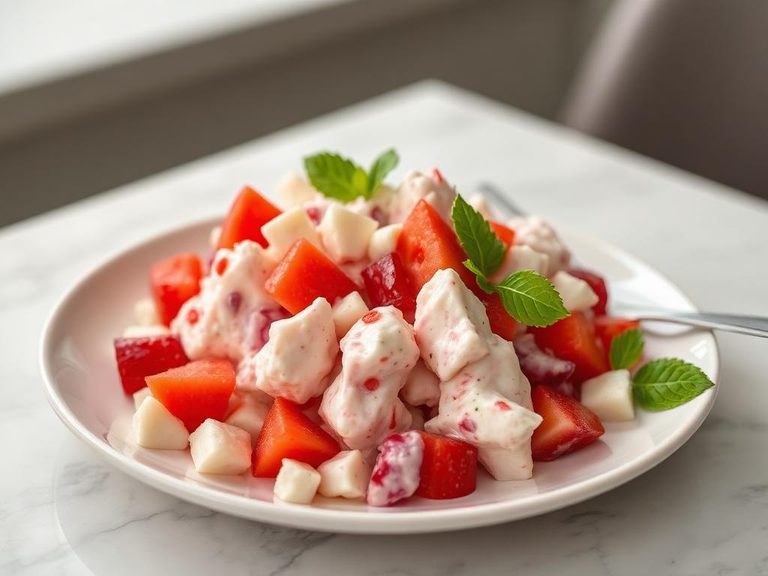
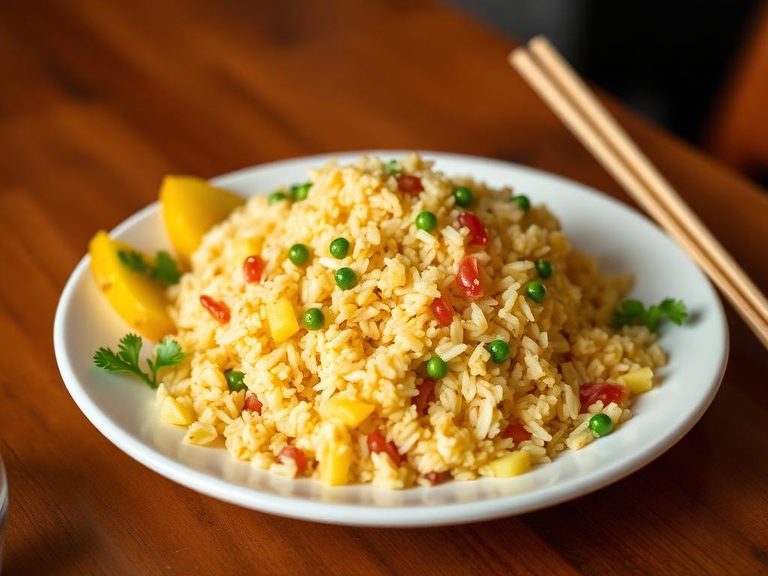
People love it for its vibrant, tropical sweetness that instantly brightens dishes and drinks, and for its incredible versatility—from topping pizzas and salads to blending into smoothies and cocktails.
⚠️ Watch-outs & how to enjoy it better
The natural sugars can cause a rapid blood-spike if consumed alone in large quantities, and the acidity may irritate sensitive mouths or digestive systems. To counteract, pair it with a source of protein or fat (like cottage cheese or nuts) to slow sugar absorption, and practice portion control. Those with oral allergy syndrome should be cautious.
Key benefits
- Excellent source of vitamin C, an antioxidant supporting immune function.
- Contains bromelain, a unique enzyme that aids in protein digestion.
- Provides manganese, essential for bone health and metabolism.
- Low in calories and fat, making it a light, hydrating snack or ingredient.
🍽️ Popular dishes
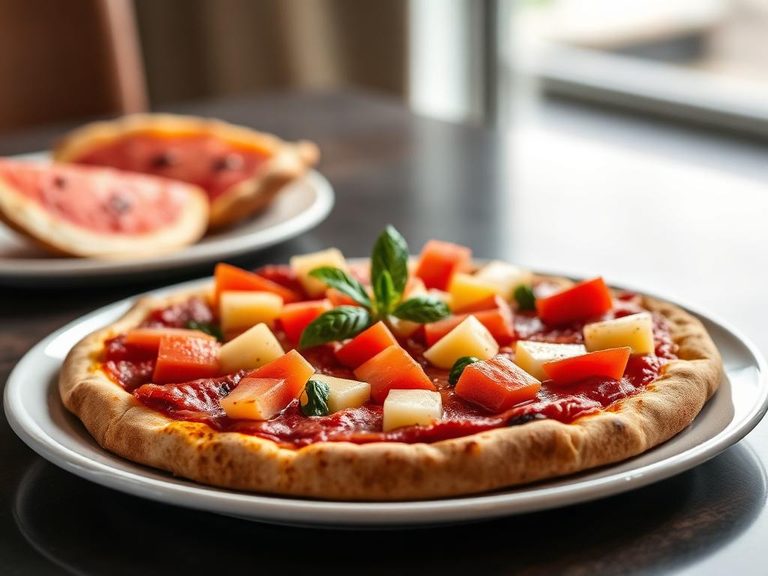
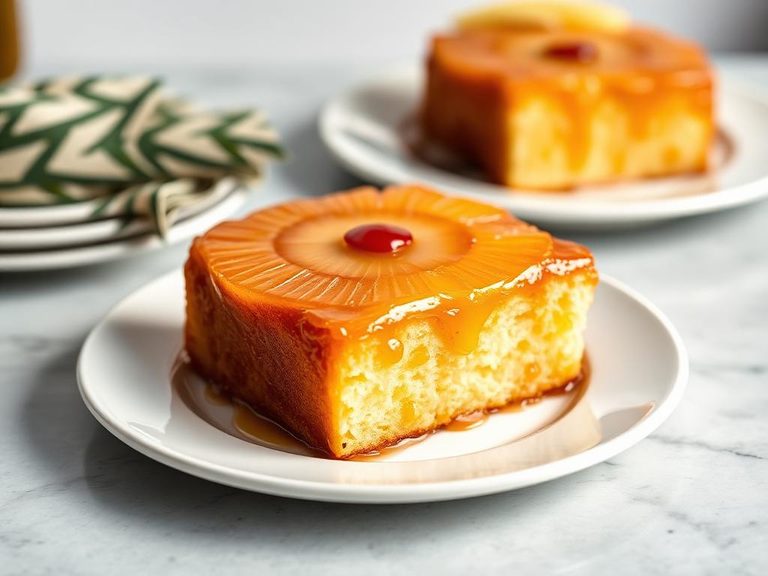
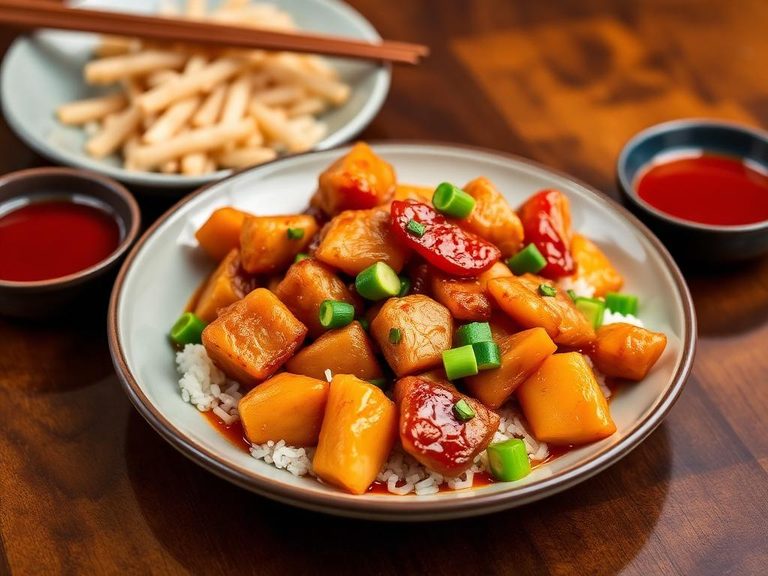
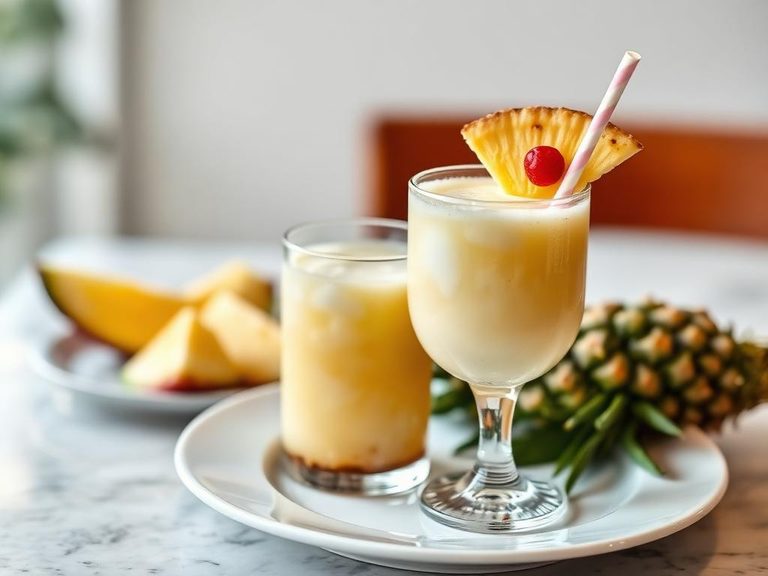
🌍 Where it's eaten
💡 Did you know?
It takes about two years for a single pineapple plant to grow just one fruit, and the individual 'eyes' on its skin are actually the remnants of individual flowers that have fused together.
Full nutrition (USDA data · scales with serving)
| Water | 83.5 g |
| Energy | 60.0 kcal |
| Energy | 251 kj |
| Protein | 0.42 g |
| Total lipid (fat) | 0.08 g |
| Ash | 0.30 g |
| Carbohydrate, by difference | 15.7 g |
| Fiber, total dietary | 0.80 g |
| Total Sugars | 14.4 g |
| Sucrose | 0.25 g |
| Glucose | 7.7 g |
| Fructose | 6.5 g |
| Calcium, Ca | 14.0 mg |
| Iron, Fe | 0.28 mg |
| Magnesium, Mg | 14.0 mg |
| Phosphorus, P | 6.0 mg |
| Potassium, K | 122 mg |
| Sodium, Na | 1.0 mg |
| Zinc, Zn | 0.10 mg |
| Copper, Cu | 0.09 mg |
| Manganese, Mn | 1.1 mg |
| Selenium, Se | 0.40 ug |
| Fluoride, F | 4.2 ug |
| Vitamin C, total ascorbic acid | 9.5 mg |
| Thiamin | 0.10 mg |
| Riboflavin | 0.02 mg |
| Niacin | 0.28 mg |
| Pantothenic acid | 0.10 mg |
| Vitamin B-6 | 0.07 mg |
| Folate, total | 5.0 ug |
| Folic acid | 0.00 ug |
| Folate, food | 5.0 ug |
| Folate, DFE | 5.0 ug |
| Choline, total | 4.8 mg |
| Vitamin B-12 | 0.00 ug |
| Vitamin B-12, added | 0.00 ug |
| Vitamin A, RAE | 2.0 ug |
| Retinol | 0.00 ug |
| Carotene, beta | 23.0 ug |
| Carotene, alpha | 0.00 ug |
| Cryptoxanthin, beta | 0.00 ug |
| Vitamin A, IU | 38.0 iu |
| Lycopene | 0.00 ug |
| Lutein + zeaxanthin | 0.00 ug |
| Vitamin E (alpha-tocopherol) | 0.01 mg |
| Vitamin E, added | 0.00 mg |
| Vitamin D (D2 + D3), International Units | 0.00 iu |
| Vitamin D (D2 + D3) | 0.00 ug |
| Vitamin K (phylloquinone) | 0.30 ug |
| Alcohol, ethyl | 0.00 g |
| Caffeine | 0.00 mg |
| Theobromine | 0.00 mg |
Fat & fatty acid profile (per 100g)
| Fatty acids, total saturated | 0.01 g |
| SFA 4:0 | 0.00 g |
| SFA 6:0 | 0.00 g |
| SFA 8:0 | 0.00 g |
| SFA 10:0 | 0.00 g |
| SFA 12:0 | 0.00 g |
| SFA 14:0 | 0.00 g |
| SFA 16:0 | 0.00 g |
| SFA 18:0 | 0.00 g |
| Fatty acids, total monounsaturated | 0.01 g |
| MUFA 16:1 | 0.00 g |
| MUFA 18:1 | 0.01 g |
| MUFA 20:1 | 0.00 g |
| MUFA 22:1 | 0.00 g |
| Fatty acids, total polyunsaturated | 0.03 g |
| PUFA 18:2 | 0.02 g |
| PUFA 18:3 | 0.01 g |
| PUFA 18:4 | 0.00 g |
| PUFA 20:4 | 0.00 g |
| PUFA 20:5 n-3 (EPA) | 0.00 g |
| PUFA 22:5 n-3 (DPA) | 0.00 g |
| PUFA 22:6 n-3 (DHA) | 0.00 g |
| Fatty acids, total trans | 0.00 g |
| Cholesterol | 0.00 mg |
Amino acid profile (per 100g)
| Tryptophan | 0.01 g |
| Threonine | 0.01 g |
| Isoleucine | 0.01 g |
| Leucine | 0.02 g |
| Lysine | 0.02 g |
| Methionine | 0.01 g |
| Cystine | 0.00 g |
| Phenylalanine | 0.01 g |
| Tyrosine | 0.01 g |
| Valine | 0.01 g |
| Arginine | 0.01 g |
| Histidine | 0.01 g |
| Alanine | 0.02 g |
| Aspartic acid | 0.10 g |
| Glutamic acid | 0.05 g |
| Glycine | 0.02 g |
| Proline | 0.01 g |
| Serine | 0.02 g |
FAQ
Is canned pineapple as healthy as fresh?
It retains most vitamins like vitamin C and the enzyme bromelain, but may have slightly less due to processing. It's a convenient, year-round alternative with a similar nutritional profile, especially when packed in juice.
What's the difference between 'juice pack' and 'heavy syrup'?
Juice pack pineapple is preserved in its own natural fruit juice, making it lower in added sugars and calories. Heavy syrup is a dense sugar-water solution, which significantly increases the sugar and calorie content.
Can I use the canned pineapple juice in the can?
Absolutely! The liquid is a flavorful blend of pineapple juice and water. It's perfect for drinking, using in smoothies, making salad dressings, or as a base for marinades and glazes.
Nutrient density (calculated · NRF9.3)
Nutrient Rich Foods index: beneficial nutrients (protein, fiber, vitamins, minerals) minus saturated fat, added sugar & sodium, per 100 kcal.
NRF9.3 index — Fulgoni, Keast & Drewnowski, 2009. Computed from USDA nutrients.
Weight-loss friendliness (composite index)
Energy density 0.60 kcal/g · 3% calories from protein · 0.8 g fiber · 14.4 g sugar per 100 g.
Composite of energy density (Rolls et al., 1999), protein & fiber satiety, minus sugar. A calculated heuristic — ranks satiety-per-calorie, not a clinical measure.
Dietary load (calculated from USDA values)
Potential renal acid load. Positive = acid-forming, negative = alkaline-forming.
Sodium-to-potassium ratio: 0.01 (lower is better — aim for ≤ 1)
Sodium:potassium per WHO potassium guidance. Computed from USDA nutrients.