

Peppers, sweet, red, frozen, chopped, unprepared
Whole food · Vegetables and Vegetable Products

Photo: Wikipedia
These are vibrant, ruby-red sweet peppers, flash-frozen at peak ripeness to lock in their crisp, juicy texture and naturally sweet, sun-kissed flavor. Nutritionally, they are a low-calorie powerhouse, delivering over 100% of your daily Vitamin C needs in a single serving, along with a notable dose of Vitamin A for eye health.
Calorie split: 18% protein · 74% carbs · 8% fat
↓ Full nutrition💚 Why it's loved
People adore them for their intense, concentrated sweetness that intensifies with cooking, and their incredible versatility—they add brilliant color and flavor to everything from quick stir-fries to slow-simmered stews.
⚠️ Watch-outs & how to enjoy it better
While generally well-tolerated, the natural sugars can contribute to blood sugar spikes if consumed in very large quantities alone. To counteract this, pair them with a source of protein (like chicken or beans) or healthy fat (like olive oil) to slow digestion and stabilize energy release.
Key benefits
- Exceptionally high in immune-boosting Vitamin C.
- Rich in antioxidant carotenoids like beta-carotene.
- Very low in calories and fat.
- Good source of dietary fiber.
- Provides essential vitamins A and B6.
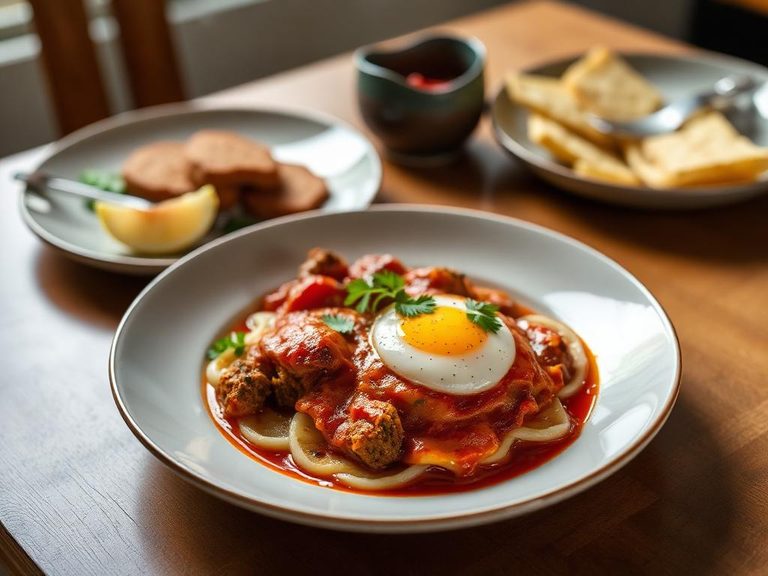
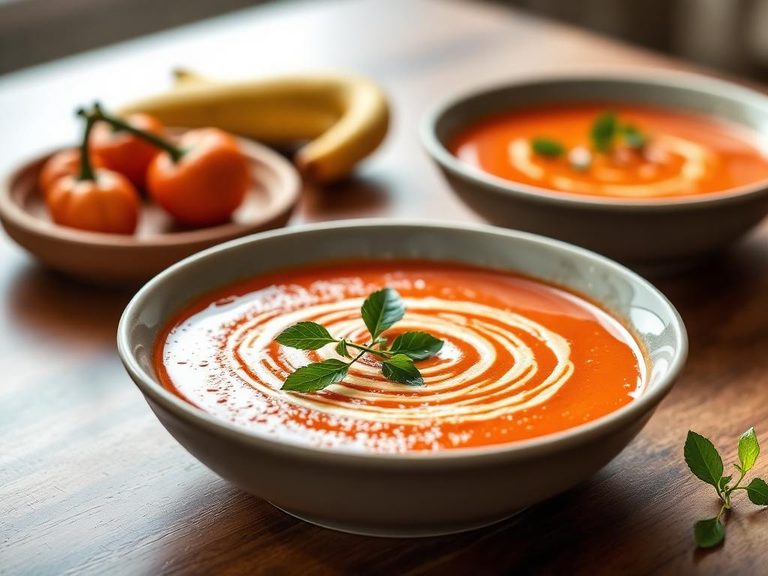
🍽️ Popular dishes
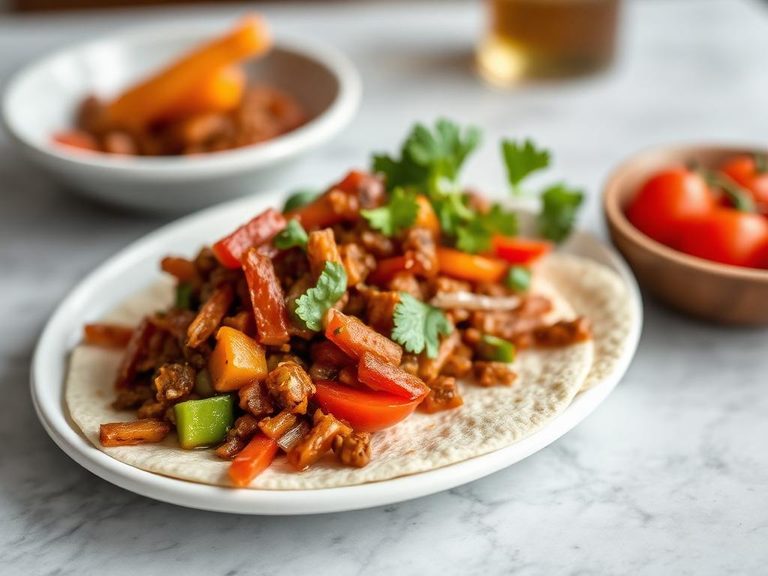
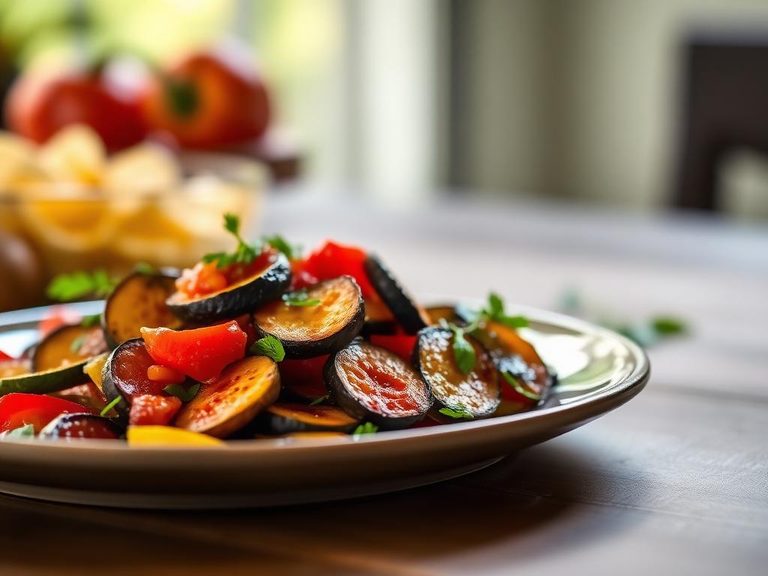
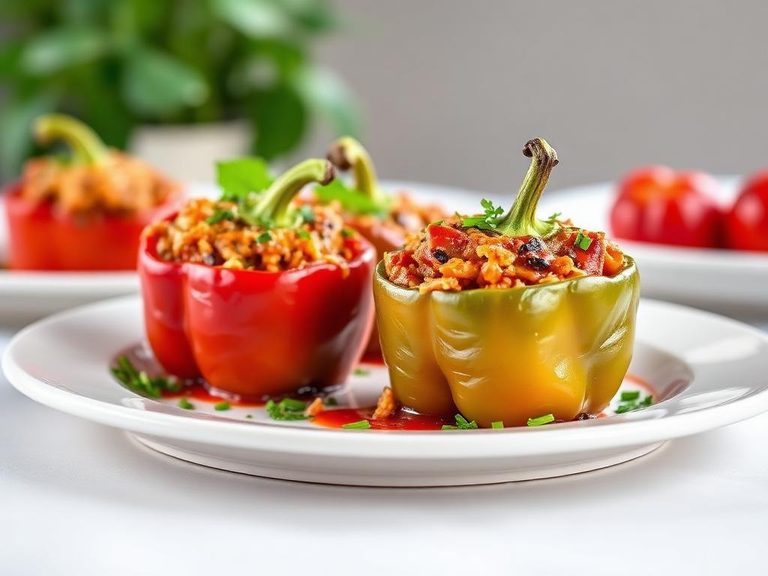
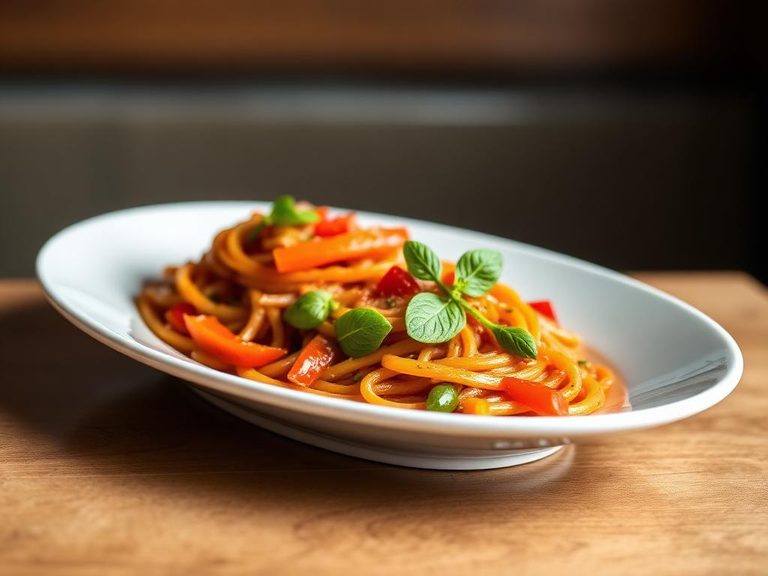
🌍 Where it's eaten
💡 Did you know?
Red bell peppers are simply green peppers that have been left on the vine to fully ripen, a process that converts their bitter compounds into sweet ones and dramatically increases their Vitamin C content.
Full nutrition (USDA data · scales with serving)
| Water | 94.0 g |
| Energy | 20.0 kcal |
| Energy | 84.0 kj |
| Protein | 1.1 g |
| Total lipid (fat) | 0.21 g |
| Ash | 0.30 g |
| Carbohydrate, by difference | 4.5 g |
| Fiber, total dietary | 1.6 g |
| Total Sugars | 3.3 g |
| Calcium, Ca | 9.0 mg |
| Iron, Fe | 0.62 mg |
| Magnesium, Mg | 8.0 mg |
| Phosphorus, P | 17.0 mg |
| Potassium, K | 91.0 mg |
| Sodium, Na | 5.0 mg |
| Zinc, Zn | 0.06 mg |
| Copper, Cu | 0.05 mg |
| Manganese, Mn | 0.12 mg |
| Selenium, Se | 0.20 ug |
| Vitamin C, total ascorbic acid | 58.7 mg |
| Thiamin | 0.07 mg |
| Riboflavin | 0.04 mg |
| Niacin | 1.4 mg |
| Pantothenic acid | 0.03 mg |
| Vitamin B-6 | 0.14 mg |
| Folate, total | 14.0 ug |
| Folic acid | 0.00 ug |
| Folate, food | 14.0 ug |
| Folate, DFE | 14.0 ug |
| Choline, total | 4.3 mg |
| Vitamin B-12 | 0.00 ug |
| Vitamin B-12, added | 0.00 ug |
| Vitamin A, RAE | 121 ug |
| Retinol | 0.00 ug |
| Carotene, beta | 1259 ug |
| Carotene, alpha | 15.0 ug |
| Cryptoxanthin, beta | 380 ug |
| Vitamin A, IU | 2428 iu |
| Lycopene | 0.00 ug |
| Lutein + zeaxanthin | 39.0 ug |
| Vitamin E (alpha-tocopherol) | 1.2 mg |
| Vitamin E, added | 0.00 mg |
| Vitamin D (D2 + D3), International Units | 0.00 iu |
| Vitamin D (D2 + D3) | 0.00 ug |
| Vitamin K (phylloquinone) | 3.8 ug |
| Alcohol, ethyl | 0.00 g |
| Caffeine | 0.00 mg |
| Theobromine | 0.00 mg |
Fat & fatty acid profile (per 100g)
| Fatty acids, total saturated | 0.03 g |
| SFA 4:0 | 0.00 g |
| SFA 6:0 | 0.00 g |
| SFA 8:0 | 0.00 g |
| SFA 10:0 | 0.00 g |
| SFA 12:0 | 0.00 g |
| SFA 14:0 | 0.00 g |
| SFA 16:0 | 0.02 g |
| SFA 18:0 | 0.01 g |
| Fatty acids, total monounsaturated | 0.01 g |
| MUFA 16:1 | 0.00 g |
| MUFA 18:1 | 0.01 g |
| MUFA 20:1 | 0.00 g |
| MUFA 22:1 | 0.00 g |
| Fatty acids, total polyunsaturated | 0.11 g |
| PUFA 18:2 | 0.10 g |
| PUFA 18:3 | 0.01 g |
| PUFA 18:4 | 0.00 g |
| PUFA 20:4 | 0.00 g |
| PUFA 20:5 n-3 (EPA) | 0.00 g |
| PUFA 22:5 n-3 (DPA) | 0.00 g |
| PUFA 22:6 n-3 (DHA) | 0.00 g |
| Fatty acids, total trans | 0.00 g |
| Cholesterol | 0.00 mg |
Amino acid profile (per 100g)
| Tryptophan | 0.01 g |
| Threonine | 0.04 g |
| Isoleucine | 0.04 g |
| Leucine | 0.06 g |
| Lysine | 0.05 g |
| Methionine | 0.01 g |
| Cystine | 0.02 g |
| Phenylalanine | 0.03 g |
| Tyrosine | 0.02 g |
| Valine | 0.04 g |
| Arginine | 0.05 g |
| Histidine | 0.02 g |
| Alanine | 0.04 g |
| Aspartic acid | 0.15 g |
| Glutamic acid | 0.14 g |
| Glycine | 0.04 g |
| Proline | 0.05 g |
| Serine | 0.04 g |
FAQ
How do frozen sweet peppers compare to fresh?
Frozen peppers are picked and frozen at peak ripeness, often retaining more nutrients than 'fresh' peppers that have traveled long distances. They are softer when thawed, making them ideal for cooked dishes but less ideal for raw applications like salads.
Do I need to thaw them before cooking?
For most cooked dishes like stir-fries, soups, or sauces, you can add them directly from the freezer. Thawing first is recommended if you plan to roast them or need them to brown properly in a pan.
Why are they sometimes called 'bell' peppers?
The name 'bell' refers to their blocky, bell-like shape. The term 'sweet' distinguishes them from hot chili peppers, as they lack the compound capsaicin that provides heat.
Nutrient density (calculated · NRF9.3)
Nutrient Rich Foods index: beneficial nutrients (protein, fiber, vitamins, minerals) minus saturated fat, added sugar & sodium, per 100 kcal.
NRF9.3 index — Fulgoni, Keast & Drewnowski, 2009. Computed from USDA nutrients.
Weight-loss friendliness (composite index)
Energy density 0.20 kcal/g · 22% calories from protein · 1.6 g fiber · 3.3 g sugar per 100 g.
Composite of energy density (Rolls et al., 1999), protein & fiber satiety, minus sugar. A calculated heuristic — ranks satiety-per-calorie, not a clinical measure.
Dietary load (calculated from USDA values)
Potential renal acid load. Positive = acid-forming, negative = alkaline-forming.
Sodium-to-potassium ratio: 0.05 (lower is better — aim for ≤ 1)
Sodium:potassium per WHO potassium guidance. Computed from USDA nutrients.