

Lamb, loin, separable lean and fat, trimmed to 1/4" fat, choice, cooked, roasted
Whole food · Lamb, Veal, and Game Products

Photo: Wikipedia
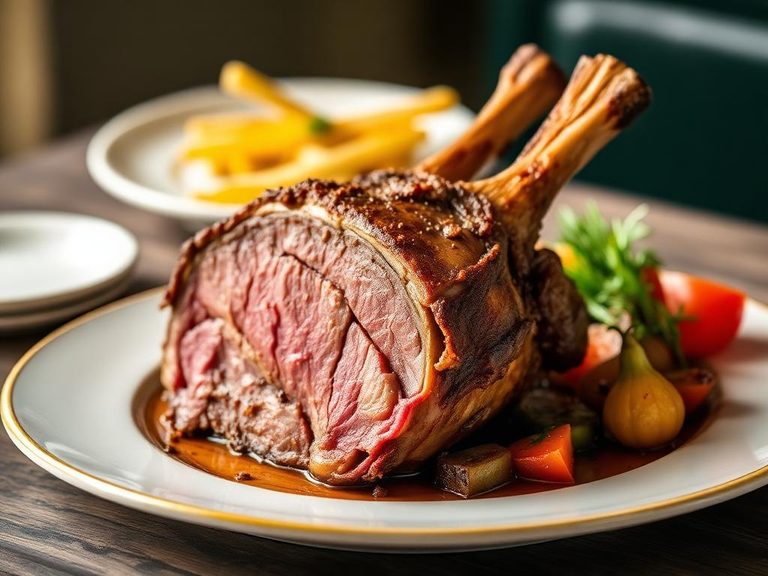
This is a succulent, richly flavored cut of lamb, roasted to a tender finish with a balanced ratio of lean meat to a thin layer of fat. Its texture is firm yet juicy, offering a robust, slightly gamey taste that deepens with cooking. Nutritionally, it's a powerhouse of high-quality protein and healthy fats, with virtually no carbohydrates.
Calorie split: 30% protein · 0% carbs · 70% fat
↓ Full nutrition💚 Why it's loved
People adore it for its deep, savory flavor and satisfying, melt-in-your-mouth texture that feels both luxurious and hearty. It's incredibly versatile, taking well to roasts, grills, and slow-cooked stews, and is a centerpiece in many celebratory meals across cultures.
⚠️ Watch-outs & how to enjoy it better
The high saturated fat content may be a concern for those monitoring cholesterol or heart health, and its strong flavor can be off-putting to some. To counteract, choose leaner cuts, trim fat thoroughly, and pair with fiber-rich vegetables like roasted root vegetables or a fresh salad to balance the meal and aid digestion.
Key benefits
- Excellent source of complete, high-quality protein for muscle maintenance.
- Rich in B vitamins, especially B12, crucial for nerve function and red blood cell formation.
- Provides essential minerals like zinc and iron, supporting immune health and oxygen transport.
- Contains conjugated linoleic acid (CLA), a fatty acid linked to potential health benefits.
- Naturally carb-free, making it suitable for low-carb and ketogenic diets.
🍽️ Popular dishes
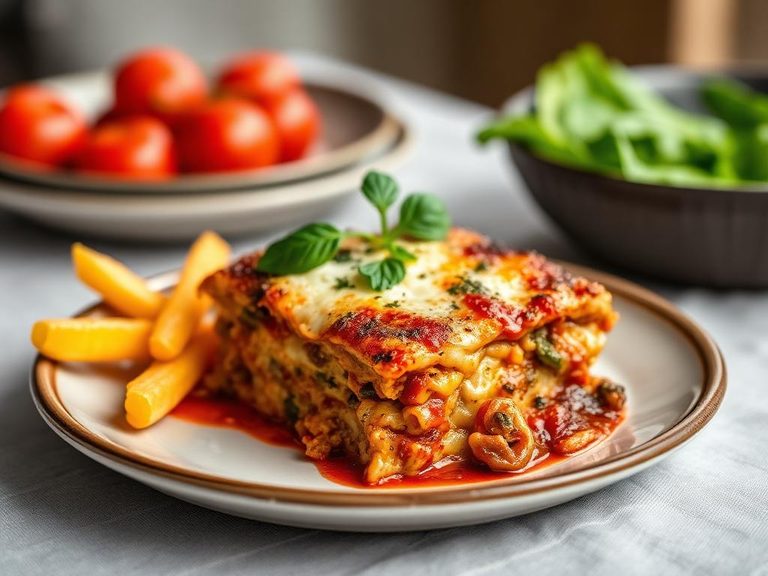
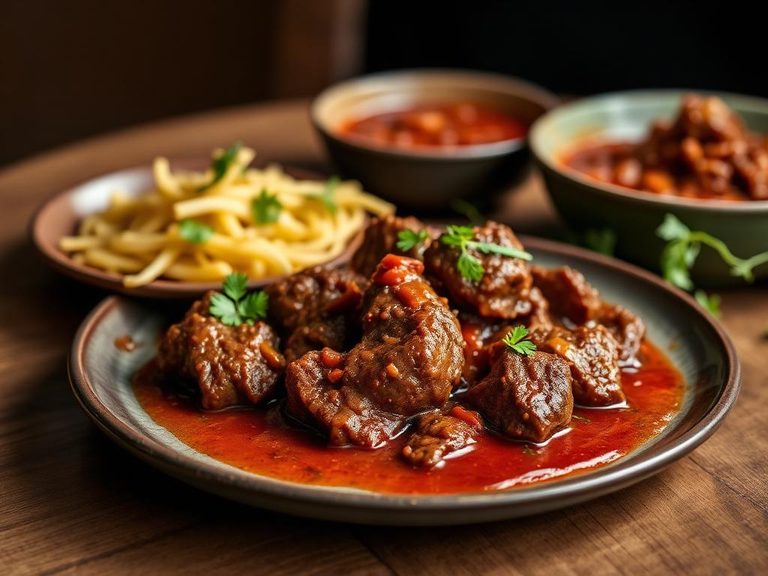
🌍 Where it's eaten
💡 Did you know?
Lamb was one of the first animals to be domesticated by humans, around 10,000 years ago, and its meat has been a staple in diets from the Fertile Crescent to the Scottish Highlands ever since.
Full nutrition (USDA data · scales with serving)
| Water | 52.5 g |
| Energy | 309 kcal |
| Energy | 1293 kj |
| Protein | 22.6 g |
| Total lipid (fat) | 23.6 g |
| Ash | 1.2 g |
| Carbohydrate, by difference | 0.00 g |
| Fiber, total dietary | 0.00 g |
| Total Sugars | 0.00 g |
| Calcium, Ca | 18.0 mg |
| Iron, Fe | 2.1 mg |
| Magnesium, Mg | 23.0 mg |
| Phosphorus, P | 180 mg |
| Potassium, K | 246 mg |
| Sodium, Na | 64.0 mg |
| Zinc, Zn | 3.4 mg |
| Copper, Cu | 0.12 mg |
| Manganese, Mn | 0.02 mg |
| Selenium, Se | 24.6 ug |
| Vitamin C, total ascorbic acid | 0.00 mg |
| Thiamin | 0.10 mg |
| Riboflavin | 0.24 mg |
| Niacin | 7.1 mg |
| Pantothenic acid | 0.65 mg |
| Vitamin B-6 | 0.11 mg |
| Folate, total | 19.0 ug |
| Folic acid | 0.00 ug |
| Folate, food | 19.0 ug |
| Folate, DFE | 19.0 ug |
| Choline, total | 88.4 mg |
| Betaine | 11.6 mg |
| Vitamin B-12 | 2.2 ug |
| Vitamin B-12, added | 0.00 ug |
| Vitamin A, RAE | 0.00 ug |
| Retinol | 0.00 ug |
| Carotene, beta | 0.00 ug |
| Carotene, alpha | 0.00 ug |
| Cryptoxanthin, beta | 0.00 ug |
| Vitamin A, IU | 0.00 iu |
| Lycopene | 0.00 ug |
| Lutein + zeaxanthin | 0.00 ug |
| Vitamin E (alpha-tocopherol) | 0.11 mg |
| Vitamin E, added | 0.00 mg |
| Vitamin D (D2 + D3), International Units | 2.0 iu |
| Vitamin D (D2 + D3) | 0.10 ug |
| Vitamin D3 (cholecalciferol) | 0.10 ug |
| Vitamin K (phylloquinone) | 4.7 ug |
| Vitamin K (Dihydrophylloquinone) | 0.00 ug |
| Alcohol, ethyl | 0.00 g |
| Caffeine | 0.00 mg |
| Theobromine | 0.00 mg |
Fat & fatty acid profile (per 100g)
| Fatty acids, total saturated | 10.2 g |
| SFA 4:0 | 0.00 g |
| SFA 6:0 | 0.00 g |
| SFA 8:0 | 0.00 g |
| SFA 10:0 | 0.06 g |
| SFA 12:0 | 0.10 g |
| SFA 14:0 | 0.93 g |
| SFA 16:0 | 5.2 g |
| SFA 18:0 | 3.2 g |
| Fatty acids, total monounsaturated | 9.7 g |
| MUFA 16:1 | 0.69 g |
| MUFA 18:1 | 8.7 g |
| MUFA 20:1 | 0.00 g |
| MUFA 22:1 | 0.00 g |
| Fatty acids, total polyunsaturated | 1.9 g |
| PUFA 18:2 | 1.4 g |
| PUFA 18:3 | 0.42 g |
| PUFA 18:4 | 0.00 g |
| PUFA 20:4 | 0.08 g |
| PUFA 20:5 n-3 (EPA) | 0.00 g |
| PUFA 22:5 n-3 (DPA) | 0.00 g |
| PUFA 22:6 n-3 (DHA) | 0.00 g |
| Cholesterol | 95.0 mg |
Amino acid profile (per 100g)
| Tryptophan | 0.26 g |
| Threonine | 0.96 g |
| Isoleucine | 1.1 g |
| Leucine | 1.8 g |
| Lysine | 2.0 g |
| Methionine | 0.58 g |
| Cystine | 0.27 g |
| Phenylalanine | 0.92 g |
| Tyrosine | 0.76 g |
| Valine | 1.2 g |
| Arginine | 1.3 g |
| Histidine | 0.71 g |
| Alanine | 1.4 g |
| Aspartic acid | 2.0 g |
| Glutamic acid | 3.3 g |
| Glycine | 1.1 g |
| Proline | 0.95 g |
| Serine | 0.84 g |
FAQ
Is lamb loin a lean cut of meat?
Yes, when trimmed to 1/4" fat, lamb loin is considered a relatively lean cut, especially compared to other lamb cuts like shoulder or rib. The remaining fat adds flavor and juiciness without being excessive.
How does the nutritional profile of roasted lamb loin compare to beef?
Roasted lamb loin is similar to lean beef in protein content but often has slightly more fat. It is typically richer in certain B vitamins and minerals like zinc, making it a nutrient-dense choice.
What's the best way to cook lamb loin to keep it tender?
Roasting at a moderate temperature (around 325°F/160°C) and not overcooking is key. Letting it rest after cooking allows the juices to redistribute, ensuring a tender and moist result.
Nutrient density (calculated · NRF9.3)
Nutrient Rich Foods index: beneficial nutrients (protein, fiber, vitamins, minerals) minus saturated fat, added sugar & sodium, per 100 kcal.
NRF9.3 index — Fulgoni, Keast & Drewnowski, 2009. Computed from USDA nutrients.
Weight-loss friendliness (composite index)
Energy density 3.09 kcal/g · 29% calories from protein · 0.0 g fiber · 0.0 g sugar per 100 g.
Composite of energy density (Rolls et al., 1999), protein & fiber satiety, minus sugar. A calculated heuristic — ranks satiety-per-calorie, not a clinical measure.
Dietary load (calculated from USDA values)
Potential renal acid load. Positive = acid-forming, negative = alkaline-forming.
Sodium-to-potassium ratio: 0.26 (lower is better — aim for ≤ 1)
Sodium:potassium per WHO potassium guidance. Computed from USDA nutrients.