

Lamb, loin, separable lean and fat, trimmed to 1/4" fat, choice, cooked, broiled
Whole food · Lamb, Veal, and Game Products

Photo: Wikipedia
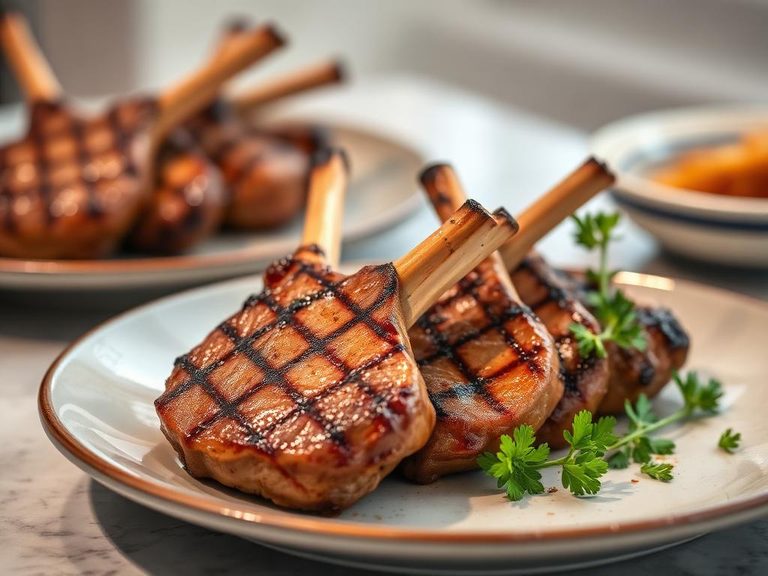
This is a succulent cut of lamb loin, broiled to perfection with a thin, flavorful layer of fat that bastes the meat as it cooks. The result is a tender, juicy texture with a rich, savory flavor that is distinctly lamb—earthy, slightly sweet, and deeply satisfying. Nutritionally, it is a powerhouse of high-quality protein and healthy fats, providing substantial energy with zero carbohydrates.
Calorie split: 33% protein · 0% carbs · 67% fat
↓ Full nutrition💚 Why it's loved
People adore this cut for its luxurious balance of tenderness and robust flavor, where the broiled fat creates a delightful crust while keeping the interior moist. It is a centerpiece of celebratory meals and is prized for its versatility, easily standing up to bold marinades or shining with simple seasoning.
⚠️ Watch-outs & how to enjoy it better
The high fat content, while flavorful, can be a concern for those monitoring saturated fat intake or calorie density. To counteract this, practice strict portion control (aim for a 3-4 oz serving) and pair it with fiber-rich, non-starchy vegetables like roasted asparagus or a leafy green salad to add volume and balance the meal.
Key benefits
- Excellent source of complete protein for muscle repair and satiety
- Rich in bioavailable iron and zinc for immune and metabolic health
- Provides healthy fats including conjugated linoleic acid (CLA)
- Naturally zero-carb, suitable for ketogenic and low-carb diets
- Contains B vitamins, particularly B12, for nerve function and energy
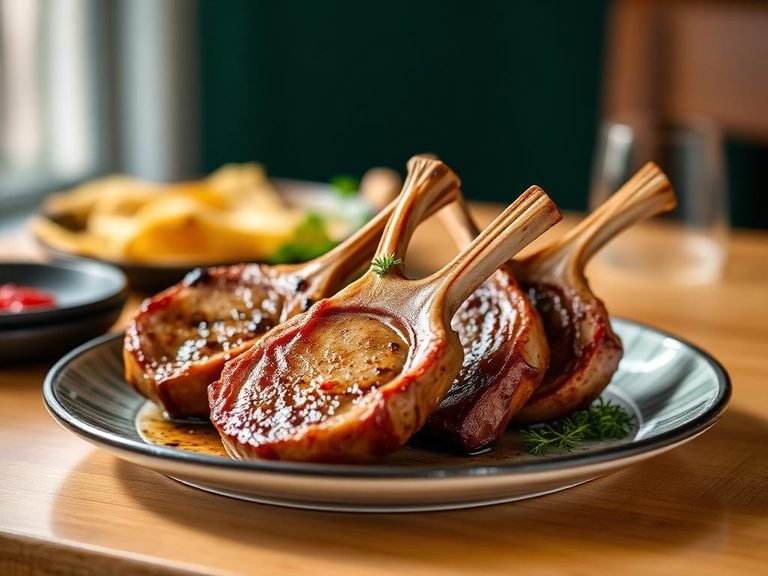
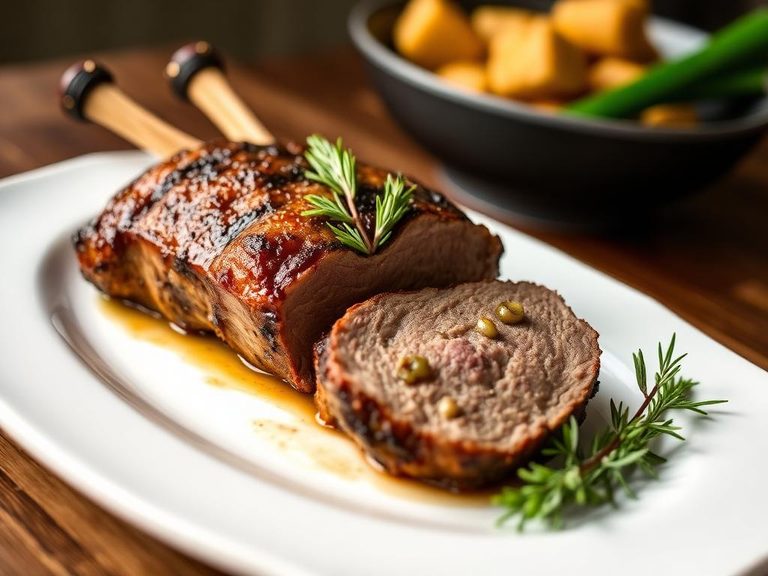
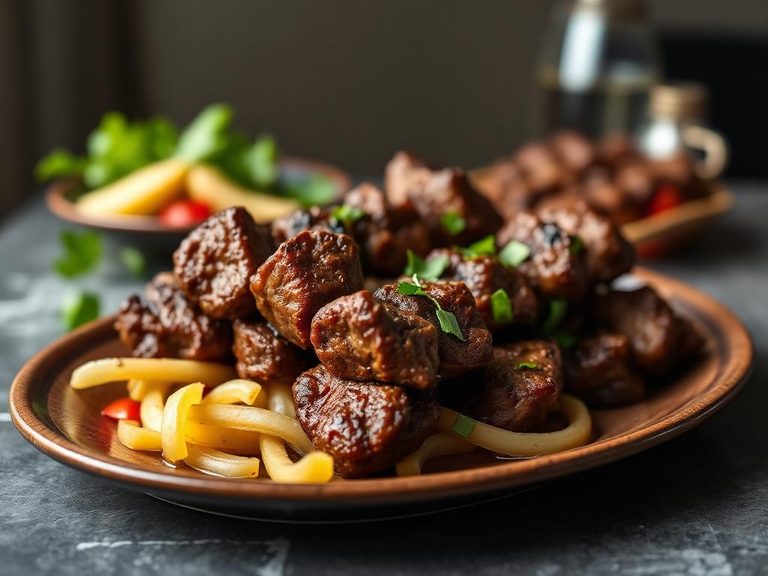
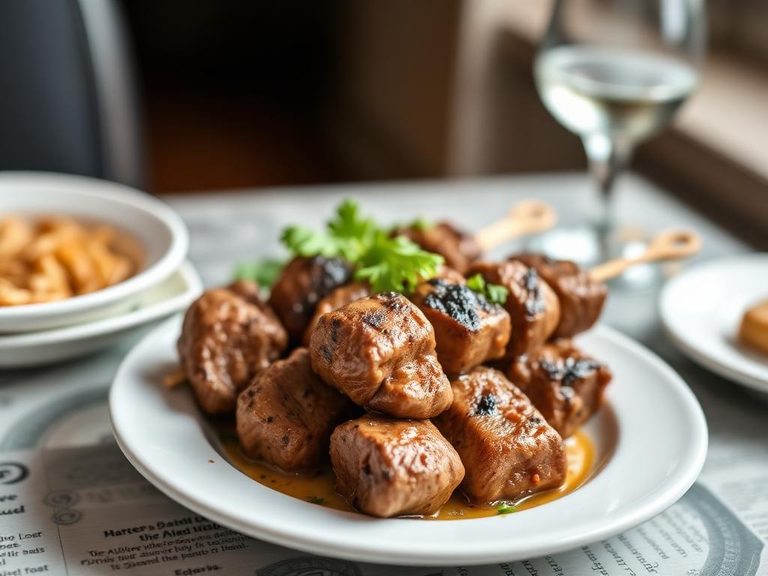
🍽️ Popular dishes
🌍 Where it's eaten
💡 Did you know?
Lamb loin is one of the most tender cuts on the animal, but it's also one of the smallest; a single lamb yields only about two pounds of this prized meat, making it a true delicacy.
Full nutrition (USDA data · scales with serving)
| Water | 51.6 g |
| Energy | 316 kcal |
| Energy | 1322 kj |
| Protein | 25.2 g |
| Total lipid (fat) | 23.1 g |
| Ash | 1.1 g |
| Carbohydrate, by difference | 0.00 g |
| Fiber, total dietary | 0.00 g |
| Total Sugars | 0.00 g |
| Calcium, Ca | 20.0 mg |
| Iron, Fe | 1.8 mg |
| Magnesium, Mg | 24.0 mg |
| Phosphorus, P | 196 mg |
| Potassium, K | 327 mg |
| Sodium, Na | 77.0 mg |
| Zinc, Zn | 3.5 mg |
| Copper, Cu | 0.13 mg |
| Manganese, Mn | 0.02 mg |
| Selenium, Se | 27.4 ug |
| Vitamin C, total ascorbic acid | 0.00 mg |
| Thiamin | 0.10 mg |
| Riboflavin | 0.25 mg |
| Niacin | 7.1 mg |
| Pantothenic acid | 0.64 mg |
| Vitamin B-6 | 0.13 mg |
| Folate, total | 18.0 ug |
| Folic acid | 0.00 ug |
| Folate, food | 18.0 ug |
| Folate, DFE | 18.0 ug |
| Choline, total | 93.8 mg |
| Betaine | 12.3 mg |
| Vitamin B-12 | 2.5 ug |
| Vitamin B-12, added | 0.00 ug |
| Vitamin A, RAE | 0.00 ug |
| Retinol | 0.00 ug |
| Carotene, beta | 0.00 ug |
| Carotene, alpha | 0.00 ug |
| Cryptoxanthin, beta | 0.00 ug |
| Vitamin A, IU | 0.00 iu |
| Lycopene | 0.00 ug |
| Lutein + zeaxanthin | 0.00 ug |
| Vitamin E (alpha-tocopherol) | 0.13 mg |
| Vitamin E, added | 0.00 mg |
| Vitamin D (D2 + D3), International Units | 2.0 iu |
| Vitamin D (D2 + D3) | 0.10 ug |
| Vitamin D3 (cholecalciferol) | 0.10 ug |
| Vitamin K (phylloquinone) | 4.8 ug |
| Vitamin K (Dihydrophylloquinone) | 0.00 ug |
| Alcohol, ethyl | 0.00 g |
| Caffeine | 0.00 mg |
| Theobromine | 0.00 mg |
Fat & fatty acid profile (per 100g)
| Fatty acids, total saturated | 9.8 g |
| SFA 4:0 | 0.00 g |
| SFA 6:0 | 0.00 g |
| SFA 8:0 | 0.00 g |
| SFA 10:0 | 0.06 g |
| SFA 12:0 | 0.10 g |
| SFA 14:0 | 0.92 g |
| SFA 16:0 | 5.0 g |
| SFA 18:0 | 3.1 g |
| Fatty acids, total monounsaturated | 9.7 g |
| MUFA 16:1 | 0.67 g |
| MUFA 18:1 | 8.8 g |
| MUFA 20:1 | 0.00 g |
| MUFA 22:1 | 0.00 g |
| Fatty acids, total polyunsaturated | 1.7 g |
| PUFA 18:2 | 1.3 g |
| PUFA 18:3 | 0.35 g |
| PUFA 18:4 | 0.00 g |
| PUFA 20:4 | 0.07 g |
| PUFA 20:5 n-3 (EPA) | 0.00 g |
| PUFA 22:5 n-3 (DPA) | 0.00 g |
| PUFA 22:6 n-3 (DHA) | 0.00 g |
| Cholesterol | 100 mg |
Amino acid profile (per 100g)
| Tryptophan | 0.29 g |
| Threonine | 1.1 g |
| Isoleucine | 1.2 g |
| Leucine | 2.0 g |
| Lysine | 2.2 g |
| Methionine | 0.65 g |
| Cystine | 0.30 g |
| Phenylalanine | 1.0 g |
| Tyrosine | 0.85 g |
| Valine | 1.4 g |
| Arginine | 1.5 g |
| Histidine | 0.80 g |
| Alanine | 1.5 g |
| Aspartic acid | 2.2 g |
| Glutamic acid | 3.7 g |
| Glycine | 1.2 g |
| Proline | 1.1 g |
| Serine | 0.94 g |
FAQ
How is broiled lamb loin different from grilled lamb?
Broiling uses high, direct heat from above (like an upside-down grill), which creates a fast, intense sear and caramelization on the surface. Grilling typically uses heat from below, which can impart a smokier flavor from charcoal or wood. Both methods are excellent for this cut, but broiling is often faster and more controlled.
What's the best way to ensure lamb loin isn't tough?
The key is not to overcook it. Lamb loin is best served medium-rare to medium (135-145°F internal temperature). Use a meat thermometer, and let the meat rest for 5-10 minutes after cooking to allow the juices to redistribute, ensuring every bite is tender.
Is the fat on lamb loin healthy?
The fat on lamb loin is a mix of saturated and monounsaturated fats, and it contains beneficial nutrients like CLA. While it's calorie-dense, it's also a source of flavor and satiety. For a balanced diet, enjoy it in moderation and trim excess fat if you prefer a leaner meal.
Nutrient density (calculated · NRF9.3)
Nutrient Rich Foods index: beneficial nutrients (protein, fiber, vitamins, minerals) minus saturated fat, added sugar & sodium, per 100 kcal.
NRF9.3 index — Fulgoni, Keast & Drewnowski, 2009. Computed from USDA nutrients.
Weight-loss friendliness (composite index)
Energy density 3.16 kcal/g · 32% calories from protein · 0.0 g fiber · 0.0 g sugar per 100 g.
Composite of energy density (Rolls et al., 1999), protein & fiber satiety, minus sugar. A calculated heuristic — ranks satiety-per-calorie, not a clinical measure.
Dietary load (calculated from USDA values)
Potential renal acid load. Positive = acid-forming, negative = alkaline-forming.
Sodium-to-potassium ratio: 0.24 (lower is better — aim for ≤ 1)
Sodium:potassium per WHO potassium guidance. Computed from USDA nutrients.