

KFC, Fried Chicken, EXTRA CRISPY, Drumstick, meat and skin with breading
Whole food · Fast Foods

Photo: Wikipedia
A KFC Extra Crispy drumstick is a chicken leg quarter, deep-fried to achieve a thick, craggy, and exceptionally crunchy coating that shatters with each bite. The interior meat is juicy and savory, protected by the seasoned breading. Nutritionally, it's a high-protein, high-fat item, with the breading contributing the majority of its carbohydrate content.
Calorie split: 30% protein · 12% carbs · 58% fat
↓ Full nutrition💚 Why it's loved
People adore the textural contrast between the shatteringly crisp, seasoned breading and the tender, juicy chicken beneath. It's a iconic comfort food, deeply tied to American fast-food culture and satisfying a craving for savory, salty, and fatty flavors.
⚠️ Watch-outs & how to enjoy it better
This is a high-calorie, high-fat, and high-sodium food, with the refined breading offering little fiber. To counteract this, practice strict portion control (e.g., one drumstick as a treat), pair it with a large, fiber-rich side salad or steamed vegetables to increase fullness and slow digestion, and be mindful of sodium intake for the rest of the day.
Key benefits
- Excellent source of complete protein (20.6g per 100g)
- Provides essential minerals like phosphorus and selenium
- The skin and fat offer a dense source of caloric energy
- A familiar, palatable food that can be part of a flexible diet
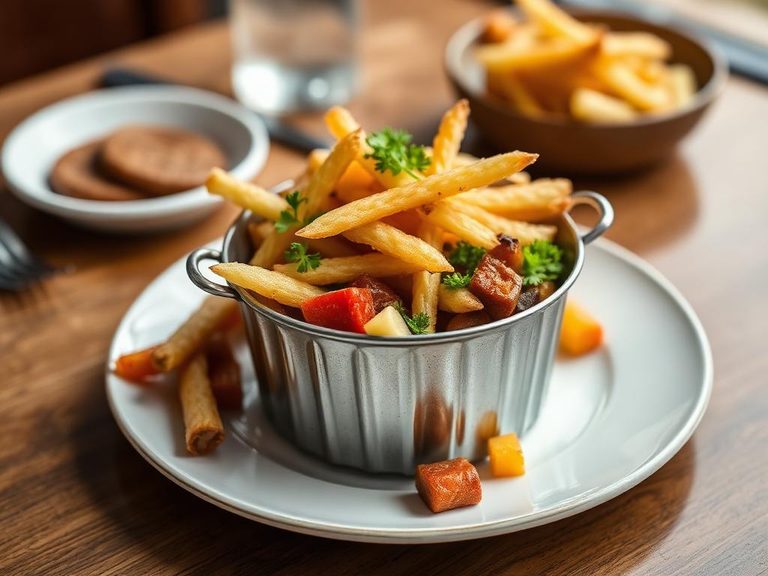
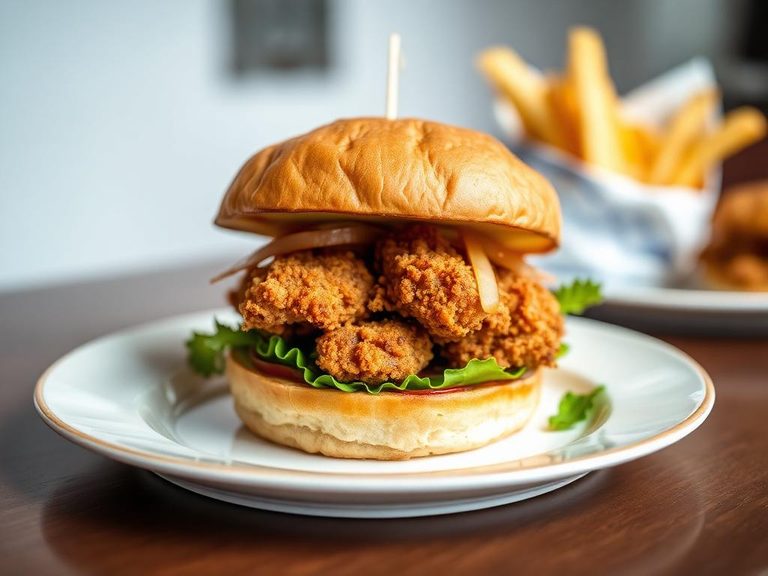
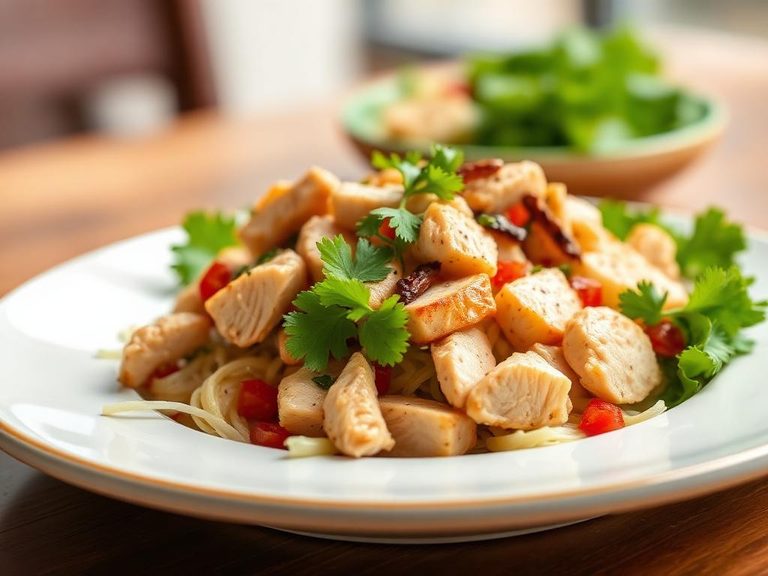
🍽️ Popular dishes


🌍 Where it's eaten
💡 Did you know?
KFC's 'Extra Crispy' recipe was developed in the 1970s as a direct competitor to Popeyes' crunchier style, using a different pressure fryer and a more heavily seasoned, thicker batter.
Full nutrition (USDA data · scales with serving)
| Water | 51.4 g |
| Energy | 274 kcal |
| Energy | 1146 kj |
| Protein | 20.6 g |
| Total lipid (fat) | 17.7 g |
| Ash | 2.4 g |
| Carbohydrate, by difference | 8.0 g |
| Calcium, Ca | 25.0 mg |
| Iron, Fe | 0.91 mg |
| Magnesium, Mg | 21.0 mg |
| Phosphorus, P | 198 mg |
| Potassium, K | 237 mg |
| Sodium, Na | 632 mg |
| Zinc, Zn | 1.8 mg |
| Copper, Cu | 0.41 mg |
| Manganese, Mn | 0.14 mg |
| Selenium, Se | 24.2 ug |
| Thiamin | 0.04 mg |
| Riboflavin | 0.20 mg |
| Niacin | 4.6 mg |
| Pantothenic acid | 1.1 mg |
| Vitamin B-6 | 0.20 mg |
| Vitamin B-12 | 0.54 ug |
| Retinol | 19.0 ug |
Fat & fatty acid profile (per 100g)
| Fatty acids, total saturated | 3.9 g |
| SFA 4:0 | 0.00 g |
| SFA 6:0 | 0.00 g |
| SFA 8:0 | 0.01 g |
| SFA 10:0 | 0.00 g |
| SFA 12:0 | 0.01 g |
| SFA 14:0 | 0.06 g |
| SFA 15:0 | 0.01 g |
| SFA 16:0 | 2.9 g |
| SFA 17:0 | 0.02 g |
| SFA 18:0 | 0.86 g |
| SFA 20:0 | 0.03 g |
| SFA 22:0 | 0.03 g |
| SFA 24:0 | 0.01 g |
| Fatty acids, total monounsaturated | 6.0 g |
| MUFA 14:1 | 0.02 g |
| MUFA 15:1 | 0.00 g |
| MUFA 16:1 | 0.66 g |
| MUFA 16:1 c | 0.66 g |
| MUFA 17:1 | 0.01 g |
| MUFA 18:1 | 5.3 g |
| MUFA 18:1 c | 5.2 g |
| MUFA 20:1 | 0.07 g |
| MUFA 22:1 | 0.00 g |
| MUFA 22:1 c | 0.00 g |
| MUFA 24:1 c | 0.01 g |
| Fatty acids, total polyunsaturated | 6.4 g |
| PUFA 18:2 | 5.9 g |
| PUFA 18:2 n-6 c,c | 5.8 g |
| PUFA 18:2 CLAs | 0.02 g |
| PUFA 18:3 | 0.30 g |
| PUFA 18:3 n-3 c,c,c (ALA) | 0.28 g |
| PUFA 18:3 n-6 c,c,c | 0.02 g |
| PUFA 18:4 | 0.00 g |
| PUFA 20:2 n-6 c,c | 0.02 g |
| PUFA 20:3 | 0.03 g |
| PUFA 20:3 n-3 | 0.00 g |
| PUFA 20:3 n-6 | 0.03 g |
| PUFA 20:4 | 0.07 g |
| PUFA 20:5 n-3 (EPA) | 0.00 g |
| PUFA 22:4 | 0.02 g |
| PUFA 22:5 n-3 (DPA) | 0.01 g |
| PUFA 22:6 n-3 (DHA) | 0.00 g |
| Fatty acids, total trans | 0.11 g |
| Fatty acids, total trans-monoenoic | 0.05 g |
| TFA 16:1 t | 0.00 g |
| TFA 18:1 t | 0.05 g |
| TFA 22:1 t | 0.00 g |
| TFA 18:2 t not further defined | 0.06 g |
| Fatty acids, total trans-polyenoic | 0.06 g |
| Cholesterol | 109 mg |
Amino acid profile (per 100g)
| Tryptophan | 0.16 g |
| Threonine | 0.68 g |
| Isoleucine | 0.60 g |
| Leucine | 1.3 g |
| Lysine | 0.90 g |
| Methionine | 0.30 g |
| Cystine | 0.24 g |
| Phenylalanine | 0.79 g |
| Tyrosine | 0.63 g |
| Valine | 0.75 g |
| Arginine | 1.2 g |
| Histidine | 0.49 g |
| Alanine | 1.2 g |
| Aspartic acid | 1.4 g |
| Glutamic acid | 4.8 g |
| Glycine | 1.7 g |
| Proline | 1.7 g |
| Serine | 0.80 g |
| Hydroxyproline | 0.54 g |
FAQ
How does the nutrition compare to the Original Recipe?
The Extra Crispy coating is thicker and absorbs more oil during frying, resulting in higher calories, fat, and carbohydrates compared to the Original Recipe, which has a lighter, less greasy breading.
Is the skin the healthiest part to eat?
The skin contains most of the added fat and calories from frying. Removing it reduces the fat content significantly, though it also removes much of the signature flavor and crunch.
Can this be part of a balanced diet?
Yes, in moderation. It should be viewed as an occasional indulgence. Balancing it with nutrient-dense, low-calorie foods like vegetables and controlling overall daily sodium and fat intake is key.
Nutrient density (calculated · NRF9.3)
Nutrient Rich Foods index: beneficial nutrients (protein, fiber, vitamins, minerals) minus saturated fat, added sugar & sodium, per 100 kcal.
NRF9.3 index — Fulgoni, Keast & Drewnowski, 2009. Computed from USDA nutrients.
Weight-loss friendliness (composite index)
Energy density 2.74 kcal/g · 30% calories from protein · 0.0 g fiber · 0.0 g sugar per 100 g.
Composite of energy density (Rolls et al., 1999), protein & fiber satiety, minus sugar. A calculated heuristic — ranks satiety-per-calorie, not a clinical measure.
Dietary load (calculated from USDA values)
Potential renal acid load. Positive = acid-forming, negative = alkaline-forming.
Sodium-to-potassium ratio: 2.67 (lower is better — aim for ≤ 1)
Sodium:potassium per WHO potassium guidance. Computed from USDA nutrients.