

Grapefruit, raw, white, all areas
Whole food · Fruits and Fruit Juices
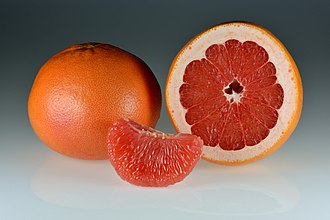
Photo: Wikipedia
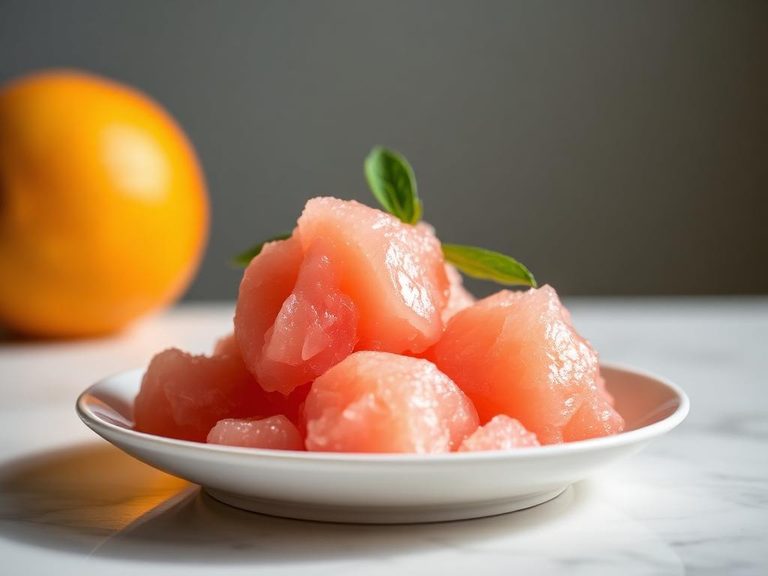
The white grapefruit is a citrus powerhouse with a pale, creamy-yellow rind and flesh that offers a bold, tart, and slightly bitter flavor. Its juicy, segmented texture is refreshing, making it a classic breakfast fruit. Nutritionally, it's exceptionally low in calories and provides a good source of vitamin C and fiber.
Calorie split: 7% protein · 90% carbs · 2% fat
↓ Full nutrition💚 Why it's loved
People love it for its vibrant, palate-cleansing tartness that cuts through richness and wakes up the senses. It's a versatile fruit, enjoyed simply on its own, squeezed into fresh juice, or used to add a bright, acidic note to both sweet and savory dishes.
⚠️ Watch-outs & how to enjoy it better
Its strong tartness and bitterness can be overwhelming for some palates, and it contains compounds that can interact with certain medications (like statins and some blood pressure drugs). To enjoy it safely, consult a doctor if on medication, and consider pairing it with a source of fat or protein (like yogurt or nuts) to balance the flavor and moderate blood sugar response.
Key benefits
- Excellent source of immune-supporting vitamin C
- Very low in calories and fat
- Provides dietary fiber for digestive health
- High water content aids hydration
- Contains antioxidants like lycopene and naringenin
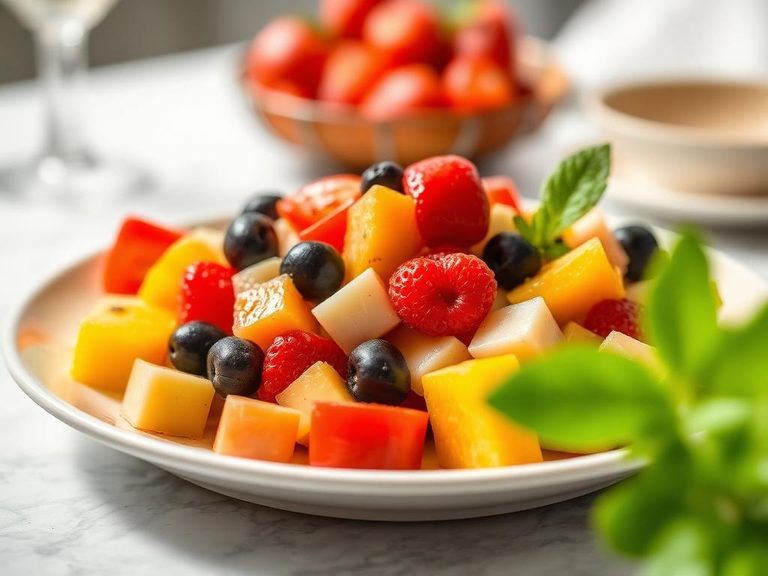
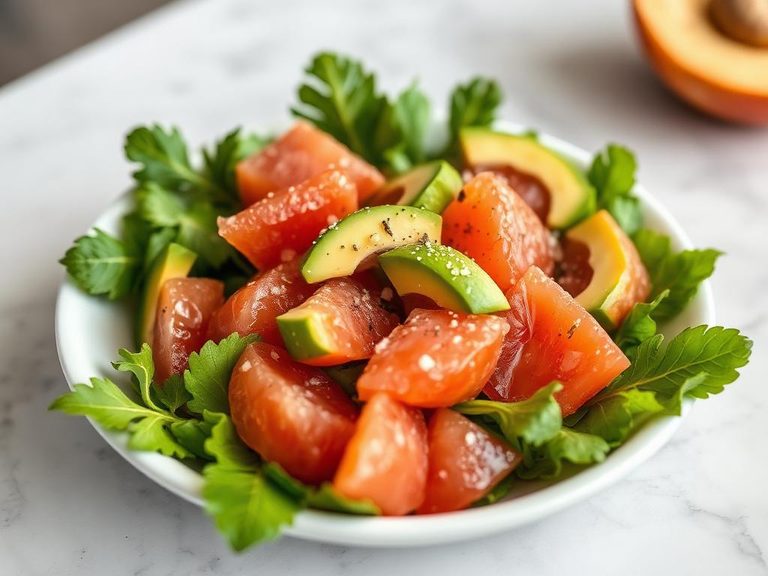
🍽️ Popular dishes
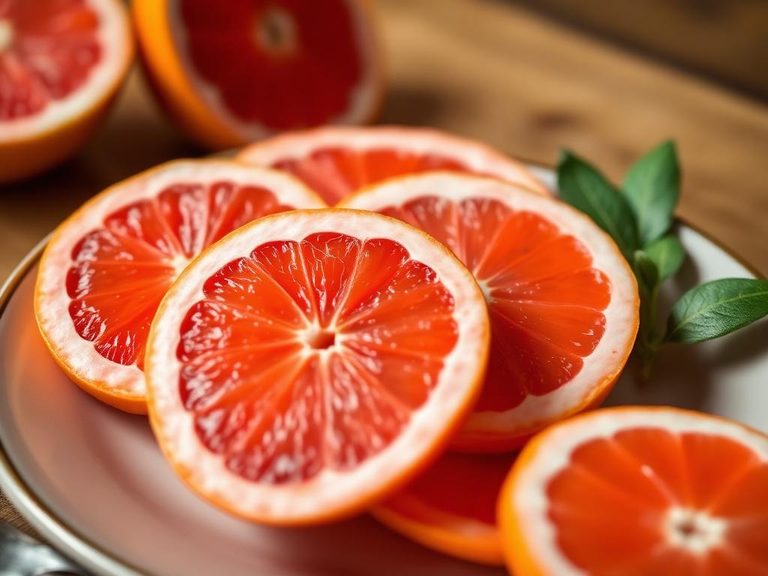
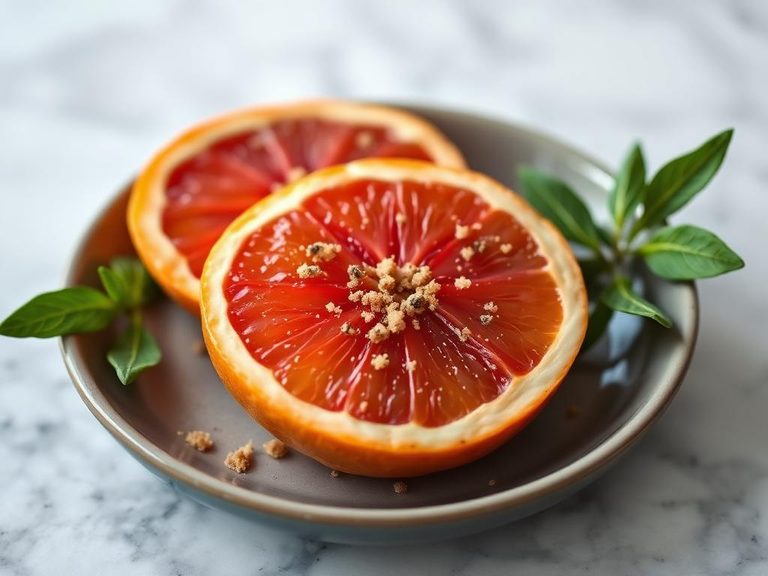
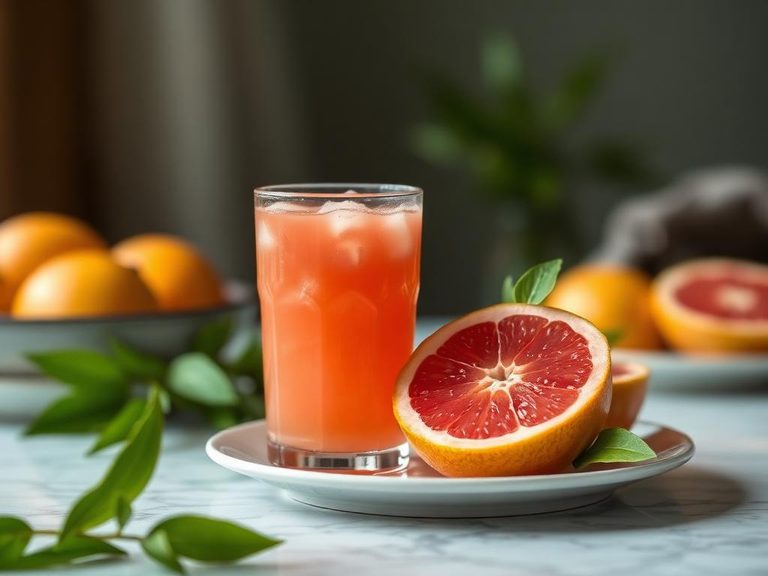
🌍 Where it's eaten
💡 Did you know?
The white grapefruit's characteristic bitterness comes from a flavonoid called naringin, which is so potent that it's used as a standard for measuring bitterness in food science.
Full nutrition (USDA data · scales with serving)
| Water | 90.5 g |
| Energy | 33.0 kcal |
| Energy | 138 kj |
| Protein | 0.69 g |
| Total lipid (fat) | 0.10 g |
| Ash | 0.33 g |
| Carbohydrate, by difference | 8.4 g |
| Fiber, total dietary | 1.1 g |
| Total Sugars | 7.3 g |
| Calcium, Ca | 12.0 mg |
| Iron, Fe | 0.06 mg |
| Magnesium, Mg | 9.0 mg |
| Phosphorus, P | 8.0 mg |
| Potassium, K | 148 mg |
| Sodium, Na | 0.00 mg |
| Zinc, Zn | 0.07 mg |
| Copper, Cu | 0.05 mg |
| Manganese, Mn | 0.01 mg |
| Selenium, Se | 1.4 ug |
| Vitamin C, total ascorbic acid | 33.3 mg |
| Thiamin | 0.04 mg |
| Riboflavin | 0.02 mg |
| Niacin | 0.27 mg |
| Pantothenic acid | 0.28 mg |
| Vitamin B-6 | 0.04 mg |
| Folate, total | 10.0 ug |
| Folic acid | 0.00 ug |
| Folate, food | 10.0 ug |
| Folate, DFE | 10.0 ug |
| Choline, total | 7.7 mg |
| Vitamin B-12 | 0.00 ug |
| Vitamin B-12, added | 0.00 ug |
| Vitamin A, RAE | 2.0 ug |
| Retinol | 0.00 ug |
| Carotene, beta | 14.0 ug |
| Carotene, alpha | 8.0 ug |
| Cryptoxanthin, beta | 3.0 ug |
| Vitamin A, IU | 33.0 iu |
| Lycopene | 0.00 ug |
| Lutein + zeaxanthin | 10.0 ug |
| Vitamin E (alpha-tocopherol) | 0.13 mg |
| Vitamin E, added | 0.00 mg |
| Vitamin D (D2 + D3), International Units | 0.00 iu |
| Vitamin D (D2 + D3) | 0.00 ug |
| Vitamin K (phylloquinone) | 0.00 ug |
| Alcohol, ethyl | 0.00 g |
| Caffeine | 0.00 mg |
| Theobromine | 0.00 mg |
Fat & fatty acid profile (per 100g)
| Fatty acids, total saturated | 0.01 g |
| SFA 4:0 | 0.00 g |
| SFA 6:0 | 0.00 g |
| SFA 8:0 | 0.00 g |
| SFA 10:0 | 0.00 g |
| SFA 12:0 | 0.00 g |
| SFA 14:0 | 0.00 g |
| SFA 16:0 | 0.01 g |
| SFA 18:0 | 0.00 g |
| Fatty acids, total monounsaturated | 0.01 g |
| MUFA 16:1 | 0.00 g |
| MUFA 18:1 | 0.01 g |
| MUFA 20:1 | 0.00 g |
| MUFA 22:1 | 0.00 g |
| Fatty acids, total polyunsaturated | 0.02 g |
| PUFA 18:2 | 0.02 g |
| PUFA 18:3 | 0.01 g |
| PUFA 18:4 | 0.00 g |
| PUFA 20:4 | 0.00 g |
| PUFA 20:5 n-3 (EPA) | 0.00 g |
| PUFA 22:5 n-3 (DPA) | 0.00 g |
| PUFA 22:6 n-3 (DHA) | 0.00 g |
| Fatty acids, total trans | 0.00 g |
| Cholesterol | 0.00 mg |
| Phytosterols | 17.0 mg |
Amino acid profile (per 100g)
| Tryptophan | 0.01 g |
| Threonine | 0.01 g |
| Isoleucine | 0.01 g |
| Leucine | 0.01 g |
| Lysine | 0.02 g |
| Methionine | 0.01 g |
| Cystine | 0.01 g |
| Phenylalanine | 0.04 g |
| Tyrosine | 0.01 g |
| Valine | 0.01 g |
| Arginine | 0.08 g |
| Histidine | 0.01 g |
| Alanine | 0.02 g |
| Aspartic acid | 0.12 g |
| Glutamic acid | 0.18 g |
| Glycine | 0.01 g |
| Proline | 0.06 g |
| Serine | 0.03 g |
FAQ
Is white grapefruit healthier than pink or red?
All grapefruits are nutritious. White grapefruit is slightly lower in calories and sugar, while pink and red varieties contain more lycopene, a powerful antioxidant linked to heart health.
Why does grapefruit interact with medications?
Compounds in grapefruit, particularly furanocoumarins, inhibit an enzyme in your gut that helps break down many drugs. This can lead to dangerously high levels of the medication in your bloodstream.
How do I reduce the bitterness?
You can broil it with a touch of honey or sugar, sprinkle the segments with salt (a common trick in some cultures), or simply pair it with creamy, fatty foods like yogurt or cottage cheese.
Nutrient density (calculated · NRF9.3)
Nutrient Rich Foods index: beneficial nutrients (protein, fiber, vitamins, minerals) minus saturated fat, added sugar & sodium, per 100 kcal.
NRF9.3 index — Fulgoni, Keast & Drewnowski, 2009. Computed from USDA nutrients.
Weight-loss friendliness (composite index)
Energy density 0.33 kcal/g · 8% calories from protein · 1.1 g fiber · 7.3 g sugar per 100 g.
Composite of energy density (Rolls et al., 1999), protein & fiber satiety, minus sugar. A calculated heuristic — ranks satiety-per-calorie, not a clinical measure.
Dietary load (calculated from USDA values)
Potential renal acid load. Positive = acid-forming, negative = alkaline-forming.
Sodium-to-potassium ratio: 0.00 (lower is better — aim for ≤ 1)
Sodium:potassium per WHO potassium guidance. Computed from USDA nutrients.