

Ginger root, raw
Whole food · Vegetables and Vegetable Products
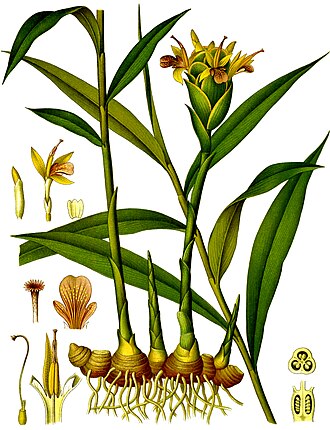
Photo: Wikipedia
Ginger root is a knobby, aromatic rhizome with a pale yellow flesh and a pungent, spicy-sweet flavor that warms the palate. Its fibrous texture is crisp when raw, becoming tender and mellow when cooked. Nutritionally, it's a low-calorie powerhouse, providing a good source of fiber and a unique set of bioactive compounds.
Calorie split: 9% protein · 84% carbs · 8% fat
↓ Full nutrition💚 Why it's loved
People love ginger for its irreplaceable, fiery zing that can transform a dish from flat to vibrant. It's a culinary chameleon, equally at home in sweet desserts, savory stir-fries, and warming beverages across countless global cuisines.
⚠️ Watch-outs & how to enjoy it better
Raw ginger's intense heat can be overwhelming for some palates and may irritate the mouth or stomach in large quantities. To temper its bite, you can grate it finely, cook it to mellow the flavor, or pair it with a fat like coconut milk or oil in a dish.
Key benefits
- Contains gingerol, a compound with potent antioxidant and anti-inflammatory properties.
- May help soothe digestive discomfort and nausea.
- Adds significant flavor to dishes without adding sodium or fat.
- Provides dietary fiber to support digestive health.
- A source of potassium, which supports heart and muscle function.
🍽️ Popular dishes

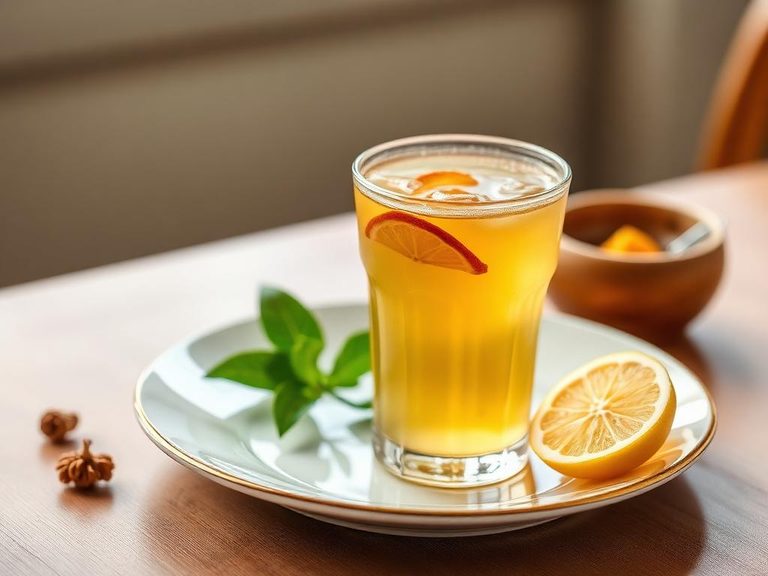
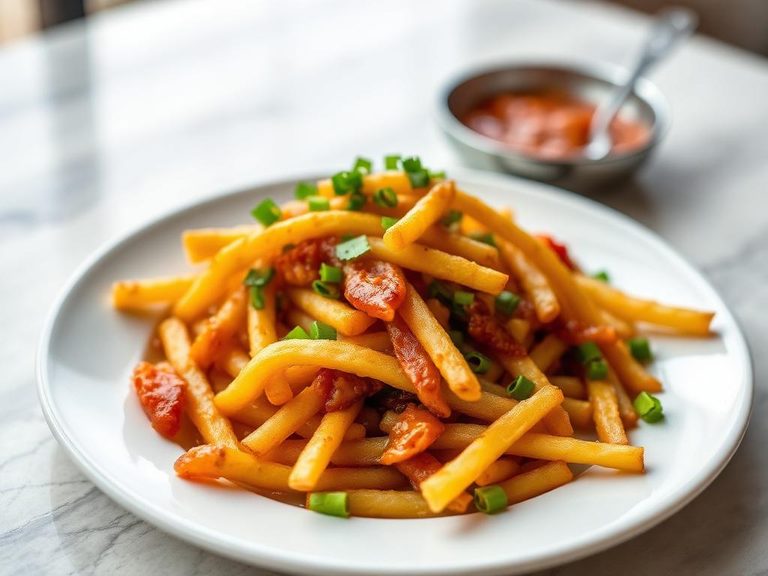
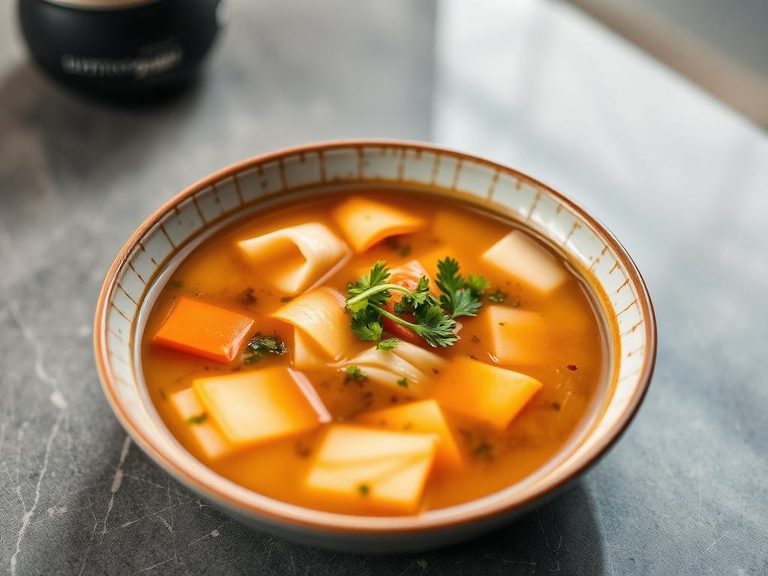
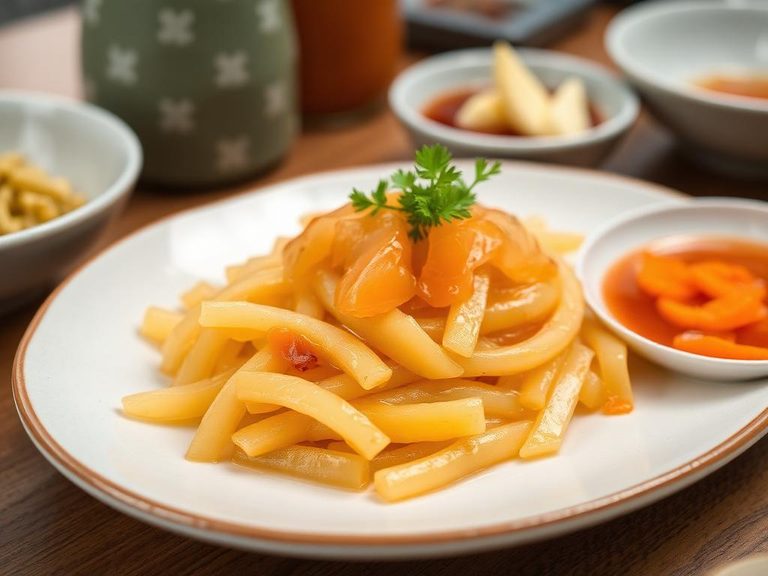
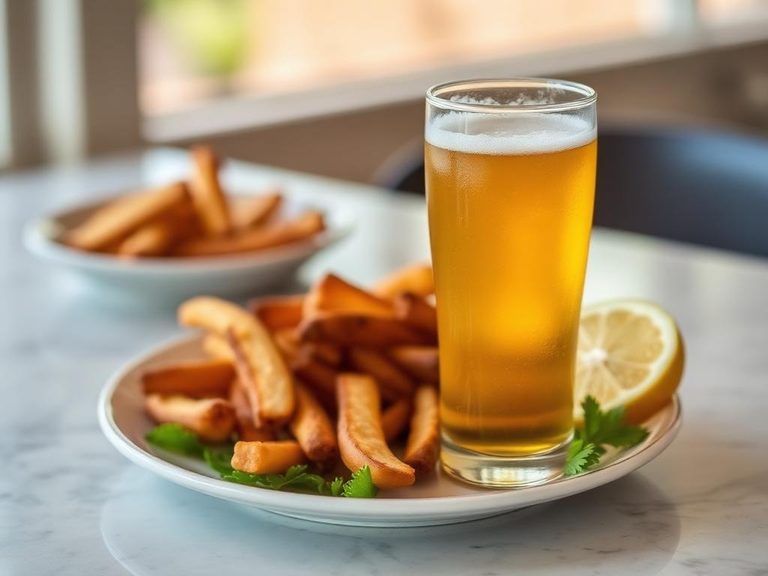
🌍 Where it's eaten
💡 Did you know?
Ginger is not a root, but a rhizome—a modified subterranean stem that grows horizontally and sends out roots and shoots from its nodes.
Full nutrition (USDA data · scales with serving)
| Water | 78.9 g |
| Energy | 80.0 kcal |
| Energy | 333 kj |
| Protein | 1.8 g |
| Total lipid (fat) | 0.75 g |
| Ash | 0.77 g |
| Carbohydrate, by difference | 17.8 g |
| Fiber, total dietary | 2.0 g |
| Total Sugars | 1.7 g |
| Calcium, Ca | 16.0 mg |
| Iron, Fe | 0.60 mg |
| Magnesium, Mg | 43.0 mg |
| Phosphorus, P | 34.0 mg |
| Potassium, K | 415 mg |
| Sodium, Na | 13.0 mg |
| Zinc, Zn | 0.34 mg |
| Copper, Cu | 0.23 mg |
| Manganese, Mn | 0.23 mg |
| Selenium, Se | 0.70 ug |
| Vitamin C, total ascorbic acid | 5.0 mg |
| Thiamin | 0.03 mg |
| Riboflavin | 0.03 mg |
| Niacin | 0.75 mg |
| Pantothenic acid | 0.20 mg |
| Vitamin B-6 | 0.16 mg |
| Folate, total | 11.0 ug |
| Folic acid | 0.00 ug |
| Folate, food | 11.0 ug |
| Folate, DFE | 11.0 ug |
| Choline, total | 28.8 mg |
| Vitamin B-12 | 0.00 ug |
| Vitamin B-12, added | 0.00 ug |
| Vitamin A, RAE | 0.00 ug |
| Retinol | 0.00 ug |
| Carotene, beta | 0.00 ug |
| Carotene, alpha | 0.00 ug |
| Cryptoxanthin, beta | 0.00 ug |
| Vitamin A, IU | 0.00 iu |
| Lycopene | 0.00 ug |
| Lutein + zeaxanthin | 0.00 ug |
| Vitamin E (alpha-tocopherol) | 0.26 mg |
| Vitamin E, added | 0.00 mg |
| Vitamin D (D2 + D3), International Units | 0.00 iu |
| Vitamin D (D2 + D3) | 0.00 ug |
| Vitamin K (phylloquinone) | 0.10 ug |
| Alcohol, ethyl | 0.00 g |
| Caffeine | 0.00 mg |
| Theobromine | 0.00 mg |
Fat & fatty acid profile (per 100g)
| Fatty acids, total saturated | 0.20 g |
| SFA 4:0 | 0.00 g |
| SFA 6:0 | 0.00 g |
| SFA 8:0 | 0.01 g |
| SFA 10:0 | 0.00 g |
| SFA 12:0 | 0.04 g |
| SFA 14:0 | 0.02 g |
| SFA 16:0 | 0.12 g |
| SFA 18:0 | 0.02 g |
| Fatty acids, total monounsaturated | 0.15 g |
| MUFA 16:1 | 0.02 g |
| MUFA 18:1 | 0.12 g |
| MUFA 20:1 | 0.01 g |
| MUFA 22:1 | 0.00 g |
| Fatty acids, total polyunsaturated | 0.15 g |
| PUFA 18:2 | 0.12 g |
| PUFA 18:3 | 0.03 g |
| PUFA 18:4 | 0.00 g |
| PUFA 20:4 | 0.00 g |
| PUFA 20:5 n-3 (EPA) | 0.00 g |
| PUFA 22:5 n-3 (DPA) | 0.00 g |
| PUFA 22:6 n-3 (DHA) | 0.00 g |
| Fatty acids, total trans | 0.00 g |
| Cholesterol | 0.00 mg |
| Phytosterols | 15.0 mg |
Amino acid profile (per 100g)
| Tryptophan | 0.01 g |
| Threonine | 0.04 g |
| Isoleucine | 0.05 g |
| Leucine | 0.07 g |
| Lysine | 0.06 g |
| Methionine | 0.01 g |
| Cystine | 0.01 g |
| Phenylalanine | 0.04 g |
| Tyrosine | 0.02 g |
| Valine | 0.07 g |
| Arginine | 0.04 g |
| Histidine | 0.03 g |
| Alanine | 0.03 g |
| Aspartic acid | 0.21 g |
| Glutamic acid | 0.16 g |
| Glycine | 0.04 g |
| Proline | 0.04 g |
| Serine | 0.04 g |
FAQ
How do I store fresh ginger?
For short-term use (a few weeks), store unpeeled ginger in the crisper drawer of your refrigerator. For long-term storage, you can peel and freeze it, then grate it directly from frozen into recipes.
What's the difference between fresh ginger and ground ginger?
Fresh ginger has a bright, pungent, and slightly sweet flavor with a crisp texture. Ground ginger is dried and powdered, offering a more concentrated, warm, and less complex flavor, often used in baking.
Can I eat the skin on ginger?
Yes, the skin is edible and nutritious. Simply scrub it well under running water. For very mature, tough ginger, peeling with a spoon edge can improve texture.
Nutrient density (calculated · NRF9.3)
Nutrient Rich Foods index: beneficial nutrients (protein, fiber, vitamins, minerals) minus saturated fat, added sugar & sodium, per 100 kcal.
NRF9.3 index — Fulgoni, Keast & Drewnowski, 2009. Computed from USDA nutrients.
Weight-loss friendliness (composite index)
Energy density 0.80 kcal/g · 9% calories from protein · 2.0 g fiber · 1.7 g sugar per 100 g.
Composite of energy density (Rolls et al., 1999), protein & fiber satiety, minus sugar. A calculated heuristic — ranks satiety-per-calorie, not a clinical measure.
Dietary load (calculated from USDA values)
Potential renal acid load. Positive = acid-forming, negative = alkaline-forming.
Sodium-to-potassium ratio: 0.03 (lower is better — aim for ≤ 1)
Sodium:potassium per WHO potassium guidance. Computed from USDA nutrients.