

Gari
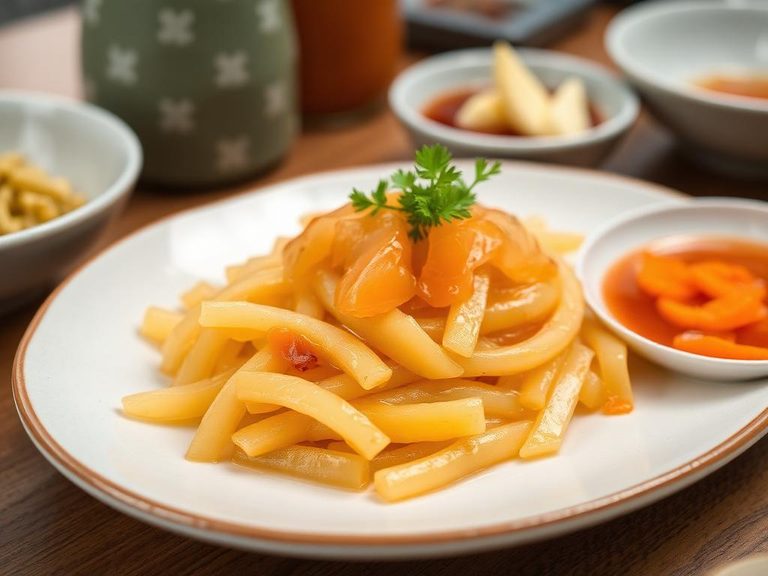
Gari is the Japanese term for thinly sliced young ginger that has been pickled in a sweet vinegar solution, typically served alongside sushi. The dish is characterized by its crisp texture and a balance of sweet and tangy flavors, often tinted a soft pink from the natural pigments in young ginger. It is a staple condiment in Japanese cuisine, commonly found in sushi bars and bento boxes.
🍽️ Nutrition at a glance
Gari is a low-calorie, low-fat food, with a single serving containing roughly 10-20 calories and negligible amounts of protein or fat. Its primary nutrients come from the ginger itself, which provides small amounts of fiber and manganese, along with antioxidants like gingerol.
Nutrition breakdown
| Calories | 5 kcal |
| Protein | 0.1 g |
| Carbs | 1.2 g |
| Fat | 0 g |
| Fiber | 0.3 g |
| Sugar | 0.8 g |
| Sodium | 180 mg |
| Potassium | 20 mg |
| Vitamin C | 1 mg |
| Iron | 0.1 mg |
| Calcium | 2 mg |
| Manganese | 0.02 mg |
| Magnesium | 1 mg |
| Phosphorus | 2 mg |
| Copper | 0.01 mg |
Per 1/4 cup (30 g) · estimated, varies by recipe
💡 What's interesting
Gari serves a functional role in Japanese dining, acting as a palate cleanser between different types of sushi to refresh the taste buds. Nutritionally, the ginger in Gari is known for its potential digestive benefits, including helping to soothe the stomach and reduce nausea.
🍽️ Related dishes
AI estimate may be inaccurate · Terms