

Gelatins, dry powder, unsweetened
Whole food · Sweets

Photo: Wikipedia
This is the dehydrated, powdered form of collagen derived from animal bones, skin, and connective tissues. When rehydrated, it forms a clear, neutral-flavored gel with a smooth, bouncy texture. It's essentially pure protein, boasting an impressive 85.6 grams per 100g with virtually no fat or carbohydrates.
Calorie split: 100% protein · 0% carbs · 0% fat
↓ Full nutrition💚 Why it's loved
People love it for its incredible versatility as a culinary building block, acting as a gelling agent for everything from desserts to savory aspics. It's also cherished in many cultures as a comforting, nostalgic food, often associated with home cooking and traditional holiday meals.
⚠️ Watch-outs & how to enjoy it better
As a pure protein supplement, it can be expensive and has a distinct, sometimes off-putting, smell when dry. Those with specific dietary restrictions, such as following a strict vegetarian or vegan diet, cannot consume it. To counteract the cost, it can be used sparingly as a gelling agent rather than a primary protein source, and its flavor is easily masked in sweet dishes or strongly seasoned savory ones.
Key benefits
- Excellent source of complete protein
- Supports joint and connective tissue health
- May improve skin elasticity and hydration
- Provides essential amino acids like glycine and proline
- Virtually carbohydrate-free
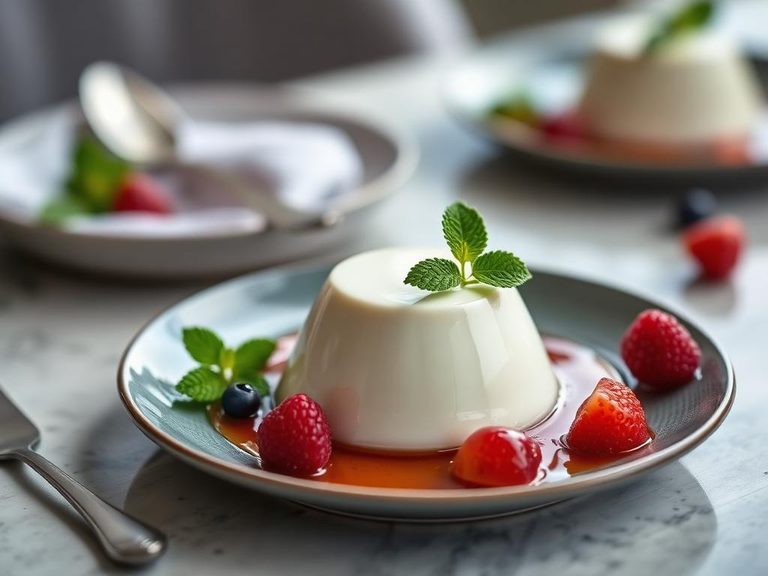
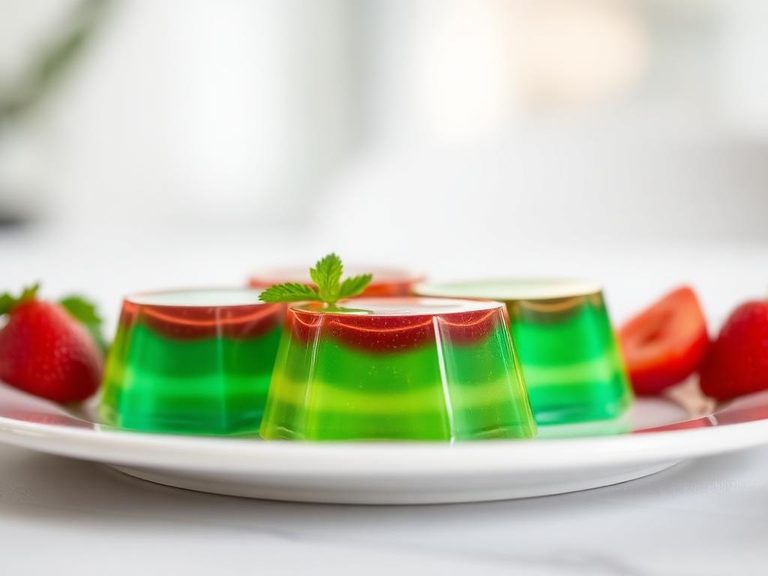
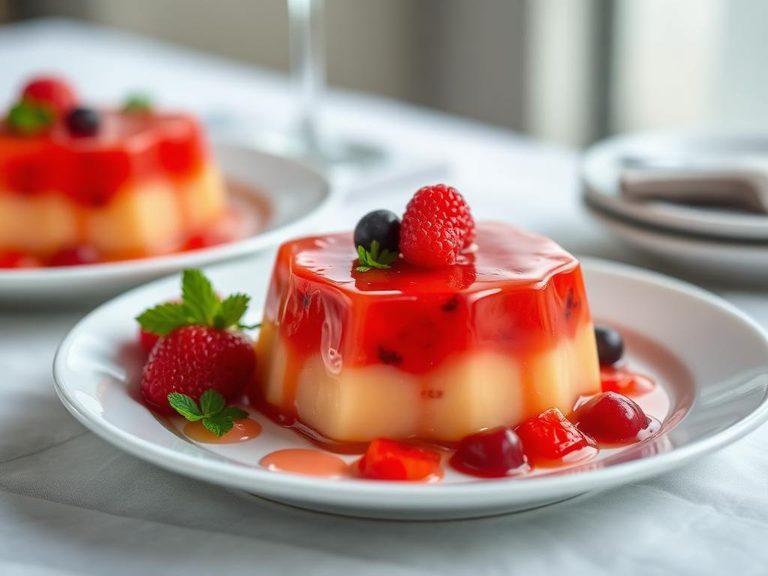
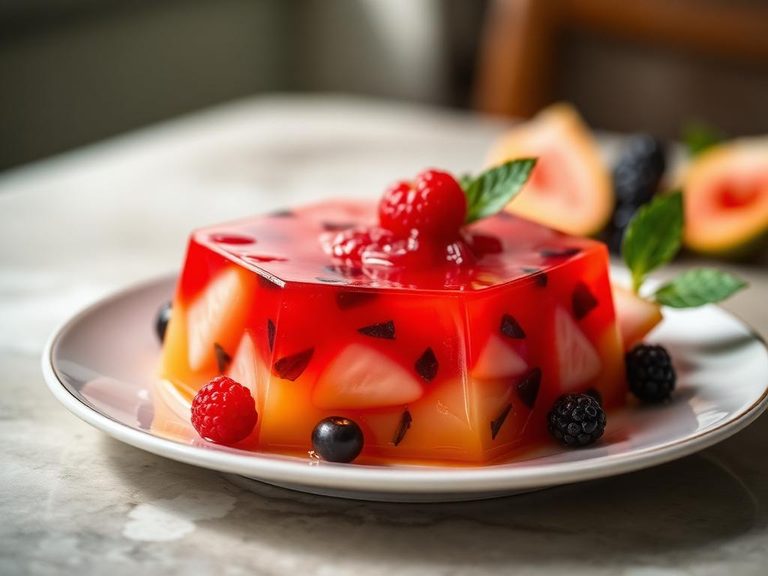
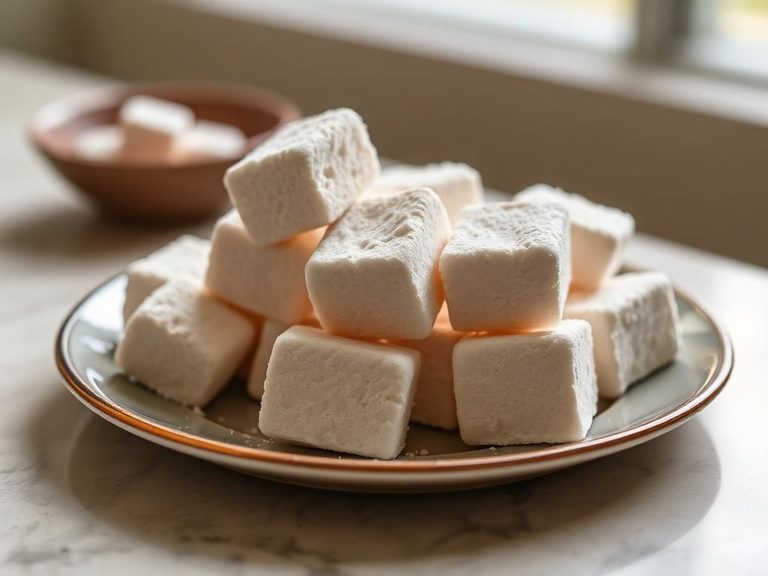
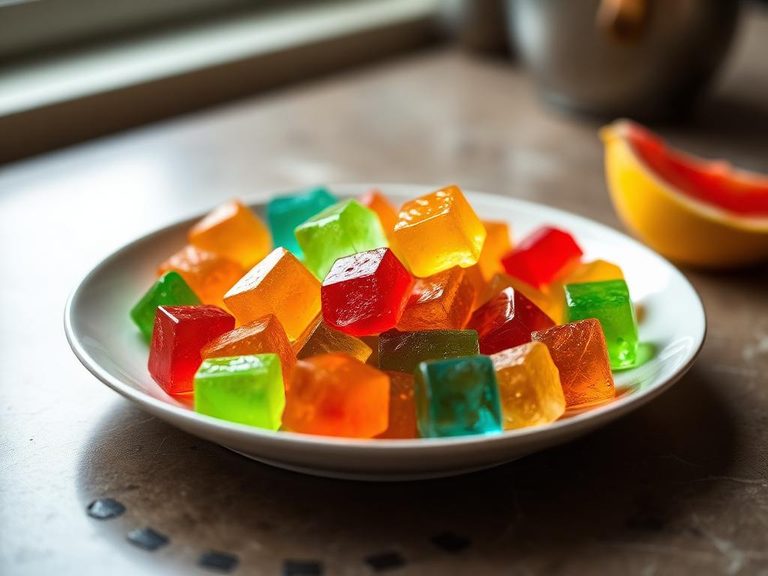
🍽️ Popular dishes
🌍 Where it's eaten
💡 Did you know?
The process of making gelatin was first documented in 1682 by a French chef, but it didn't become a household staple until the 19th century when a carpenter's wife in Maine invented the portable, pre-measured powdered form.
Full nutrition (USDA data · scales with serving)
| Water | 13.0 g |
| Energy | 335 kcal |
| Energy | 1402 kj |
| Protein | 85.6 g |
| Total lipid (fat) | 0.10 g |
| Ash | 1.3 g |
| Carbohydrate, by difference | 0.00 g |
| Fiber, total dietary | 0.00 g |
| Total Sugars | 0.00 g |
| Calcium, Ca | 55.0 mg |
| Iron, Fe | 1.1 mg |
| Magnesium, Mg | 22.0 mg |
| Phosphorus, P | 39.0 mg |
| Potassium, K | 16.0 mg |
| Sodium, Na | 196 mg |
| Zinc, Zn | 0.14 mg |
| Copper, Cu | 2.2 mg |
| Manganese, Mn | 0.10 mg |
| Selenium, Se | 39.5 ug |
| Vitamin C, total ascorbic acid | 0.00 mg |
| Thiamin | 0.03 mg |
| Riboflavin | 0.23 mg |
| Niacin | 0.09 mg |
| Pantothenic acid | 0.13 mg |
| Vitamin B-6 | 0.01 mg |
| Folate, total | 30.0 ug |
| Folic acid | 0.00 ug |
| Folate, food | 30.0 ug |
| Folate, DFE | 30.0 ug |
| Choline, total | 38.5 mg |
| Vitamin B-12 | 0.00 ug |
| Vitamin B-12, added | 0.00 ug |
| Vitamin A, RAE | 0.00 ug |
| Retinol | 0.00 ug |
| Carotene, beta | 0.00 ug |
| Carotene, alpha | 0.00 ug |
| Cryptoxanthin, beta | 0.00 ug |
| Vitamin A, IU | 0.00 iu |
| Lycopene | 0.00 ug |
| Lutein + zeaxanthin | 0.00 ug |
| Vitamin E (alpha-tocopherol) | 0.00 mg |
| Vitamin E, added | 0.00 mg |
| Vitamin D (D2 + D3), International Units | 0.00 iu |
| Vitamin D (D2 + D3) | 0.00 ug |
| Vitamin K (phylloquinone) | 0.00 ug |
| Alcohol, ethyl | 0.00 g |
| Caffeine | 0.00 mg |
| Theobromine | 0.00 mg |
Fat & fatty acid profile (per 100g)
| Fatty acids, total saturated | 0.07 g |
| SFA 4:0 | 0.00 g |
| SFA 6:0 | 0.00 g |
| SFA 8:0 | 0.00 g |
| SFA 10:0 | 0.00 g |
| SFA 12:0 | 0.00 g |
| SFA 14:0 | 0.01 g |
| SFA 16:0 | 0.04 g |
| SFA 18:0 | 0.03 g |
| Fatty acids, total monounsaturated | 0.06 g |
| MUFA 16:1 | 0.01 g |
| MUFA 18:1 | 0.05 g |
| MUFA 20:1 | 0.00 g |
| MUFA 22:1 | 0.00 g |
| Fatty acids, total polyunsaturated | 0.01 g |
| PUFA 18:2 | 0.00 g |
| PUFA 18:3 | 0.00 g |
| PUFA 18:4 | 0.00 g |
| PUFA 20:4 | 0.00 g |
| PUFA 20:5 n-3 (EPA) | 0.00 g |
| PUFA 22:5 n-3 (DPA) | 0.00 g |
| PUFA 22:6 n-3 (DHA) | 0.00 g |
| Cholesterol | 0.00 mg |
Amino acid profile (per 100g)
| Tryptophan | 0.00 g |
| Threonine | 1.5 g |
| Isoleucine | 1.2 g |
| Leucine | 2.5 g |
| Lysine | 3.5 g |
| Methionine | 0.61 g |
| Cystine | 0.00 g |
| Phenylalanine | 1.7 g |
| Tyrosine | 0.30 g |
| Valine | 2.1 g |
| Arginine | 6.6 g |
| Histidine | 0.66 g |
| Alanine | 8.0 g |
| Aspartic acid | 5.3 g |
| Glutamic acid | 8.8 g |
| Glycine | 19.0 g |
| Proline | 12.3 g |
| Serine | 2.6 g |
FAQ
What is the difference between gelatin and collagen peptides?
Gelatin is a protein that has been partially hydrolyzed, which allows it to form a gel when cooled. Collagen peptides are hydrolyzed further into smaller particles, making them soluble in hot or cold liquids without gelling.
Can I use gelatin to thicken sauces?
Yes, but it's not ideal for all sauces. It works well for creating a glossy, smooth texture in clear sauces or consommés. For opaque, starch-based sauces like gravy, a roux or cornstarch slurry is more conventional.
Is gelatin safe for people with allergies?
Gelatin is derived from animal sources, typically pork or beef. While highly processed and rarely causing issues, it can be a concern for individuals with severe meat allergies or those following religious dietary laws (e.g., kosher, halal). Always check the source if this is a concern.
Nutrient density (calculated · NRF9.3)
Nutrient Rich Foods index: beneficial nutrients (protein, fiber, vitamins, minerals) minus saturated fat, added sugar & sodium, per 100 kcal.
NRF9.3 index — Fulgoni, Keast & Drewnowski, 2009. Computed from USDA nutrients.
Weight-loss friendliness (composite index)
Energy density 3.35 kcal/g · 102% calories from protein · 0.0 g fiber · 0.0 g sugar per 100 g.
Composite of energy density (Rolls et al., 1999), protein & fiber satiety, minus sugar. A calculated heuristic — ranks satiety-per-calorie, not a clinical measure.
Dietary load (calculated from USDA values)
Potential renal acid load. Positive = acid-forming, negative = alkaline-forming.
Sodium-to-potassium ratio: 12.25 (lower is better — aim for ≤ 1)
Sodium:potassium per WHO potassium guidance. Computed from USDA nutrients.