Aspic

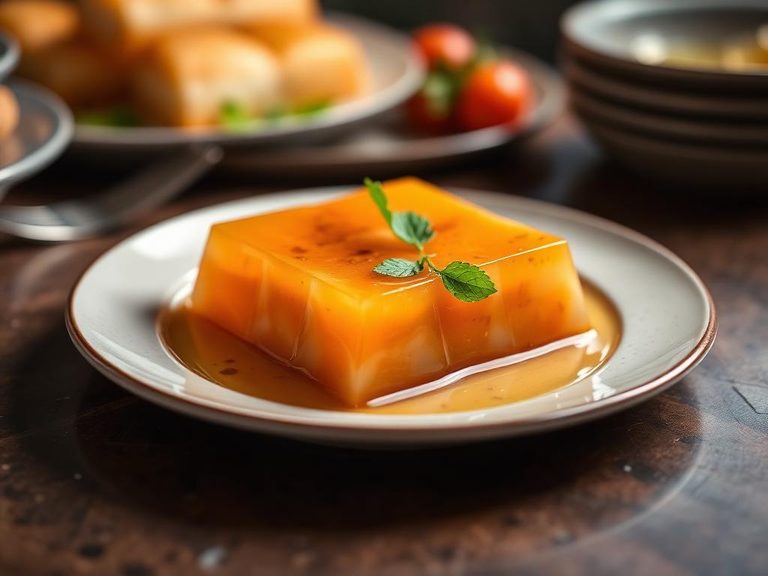
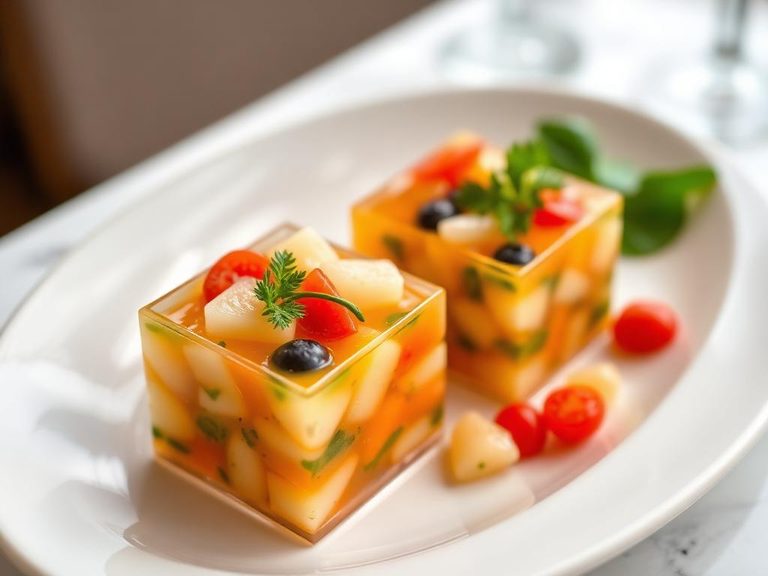
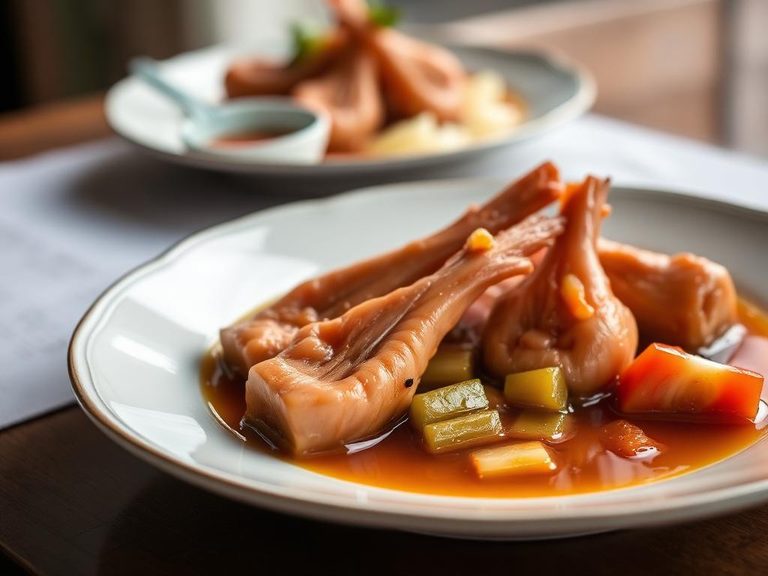
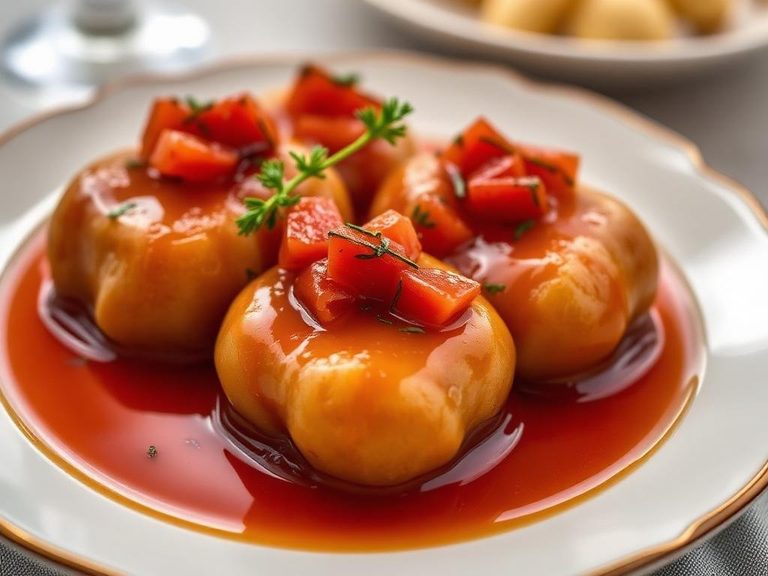
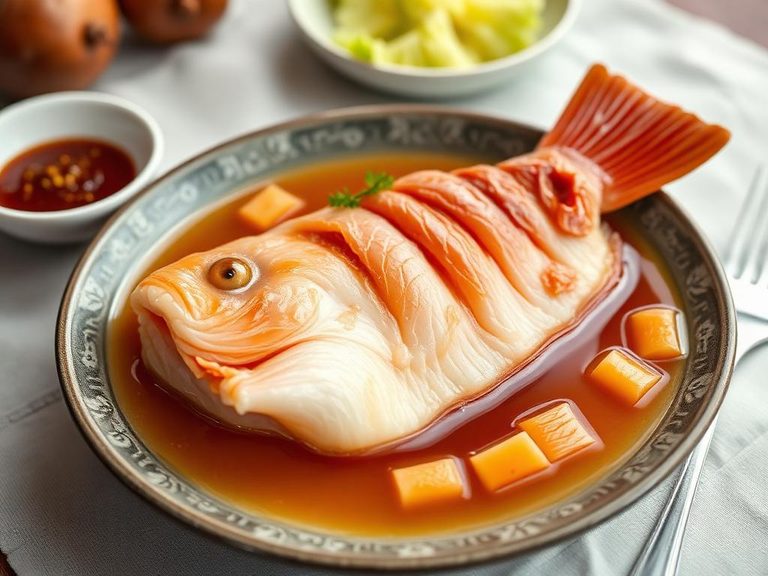
Aspic is a savory jelly dish made by chilling meat, fish, or vegetable stock until it sets into a firm, wobbly gel, typically using natural collagen from bones or added gelatin. It often features pieces of meat, vegetables, or eggs suspended within the translucent jelly. This dish has historical roots in European cuisine, particularly in France, Russia, and Eastern Europe, where it was traditionally served as an elegant appetizer or part of a cold buffet.
🍽️ Nutrition at a glance
Aspic is generally high in protein due to its gelatin or collagen content, with minimal carbohydrates and fat depending on the ingredients used. A typical serving provides a good source of protein and minerals like sodium and potassium, with a calorie range of approximately 100-200 kcal per serving.
Nutrition breakdown
| Calories | 150 kcal |
| Protein | 12 g |
| Carbs | 2 g |
| Fat | 10 g |
| Fiber | 0 g |
| Sugar | 1 g |
| Sodium | 480 mg |
| Potassium | 180 mg |
| Phosphorus | 90 mg |
| Sodium | 480 mg |
| Calcium | 20 mg |
| Iron | 1.5 mg |
| Magnesium | 15 mg |
| Zinc | 2 mg |
| Vitamin B12 | 0.5 mcg |
Per 1 cup (240 g) · estimated, varies by recipe
💡 What's interesting
Aspic is culturally fascinating as a historical method of food preservation and presentation, often used in grand feasts to showcase culinary skill. Nutritionally, it's unique for its high collagen content, which is believed to support joint and skin health.