Molded Aspic
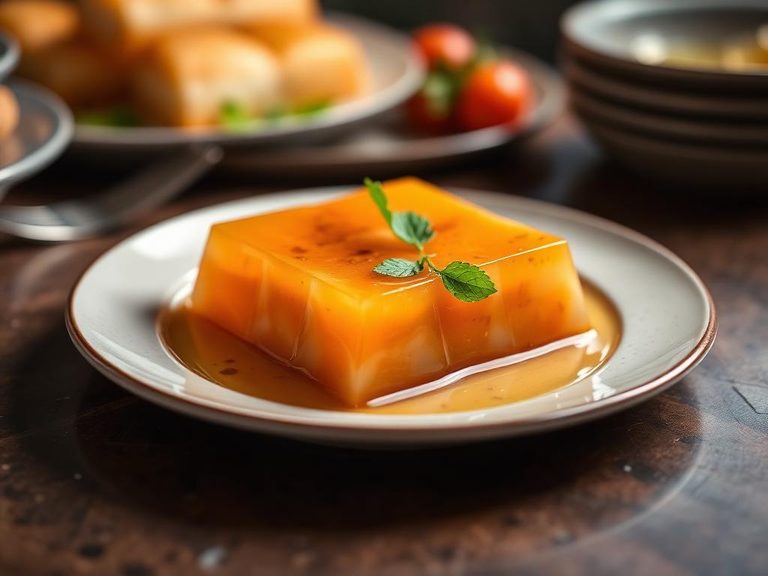
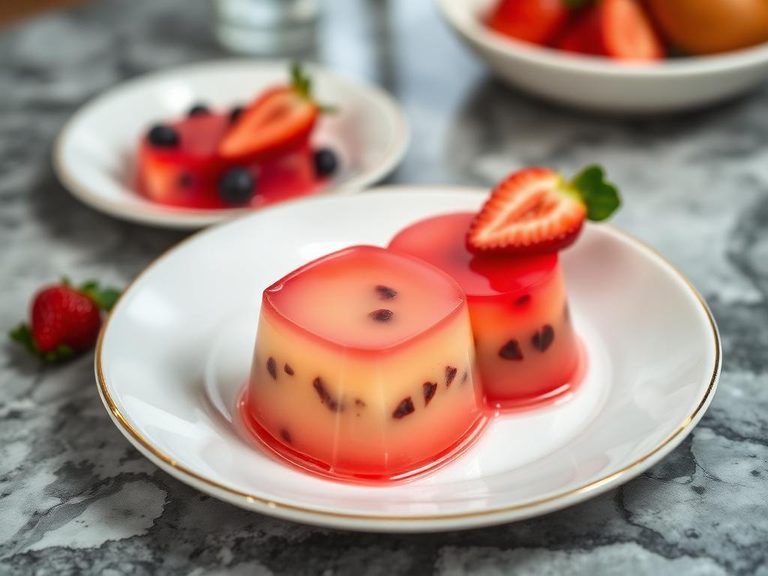
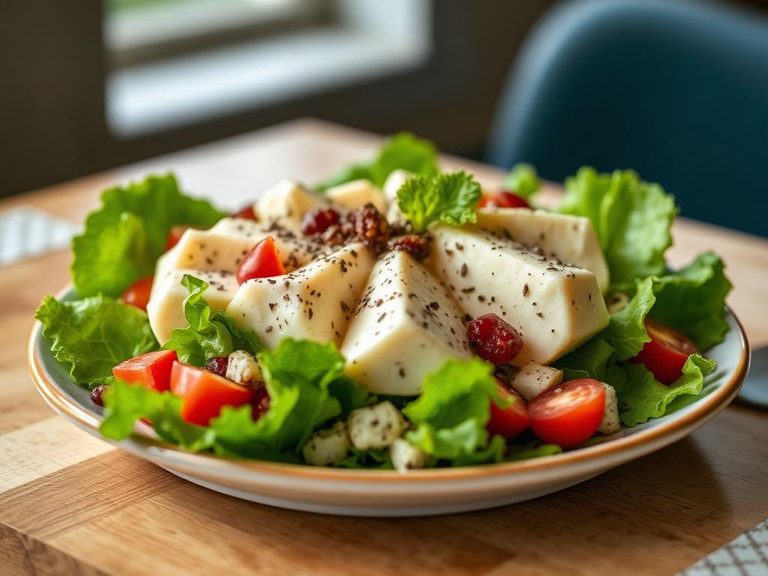
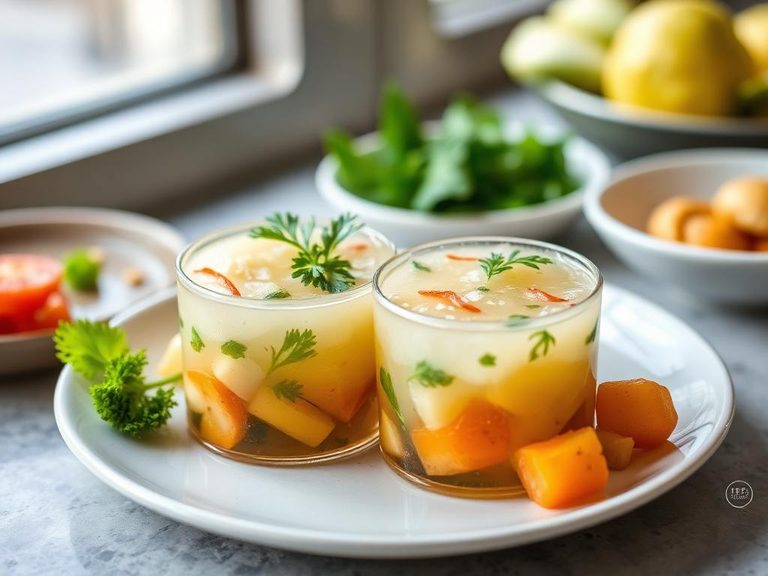
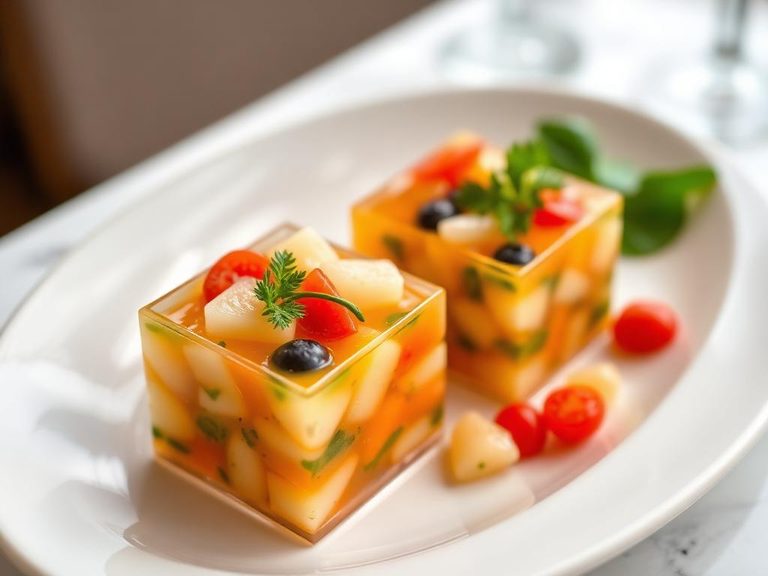
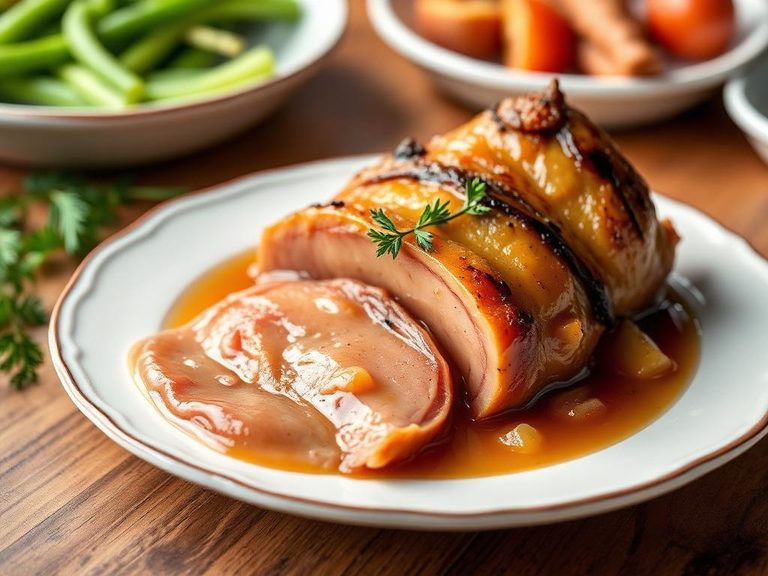
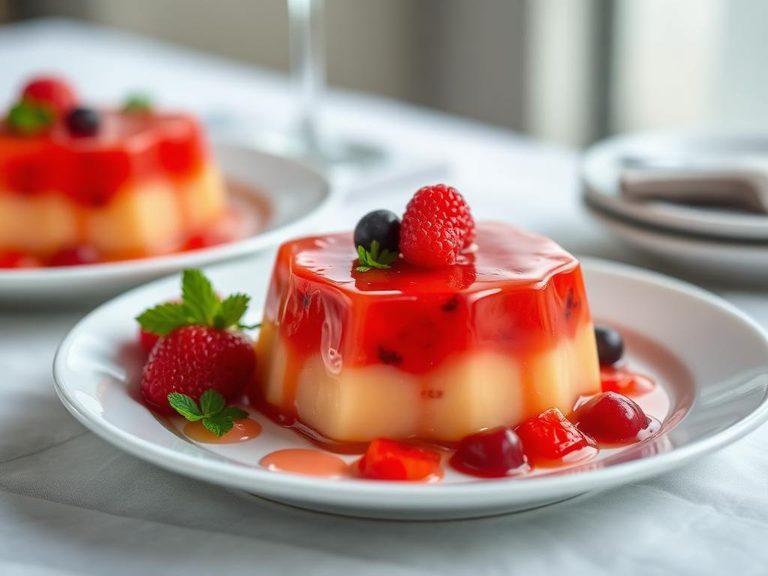
Molded aspic is a savory, savory gelatin dish made by chilling a broth or stock until it sets into a firm, jiggly mold, often incorporating ingredients like chopped meats, vegetables, or eggs. It is a classic dish in European and American cuisine, particularly popular in the mid-20th century as an elegant appetizer or centerpiece. The gelatin is typically derived from animal sources like bones or connective tissues, which gives the dish its characteristic texture.
🍽️ Nutrition at a glance
Molded aspic is generally low in carbohydrates and can be a good source of protein and collagen from the gelatin and meat components, though it may also contain moderate fat depending on the broth and added ingredients. A typical serving (about 1 cup) might range from 100 to 200 calories, making it a relatively light option.
Nutrition breakdown
| Calories | 120 kcal |
| Protein | 15 g |
| Carbs | 3 g |
| Fat | 5 g |
| Fiber | 0 g |
| Sugar | 1 g |
| Sodium | 480 mg |
| Sodium | 480 mg |
| Potassium | 220 mg |
| Phosphorus | 150 mg |
| Selenium | 18 mcg |
| Vitamin B12 | 1.5 mcg |
| Niacin (B3) | 4 mg |
| Riboflavin (B2) | 0.2 mg |
| Vitamin D | 0.5 mcg |
Per 1 cup (240 g) · estimated, varies by recipe
💡 What's interesting
Culturally, molded aspic was a symbol of culinary sophistication in the 1950s and 60s, often featured at parties and holidays, but it has since fallen out of mainstream favor. Nutritionally, the gelatin in aspic is known for supporting joint and skin health due to its high collagen content, which is a unique benefit not found in many other savory dishes.