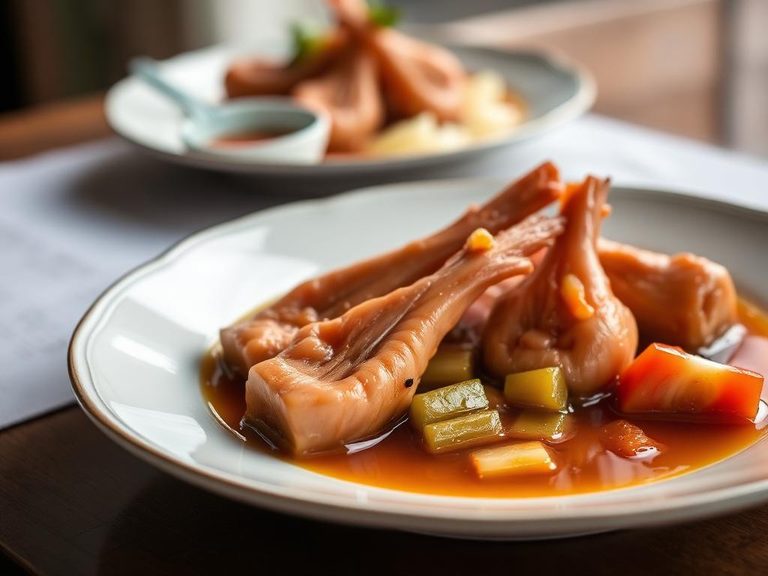
Tongue in Aspic
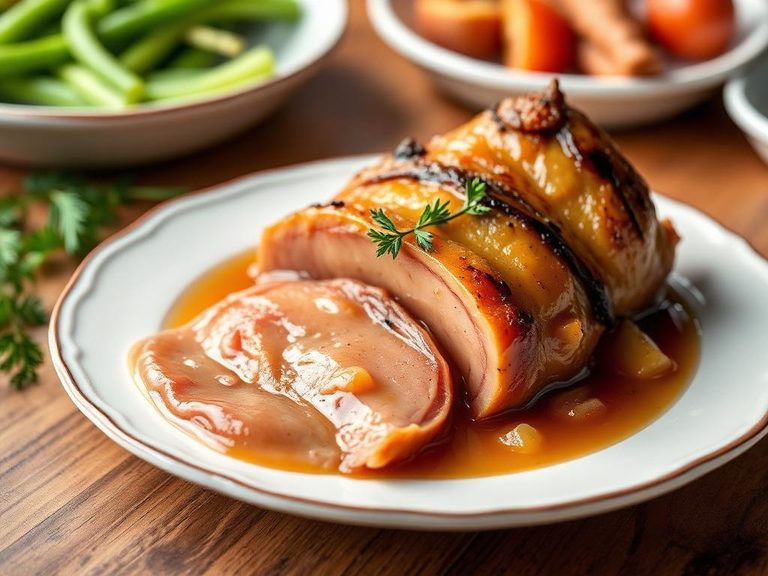
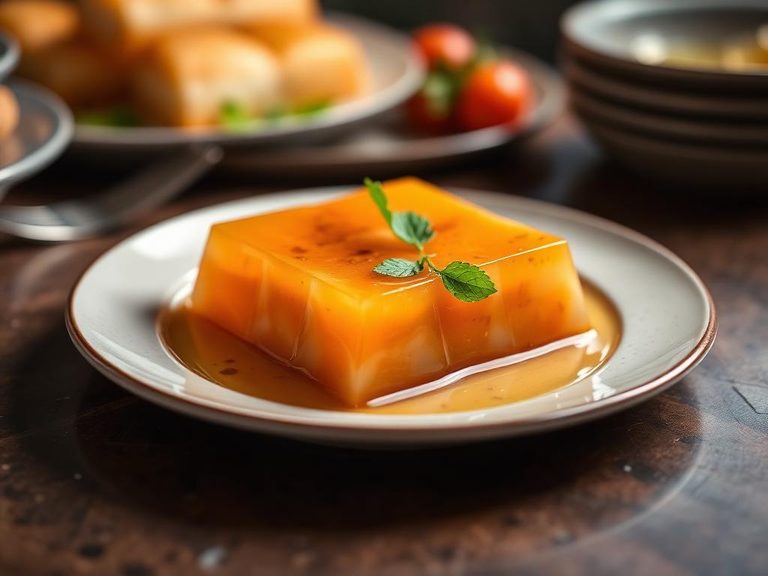
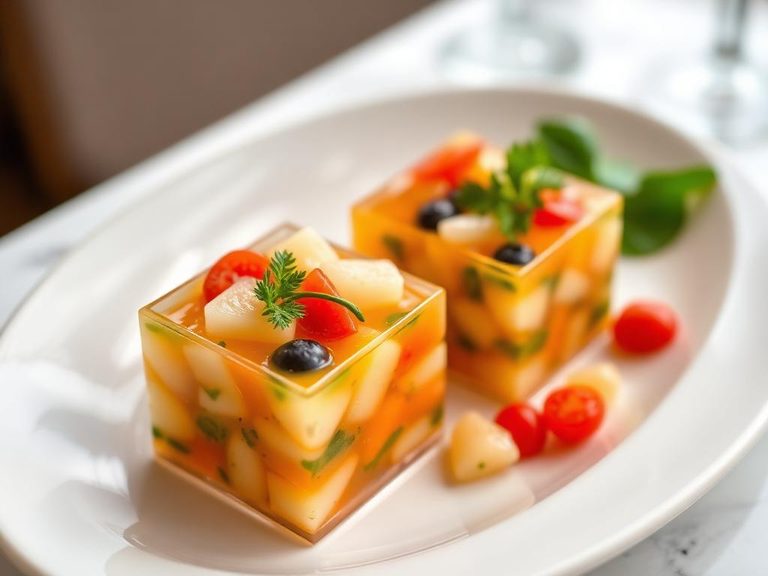
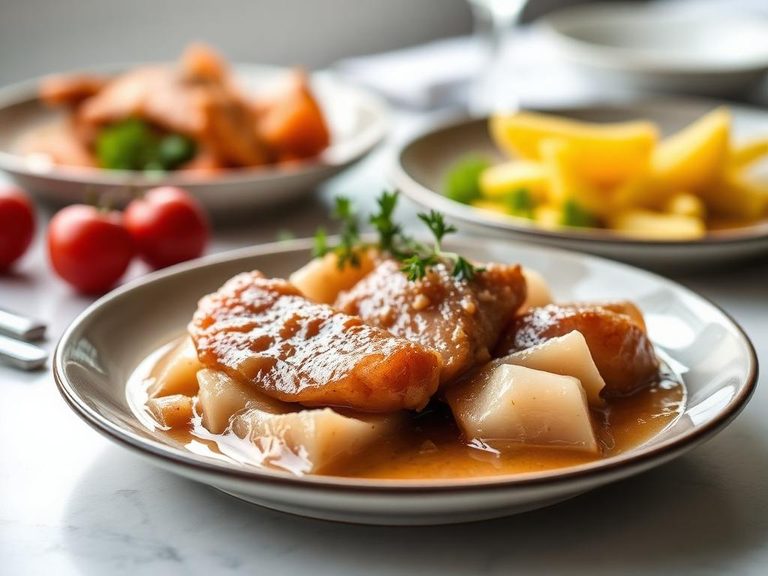
Tongue in Aspic is a traditional Eastern European cold appetizer, particularly popular in Russian, Polish, and Ukrainian cuisines. It features tender, boiled beef or pork tongue set in a clear, savory gelatin broth (aspic), often garnished with vegetables like carrots and herbs. The dish is typically sliced and served chilled, making it a staple for festive tables and holiday meals.
🍽️ Nutrition at a glance
This dish is high in protein and fat, with minimal carbohydrates, as the gelatin provides collagen and the tongue offers rich B vitamins and iron. A typical serving of around 150 grams contains roughly 250-300 calories, depending on the cut of meat and added fats.
Nutrition breakdown
| Calories | 210 kcal |
| Protein | 18 g |
| Carbs | 3 g |
| Fat | 14 g |
| Fiber | 0 g |
| Sugar | 1 g |
| Sodium | 680 mg |
| Potassium | 280 mg |
| Phosphorus | 180 mg |
| Zinc | 4.5 mg |
| Iron | 3.2 mg |
| Vitamin B12 | 5.8 mcg |
| Niacin (B3) | 6.5 mg |
| Vitamin B6 | 0.4 mg |
| Selenium | 12 mcg |
Per 1 cup (240 g) · estimated, varies by recipe
💡 What's interesting
Culturally, Tongue in Aspic showcases the Eastern European tradition of using natural gelatin from bones and connective tissues, turning humble ingredients into an elegant presentation. Nutritionally, it’s a unique source of collagen, which supports joint and skin health, and it exemplifies nose-to-tail eating that minimizes waste.