

Game meat, bison, separable lean only, cooked, roasted
Whole food · Lamb, Veal, and Game Products

Photo: Wikipedia
Bison lean, roasted, is a deep red, iron-rich meat with a clean, subtly sweet flavor and a firm, fine-grained texture. It's a nutritional powerhouse, delivering an exceptional amount of protein with minimal fat and zero carbohydrates. This makes it a lean, high-protein alternative to beef, prized for its rich, gamey yet approachable taste.
Calorie split: 84% protein · 0% carbs · 16% fat
↓ Full nutrition💚 Why it's loved
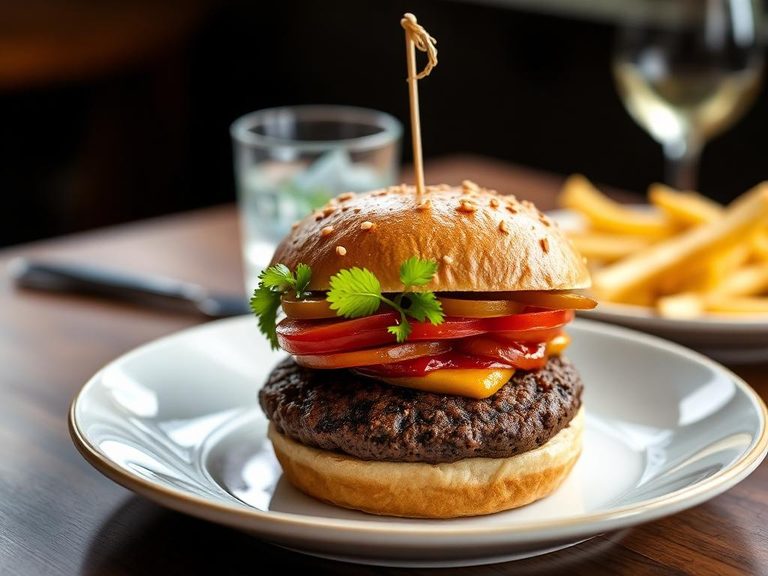
People love bison for its robust, slightly sweet and earthy flavor that's more complex than beef but not overpowering. Its remarkable leanness makes it a versatile, guilt-free protein for everything from burgers to steaks, appealing to health-conscious foodies and outdoor cooking enthusiasts alike.
⚠️ Watch-outs & how to enjoy it better
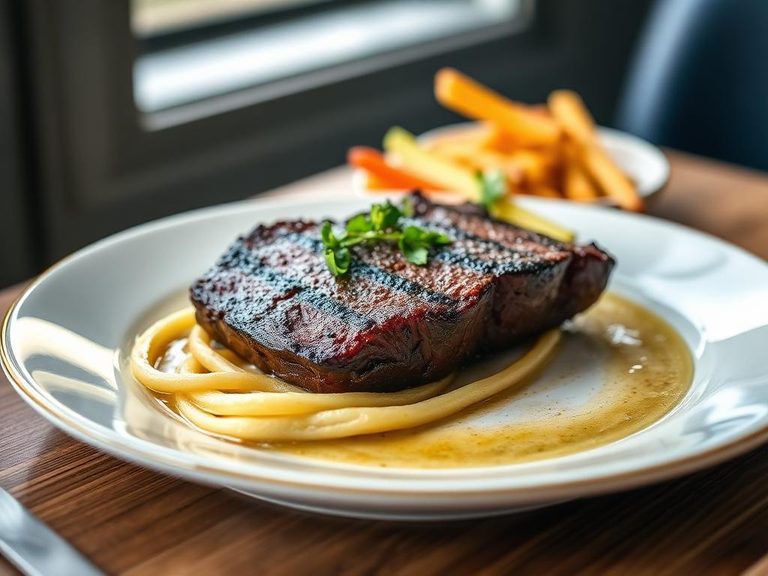
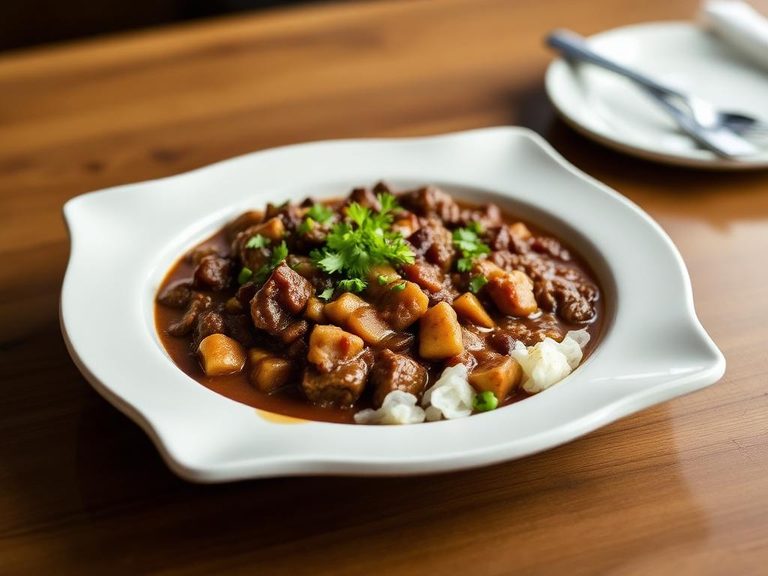
Due to its very low fat content, bison can become tough and dry if overcooked. It's also a common game meat allergen for some. To counteract dryness, cook it to medium-rare or medium (135-145°F internal temp) and let it rest after cooking. Pairing it with a flavorful sauce or cooking it in a stew can also add moisture.
Key benefits
- Exceptionally high in complete protein for muscle maintenance.
- Very low in fat, especially saturated fat compared to beef.
- Rich source of iron (heme iron) and B vitamins like B12.
- Zero carbohydrates, making it ideal for low-carb and ketogenic diets.
- Leaner protein source may support heart health goals.
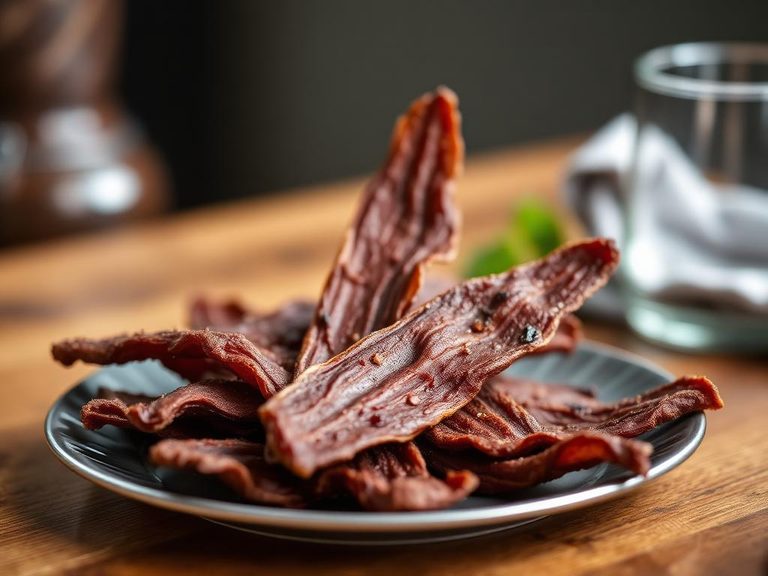
🍽️ Popular dishes
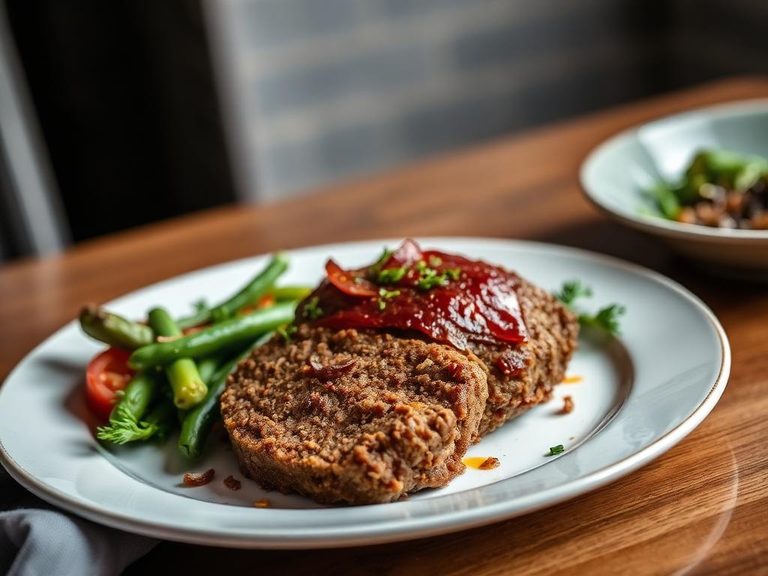
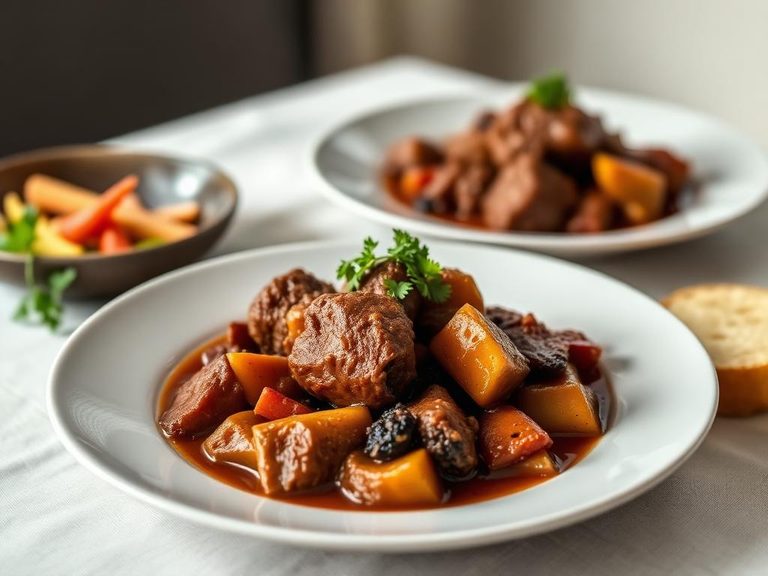
🌍 Where it's eaten
💡 Did you know?
A single bison can produce over 400 pounds of boneless meat, but the average yield of lean, usable meat from a whole animal is only about 300 pounds.
Full nutrition (USDA data · scales with serving)
| Water | 66.5 g |
| Energy | 143 kcal |
| Energy | 598 kj |
| Protein | 28.4 g |
| Total lipid (fat) | 2.4 g |
| Ash | 1.6 g |
| Carbohydrate, by difference | 0.00 g |
| Fiber, total dietary | 0.00 g |
| Total Sugars | 0.00 g |
| Calcium, Ca | 8.0 mg |
| Iron, Fe | 3.4 mg |
| Magnesium, Mg | 26.0 mg |
| Phosphorus, P | 209 mg |
| Potassium, K | 361 mg |
| Sodium, Na | 57.0 mg |
| Zinc, Zn | 3.7 mg |
| Copper, Cu | 0.11 mg |
| Manganese, Mn | 0.01 mg |
| Selenium, Se | 35.5 ug |
| Vitamin C, total ascorbic acid | 0.00 mg |
| Thiamin | 0.10 mg |
| Riboflavin | 0.27 mg |
| Niacin | 3.7 mg |
| Vitamin B-6 | 0.40 mg |
| Folate, total | 8.0 ug |
| Folic acid | 0.00 ug |
| Folate, food | 8.0 ug |
| Folate, DFE | 8.0 ug |
| Choline, total | 115 mg |
| Betaine | 15.1 mg |
| Vitamin B-12 | 2.9 ug |
| Vitamin B-12, added | 0.00 ug |
| Vitamin A, RAE | 0.00 ug |
| Retinol | 0.00 ug |
| Carotene, beta | 0.00 ug |
| Carotene, alpha | 0.00 ug |
| Cryptoxanthin, beta | 0.00 ug |
| Vitamin A, IU | 0.00 iu |
| Lycopene | 0.00 ug |
| Lutein + zeaxanthin | 0.00 ug |
| Vitamin E (alpha-tocopherol) | 0.36 mg |
| Vitamin E, added | 0.00 mg |
| Vitamin D (D2 + D3), International Units | 0.00 iu |
| Vitamin D (D2 + D3) | 0.00 ug |
| Vitamin D3 (cholecalciferol) | 0.00 ug |
| Vitamin K (phylloquinone) | 1.3 ug |
| Vitamin K (Dihydrophylloquinone) | 0.00 ug |
| Alcohol, ethyl | 0.00 g |
| Caffeine | 0.00 mg |
| Theobromine | 0.00 mg |
Fat & fatty acid profile (per 100g)
| Fatty acids, total saturated | 0.91 g |
| SFA 4:0 | 0.00 g |
| SFA 6:0 | 0.00 g |
| SFA 8:0 | 0.00 g |
| SFA 10:0 | 0.00 g |
| SFA 12:0 | 0.00 g |
| SFA 14:0 | 0.03 g |
| SFA 16:0 | 0.43 g |
| SFA 18:0 | 0.45 g |
| Fatty acids, total monounsaturated | 0.95 g |
| MUFA 16:1 | 0.06 g |
| MUFA 18:1 | 0.88 g |
| MUFA 20:1 | 0.00 g |
| MUFA 22:1 | 0.00 g |
| Fatty acids, total polyunsaturated | 0.24 g |
| PUFA 18:2 | 0.14 g |
| PUFA 18:3 | 0.04 g |
| PUFA 18:4 | 0.00 g |
| PUFA 20:4 | 0.07 g |
| PUFA 20:5 n-3 (EPA) | 0.00 g |
| PUFA 22:5 n-3 (DPA) | 0.00 g |
| PUFA 22:6 n-3 (DHA) | 0.00 g |
| Cholesterol | 82.0 mg |
Amino acid profile (per 100g)
| Threonine | 1.2 g |
| Isoleucine | 1.2 g |
| Leucine | 2.2 g |
| Lysine | 2.2 g |
| Methionine | 0.67 g |
| Phenylalanine | 1.1 g |
| Tyrosine | 0.91 g |
| Valine | 1.3 g |
| Arginine | 1.7 g |
| Histidine | 0.75 g |
| Alanine | 1.6 g |
| Aspartic acid | 2.5 g |
| Glutamic acid | 4.1 g |
| Glycine | 1.4 g |
| Proline | 1.1 g |
| Serine | 1.1 g |
FAQ
How does bison taste different from beef?
Bison has a richer, slightly sweeter, and more earthy flavor than beef, with a cleaner finish. The texture is finer-grained and leaner, making it less juicy if overcooked.
Is bison healthier than beef?
Generally, yes. Lean bison is significantly lower in total fat and saturated fat than most cuts of beef, while providing comparable or higher protein and iron content.
How should I cook bison to avoid it getting tough?
The key is to avoid overcooking. Use a meat thermometer and pull it off the heat at 135°F for medium-rare. Let it rest for 5-10 minutes before slicing. High-heat, quick-cooking methods like grilling or pan-searing work best.
Nutrient density (calculated · NRF9.3)
Nutrient Rich Foods index: beneficial nutrients (protein, fiber, vitamins, minerals) minus saturated fat, added sugar & sodium, per 100 kcal.
NRF9.3 index — Fulgoni, Keast & Drewnowski, 2009. Computed from USDA nutrients.
Weight-loss friendliness (composite index)
Energy density 1.43 kcal/g · 80% calories from protein · 0.0 g fiber · 0.0 g sugar per 100 g.
Composite of energy density (Rolls et al., 1999), protein & fiber satiety, minus sugar. A calculated heuristic — ranks satiety-per-calorie, not a clinical measure.
Dietary load (calculated from USDA values)
Potential renal acid load. Positive = acid-forming, negative = alkaline-forming.
Sodium-to-potassium ratio: 0.16 (lower is better — aim for ≤ 1)
Sodium:potassium per WHO potassium guidance. Computed from USDA nutrients.