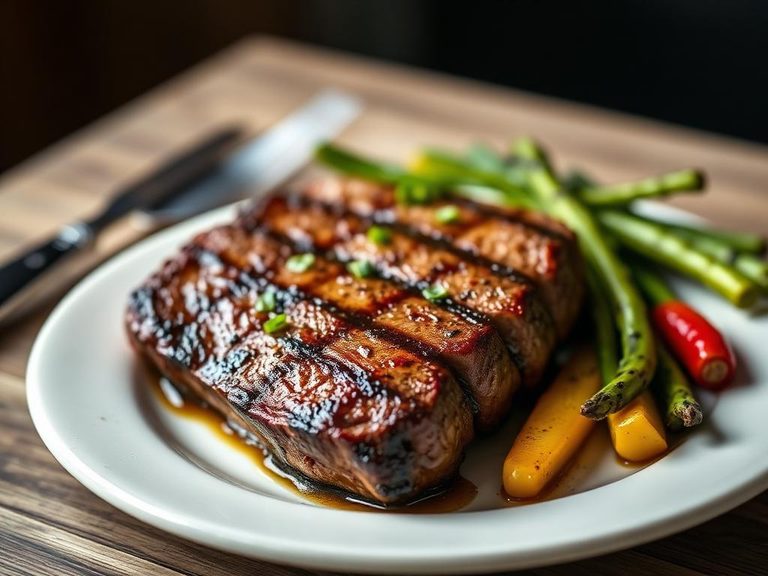
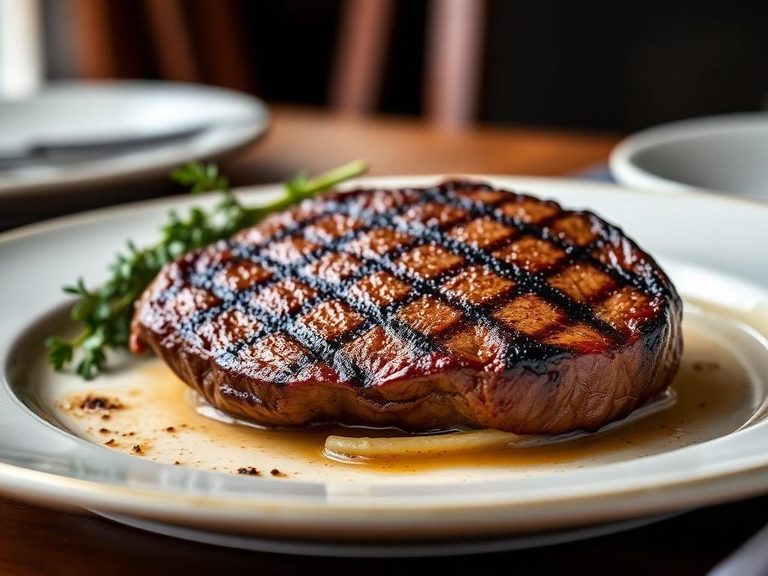
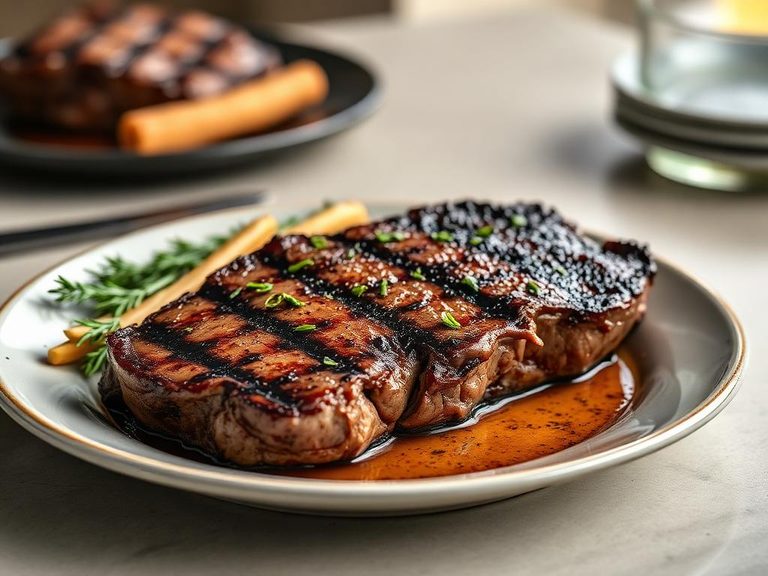
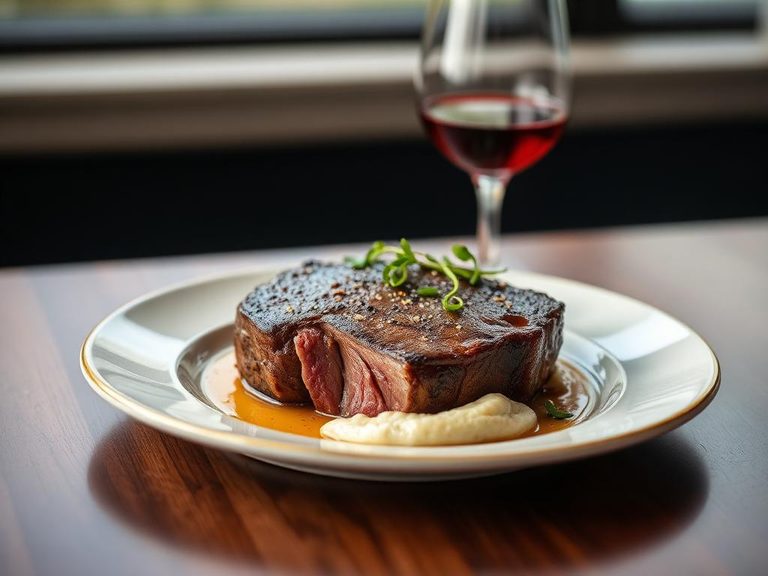
Bison steak
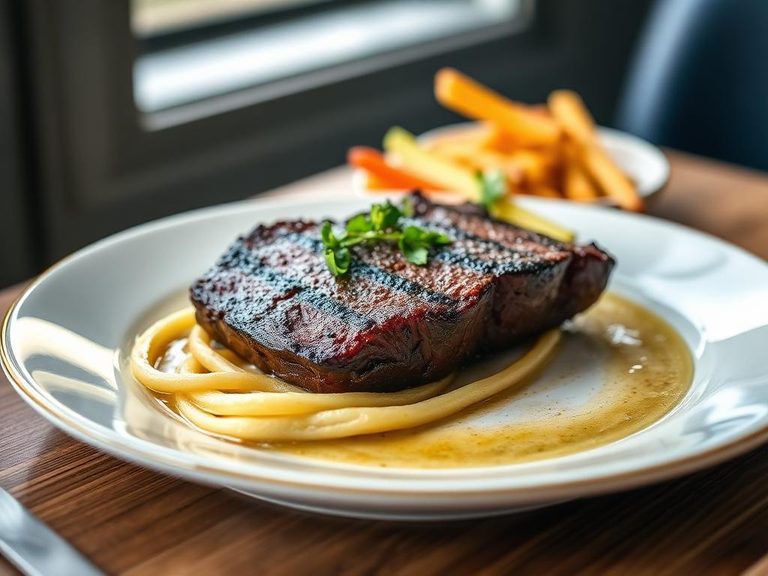
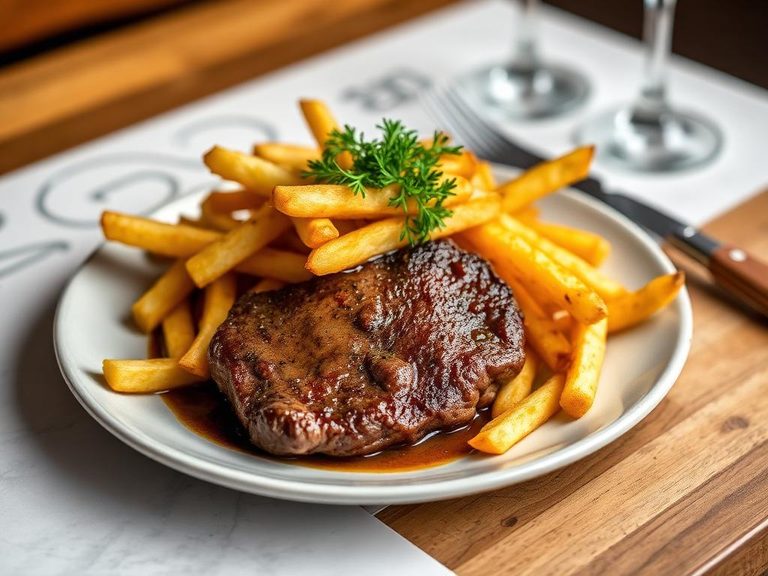
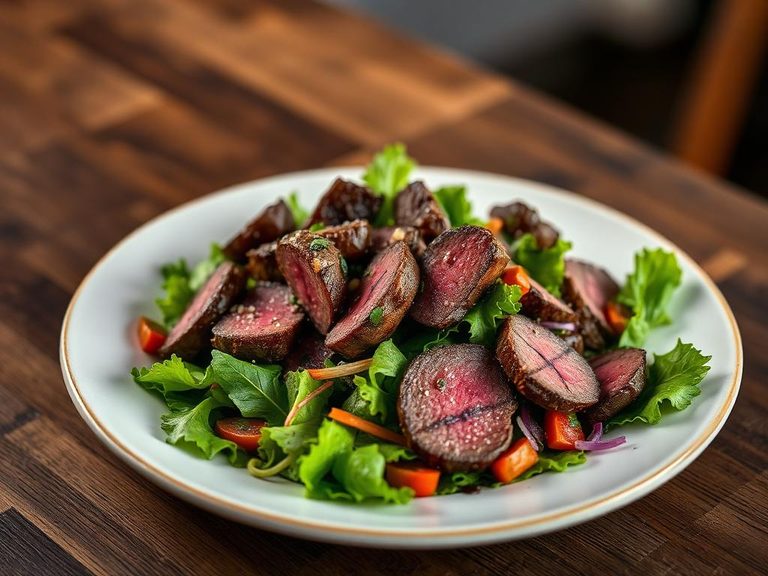
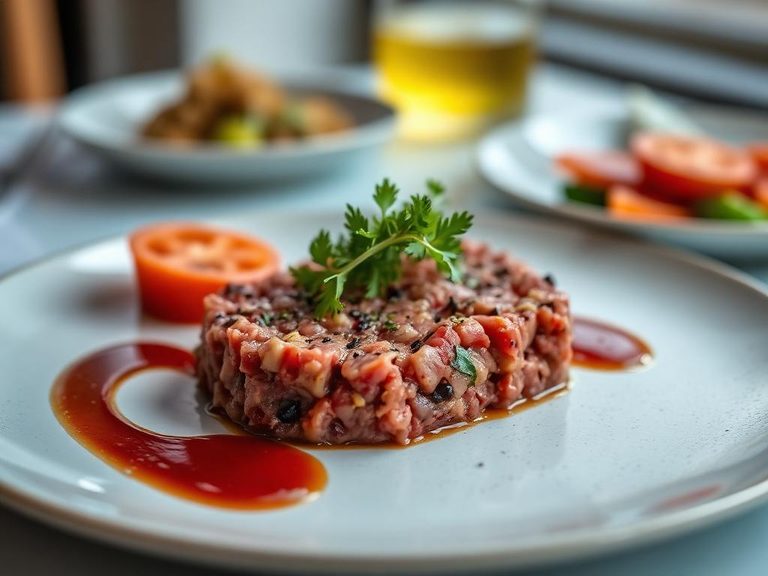
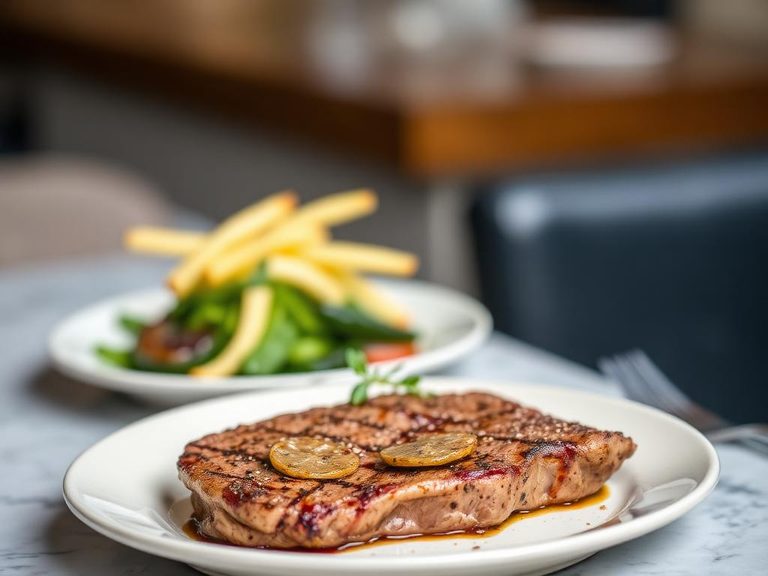
Bison steak is a lean, flavorful cut of meat from North American bison, often compared to beef but with a slightly sweeter, richer taste. It's typically seasoned simply with salt, pepper, and herbs, then grilled or pan-seared to preserve its natural flavor. This dish has deep roots in the culinary traditions of Indigenous peoples of the Great Plains and remains a popular choice in modern American and Canadian cuisine.
🍽️ Nutrition at a glance
Bison steak is exceptionally high in protein and low in fat, making it a nutrient-dense option with fewer calories than beef—roughly 150-200 calories per 4-ounce serving. It's an excellent source of iron, zinc, and B vitamins, supporting energy and immune health.
Nutrition breakdown
| Calories | 350 kcal |
| Protein | 42 g |
| Carbs | 0 g |
| Fat | 18 g |
| Fiber | 0 g |
| Sugar | 0 g |
| Sodium | 100 mg |
| Iron | 4.5 mg |
| Zinc | 8.5 mg |
| Vitamin B12 | 3.0 mcg |
| Niacin (B3) | 10 mg |
| Vitamin B6 | 0.6 mg |
| Phosphorus | 350 mg |
| Selenium | 40 mcg |
| Potassium | 450 mg |
Per 6 oz (170 g) · estimated, varies by recipe
💡 What's interesting
Culturally, bison was a sacred and vital resource for many Native American tribes, symbolizing abundance and sustainability. Nutritionally, its lower fat content and higher omega-3 fatty acids compared to conventional beef make it a sought-after alternative for health-conscious eaters.