

Fish, cod, Atlantic, dried and salted
Whole food · Finfish and Shellfish Products

Photo: Wikipedia
Atlantic cod, dried and salted, is a dense, intensely flavored preserved fish with a firm, flaky texture that transforms when rehydrated. Its nutritional profile is dominated by an extraordinary protein content, making it a powerful, low-fat food source. The preservation process gives it a distinct, savory, and briny character that is deeply embedded in culinary traditions.
Calorie split: 92% protein · 0% carbs · 8% fat
↓ Full nutrition💚 Why it's loved
People love it for its intense, concentrated umami flavor and satisfying, meaty texture that stands up to bold seasonings. It is a versatile staple in many cultures, prized for its ability to be stored for months and reconstituted into hearty, comforting dishes.
⚠️ Watch-outs & how to enjoy it better
Its primary downside is the very high sodium content from the salting process, which can be a concern for those monitoring blood pressure. To counteract this, it must be soaked in multiple changes of cold water for 24-48 hours before cooking to draw out excess salt. It is also a common fish allergen.
Key benefits
- Extremely high in protein for muscle maintenance and satiety.
- Virtually carbohydrate-free, making it suitable for low-carb diets.
- Very low in fat, providing lean nutrition.
- A concentrated source of essential minerals like phosphorus and selenium.
- Long shelf life without refrigeration due to traditional curing.
🍽️ Popular dishes
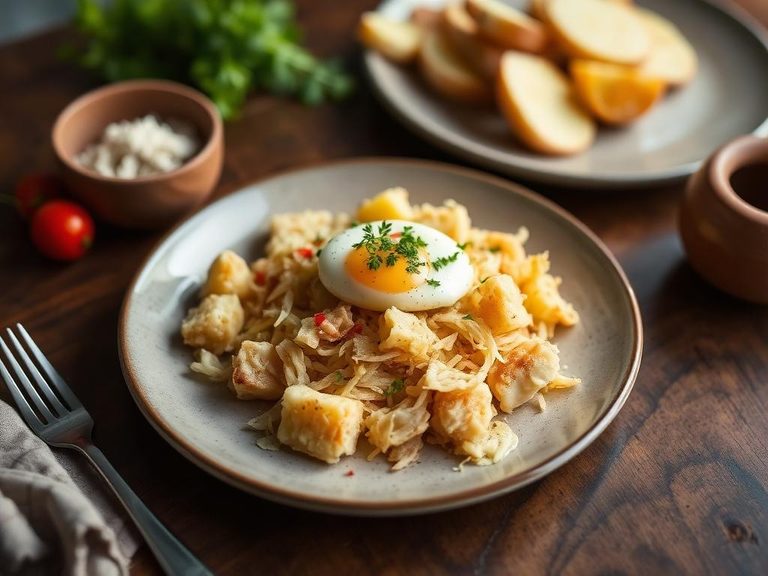
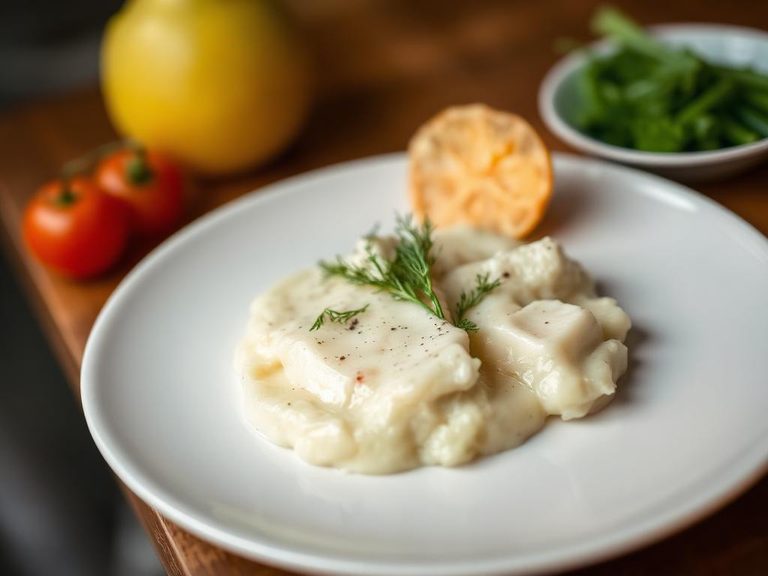
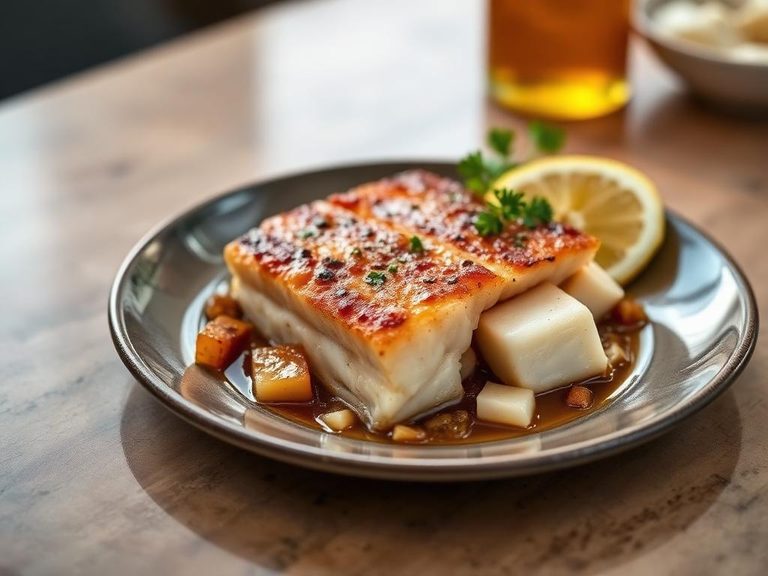
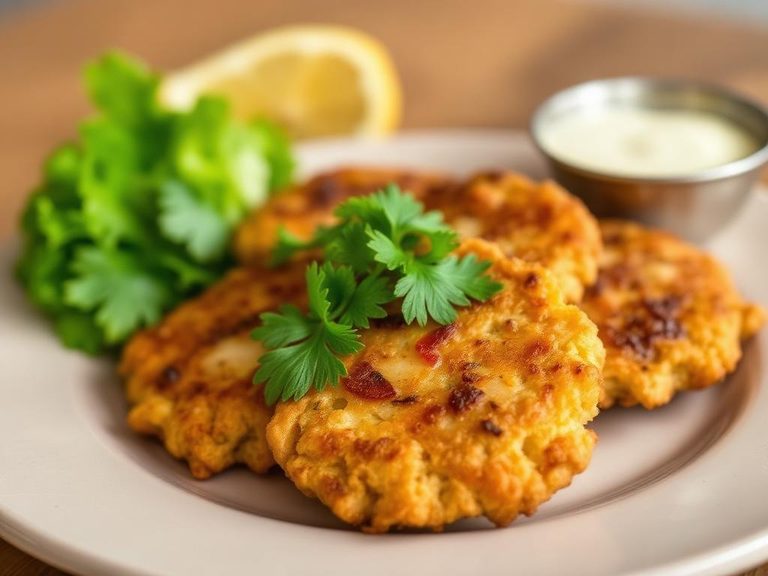
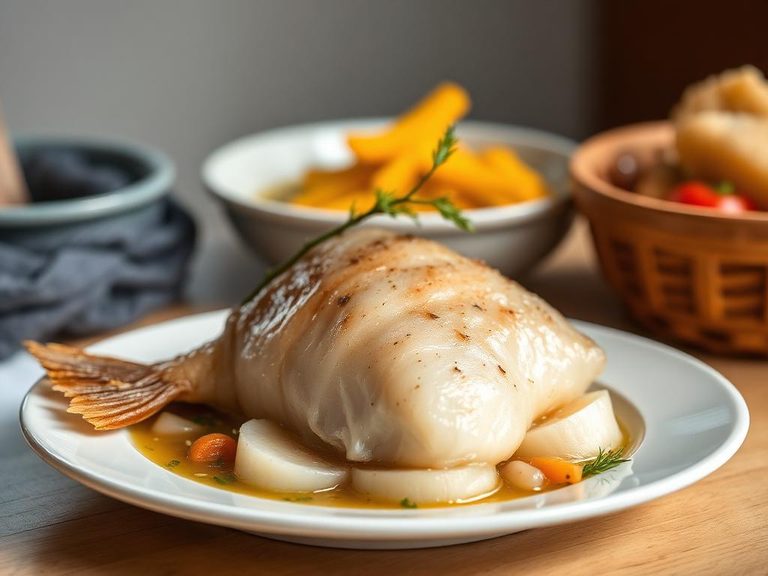
🌍 Where it's eaten
💡 Did you know?
The traditional method of drying and salting cod was so vital to global trade that it was used as currency in some parts of the world, including Canada, where it was once called 'the currency of the empire.'
Full nutrition (USDA data · scales with serving)
| Water | 16.1 g |
| Energy | 290 kcal |
| Energy | 1212 kj |
| Protein | 62.8 g |
| Total lipid (fat) | 2.4 g |
| Ash | 18.7 g |
| Carbohydrate, by difference | 0.00 g |
| Fiber, total dietary | 0.00 g |
| Total Sugars | 0.00 g |
| Calcium, Ca | 160 mg |
| Iron, Fe | 2.5 mg |
| Magnesium, Mg | 133 mg |
| Phosphorus, P | 950 mg |
| Potassium, K | 1458 mg |
| Sodium, Na | 7027 mg |
| Zinc, Zn | 1.6 mg |
| Copper, Cu | 0.18 mg |
| Manganese, Mn | 0.05 mg |
| Selenium, Se | 148 ug |
| Vitamin C, total ascorbic acid | 3.5 mg |
| Thiamin | 0.27 mg |
| Riboflavin | 0.24 mg |
| Niacin | 7.5 mg |
| Pantothenic acid | 1.7 mg |
| Vitamin B-6 | 0.86 mg |
| Folate, total | 25.0 ug |
| Folic acid | 0.00 ug |
| Folate, food | 25.0 ug |
| Folate, DFE | 25.0 ug |
| Choline, total | 291 mg |
| Vitamin B-12 | 10.0 ug |
| Vitamin B-12, added | 0.00 ug |
| Vitamin A, RAE | 42.0 ug |
| Retinol | 42.0 ug |
| Carotene, beta | 0.00 ug |
| Carotene, alpha | 0.00 ug |
| Cryptoxanthin, beta | 0.00 ug |
| Vitamin A, IU | 140 iu |
| Lycopene | 0.00 ug |
| Lutein + zeaxanthin | 0.00 ug |
| Vitamin E (alpha-tocopherol) | 2.8 mg |
| Vitamin E, added | 0.00 mg |
| Vitamin D (D2 + D3), International Units | 161 iu |
| Vitamin D (D2 + D3) | 4.0 ug |
| Vitamin D3 (cholecalciferol) | 4.0 ug |
| Vitamin K (phylloquinone) | 0.40 ug |
| Alcohol, ethyl | 0.00 g |
| Caffeine | 0.00 mg |
| Theobromine | 0.00 mg |
Fat & fatty acid profile (per 100g)
| Fatty acids, total saturated | 0.46 g |
| SFA 4:0 | 0.00 g |
| SFA 6:0 | 0.00 g |
| SFA 8:0 | 0.00 g |
| SFA 10:0 | 0.00 g |
| SFA 12:0 | 0.00 g |
| SFA 14:0 | 0.03 g |
| SFA 16:0 | 0.32 g |
| SFA 18:0 | 0.11 g |
| Fatty acids, total monounsaturated | 0.34 g |
| MUFA 16:1 | 0.06 g |
| MUFA 18:1 | 0.21 g |
| MUFA 20:1 | 0.05 g |
| MUFA 22:1 | 0.01 g |
| Fatty acids, total polyunsaturated | 0.80 g |
| PUFA 18:2 | 0.02 g |
| PUFA 18:3 | 0.00 g |
| PUFA 18:4 | 0.00 g |
| PUFA 20:4 | 0.08 g |
| PUFA 20:5 n-3 (EPA) | 0.01 g |
| PUFA 22:5 n-3 (DPA) | 0.04 g |
| PUFA 22:6 n-3 (DHA) | 0.42 g |
| Cholesterol | 152 mg |
Amino acid profile (per 100g)
| Tryptophan | 0.70 g |
| Threonine | 2.8 g |
| Isoleucine | 2.9 g |
| Leucine | 5.1 g |
| Lysine | 5.8 g |
| Methionine | 1.9 g |
| Cystine | 0.67 g |
| Phenylalanine | 2.5 g |
| Tyrosine | 2.1 g |
| Valine | 3.2 g |
| Arginine | 3.8 g |
| Histidine | 1.8 g |
| Alanine | 3.8 g |
| Aspartic acid | 6.4 g |
| Glutamic acid | 9.4 g |
| Glycine | 3.0 g |
| Proline | 2.2 g |
| Serine | 2.6 g |
FAQ
How do I prepare dried and salted cod for cooking?
You must rehydrate it by soaking it in cold water for 24-48 hours, changing the water several times to remove excess salt. After soaking, it can be boiled or used in recipes as directed.
Is dried and salted cod the same as stockfish?
No. Dried and salted cod is cured with salt, while stockfish is air-dried without salt. They have different textures and flavors, and stockfish requires a much longer soaking time.
Can I eat it raw after soaking?
It is not recommended to eat it raw. The curing and drying process is a preservation method, not a cooking method. It should always be cooked (boiled, baked, or fried) after rehydration for safety and texture.
Nutrient density (calculated · NRF9.3)
Nutrient Rich Foods index: beneficial nutrients (protein, fiber, vitamins, minerals) minus saturated fat, added sugar & sodium, per 100 kcal.
NRF9.3 index — Fulgoni, Keast & Drewnowski, 2009. Computed from USDA nutrients.
Weight-loss friendliness (composite index)
Energy density 2.90 kcal/g · 87% calories from protein · 0.0 g fiber · 0.0 g sugar per 100 g.
Composite of energy density (Rolls et al., 1999), protein & fiber satiety, minus sugar. A calculated heuristic — ranks satiety-per-calorie, not a clinical measure.
Dietary load (calculated from USDA values)
Potential renal acid load. Positive = acid-forming, negative = alkaline-forming.
Sodium-to-potassium ratio: 4.82 (lower is better — aim for ≤ 1)
Sodium:potassium per WHO potassium guidance. Computed from USDA nutrients.