

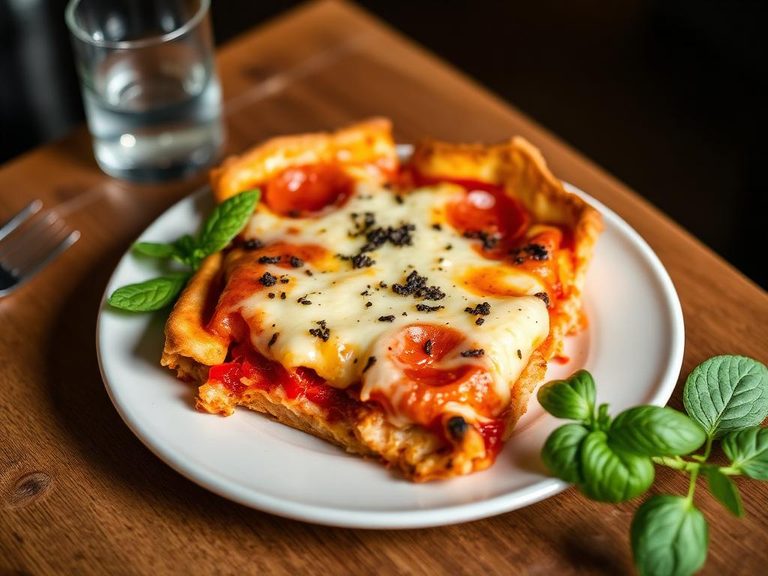
DIGIORNO Pizza, pepperoni topping, thin crispy crust, frozen, baked
Whole food · Fast Foods
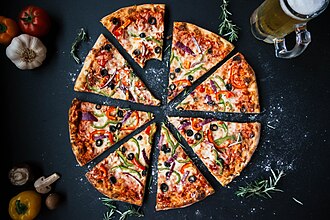
Photo: Wikipedia
This is a classic frozen pepperoni pizza with a thin, crispy crust that bakes to a satisfying crunch, topped with savory, slightly spicy pepperoni and melted mozzarella. The nutrition profile per 100g is balanced for a ready meal, offering a solid protein boost (13.22g) alongside its carbs and fats. It's a convenient, heat-and-eat option that delivers a familiar, comforting flavor.
Calorie split: 19% protein · 40% carbs · 41% fat
↓ Full nutrition💚 Why it's loved
People love it for the reliable, crispy texture and the classic salty-spicy flavor of pepperoni that crisps up in the oven. It's a go-to for quick weeknight dinners, game-day snacks, or satisfying a late-night craving without any preparation.
⚠️ Watch-outs & how to enjoy it better
The high sodium and saturated fat content from the cheese and pepperoni can be a concern for those monitoring heart health or blood pressure. To counteract, pair a slice with a large, vinegar-dressed green salad to add volume and fiber, and practice portion control by having one or two slices as part of a balanced meal.
Key benefits
- High protein content per 100g for a frozen meal.
- Thin crust reduces overall carbohydrate load versus deep-dish styles.
- Convenient, single-serve or family-sized meal solution.
- Good source of dietary fiber (2.8g) from the crust and toppings.
🍽️ Popular dishes
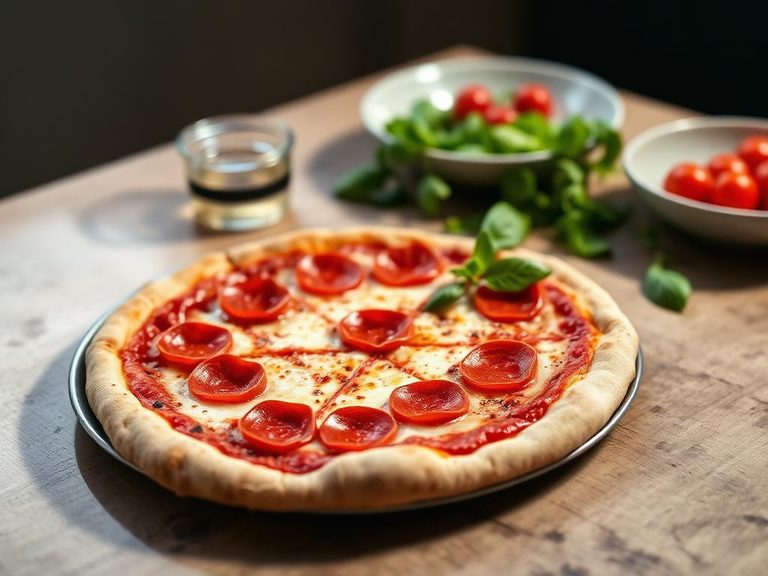

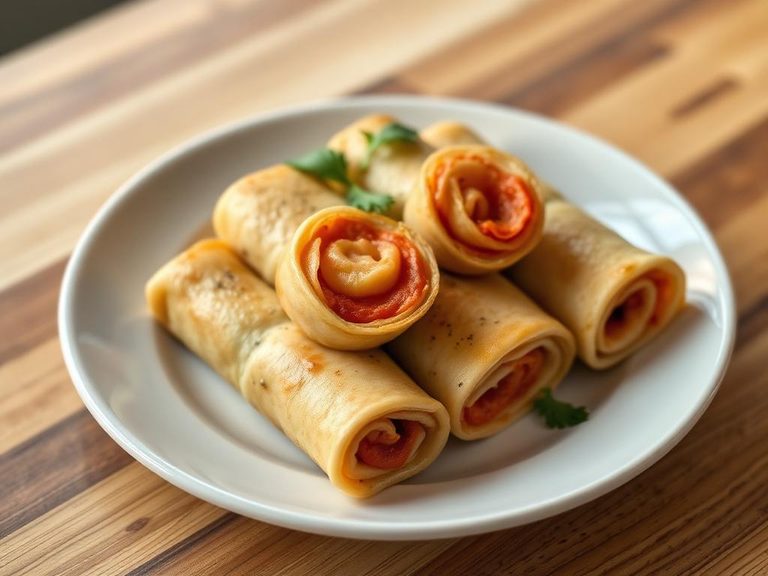
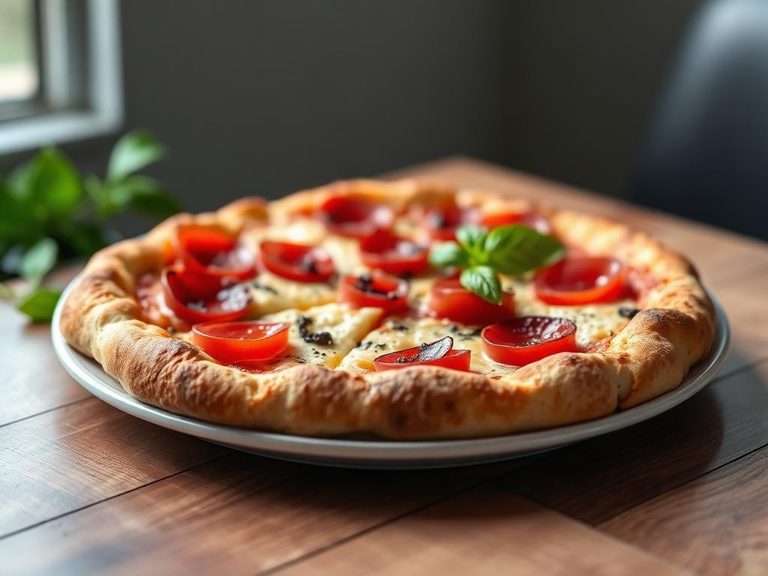
🌍 Where it's eaten
💡 Did you know?
The pepperoni topping is actually an Italian-American invention, not from Italy; it's a cured sausage inspired by spicy salamis from Southern Italy but developed in the U.S.
Full nutrition (USDA data · scales with serving)
| Water | 42.4 g |
| Energy | 283 kcal |
| Energy | 1185 kj |
| Protein | 13.2 g |
| Total lipid (fat) | 12.9 g |
| Ash | 2.9 g |
| Carbohydrate, by difference | 28.7 g |
| Fiber, total dietary | 2.8 g |
| Sucrose | 0.00 g |
| Glucose | 1.3 g |
| Fructose | 1.4 g |
| Lactose | 0.00 g |
| Maltose | 0.97 g |
| Starch | 22.3 g |
| Calcium, Ca | 209 mg |
| Iron, Fe | 0.90 mg |
| Magnesium, Mg | 28.0 mg |
| Phosphorus, P | 213 mg |
| Potassium, K | 268 mg |
| Sodium, Na | 663 mg |
| Zinc, Zn | 1.6 mg |
| Copper, Cu | 0.11 mg |
| Manganese, Mn | 0.30 mg |
| Selenium, Se | 24.1 ug |
| Vitamin C, total ascorbic acid | 0.90 mg |
| Thiamin | 0.14 mg |
| Riboflavin | 0.13 mg |
| Niacin | 2.1 mg |
| Pantothenic acid | 0.54 mg |
| Vitamin B-6 | 0.16 mg |
| Vitamin B-12 | 0.55 ug |
| Vitamin A, RAE | 46.0 ug |
| Retinol | 46.0 ug |
| Vitamin A, IU | 152 iu |
| Vitamin E (alpha-tocopherol) | 0.77 mg |
| Tocopherol, beta | 0.06 mg |
| Tocopherol, gamma | 0.99 mg |
| Tocopherol, delta | 0.29 mg |
| Tocotrienol, alpha | 0.00 mg |
| Tocotrienol, beta | 0.00 mg |
| Tocotrienol, gamma | 0.01 mg |
| Tocotrienol, delta | 0.00 mg |
| Vitamin K (phylloquinone) | 5.0 ug |
| Vitamin K (Dihydrophylloquinone) | 3.9 ug |
| Vitamin K (Menaquinone-4) | 4.0 ug |
Fat & fatty acid profile (per 100g)
| Fatty acids, total saturated | 5.0 g |
| SFA 4:0 | 0.06 g |
| SFA 6:0 | 0.06 g |
| SFA 8:0 | 0.04 g |
| SFA 10:0 | 0.11 g |
| SFA 12:0 | 0.14 g |
| SFA 14:0 | 0.53 g |
| SFA 15:0 | 0.05 g |
| SFA 16:0 | 2.7 g |
| SFA 17:0 | 0.05 g |
| SFA 18:0 | 1.2 g |
| SFA 20:0 | 0.02 g |
| SFA 22:0 | 0.01 g |
| SFA 24:0 | 0.01 g |
| Fatty acids, total monounsaturated | 4.4 g |
| MUFA 14:1 | 0.04 g |
| MUFA 15:1 | 0.00 g |
| MUFA 16:1 | 0.23 g |
| MUFA 16:1 c | 0.22 g |
| MUFA 17:1 | 0.01 g |
| MUFA 18:1 | 4.0 g |
| MUFA 18:1 c | 3.6 g |
| MUFA 20:1 | 0.05 g |
| MUFA 22:1 | 0.02 g |
| MUFA 22:1 c | 0.02 g |
| MUFA 24:1 c | 0.00 g |
| Fatty acids, total polyunsaturated | 1.8 g |
| PUFA 18:2 | 1.6 g |
| PUFA 18:2 n-6 c,c | 1.5 g |
| PUFA 18:2 CLAs | 0.04 g |
| PUFA 18:3 | 0.14 g |
| PUFA 18:3 n-3 c,c,c (ALA) | 0.13 g |
| PUFA 18:3 n-6 c,c,c | 0.00 g |
| PUFA 18:4 | 0.00 g |
| PUFA 20:2 n-6 c,c | 0.02 g |
| PUFA 20:3 | 0.01 g |
| PUFA 20:3 n-3 | 0.00 g |
| PUFA 20:3 n-6 | 0.01 g |
| PUFA 20:4 | 0.02 g |
| PUFA 20:5 n-3 (EPA) | 0.00 g |
| PUFA 22:4 | 0.01 g |
| PUFA 22:5 n-3 (DPA) | 0.01 g |
| PUFA 22:6 n-3 (DHA) | 0.00 g |
| Fatty acids, total trans | 0.51 g |
| Fatty acids, total trans-monoenoic | 0.46 g |
| TFA 16:1 t | 0.01 g |
| TFA 18:1 t | 0.45 g |
| TFA 22:1 t | 0.00 g |
| TFA 18:2 t not further defined | 0.05 g |
| Fatty acids, total trans-polyenoic | 0.05 g |
| Cholesterol | 28.0 mg |
FAQ
Is the crust actually crispy when baked?
Yes, the 'thin crispy crust' is designed to become crisp and slightly cracker-like when baked at the recommended high temperature (around 400-425°F or 200-220°C), especially on a preheated pizza stone or directly on the oven rack.
How does the nutrition compare to a takeout pepperoni pizza?
Per 100g, it typically has less fat and slightly more protein than many greasy takeout versions, but can be higher in sodium due to preservatives. The thin crust also means fewer calories per slice than a thick, doughy pan pizza.
Can I add my own toppings before baking?
Absolutely. It's a great blank canvas. Popular additions include extra veggies (bell peppers, onions, mushrooms), a sprinkle of red pepper flakes for heat, or a drizzle of hot honey after baking for a sweet-spicy kick.
Nutrient density (calculated · NRF9.3)
Nutrient Rich Foods index: beneficial nutrients (protein, fiber, vitamins, minerals) minus saturated fat, added sugar & sodium, per 100 kcal.
NRF9.3 index — Fulgoni, Keast & Drewnowski, 2009. Computed from USDA nutrients.
Weight-loss friendliness (composite index)
Energy density 2.83 kcal/g · 19% calories from protein · 2.8 g fiber · 0.0 g sugar per 100 g.
Composite of energy density (Rolls et al., 1999), protein & fiber satiety, minus sugar. A calculated heuristic — ranks satiety-per-calorie, not a clinical measure.
Dietary load (calculated from USDA values)
Potential renal acid load. Positive = acid-forming, negative = alkaline-forming.
Sodium-to-potassium ratio: 2.47 (lower is better — aim for ≤ 1)
Sodium:potassium per WHO potassium guidance. Computed from USDA nutrients.