

Cranberry juice cocktail, bottled
Whole food · Beverages

Photo: Wikipedia
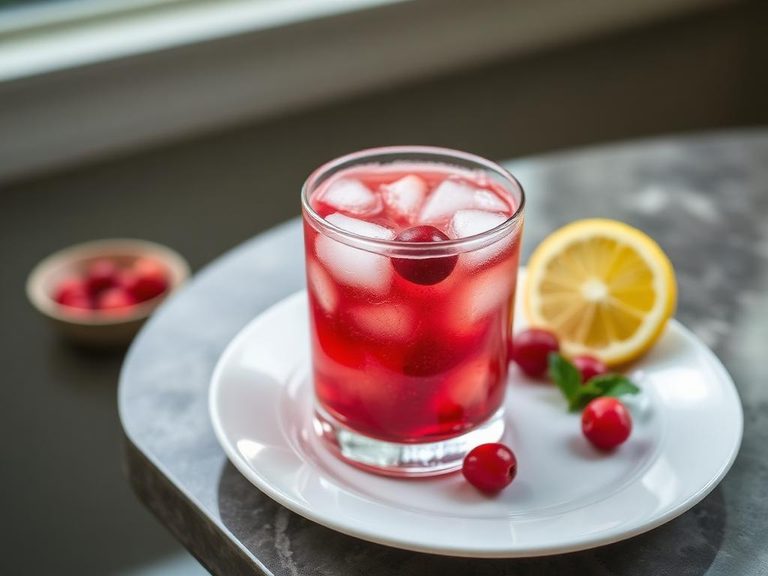
A vibrant, ruby-red beverage made from cranberry juice blended with water and sweeteners, offering a tart-sweet punch and a smooth, non-pulpy texture. Nutritionally, it's a low-calorie drink (54 kcal/100g) that provides a quick source of energy primarily from its 13.52g of carbohydrates, almost all of which are added sugars.
Calorie split: 0% protein · 98% carbs · 2% fat
↓ Full nutrition💚 Why it's loved
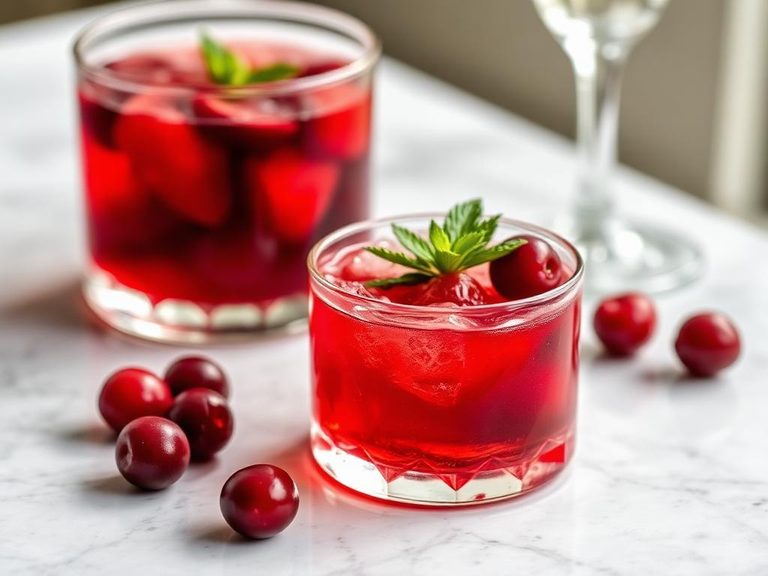
People love its distinctive sweet-tart flavor profile, which is both refreshing and festive, often evoking autumn and holiday traditions. Its versatility makes it a staple for cocktails, mocktails, and as a standalone chilled drink.
⚠️ Watch-outs & how to enjoy it better
The high sugar content (11.87g per 100g) can contribute to blood-sugar spikes and is a concern for those managing diabetes or calorie intake. To counteract this, practice portion control (e.g., a 120ml serving) and consider diluting it with sparkling water or pairing it with a source of protein or fat, like nuts, to slow sugar absorption.
Key benefits
- Provides quick energy from carbohydrates.
- Contains antioxidants like vitamin C and polyphenols.
- May support urinary tract health (though less than pure juice).
- Low in fat and protein.
- A popular, flavorful alternative to plain water.
🍽️ Popular dishes
🌍 Where it's eaten
💡 Did you know?
The name 'cranberry' is thought to derive from 'craneberry,' as the flower's stamens and petals were said to resemble the head and neck of a sandhill crane.
Full nutrition (USDA data · scales with serving)
| Water | 86.2 g |
| Energy | 54.0 kcal |
| Energy | 224 kj |
| Protein | 0.00 g |
| Total lipid (fat) | 0.10 g |
| Ash | 0.20 g |
| Carbohydrate, by difference | 13.5 g |
| Fiber, total dietary | 0.00 g |
| Total Sugars | 11.9 g |
| Sucrose | 0.00 g |
| Glucose | 6.8 g |
| Fructose | 5.0 g |
| Lactose | 0.00 g |
| Maltose | 0.12 g |
| Galactose | 0.00 g |
| Calcium, Ca | 3.0 mg |
| Iron, Fe | 0.10 mg |
| Magnesium, Mg | 1.0 mg |
| Phosphorus, P | 1.0 mg |
| Potassium, K | 14.0 mg |
| Sodium, Na | 2.0 mg |
| Zinc, Zn | 0.03 mg |
| Copper, Cu | 0.01 mg |
| Manganese, Mn | 0.05 mg |
| Selenium, Se | 0.20 ug |
| Fluoride, F | 67.3 ug |
| Vitamin C, total ascorbic acid | 42.3 mg |
| Thiamin | 0.00 mg |
| Riboflavin | 0.00 mg |
| Niacin | 0.04 mg |
| Pantothenic acid | 0.05 mg |
| Vitamin B-6 | 0.00 mg |
| Folate, total | 0.00 ug |
| Folic acid | 0.00 ug |
| Folate, food | 0.00 ug |
| Folate, DFE | 0.00 ug |
| Choline, total | 1.1 mg |
| Betaine | 0.10 mg |
| Vitamin B-12 | 0.00 ug |
| Vitamin B-12, added | 0.00 ug |
| Vitamin A, RAE | 0.00 ug |
| Retinol | 0.00 ug |
| Carotene, beta | 5.0 ug |
| Carotene, alpha | 0.00 ug |
| Cryptoxanthin, beta | 0.00 ug |
| Vitamin A, IU | 8.0 iu |
| Lycopene | 0.00 ug |
| Lutein + zeaxanthin | 13.0 ug |
| Vitamin E (alpha-tocopherol) | 0.22 mg |
| Vitamin E, added | 0.00 mg |
| Vitamin D (D2 + D3), International Units | 0.00 iu |
| Vitamin D (D2 + D3) | 0.00 ug |
| Vitamin K (phylloquinone) | 1.0 ug |
| Alcohol, ethyl | 0.00 g |
| Caffeine | 0.00 mg |
| Theobromine | 0.00 mg |
Fat & fatty acid profile (per 100g)
| Fatty acids, total saturated | 0.01 g |
| SFA 4:0 | 0.00 g |
| SFA 6:0 | 0.00 g |
| SFA 8:0 | 0.00 g |
| SFA 10:0 | 0.00 g |
| SFA 12:0 | 0.00 g |
| SFA 14:0 | 0.00 g |
| SFA 16:0 | 0.01 g |
| SFA 18:0 | 0.00 g |
| Fatty acids, total monounsaturated | 0.02 g |
| MUFA 16:1 | 0.00 g |
| MUFA 18:1 | 0.02 g |
| MUFA 20:1 | 0.00 g |
| MUFA 22:1 | 0.00 g |
| Fatty acids, total polyunsaturated | 0.06 g |
| PUFA 18:2 | 0.04 g |
| PUFA 18:3 | 0.02 g |
| PUFA 18:4 | 0.00 g |
| PUFA 20:4 | 0.00 g |
| PUFA 20:5 n-3 (EPA) | 0.00 g |
| PUFA 22:5 n-3 (DPA) | 0.00 g |
| PUFA 22:6 n-3 (DHA) | 0.00 g |
| Fatty acids, total trans | 0.00 g |
| Cholesterol | 0.00 mg |
Amino acid profile (per 100g)
Estimated from Cranberry juice cocktail, bottled, low calorie, with calcium, saccharin and corn sweetener — USDA does not publish this profile for Cranberry juice cocktail.
| Tryptophan | 0.00 g |
| Threonine | 0.00 g |
| Isoleucine | 0.00 g |
| Leucine | 0.00 g |
| Lysine | 0.00 g |
| Methionine | 0.00 g |
| Cystine | 0.00 g |
| Phenylalanine | 0.00 g |
| Tyrosine | 0.00 g |
| Valine | 0.00 g |
| Arginine | 0.00 g |
| Histidine | 0.00 g |
| Alanine | 0.00 g |
| Aspartic acid | 0.00 g |
| Glutamic acid | 0.00 g |
| Glycine | 0.00 g |
| Proline | 0.00 g |
| Serine | 0.00 g |
FAQ
Is cranberry juice cocktail the same as 100% cranberry juice?
No. Cranberry juice cocktail is a blend of cranberry juice, water, and added sweeteners (like high-fructose corn syrup or sugar), making it sweeter and less tart than 100% pure cranberry juice.
Does it really help prevent UTIs?
While pure cranberry juice contains compounds that may help prevent certain bacteria from adhering to the bladder wall, the cocktail version has significantly less of these active compounds due to dilution and added sugars. It's not a reliable medical treatment.
Why is it so high in sugar?
Pure cranberry juice is extremely tart and astringent. To make it palatable for a wide audience, manufacturers add substantial amounts of sugar or sweeteners, which constitutes almost all of its carbohydrate content.
Nutrient density (calculated · NRF9.3)
Nutrient Rich Foods index: beneficial nutrients (protein, fiber, vitamins, minerals) minus saturated fat, added sugar & sodium, per 100 kcal.
NRF9.3 index — Fulgoni, Keast & Drewnowski, 2009. Computed from USDA nutrients.
Weight-loss friendliness (composite index)
Energy density 0.54 kcal/g · 0% calories from protein · 0.0 g fiber · 11.9 g sugar per 100 g.
Composite of energy density (Rolls et al., 1999), protein & fiber satiety, minus sugar. A calculated heuristic — ranks satiety-per-calorie, not a clinical measure.
Dietary load (calculated from USDA values)
Potential renal acid load. Positive = acid-forming, negative = alkaline-forming.
Sodium-to-potassium ratio: 0.14 (lower is better — aim for ≤ 1)
Sodium:potassium per WHO potassium guidance. Computed from USDA nutrients.