

Cranberry juice blend, 100% juice, bottled, with added vitamin C and calcium
Whole food · Fruits and Fruit Juices

Photo: Wikipedia
A vibrant, ruby-red blend of cranberry juice and other fruit juices, fortified with vitamin C and calcium for a tangy, refreshing sip. It delivers a clean, tart-sweet flavor profile with a smooth, non-pulpy texture. Nutritionally, it's a low-calorie source of added vitamins and minerals, though its sugar content comes primarily from fruit sugars.
Calorie split: 2% protein · 95% carbs · 2% fat
↓ Full nutrition💚 Why it's loved
People love its distinctive tart-sweet balance that's more complex than plain fruit punches. It's a versatile mixer for cocktails and mocktails, and a staple at holiday meals in North American cuisine.
⚠️ Watch-outs & how to enjoy it better
The 9.8g of sugar per 100g can cause blood-sugar spikes if consumed in large quantities, so portion control is key. Those monitoring kidney health should be mindful of its oxalate content. To mitigate sugar impact, pair it with a source of protein or fat, like nuts or yogurt, and stick to a single serving.
Key benefits
- Good source of Vitamin C for immune support
- Provides calcium for bone health
- Low in fat and contains no cholesterol
- Contains antioxidants from cranberries
- A refreshing, low-calorie beverage option
🍽️ Popular dishes
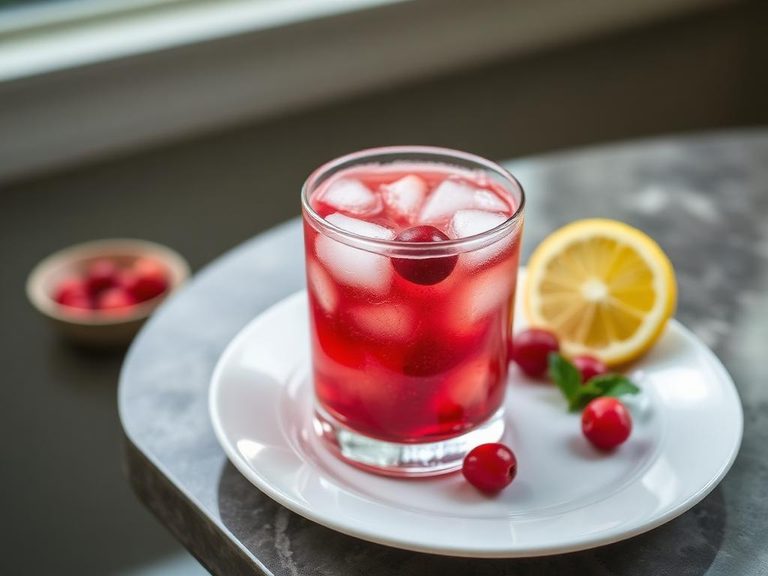
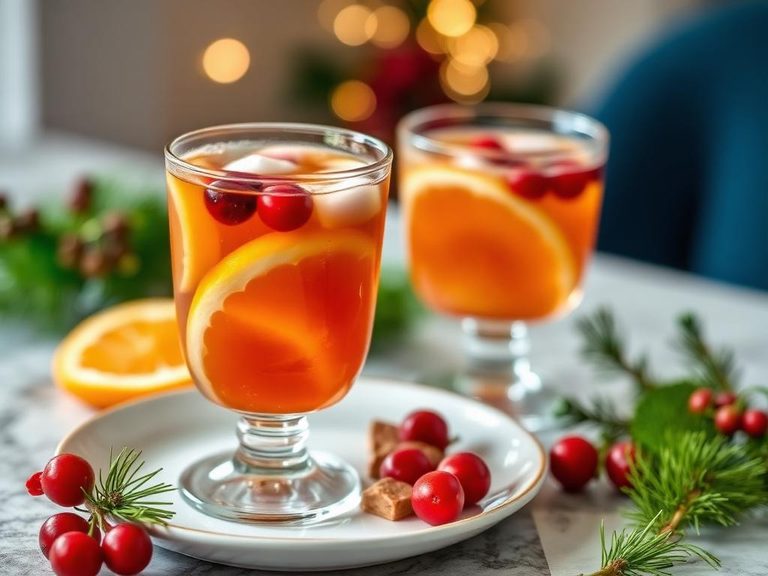
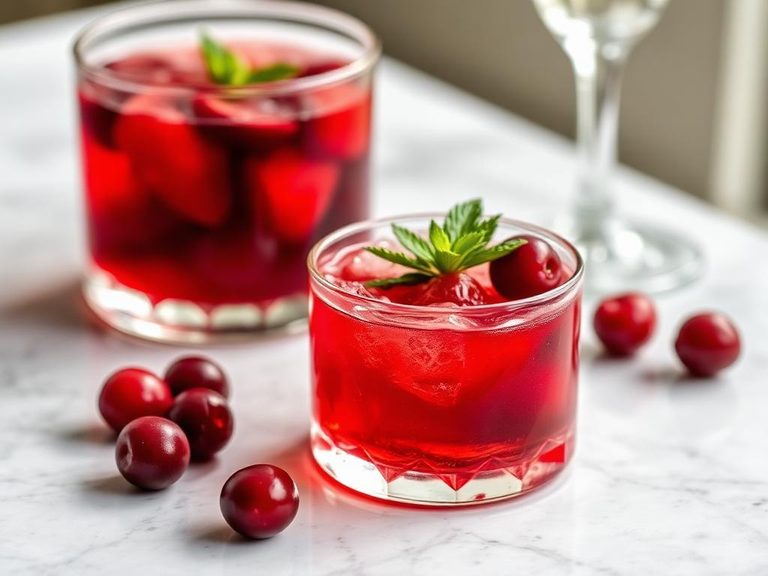
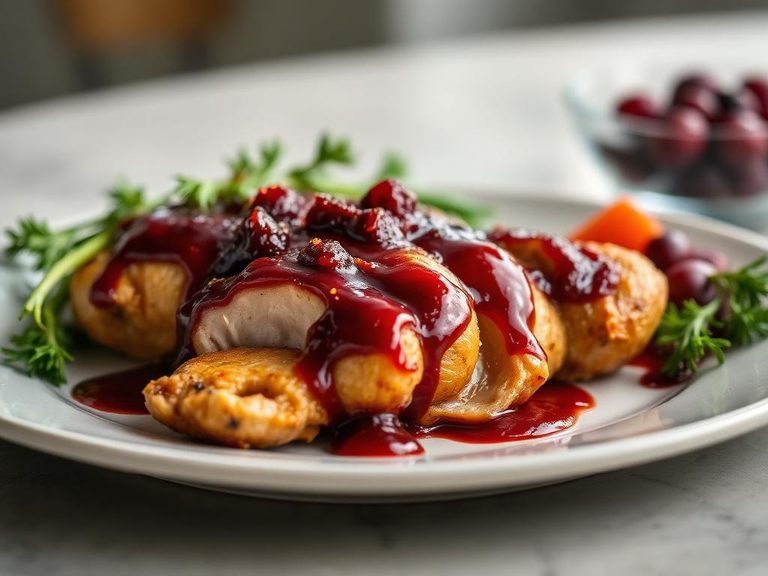
🌍 Where it's eaten
💡 Did you know?
The '100% juice' blend often includes apple or grape juice, which are used to naturally sweeten the intensely tart cranberry juice and create a smoother, more palatable flavor profile.
Full nutrition (USDA data · scales with serving)
| Water | 88.6 g |
| Energy | 45.0 kcal |
| Energy | 187 kj |
| Protein | 0.27 g |
| Total lipid (fat) | 0.12 g |
| Ash | 0.10 g |
| Carbohydrate, by difference | 10.9 g |
| Fiber, total dietary | 0.10 g |
| Total Sugars | 9.8 g |
| Sucrose | 0.10 g |
| Glucose | 4.0 g |
| Fructose | 5.7 g |
| Lactose | 0.00 g |
| Maltose | 0.00 g |
| Galactose | 0.00 g |
| Calcium, Ca | 19.0 mg |
| Iron, Fe | 0.08 mg |
| Magnesium, Mg | 5.0 mg |
| Phosphorus, P | 8.0 mg |
| Potassium, K | 76.0 mg |
| Sodium, Na | 6.0 mg |
| Zinc, Zn | 0.05 mg |
| Copper, Cu | 0.02 mg |
| Manganese, Mn | 0.07 mg |
| Selenium, Se | 0.10 ug |
| Vitamin C, total ascorbic acid | 31.5 mg |
| Thiamin | 0.01 mg |
| Riboflavin | 0.01 mg |
| Niacin | 0.09 mg |
| Vitamin B-6 | 0.02 mg |
| Folate, total | 18.0 ug |
| Folic acid | 0.00 ug |
| Folate, food | 18.0 ug |
| Folate, DFE | 18.0 ug |
| Choline, total | 1.8 mg |
| Vitamin B-12 | 0.00 ug |
| Vitamin B-12, added | 0.00 ug |
| Vitamin A, RAE | 1.0 ug |
| Retinol | 0.00 ug |
| Carotene, beta | 15.0 ug |
| Carotene, alpha | 0.00 ug |
| Cryptoxanthin, beta | 0.00 ug |
| Vitamin A, IU | 25.0 iu |
| Lycopene | 0.00 ug |
| Lutein + zeaxanthin | 68.0 ug |
| Vitamin E (alpha-tocopherol) | 0.01 mg |
| Vitamin E, added | 0.00 mg |
| Vitamin D (D2 + D3), International Units | 0.00 iu |
| Vitamin D (D2 + D3) | 0.00 ug |
| Vitamin K (phylloquinone) | 0.00 ug |
| Alcohol, ethyl | 0.00 g |
| Caffeine | 0.00 mg |
| Theobromine | 0.00 mg |
Fat & fatty acid profile (per 100g)
| Fatty acids, total saturated | 0.00 g |
| SFA 4:0 | 0.00 g |
| SFA 6:0 | 0.00 g |
| SFA 8:0 | 0.00 g |
| SFA 10:0 | 0.00 g |
| SFA 12:0 | 0.00 g |
| SFA 14:0 | 0.00 g |
| SFA 16:0 | 0.00 g |
| SFA 18:0 | 0.00 g |
| Fatty acids, total monounsaturated | 0.00 g |
| MUFA 16:1 | 0.00 g |
| MUFA 18:1 | 0.00 g |
| MUFA 20:1 | 0.00 g |
| MUFA 22:1 | 0.00 g |
| Fatty acids, total polyunsaturated | 0.00 g |
| PUFA 18:2 | 0.00 g |
| PUFA 18:3 | 0.00 g |
| PUFA 18:4 | 0.00 g |
| PUFA 20:4 | 0.00 g |
| PUFA 20:5 n-3 (EPA) | 0.00 g |
| PUFA 22:5 n-3 (DPA) | 0.00 g |
| PUFA 22:6 n-3 (DHA) | 0.00 g |
| Fatty acids, total trans | 0.00 g |
| Cholesterol | 0.00 mg |
Amino acid profile (per 100g)
Estimated from Cranberry juice cocktail, bottled, low calorie, with calcium, saccharin and corn sweetener — USDA does not publish this profile for Cranberry juice blend.
| Tryptophan | 0.00 g |
| Threonine | 0.00 g |
| Isoleucine | 0.00 g |
| Leucine | 0.00 g |
| Lysine | 0.00 g |
| Methionine | 0.00 g |
| Cystine | 0.00 g |
| Phenylalanine | 0.00 g |
| Tyrosine | 0.00 g |
| Valine | 0.00 g |
| Arginine | 0.00 g |
| Histidine | 0.00 g |
| Alanine | 0.00 g |
| Aspartic acid | 0.00 g |
| Glutamic acid | 0.00 g |
| Glycine | 0.00 g |
| Proline | 0.00 g |
| Serine | 0.00 g |
FAQ
Is this the same as pure cranberry juice?
No. This is a 'juice blend,' meaning it's a mix of cranberry juice with other fruit juices (like apple or grape) to balance the tartness. Pure, 100% cranberry juice is extremely tart and not typically consumed straight.
How does the added calcium affect the taste?
The added calcium is usually in a form like calcium lactate or calcium citrate, which is tasteless and doesn't alter the juice's characteristic tangy flavor.
Is it good for hydration?
Yes, it contributes to daily fluid intake. However, due to its sugar content, water remains the best choice for pure hydration. It's a flavorful alternative to plain water.
Nutrient density (calculated · NRF9.3)
Nutrient Rich Foods index: beneficial nutrients (protein, fiber, vitamins, minerals) minus saturated fat, added sugar & sodium, per 100 kcal.
NRF9.3 index — Fulgoni, Keast & Drewnowski, 2009. Computed from USDA nutrients.
Weight-loss friendliness (composite index)
Energy density 0.45 kcal/g · 2% calories from protein · 0.1 g fiber · 9.8 g sugar per 100 g.
Composite of energy density (Rolls et al., 1999), protein & fiber satiety, minus sugar. A calculated heuristic — ranks satiety-per-calorie, not a clinical measure.
Dietary load (calculated from USDA values)
Potential renal acid load. Positive = acid-forming, negative = alkaline-forming.
Sodium-to-potassium ratio: 0.08 (lower is better — aim for ≤ 1)
Sodium:potassium per WHO potassium guidance. Computed from USDA nutrients.