

Chicken, broilers or fryers, light meat, meat only, cooked, roasted
Whole food · Poultry Products
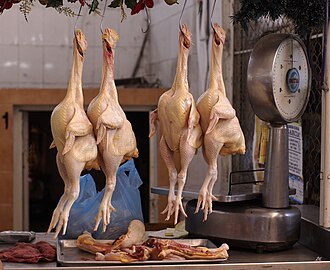
Photo: Wikipedia
This is the lean, white breast meat of a young chicken, roasted to a firm yet tender texture with a mild, savory flavor. It's a powerhouse of complete protein, delivering over 30 grams per 100-gram serving with virtually no fat or carbohydrates. The result is a clean, versatile canvas that absorbs marinades and seasonings beautifully.
Calorie split: 75% protein · 0% carbs · 25% fat
↓ Full nutrition💚 Why it's loved
People adore it for its incredible versatility and neutral flavor, which acts as a perfect base for countless global cuisines and diets. It's a reliable, quick-cooking protein that can be seasoned to taste anything from mild to bold.
⚠️ Watch-outs & how to enjoy it better
Overcooking is its main pitfall, leading to a dry, chalky texture that can be unpalatable. To counter this, use a meat thermometer (target 165°F/74°C), brine before cooking, or shred it for use in salads and tacos where dryness is less noticeable.
Key benefits
- Exceptionally high in complete protein for muscle maintenance.
- Very low in fat, especially saturated fat.
- Zero carbohydrates, making it ideal for low-carb diets.
- Rich in selenium, phosphorus, and B vitamins like niacin.
- A lean, nutrient-dense staple for weight management.
🍽️ Popular dishes
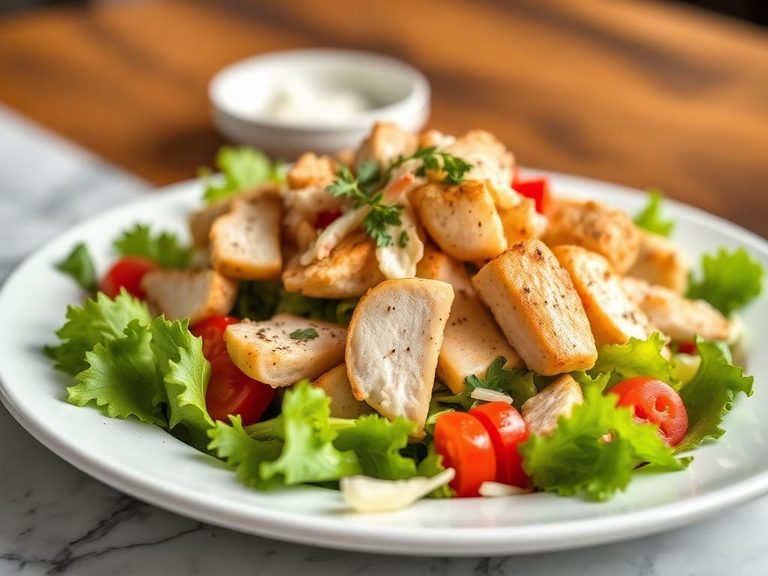
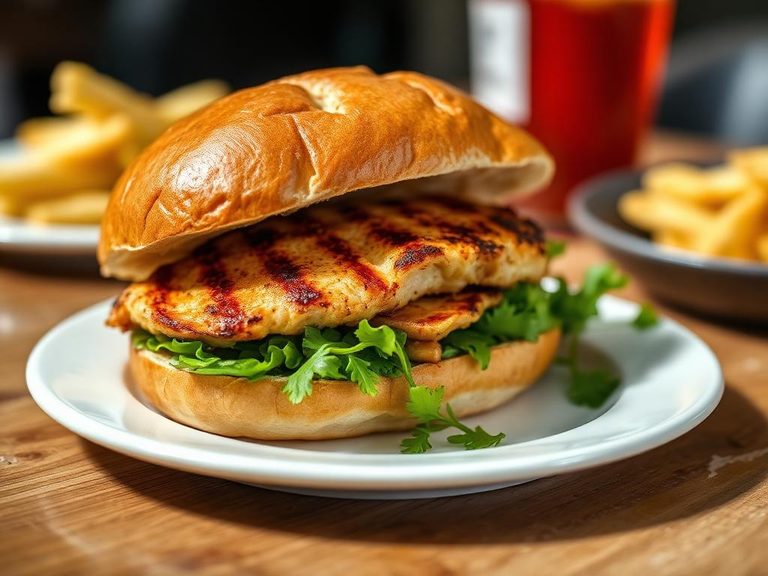

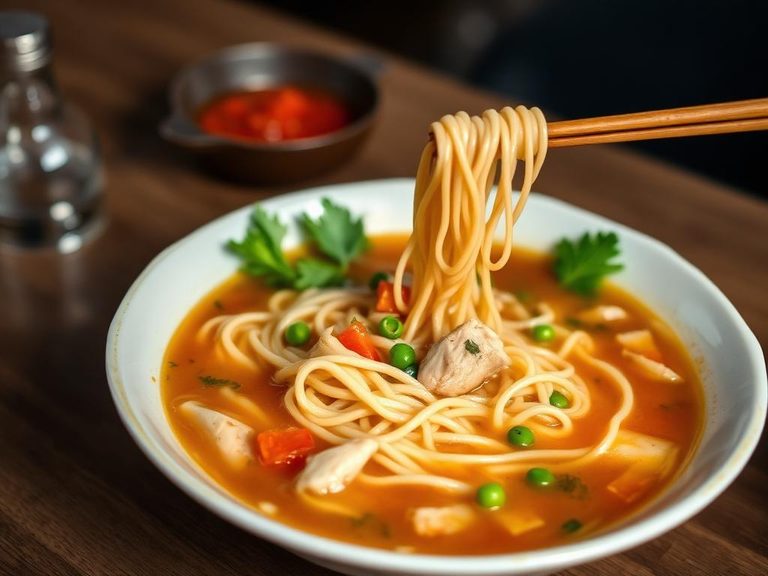
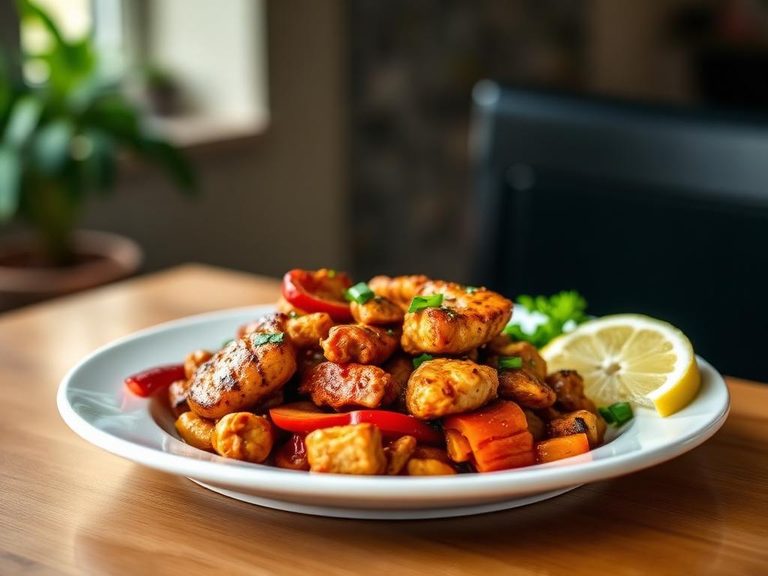
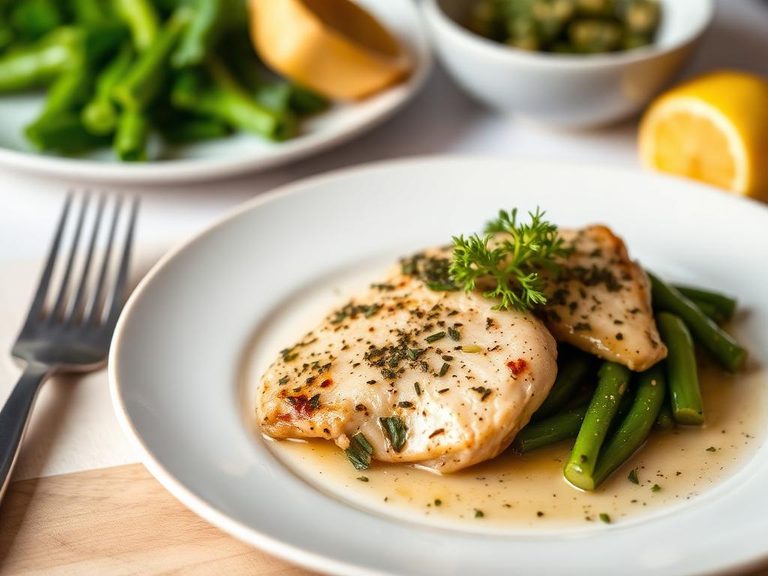
🌍 Where it's eaten
💡 Did you know?
The pectoralis major muscle, which is the breast meat, can make up about 15-20% of a broiler chicken's total live weight, a proportion selectively bred for decades to meet consumer demand for white meat.
Full nutrition (USDA data · scales with serving)
| Water | 64.8 g |
| Energy | 173 kcal |
| Energy | 724 kj |
| Protein | 30.9 g |
| Total lipid (fat) | 4.5 g |
| Ash | 1.0 g |
| Carbohydrate, by difference | 0.00 g |
| Fiber, total dietary | 0.00 g |
| Total Sugars | 0.00 g |
| Calcium, Ca | 15.0 mg |
| Iron, Fe | 1.1 mg |
| Magnesium, Mg | 27.0 mg |
| Phosphorus, P | 216 mg |
| Potassium, K | 247 mg |
| Sodium, Na | 77.0 mg |
| Zinc, Zn | 1.2 mg |
| Copper, Cu | 0.05 mg |
| Manganese, Mn | 0.02 mg |
| Selenium, Se | 24.4 ug |
| Vitamin C, total ascorbic acid | 0.00 mg |
| Thiamin | 0.07 mg |
| Riboflavin | 0.12 mg |
| Niacin | 12.4 mg |
| Pantothenic acid | 0.97 mg |
| Vitamin B-6 | 0.60 mg |
| Folate, total | 4.0 ug |
| Folic acid | 0.00 ug |
| Folate, food | 4.0 ug |
| Folate, DFE | 4.0 ug |
| Choline, total | 84.0 mg |
| Betaine | 6.1 mg |
| Vitamin B-12 | 0.34 ug |
| Vitamin B-12, added | 0.00 ug |
| Vitamin A, RAE | 9.0 ug |
| Retinol | 9.0 ug |
| Carotene, beta | 0.00 ug |
| Carotene, alpha | 0.00 ug |
| Cryptoxanthin, beta | 0.00 ug |
| Vitamin A, IU | 29.0 iu |
| Lycopene | 0.00 ug |
| Lutein + zeaxanthin | 0.00 ug |
| Vitamin E (alpha-tocopherol) | 0.27 mg |
| Vitamin E, added | 0.00 mg |
| Vitamin D (D2 + D3), International Units | 5.0 iu |
| Vitamin D (D2 + D3) | 0.10 ug |
| Vitamin D3 (cholecalciferol) | 0.10 ug |
| Vitamin K (phylloquinone) | 0.30 ug |
| Vitamin K (Dihydrophylloquinone) | 0.00 ug |
| Alcohol, ethyl | 0.00 g |
| Caffeine | 0.00 mg |
| Theobromine | 0.00 mg |
Fat & fatty acid profile (per 100g)
| Fatty acids, total saturated | 1.3 g |
| SFA 4:0 | 0.00 g |
| SFA 6:0 | 0.00 g |
| SFA 8:0 | 0.00 g |
| SFA 10:0 | 0.00 g |
| SFA 12:0 | 0.01 g |
| SFA 14:0 | 0.04 g |
| SFA 16:0 | 0.87 g |
| SFA 18:0 | 0.32 g |
| Fatty acids, total monounsaturated | 1.5 g |
| MUFA 16:1 | 0.18 g |
| MUFA 18:1 | 1.3 g |
| MUFA 20:1 | 0.03 g |
| MUFA 22:1 | 0.00 g |
| Fatty acids, total polyunsaturated | 0.98 g |
| PUFA 18:2 | 0.74 g |
| PUFA 18:3 | 0.04 g |
| PUFA 18:4 | 0.00 g |
| PUFA 20:4 | 0.08 g |
| PUFA 20:5 n-3 (EPA) | 0.01 g |
| PUFA 22:5 n-3 (DPA) | 0.02 g |
| PUFA 22:6 n-3 (DHA) | 0.03 g |
| Cholesterol | 85.0 mg |
Amino acid profile (per 100g)
| Tryptophan | 0.36 g |
| Threonine | 1.3 g |
| Isoleucine | 1.6 g |
| Leucine | 2.3 g |
| Lysine | 2.6 g |
| Methionine | 0.85 g |
| Cystine | 0.40 g |
| Phenylalanine | 1.2 g |
| Tyrosine | 1.0 g |
| Valine | 1.5 g |
| Arginine | 1.9 g |
| Histidine | 0.96 g |
| Alanine | 1.7 g |
| Aspartic acid | 2.8 g |
| Glutamic acid | 4.6 g |
| Glycine | 1.5 g |
| Proline | 1.3 g |
| Serine | 1.1 g |
FAQ
How do I keep roasted chicken breast from drying out?
Brining it in a saltwater solution for 30 minutes before cooking helps it retain moisture. Alternatively, roasting at a high temperature (425°F/220°C) for a shorter time or using a meat thermometer to pull it at exactly 165°F (74°C) are key techniques.
Is the nutritional profile different from dark meat?
Yes. Breast meat is significantly leaner, with less total fat and calories, but slightly less iron and zinc than thigh or drumstick meat. Dark meat has more myoglobin, which gives it a richer flavor and higher fat content.
What's the best way to use leftover roasted chicken breast?
Shred it for tacos, salads, or soup. Dice it for a quick stir-fry, pasta salad, or to top a baked potato. It's also excellent sliced cold in sandwiches or wraps.
Nutrient density (calculated · NRF9.3)
Nutrient Rich Foods index: beneficial nutrients (protein, fiber, vitamins, minerals) minus saturated fat, added sugar & sodium, per 100 kcal.
NRF9.3 index — Fulgoni, Keast & Drewnowski, 2009. Computed from USDA nutrients.
Weight-loss friendliness (composite index)
Energy density 1.73 kcal/g · 71% calories from protein · 0.0 g fiber · 0.0 g sugar per 100 g.
Composite of energy density (Rolls et al., 1999), protein & fiber satiety, minus sugar. A calculated heuristic — ranks satiety-per-calorie, not a clinical measure.
Dietary load (calculated from USDA values)
Potential renal acid load. Positive = acid-forming, negative = alkaline-forming.
Sodium-to-potassium ratio: 0.31 (lower is better — aim for ≤ 1)
Sodium:potassium per WHO potassium guidance. Computed from USDA nutrients.