

Chicken, broilers or fryers, dark meat, meat only, cooked, roasted
Whole food · Poultry Products

Photo: Wikipedia
This is the juicy, flavorful dark meat from a broiler or fryer chicken—thighs and drumsticks—roasted to a rich, savory finish. The meat is tender and succulent, with a deeper, more robust chicken flavor than the breast, thanks to its higher fat content. Nutritionally, it's a powerhouse of protein with a significant amount of healthy fats and virtually no carbohydrates.
Calorie split: 56% protein · 0% carbs · 44% fat
↓ Full nutrition💚 Why it's loved
People adore dark meat for its forgiving nature and deep, satisfying flavor; it stays moist and tender even with high-heat cooking methods like roasting or grilling. Its versatility makes it a staple in comfort foods worldwide, from Sunday roasts to spicy curries.
⚠️ Watch-outs & how to enjoy it better
The higher fat content means more calories per gram than white meat, which may be a consideration for strict calorie-controlled diets. To maximize health, trim visible skin before eating (which reduces saturated fat) and pair it with fiber-rich vegetables or whole grains for a balanced plate.
Key benefits
- Excellent source of complete protein (27g per 100g)
- Rich in essential minerals like iron and zinc
- Provides B vitamins, especially niacin and B6
- Contains healthy monounsaturated fats
- Naturally low in carbohydrates and sugar
🍽️ Popular dishes

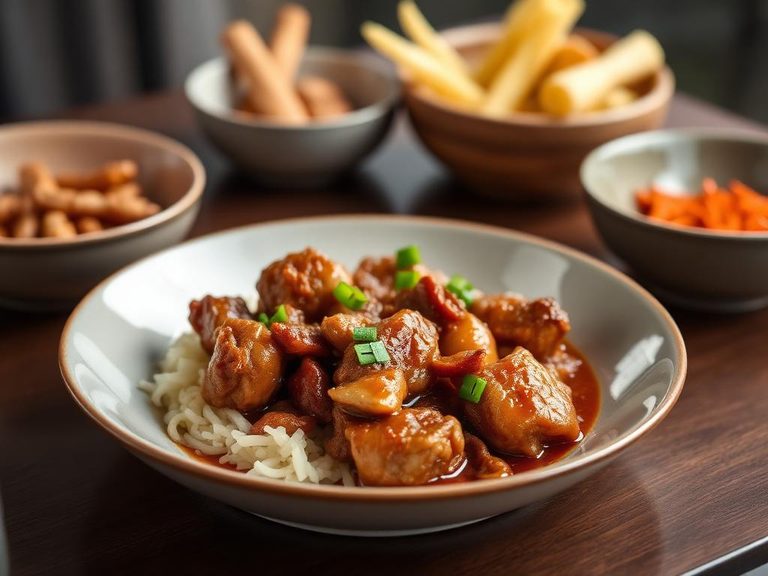
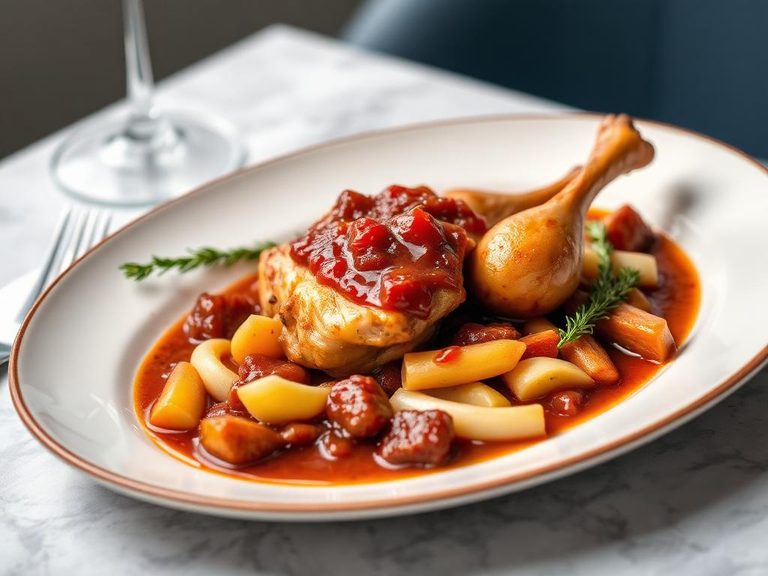
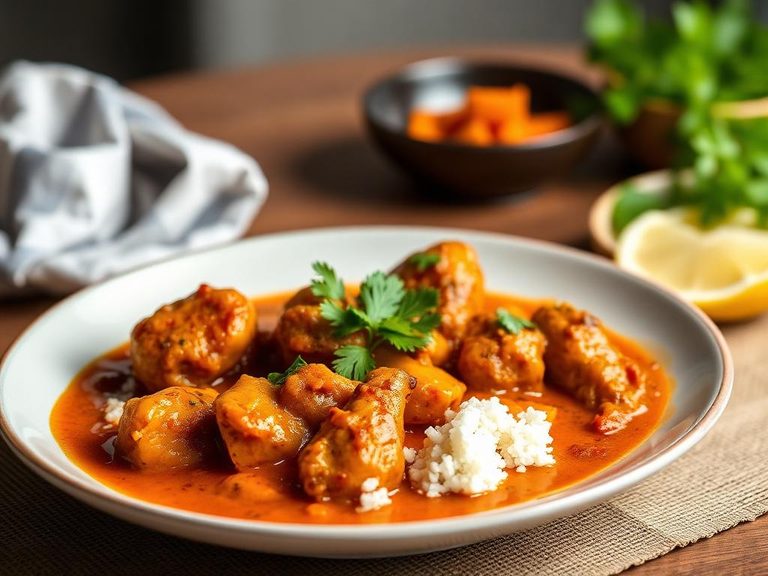
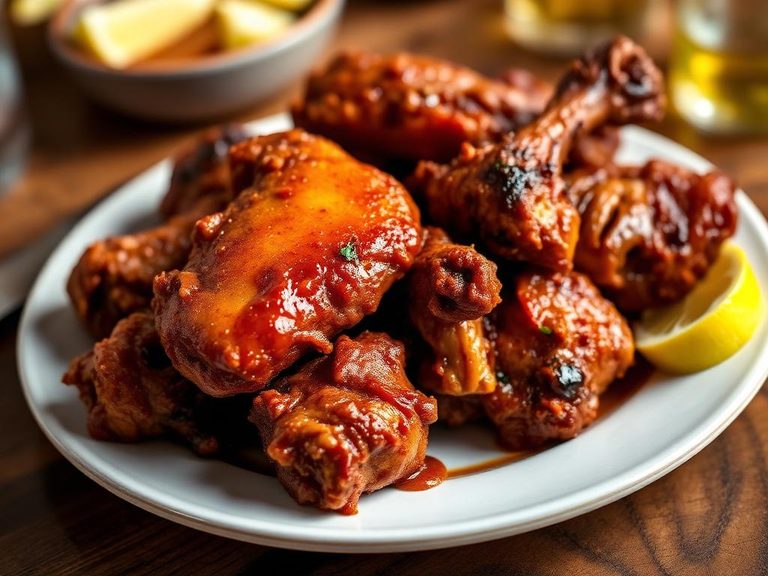

🌍 Where it's eaten
💡 Did you know?
Dark meat gets its color from myoglobin, a protein that stores oxygen in muscle cells. Chicken legs and thighs are 'working muscles' used for walking, so they have more myoglobin—and thus more flavor and moisture—than the less-used breast muscles.
Full nutrition (USDA data · scales with serving)
| Water | 63.1 g |
| Energy | 205 kcal |
| Energy | 858 kj |
| Protein | 27.4 g |
| Total lipid (fat) | 9.7 g |
| Ash | 1.0 g |
| Carbohydrate, by difference | 0.00 g |
| Fiber, total dietary | 0.00 g |
| Total Sugars | 0.00 g |
| Calcium, Ca | 15.0 mg |
| Iron, Fe | 1.3 mg |
| Magnesium, Mg | 23.0 mg |
| Phosphorus, P | 179 mg |
| Potassium, K | 240 mg |
| Sodium, Na | 93.0 mg |
| Zinc, Zn | 2.8 mg |
| Copper, Cu | 0.08 mg |
| Manganese, Mn | 0.02 mg |
| Selenium, Se | 18.0 ug |
| Vitamin C, total ascorbic acid | 0.00 mg |
| Thiamin | 0.07 mg |
| Riboflavin | 0.23 mg |
| Niacin | 6.5 mg |
| Pantothenic acid | 1.2 mg |
| Vitamin B-6 | 0.36 mg |
| Folate, total | 8.0 ug |
| Folic acid | 0.00 ug |
| Folate, food | 8.0 ug |
| Folate, DFE | 8.0 ug |
| Choline, total | 74.4 mg |
| Betaine | 5.4 mg |
| Vitamin B-12 | 0.32 ug |
| Vitamin B-12, added | 0.00 ug |
| Vitamin A, RAE | 22.0 ug |
| Retinol | 22.0 ug |
| Carotene, beta | 0.00 ug |
| Carotene, alpha | 0.00 ug |
| Cryptoxanthin, beta | 0.00 ug |
| Vitamin A, IU | 72.0 iu |
| Lycopene | 0.00 ug |
| Lutein + zeaxanthin | 0.00 ug |
| Vitamin E (alpha-tocopherol) | 0.27 mg |
| Vitamin E, added | 0.00 mg |
| Vitamin D (D2 + D3), International Units | 5.0 iu |
| Vitamin D (D2 + D3) | 0.10 ug |
| Vitamin D3 (cholecalciferol) | 0.10 ug |
| Vitamin K (phylloquinone) | 3.9 ug |
| Vitamin K (Dihydrophylloquinone) | 0.00 ug |
| Alcohol, ethyl | 0.00 g |
| Caffeine | 0.00 mg |
| Theobromine | 0.00 mg |
Fat & fatty acid profile (per 100g)
| Fatty acids, total saturated | 2.7 g |
| SFA 4:0 | 0.00 g |
| SFA 6:0 | 0.00 g |
| SFA 8:0 | 0.00 g |
| SFA 10:0 | 0.00 g |
| SFA 12:0 | 0.03 g |
| SFA 14:0 | 0.07 g |
| SFA 16:0 | 1.8 g |
| SFA 18:0 | 0.63 g |
| Fatty acids, total monounsaturated | 3.6 g |
| MUFA 16:1 | 0.49 g |
| MUFA 18:1 | 3.0 g |
| MUFA 20:1 | 0.05 g |
| MUFA 22:1 | 0.00 g |
| Fatty acids, total polyunsaturated | 2.3 g |
| PUFA 18:2 | 1.9 g |
| PUFA 18:3 | 0.09 g |
| PUFA 18:4 | 0.00 g |
| PUFA 20:4 | 0.14 g |
| PUFA 20:5 n-3 (EPA) | 0.01 g |
| PUFA 22:5 n-3 (DPA) | 0.03 g |
| PUFA 22:6 n-3 (DHA) | 0.05 g |
| Cholesterol | 93.0 mg |
Amino acid profile (per 100g)
| Tryptophan | 0.32 g |
| Threonine | 1.2 g |
| Isoleucine | 1.4 g |
| Leucine | 2.1 g |
| Lysine | 2.3 g |
| Methionine | 0.76 g |
| Cystine | 0.35 g |
| Phenylalanine | 1.1 g |
| Tyrosine | 0.92 g |
| Valine | 1.4 g |
| Arginine | 1.7 g |
| Histidine | 0.85 g |
| Alanine | 1.5 g |
| Aspartic acid | 2.4 g |
| Glutamic acid | 4.1 g |
| Glycine | 1.3 g |
| Proline | 1.1 g |
| Serine | 0.94 g |
FAQ
Is dark meat less healthy than white meat?
Not necessarily. While it has more fat and calories, it's also richer in certain minerals like iron and zinc. The key is portion control and preparation method; roasting without added fats is healthier than frying.
Why does my roasted dark meat sometimes turn out tough?
Dark meat is actually more forgiving, but overcooking past 175-180°F (80-82°C) internal temperature can dry it out. Use a meat thermometer and let it rest after cooking to retain juices.
Can I use dark meat interchangeably with breast meat in recipes?
Yes, but adjust cooking times. Dark meat generally requires slightly longer cooking to become tender. It's a superior choice for slow-cooking, braising, or grilling where moisture retention is key.
Nutrient density (calculated · NRF9.3)
Nutrient Rich Foods index: beneficial nutrients (protein, fiber, vitamins, minerals) minus saturated fat, added sugar & sodium, per 100 kcal.
NRF9.3 index — Fulgoni, Keast & Drewnowski, 2009. Computed from USDA nutrients.
Weight-loss friendliness (composite index)
Energy density 2.05 kcal/g · 53% calories from protein · 0.0 g fiber · 0.0 g sugar per 100 g.
Composite of energy density (Rolls et al., 1999), protein & fiber satiety, minus sugar. A calculated heuristic — ranks satiety-per-calorie, not a clinical measure.
Dietary load (calculated from USDA values)
Potential renal acid load. Positive = acid-forming, negative = alkaline-forming.
Sodium-to-potassium ratio: 0.39 (lower is better — aim for ≤ 1)
Sodium:potassium per WHO potassium guidance. Computed from USDA nutrients.