

Cheese, muenster
Whole food · Dairy and Egg Products

Photo: Wikipedia
Muenster is a semi-soft, orange-hued cheese with a smooth, creamy texture and a mild, slightly tangy flavor derived from its washed rind. Nutritionally, it's a powerhouse of protein and fat, delivering a substantial 23.41g of protein per 100g while containing minimal carbohydrates.
Calorie split: 25% protein · 1% carbs · 73% fat
↓ Full nutrition💚 Why it's loved
People adore Muenster for its exceptional meltability, which creates a luxuriously gooey texture in sandwiches and casseroles, and its mild, approachable flavor that complements rather than overpowers other ingredients.
⚠️ Watch-outs & how to enjoy it better
Its high fat and calorie density (30g fat per 100g) can be a concern for those managing weight or heart health. As a dairy product, it's a common allergen and contains lactose; those with sensitivities should use lactose-free versions or pair small portions with lactase supplements.
Key benefits
- Excellent source of high-quality protein
- Rich in calcium for bone health
- Provides vitamin B12 for nerve function
- High in conjugated linoleic acid (CLA) from its fat content
- Contains phosphorus and zinc
🍽️ Popular dishes

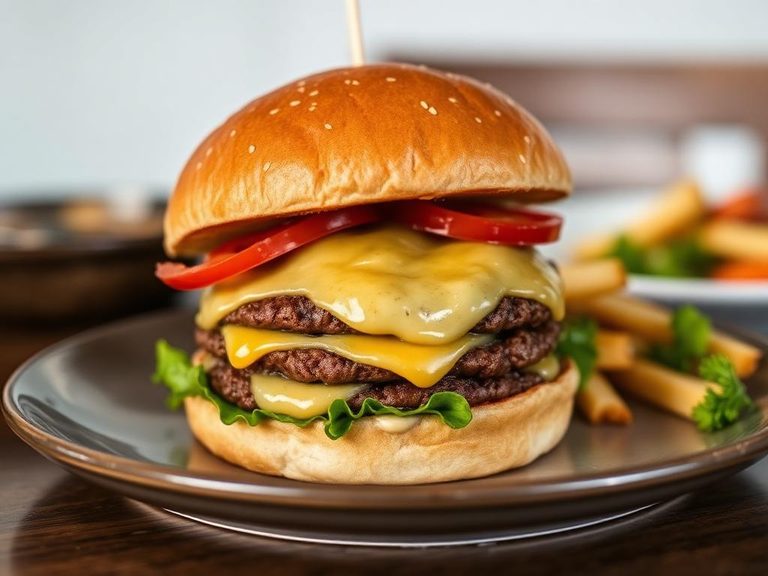

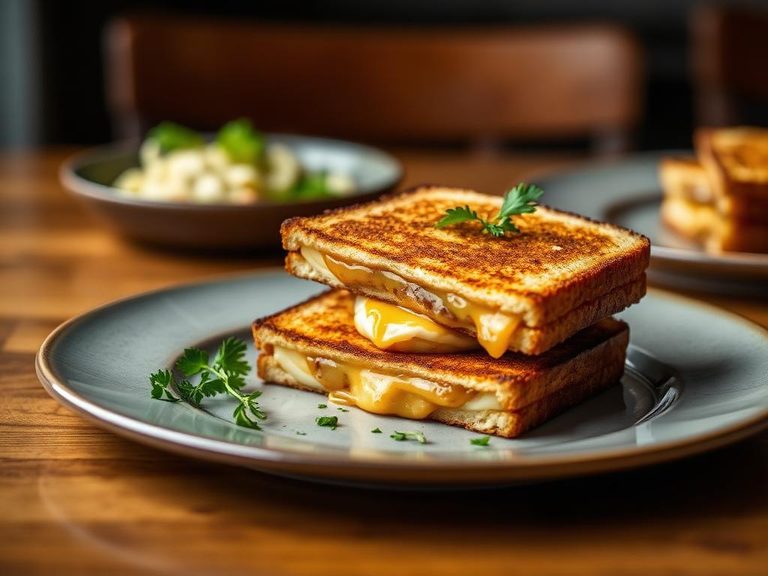


🌍 Where it's eaten
💡 Did you know?
Despite its name, the American Muenster cheese is a distinct product from the original German Münster cheese, which has a much stronger flavor and is made with different bacterial cultures.
Full nutrition (USDA data · scales with serving)
| Water | 41.8 g |
| Energy | 368 kcal |
| Energy | 1541 kj |
| Protein | 23.4 g |
| Total lipid (fat) | 30.0 g |
| Ash | 3.7 g |
| Carbohydrate, by difference | 1.1 g |
| Fiber, total dietary | 0.00 g |
| Total Sugars | 1.1 g |
| Calcium, Ca | 717 mg |
| Iron, Fe | 0.41 mg |
| Magnesium, Mg | 27.0 mg |
| Phosphorus, P | 468 mg |
| Potassium, K | 134 mg |
| Sodium, Na | 628 mg |
| Zinc, Zn | 2.8 mg |
| Copper, Cu | 0.03 mg |
| Manganese, Mn | 0.01 mg |
| Selenium, Se | 14.5 ug |
| Vitamin C, total ascorbic acid | 0.00 mg |
| Thiamin | 0.01 mg |
| Riboflavin | 0.32 mg |
| Niacin | 0.10 mg |
| Pantothenic acid | 0.19 mg |
| Vitamin B-6 | 0.06 mg |
| Folate, total | 12.0 ug |
| Folic acid | 0.00 ug |
| Folate, food | 12.0 ug |
| Folate, DFE | 12.0 ug |
| Choline, total | 15.4 mg |
| Vitamin B-12 | 1.5 ug |
| Vitamin B-12, added | 0.00 ug |
| Vitamin A, RAE | 298 ug |
| Retinol | 297 ug |
| Carotene, beta | 13.0 ug |
| Carotene, alpha | 0.00 ug |
| Cryptoxanthin, beta | 0.00 ug |
| Vitamin A, IU | 1012 iu |
| Lycopene | 0.00 ug |
| Lutein + zeaxanthin | 0.00 ug |
| Vitamin E (alpha-tocopherol) | 0.26 mg |
| Vitamin E, added | 0.00 mg |
| Vitamin D (D2 + D3), International Units | 22.0 iu |
| Vitamin D (D2 + D3) | 0.60 ug |
| Vitamin D3 (cholecalciferol) | 0.60 ug |
| Vitamin K (phylloquinone) | 2.5 ug |
| Alcohol, ethyl | 0.00 g |
| Caffeine | 0.00 mg |
| Theobromine | 0.00 mg |
Fat & fatty acid profile (per 100g)
| Fatty acids, total saturated | 19.1 g |
| SFA 4:0 | 1.0 g |
| SFA 6:0 | 0.24 g |
| SFA 8:0 | 0.28 g |
| SFA 10:0 | 0.59 g |
| SFA 12:0 | 0.37 g |
| SFA 14:0 | 3.1 g |
| SFA 16:0 | 9.2 g |
| SFA 18:0 | 3.6 g |
| Fatty acids, total monounsaturated | 8.7 g |
| MUFA 16:1 | 0.97 g |
| MUFA 18:1 | 7.3 g |
| MUFA 20:1 | 0.00 g |
| MUFA 22:1 | 0.00 g |
| Fatty acids, total polyunsaturated | 0.66 g |
| PUFA 18:2 | 0.43 g |
| PUFA 18:3 | 0.23 g |
| PUFA 18:4 | 0.00 g |
| PUFA 20:4 | 0.00 g |
| PUFA 20:5 n-3 (EPA) | 0.00 g |
| PUFA 22:5 n-3 (DPA) | 0.00 g |
| PUFA 22:6 n-3 (DHA) | 0.00 g |
| Cholesterol | 96.0 mg |
Amino acid profile (per 100g)
| Tryptophan | 0.33 g |
| Threonine | 0.89 g |
| Isoleucine | 1.1 g |
| Leucine | 2.3 g |
| Lysine | 2.1 g |
| Methionine | 0.57 g |
| Cystine | 0.13 g |
| Phenylalanine | 1.2 g |
| Tyrosine | 1.1 g |
| Valine | 1.5 g |
| Arginine | 0.88 g |
| Histidine | 0.83 g |
| Alanine | 0.68 g |
| Aspartic acid | 1.6 g |
| Glutamic acid | 5.6 g |
| Glycine | 0.44 g |
| Proline | 2.6 g |
| Serine | 1.3 g |
FAQ
What's the difference between Muenster and Monterey Jack?
Muenster has a washed rind and a more orange color from annatto, giving it a slightly tangier, more pungent aroma than the milder, creamier Monterey Jack.
Is Muenster cheese gluten-free?
Yes, pure Muenster cheese is typically gluten-free, but always check labels for additives or cross-contamination if you have celiac disease.
How should I store Muenster cheese?
Wrap it tightly in wax paper or cheese paper, then place it in a loose plastic bag in the refrigerator's cheese drawer to maintain moisture without trapping excess condensation.
Nutrient density (calculated · NRF9.3)
Nutrient Rich Foods index: beneficial nutrients (protein, fiber, vitamins, minerals) minus saturated fat, added sugar & sodium, per 100 kcal.
NRF9.3 index — Fulgoni, Keast & Drewnowski, 2009. Computed from USDA nutrients.
Weight-loss friendliness (composite index)
Energy density 3.68 kcal/g · 25% calories from protein · 0.0 g fiber · 1.1 g sugar per 100 g.
Composite of energy density (Rolls et al., 1999), protein & fiber satiety, minus sugar. A calculated heuristic — ranks satiety-per-calorie, not a clinical measure.
Dietary load (calculated from USDA values)
Potential renal acid load. Positive = acid-forming, negative = alkaline-forming.
Sodium-to-potassium ratio: 4.69 (lower is better — aim for ≤ 1)
Sodium:potassium per WHO potassium guidance. Computed from USDA nutrients.