

Omelet or frittata
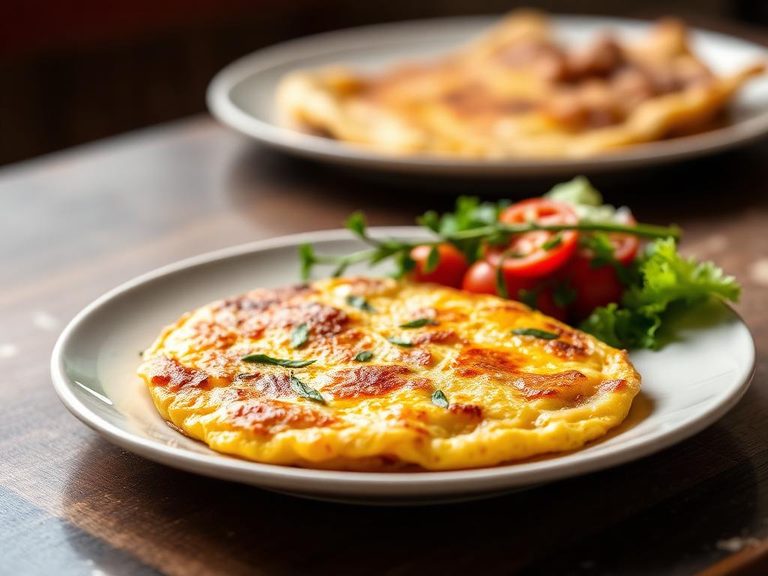
An omelet or frittata is a versatile egg dish where beaten eggs are cooked with various fillings. The classic omelet is folded around its fillings, while an Italian frittata is thicker, often finished in the oven, and served in wedges. Both are foundational in many cuisines, from French bistros to American diners.
🍳 View the full Omelet or frittata recipe →
🍽️ Nutrition at a glance
This dish is primarily a source of high-quality protein and healthy fats, with very few carbohydrates unless served with bread or potatoes. A single serving provides key nutrients like choline, vitamin D, and B vitamins, with a calorie count that typically ranges from 250 to 400, depending on the amount of eggs, cheese, and added fats used.
Nutrition breakdown
| Calories | 240 kcal |
| Protein | 20 g |
| Carbs | 2 g |
| Fat | 17 g |
| Fiber | 0 g |
| Sugar | 1 g |
| Sodium | 420 mg |
| Vitamin A | 300 µg RAE |
| Vitamin D | 2 µg |
| Vitamin B12 | 1.2 µg |
| Riboflavin (B2) | 0.5 mg |
| Choline | 290 mg |
| Selenium | 30 µg |
| Phosphorus | 250 mg |
| Calcium | 60 mg |
Per 1 omelet (about 150 g) · estimated, varies by recipe
💡 What's interesting
Culturally, the omelet is a global dish with distinct national variations, like the Japanese *tamagoyaki* or the Spanish *tortilla de patatas*. Nutritionally, it's a fantastic vehicle for incorporating vegetables and lean proteins into a meal, making it a customizable staple for everything from a quick breakfast to a light dinner.
🍽️ Related dishes





AI estimate may be inaccurate · Terms