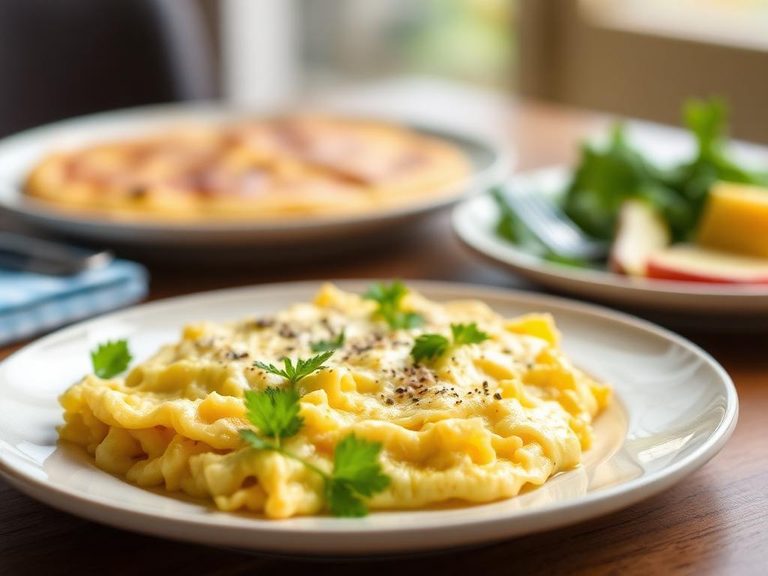
Omelets and frittatas

Omelets and frittatas are egg-based dishes where beaten eggs are cooked with various fillings. Omelets are typically folded around fillings, while frittatas are thicker, often finished in the oven, and served in wedges. Both are versatile and popular worldwide, originating from ancient Roman and French culinary traditions.
🍽️ Nutrition at a glance
These dishes are high in protein and healthy fats, with minimal carbohydrates unless starchy fillings are added. They provide essential nutrients like vitamin D, B12, and choline, with a typical serving containing around 200-300 calories.
Nutrition breakdown
| Calories | 210 kcal |
| Protein | 14 g |
| Carbs | 2 g |
| Fat | 16 g |
| Fiber | 0 g |
| Sugar | 1 g |
| Sodium | 350 mg |
| Vitamin A | 150 mcg RAE |
| Vitamin D | 1.5 mcg |
| Vitamin B12 | 0.9 mcg |
| Riboflavin (B2) | 0.4 mg |
| Selenium | 20 mcg |
| Phosphorus | 200 mg |
| Choline | 180 mg |
| Calcium | 60 mg |
Per 1 omelet (about 150 g) · estimated, varies by recipe
💡 What's interesting
Frittatas are nutritionally unique as they can easily incorporate a wide variety of vegetables, making them a flexible way to increase vegetable intake. Culturally, they represent a simple yet elegant meal that transitions seamlessly from breakfast to dinner across many cuisines.