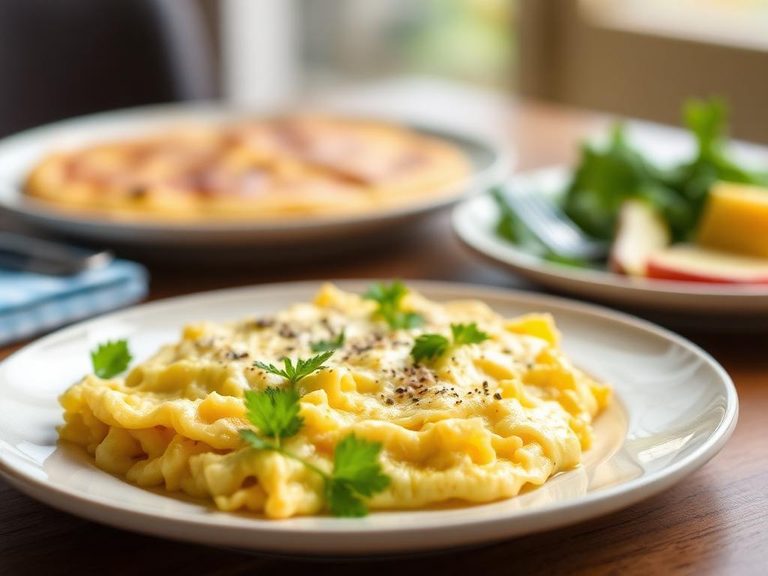
Omelets

An omelet is a classic dish made by beating eggs and cooking them in a pan, often folded around a filling of cheese, vegetables, meats, or herbs. It's a staple breakfast food in many Western cuisines, particularly French and American, prized for its speed and versatility. The basic ingredients are simply eggs, a fat like butter or oil, and salt.
🍽️ Nutrition at a glance
Omelets are a high-protein, low-carbohydrate food, making them very satiating. They are a good source of vitamins B12 and D, selenium, and choline, with a typical two-egg omelet containing around 150-200 calories, depending on added fats and fillings.
Nutrition breakdown
| Calories | 250 kcal |
| Protein | 18 g |
| Carbs | 2 g |
| Fat | 19 g |
| Fiber | 0 g |
| Sugar | 1 g |
| Sodium | 350 mg |
| Vitamin A | 270 mcg RAE |
| Vitamin D | 2.0 mcg |
| Vitamin B12 | 1.1 mcg |
| Riboflavin (B2) | 0.5 mg |
| Choline | 300 mg |
| Selenium | 30 mcg |
| Phosphorus | 200 mg |
| Iron | 2.0 mg |
Per 1 large omelet (approx. 140 g) · estimated, varies by recipe
💡 What's interesting
Culturally, the omelet is a universal comfort food with countless regional variations, from the fluffy French omelette to the stuffed Spanish tortilla. Nutritionally, it's a highly efficient way to package complete protein and essential nutrients into a quick, customizable meal.