

Candies, toffee, prepared-from-recipe
Whole food · Sweets

Photo: Wikipedia
A rich, buttery confection made by caramelizing sugar and butter, toffee has a deep amber color and a satisfyingly hard, brittle snap that melts into a buttery, caramelized sweetness. Nutritionally, it is a dense energy source, packing 560 kcal and over 32g of fat per 100g, with virtually all its carbohydrates coming from sugar.
Calorie split: 1% protein · 46% carbs · 53% fat
↓ Full nutrition💚 Why it's loved
People love toffee for its intense, buttery caramel flavor and the satisfying crunch that gives way to a smooth, melt-in-your-mouth texture. It's a nostalgic treat often associated with holidays and celebrations, and its versatility makes it a beloved ingredient in everything from candy bars to ice cream toppings.
⚠️ Watch-outs & how to enjoy it better
The high sugar and fat content can lead to blood-sugar spikes and is a concern for those monitoring calorie intake or managing diabetes. To counteract this, practice strict portion control, pair a small piece with a source of protein or fat (like nuts) to slow sugar absorption, and avoid consuming it on an empty stomach.
Key benefits
- Quick source of energy due to high sugar content
- Contains butter, which provides fat-soluble vitamins like Vitamin A
- Can be a mood booster as a sweet treat in moderation
- Long shelf life when stored properly
- Versatile base for other confections like English toffee or brittle
🍽️ Popular dishes
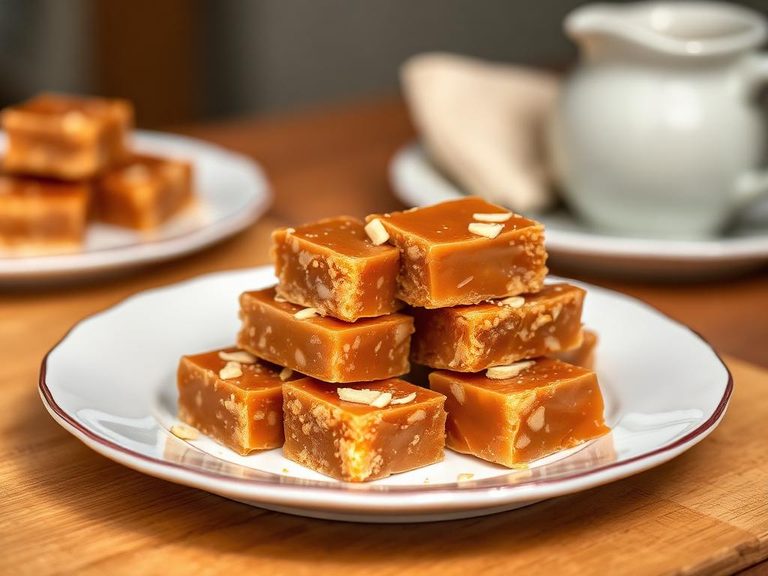
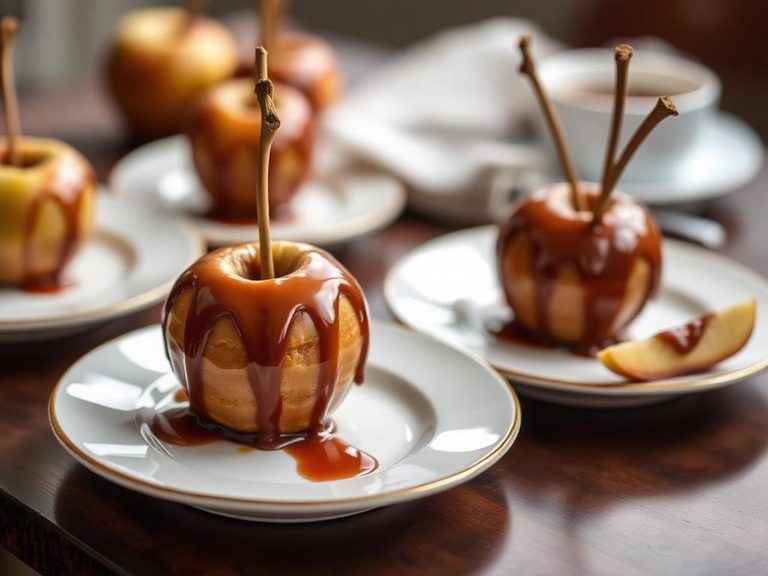
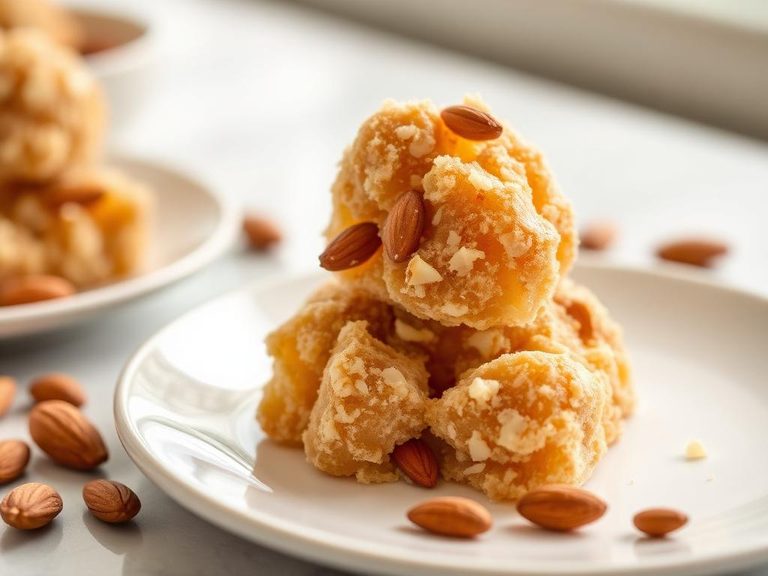

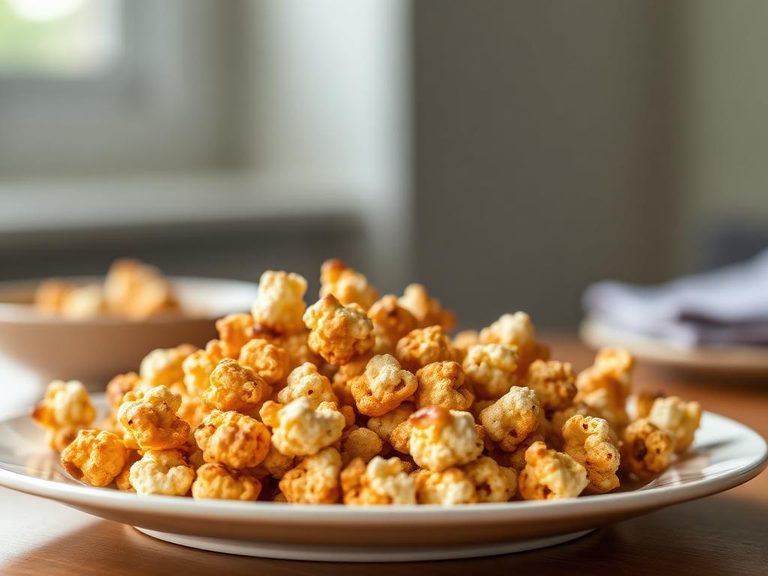
🌍 Where it's eaten
💡 Did you know?
The word 'toffee' first appeared in print in 1825, but the confection itself is believed to have evolved from earlier British boiled sweets in the late 18th century.
Full nutrition (USDA data · scales with serving)
| Water | 0.55 g |
| Energy | 560 kcal |
| Energy | 2342 kj |
| Protein | 1.1 g |
| Total lipid (fat) | 32.8 g |
| Ash | 0.66 g |
| Carbohydrate, by difference | 64.7 g |
| Fiber, total dietary | 0.00 g |
| Total Sugars | 63.5 g |
| Calcium, Ca | 34.0 mg |
| Iron, Fe | 0.03 mg |
| Magnesium, Mg | 4.0 mg |
| Phosphorus, P | 32.0 mg |
| Potassium, K | 51.0 mg |
| Sodium, Na | 135 mg |
| Zinc, Zn | 0.12 mg |
| Copper, Cu | 0.00 mg |
| Manganese, Mn | 0.00 mg |
| Selenium, Se | 0.80 ug |
| Vitamin C, total ascorbic acid | 0.20 mg |
| Thiamin | 0.01 mg |
| Riboflavin | 0.07 mg |
| Niacin | 0.03 mg |
| Pantothenic acid | 0.13 mg |
| Vitamin B-6 | 0.01 mg |
| Folate, total | 2.0 ug |
| Folic acid | 0.00 ug |
| Folate, food | 2.0 ug |
| Folate, DFE | 2.0 ug |
| Vitamin B-12 | 0.11 ug |
| Vitamin B-12, added | 0.00 ug |
| Vitamin A, RAE | 319 ug |
| Retinol | 314 ug |
| Carotene, beta | 64.0 ug |
| Carotene, alpha | 0.00 ug |
| Cryptoxanthin, beta | 0.00 ug |
| Vitamin A, IU | 1152 iu |
| Lycopene | 0.00 ug |
| Lutein + zeaxanthin | 0.00 ug |
| Vitamin E (alpha-tocopherol) | 0.94 mg |
| Vitamin E, added | 0.00 mg |
| Vitamin K (phylloquinone) | 2.8 ug |
| Caffeine | 0.00 mg |
| Theobromine | 0.00 mg |
Fat & fatty acid profile (per 100g)
| Fatty acids, total saturated | 20.6 g |
| SFA 4:0 | 1.2 g |
| SFA 6:0 | 0.72 g |
| SFA 8:0 | 0.42 g |
| SFA 10:0 | 0.92 g |
| SFA 12:0 | 0.98 g |
| SFA 14:0 | 3.1 g |
| SFA 16:0 | 8.7 g |
| SFA 17:0 | 0.12 g |
| SFA 18:0 | 4.0 g |
| SFA 20:0 | 0.03 g |
| Fatty acids, total monounsaturated | 9.0 g |
| MUFA 16:1 | 0.56 g |
| MUFA 16:1 c | 0.20 g |
| MUFA 18:1 | 8.1 g |
| MUFA 18:1 c | 3.5 g |
| MUFA 20:1 | 0.02 g |
| MUFA 22:1 | 0.00 g |
| Fatty acids, total polyunsaturated | 1.2 g |
| PUFA 18:2 | 0.92 g |
| PUFA 18:2 n-6 c,c | 0.45 g |
| PUFA 18:2 CLAs | 0.06 g |
| PUFA 18:2 i | 0.06 g |
| PUFA 18:3 | 0.30 g |
| PUFA 18:3 n-3 c,c,c (ALA) | 0.07 g |
| PUFA 18:4 | 0.00 g |
| PUFA 20:4 | 0.00 g |
| PUFA 20:5 n-3 (EPA) | 0.00 g |
| PUFA 22:5 n-3 (DPA) | 0.00 g |
| PUFA 22:6 n-3 (DHA) | 0.00 g |
| Fatty acids, total trans | 0.67 g |
| Fatty acids, total trans-monoenoic | 0.61 g |
| TFA 18:1 t | 0.61 g |
| Fatty acids, total trans-polyenoic | 0.06 g |
| Cholesterol | 104 mg |
Amino acid profile (per 100g)
Estimated from Candies, honey-combed, with peanut butter — USDA does not publish this profile for Candies.
| Tryptophan | 0.09 g |
| Threonine | 0.21 g |
| Isoleucine | 0.24 g |
| Leucine | 0.61 g |
| Lysine | 0.27 g |
| Methionine | 0.10 g |
| Cystine | 0.09 g |
| Phenylalanine | 0.47 g |
| Tyrosine | 0.33 g |
| Valine | 0.31 g |
| Arginine | 1.1 g |
| Histidine | 0.22 g |
| Alanine | 0.36 g |
| Aspartic acid | 1.2 g |
| Glutamic acid | 2.0 g |
| Glycine | 0.56 g |
| Proline | 0.55 g |
| Serine | 0.58 g |
FAQ
What is the difference between toffee and caramel?
Toffee is cooked to a higher temperature (hard crack stage), resulting in a brittle, crunchy texture, while caramel is cooked to a lower temperature, making it softer and chewier.
Is toffee gluten-free?
Pure toffee made from sugar, butter, and sometimes nuts is naturally gluten-free, but always check labels for cross-contamination or added ingredients.
How should I store homemade toffee?
Store in an airtight container at room temperature, separated by layers of wax paper, to prevent sticking and moisture absorption.
Can I make toffee without a candy thermometer?
While possible using the cold water test, a candy thermometer is highly recommended for accuracy, as toffee requires precise temperature control to avoid burning or undercooking.
Nutrient density (calculated · NRF9.3)
Nutrient Rich Foods index: beneficial nutrients (protein, fiber, vitamins, minerals) minus saturated fat, added sugar & sodium, per 100 kcal.
NRF9.3 index — Fulgoni, Keast & Drewnowski, 2009. Computed from USDA nutrients.
Weight-loss friendliness (composite index)
Energy density 5.60 kcal/g · 1% calories from protein · 0.0 g fiber · 63.5 g sugar per 100 g.
Composite of energy density (Rolls et al., 1999), protein & fiber satiety, minus sugar. A calculated heuristic — ranks satiety-per-calorie, not a clinical measure.
Dietary load (calculated from USDA values)
Potential renal acid load. Positive = acid-forming, negative = alkaline-forming.
Sodium-to-potassium ratio: 2.65 (lower is better — aim for ≤ 1)
Sodium:potassium per WHO potassium guidance. Computed from USDA nutrients.