

BURGER KING, Vanilla Shake
Whole food · Fast Foods

Photo: Wikipedia
A thick, creamy, and frosty vanilla-flavored dairy beverage, typically blended with ice to a smooth, sippable consistency. It delivers a classic sweet, creamy vanilla taste with a rich mouthfeel. Nutritionally, it's a significant source of simple sugars and fat, providing a quick energy boost.
Calorie split: 8% protein · 45% carbs · 47% fat
↓ Full nutrition💚 Why it's loved
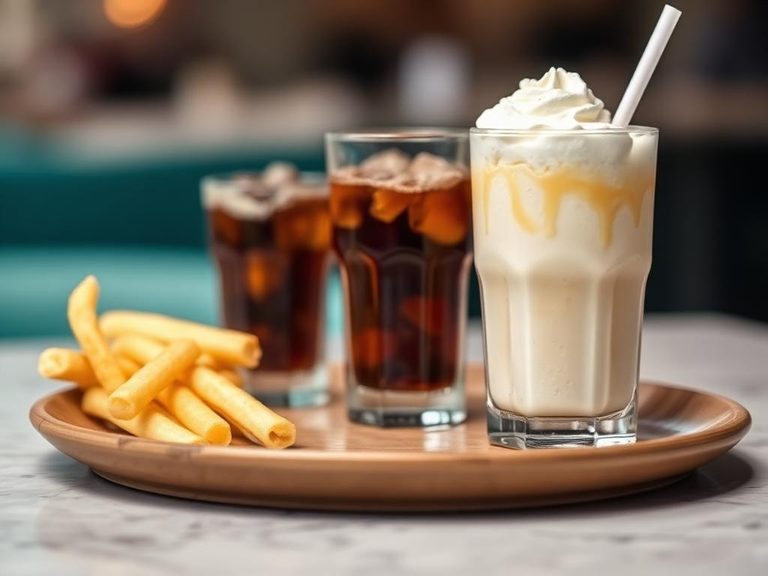
People love it for its comforting, nostalgic sweetness and the indulgent, smooth texture that feels like a dessert. It's a classic fast-food treat that pairs perfectly with savory meals like burgers and fries.
⚠️ Watch-outs & how to enjoy it better
The high sugar content (11.67g per 100g) can lead to rapid blood-sugar spikes and subsequent energy crashes. To counteract this, pair it with a protein-rich food like grilled chicken or nuts, and practice portion control by choosing a smaller size.
Key benefits
- Quick source of energy from carbohydrates and fat
- Provides some dietary calcium from dairy ingredients
- Satisfies sweet cravings effectively
- Offers a convenient, ready-to-drink treat
🍽️ Popular dishes
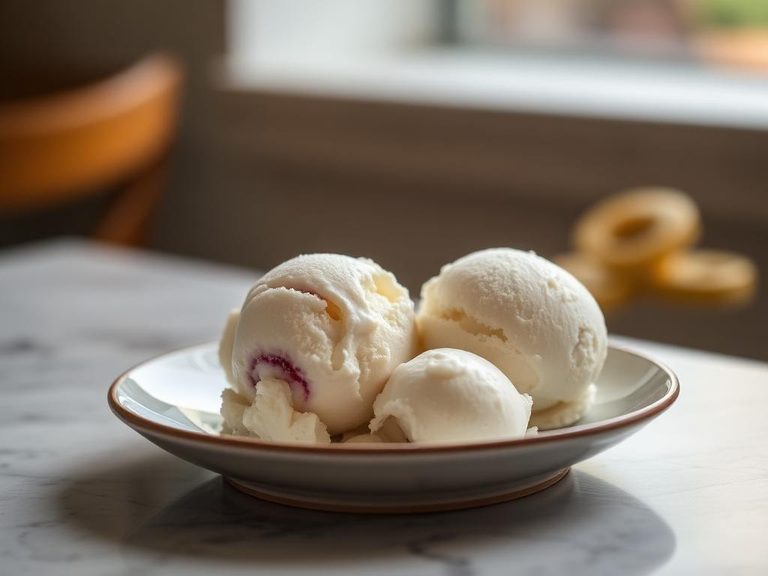
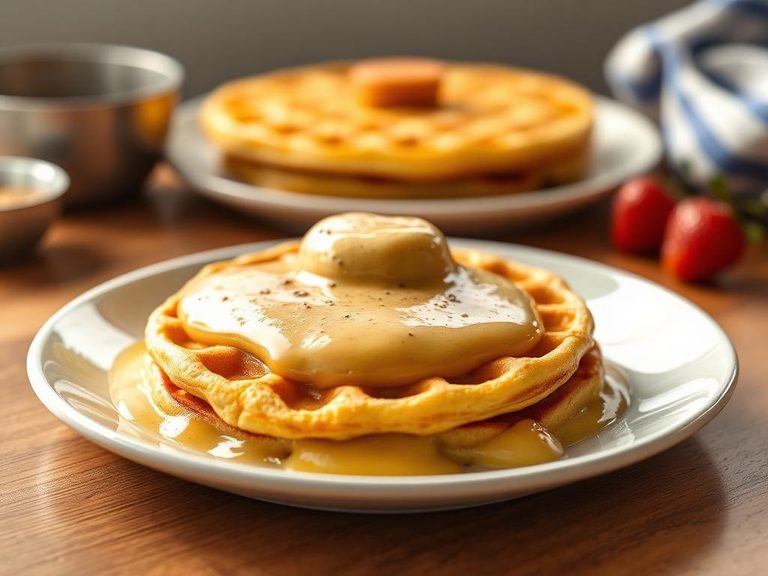
🌍 Where it's eaten
💡 Did you know?
The vanilla flavor in most commercial shakes, including fast-food versions, is often derived from vanillin, a synthetic compound that mimics the primary flavor of vanilla beans but is far more cost-effective for mass production.
Full nutrition (USDA data · scales with serving)
| Water | 68.1 g |
| Energy | 168 kcal |
| Energy | 701 kj |
| Protein | 3.2 g |
| Total lipid (fat) | 8.7 g |
| Ash | 0.91 g |
| Carbohydrate, by difference | 19.0 g |
| Fiber, total dietary | 0.00 g |
| Total Sugars | 11.7 g |
| Sucrose | 7.3 g |
| Glucose | 0.00 g |
| Fructose | 0.00 g |
| Lactose | 4.3 g |
| Maltose | 0.00 g |
| Galactose | 0.13 g |
| Starch | 1.0 g |
| Calcium, Ca | 104 mg |
| Iron, Fe | 0.42 mg |
| Magnesium, Mg | 12.0 mg |
| Phosphorus, P | 97.0 mg |
| Potassium, K | 153 mg |
| Sodium, Na | 100 mg |
| Zinc, Zn | 0.67 mg |
| Copper, Cu | 0.19 mg |
| Manganese, Mn | 0.06 mg |
| Selenium, Se | 3.2 ug |
| Vitamin C, total ascorbic acid | 0.00 mg |
| Thiamin | 0.00 mg |
| Riboflavin | 0.18 mg |
| Niacin | 0.09 mg |
| Pantothenic acid | 0.62 mg |
| Vitamin B-6 | 0.03 mg |
| Vitamin B-12 | 0.36 ug |
| Vitamin E (alpha-tocopherol) | 0.32 mg |
Fat & fatty acid profile (per 100g)
| Fatty acids, total saturated | 5.3 g |
| SFA 4:0 | 0.20 g |
| SFA 6:0 | 0.15 g |
| SFA 8:0 | 0.09 g |
| SFA 10:0 | 0.23 g |
| SFA 12:0 | 0.25 g |
| SFA 14:0 | 0.82 g |
| SFA 15:0 | 0.08 g |
| SFA 16:0 | 2.4 g |
| SFA 17:0 | 0.05 g |
| SFA 18:0 | 1.0 g |
| SFA 20:0 | 0.01 g |
| SFA 22:0 | 0.00 g |
| SFA 24:0 | 0.01 g |
| Fatty acids, total monounsaturated | 2.5 g |
| MUFA 14:1 | 0.07 g |
| MUFA 15:1 | 0.00 g |
| MUFA 16:1 | 0.17 g |
| MUFA 16:1 c | 0.14 g |
| MUFA 17:1 | 0.02 g |
| MUFA 18:1 | 2.2 g |
| MUFA 18:1 c | 2.0 g |
| MUFA 20:1 | 0.01 g |
| MUFA 22:1 c | 0.00 g |
| MUFA 24:1 c | 0.00 g |
| Fatty acids, total polyunsaturated | 0.43 g |
| PUFA 18:2 n-6 c,c | 0.26 g |
| PUFA 18:2 CLAs | 0.05 g |
| PUFA 18:3 n-3 c,c,c (ALA) | 0.03 g |
| PUFA 18:3 n-6 c,c,c | 0.00 g |
| PUFA 18:4 | 0.00 g |
| PUFA 20:2 n-6 c,c | 0.00 g |
| PUFA 20:3 n-6 | 0.01 g |
| PUFA 20:4 | 0.01 g |
| PUFA 20:5 n-3 (EPA) | 0.00 g |
| PUFA 22:5 n-3 (DPA) | 0.01 g |
| PUFA 22:6 n-3 (DHA) | 0.00 g |
| Fatty acids, total trans | 0.30 g |
| Fatty acids, total trans-monoenoic | 0.24 g |
| TFA 16:1 t | 0.03 g |
| TFA 18:1 t | 0.21 g |
| TFA 22:1 t | 0.00 g |
| TFA 18:2 t not further defined | 0.06 g |
| Fatty acids, total trans-polyenoic | 0.06 g |
| Cholesterol | 31.0 mg |
Amino acid profile (per 100g)
Estimated from BURGER KING, CROISSAN'WICH with Sausage and Cheese — USDA does not publish this profile for BURGER KING.
| Tryptophan | 0.11 g |
| Threonine | 0.48 g |
| Isoleucine | 0.58 g |
| Leucine | 1.0 g |
| Lysine | 0.82 g |
| Methionine | 0.26 g |
| Cystine | 0.18 g |
| Phenylalanine | 0.59 g |
| Tyrosine | 0.46 g |
| Valine | 0.69 g |
| Arginine | 0.68 g |
| Histidine | 0.41 g |
| Alanine | 0.65 g |
| Aspartic acid | 1.0 g |
| Glutamic acid | 3.1 g |
| Glycine | 0.68 g |
| Proline | 1.0 g |
| Serine | 0.64 g |
FAQ
Is a vanilla shake a good source of protein?
Not particularly. With only about 3.2g of protein per 100g, a medium shake (400g) provides roughly 12.8g, which is modest compared to its high sugar and fat content.
Can I make a similar shake at home?
Yes. Blend vanilla ice cream or frozen yogurt with milk and a splash of vanilla extract. For a lighter version, use frozen bananas, Greek yogurt, and a touch of honey.
What is the main difference between a milkshake and a smoothie?
A milkshake is primarily dairy-based (ice cream/milk) and sweet, while a smoothie typically features fruits or vegetables blended with a liquid base like juice or yogurt, often with added nutrients.
Nutrient density (calculated · NRF9.3)
Nutrient Rich Foods index: beneficial nutrients (protein, fiber, vitamins, minerals) minus saturated fat, added sugar & sodium, per 100 kcal.
NRF9.3 index — Fulgoni, Keast & Drewnowski, 2009. Computed from USDA nutrients.
Weight-loss friendliness (composite index)
Energy density 1.68 kcal/g · 8% calories from protein · 0.0 g fiber · 11.7 g sugar per 100 g.
Composite of energy density (Rolls et al., 1999), protein & fiber satiety, minus sugar. A calculated heuristic — ranks satiety-per-calorie, not a clinical measure.
Dietary load (calculated from USDA values)
Potential renal acid load. Positive = acid-forming, negative = alkaline-forming.
Sodium-to-potassium ratio: 0.65 (lower is better — aim for ≤ 1)
Sodium:potassium per WHO potassium guidance. Computed from USDA nutrients.