

Beverages, tea, green, ready-to-drink, diet
Whole food · Beverages

Photo: Wikipedia
This is a crisp, zero-calorie ready-to-drink green tea, often lightly sweetened with non-nutritive sweeteners for a clean, refreshing finish. Its flavor profile is typically a delicate balance of grassy, slightly astringent green tea with a hint of sweetness. Nutritionally, it's a near-zero energy beverage, contributing negligible calories, protein, fat, or fiber.
Calorie split: 0% protein · 100% carbs · 0% fat
↓ Full nutrition💚 Why it's loved
People love it for its crisp, thirst-quenching quality and the subtle, clean taste of green tea without any caloric burden. Its versatility makes it a go-to drink for hydration, a post-meal palate cleanser, or a base for creative mocktails.
⚠️ Watch-outs & how to enjoy it better
The use of artificial or natural zero-calorie sweeteners (like aspartame, sucralose, or stevia) can leave an aftertaste some find unpleasant. Those sensitive to caffeine may experience jitters if consumed in large quantities, and the tannins can occasionally cause stomach upset on an empty stomach. To mitigate, consume in moderation and consider pairing with a small, protein-rich snack.
Key benefits
- Extremely low in calories (4 kcal per 100g).
- Provides a source of hydration without added sugars.
- Contains naturally occurring catechins from green tea.
- Convenient, portable source of antioxidants.
- A common alternative to sugary sodas and juices.
🍽️ Popular dishes


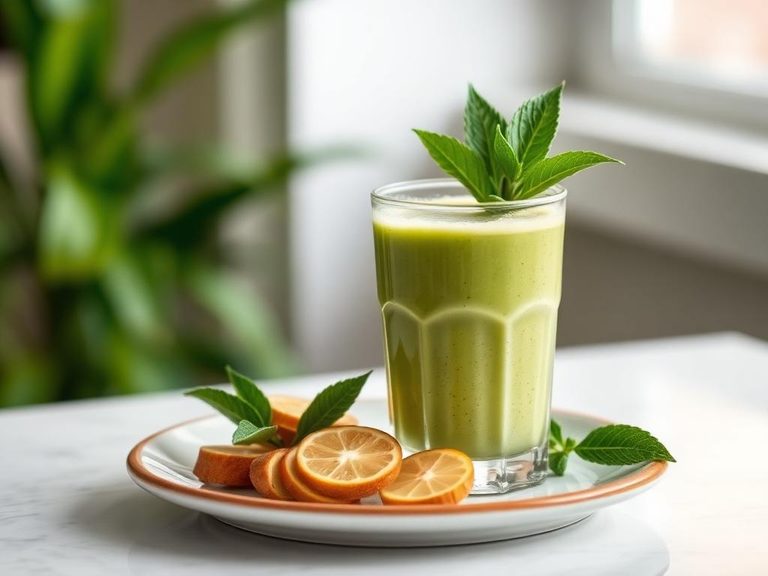
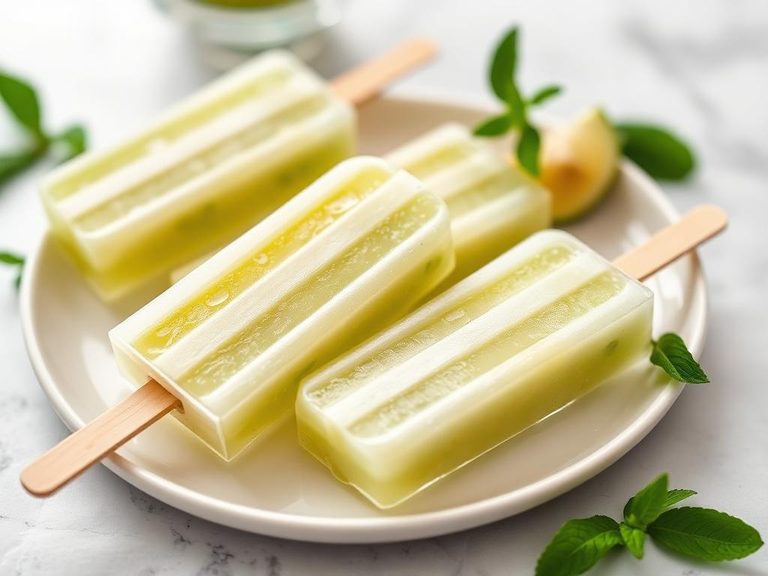
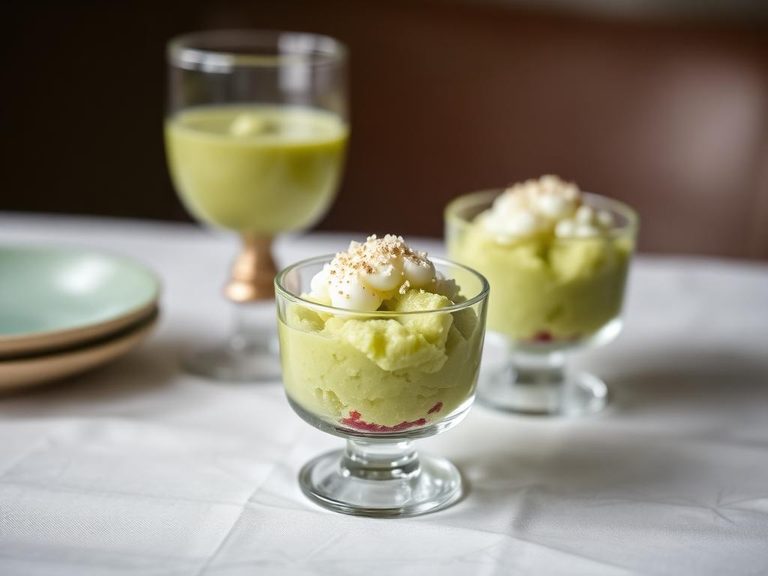
🌍 Where it's eaten
💡 Did you know?
The 'ready-to-drink' green tea market is enormous in Japan and South Korea, where it's often sold in vending machines and is a staple daily beverage, not just a health drink.
Full nutrition (USDA data · scales with serving)
| Water | 98.7 g |
| Energy | 4.0 kcal |
| Energy | 16.0 kj |
| Protein | 0.00 g |
| Total lipid (fat) | 0.00 g |
| Ash | 0.36 g |
| Carbohydrate, by difference | 0.93 g |
| Fiber, total dietary | 0.00 g |
| Total Sugars | 0.93 g |
| Sucrose | 0.00 g |
| Glucose | 0.40 g |
| Fructose | 0.53 g |
| Lactose | 0.00 g |
| Maltose | 0.00 g |
| Galactose | 0.00 g |
| Calcium, Ca | 1.0 mg |
| Iron, Fe | 0.00 mg |
| Magnesium, Mg | 1.0 mg |
| Phosphorus, P | 0.00 mg |
| Potassium, K | 5.0 mg |
| Sodium, Na | 6.0 mg |
| Zinc, Zn | 0.01 mg |
| Copper, Cu | 0.01 mg |
| Manganese, Mn | 0.12 mg |
| Selenium, Se | 0.00 ug |
| Vitamin C, total ascorbic acid | 9.5 mg |
| Thiamin | 0.00 mg |
| Riboflavin | 0.00 mg |
| Niacin | 0.00 mg |
| Vitamin B-6 | 0.00 mg |
| Folate, total | 0.00 ug |
| Folic acid | 0.00 ug |
| Folate, food | 0.00 ug |
| Folate, DFE | 0.00 ug |
| Choline, total | 0.00 mg |
| Vitamin B-12 | 0.00 ug |
| Vitamin B-12, added | 0.00 ug |
| Vitamin A, RAE | 0.00 ug |
| Retinol | 0.00 ug |
| Carotene, beta | 0.00 ug |
| Carotene, alpha | 0.00 ug |
| Cryptoxanthin, beta | 0.00 ug |
| Vitamin A, IU | 0.00 iu |
| Lycopene | 0.00 ug |
| Lutein + zeaxanthin | 0.00 ug |
| Vitamin E (alpha-tocopherol) | 0.00 mg |
| Vitamin E, added | 0.00 mg |
| Vitamin D (D2 + D3), International Units | 0.00 iu |
| Vitamin D (D2 + D3) | 0.00 ug |
| Vitamin K (phylloquinone) | 0.00 ug |
| Alcohol, ethyl | 0.00 g |
| Caffeine | 4.0 mg |
| Theobromine | 0.00 mg |
Fat & fatty acid profile (per 100g)
| Fatty acids, total saturated | 0.00 g |
| SFA 4:0 | 0.00 g |
| SFA 6:0 | 0.00 g |
| SFA 8:0 | 0.00 g |
| SFA 10:0 | 0.00 g |
| SFA 12:0 | 0.00 g |
| SFA 14:0 | 0.00 g |
| SFA 16:0 | 0.00 g |
| SFA 18:0 | 0.00 g |
| Fatty acids, total monounsaturated | 0.00 g |
| MUFA 16:1 | 0.00 g |
| MUFA 18:1 | 0.00 g |
| MUFA 20:1 | 0.00 g |
| MUFA 22:1 | 0.00 g |
| Fatty acids, total polyunsaturated | 0.00 g |
| PUFA 18:2 | 0.00 g |
| PUFA 18:3 | 0.00 g |
| PUFA 18:4 | 0.00 g |
| PUFA 20:4 | 0.00 g |
| PUFA 20:5 n-3 (EPA) | 0.00 g |
| PUFA 22:5 n-3 (DPA) | 0.00 g |
| PUFA 22:6 n-3 (DHA) | 0.00 g |
| Cholesterol | 0.00 mg |
Amino acid profile (per 100g)
Estimated from Beverages, carbonated, tonic water — USDA does not publish this profile for Beverages.
| Tryptophan | 0.00 g |
| Threonine | 0.00 g |
| Isoleucine | 0.00 g |
| Leucine | 0.00 g |
| Lysine | 0.00 g |
| Methionine | 0.00 g |
| Cystine | 0.00 g |
| Phenylalanine | 0.00 g |
| Tyrosine | 0.00 g |
| Valine | 0.00 g |
| Arginine | 0.00 g |
| Histidine | 0.00 g |
| Alanine | 0.00 g |
| Aspartic acid | 0.00 g |
| Glutamic acid | 0.00 g |
| Glycine | 0.00 g |
| Proline | 0.00 g |
| Serine | 0.00 g |
FAQ
Is diet green tea actually healthy?
It's a healthy alternative to sugary drinks, providing hydration and antioxidants with minimal calories. However, it's not a significant source of nutrients and shouldn't replace water or whole foods.
Does the diet version have the same antioxidants as brewed green tea?
It contains catechins from green tea, but the amount can vary by brand and processing. Generally, freshly brewed tea may have a higher concentration.
Can I drink this every day?
For most healthy adults, yes. It's a fine daily beverage choice. Be mindful of total caffeine intake from all sources and listen to your body's response to sweeteners.
Nutrient density (calculated · NRF9.3)
Nutrient Rich Foods index: beneficial nutrients (protein, fiber, vitamins, minerals) minus saturated fat, added sugar & sodium, per 100 kcal.
NRF9.3 index — Fulgoni, Keast & Drewnowski, 2009. Computed from USDA nutrients.
Weight-loss friendliness (composite index)
Energy density 0.04 kcal/g · 0% calories from protein · 0.0 g fiber · 0.9 g sugar per 100 g.
Composite of energy density (Rolls et al., 1999), protein & fiber satiety, minus sugar. A calculated heuristic — ranks satiety-per-calorie, not a clinical measure.
Dietary load (calculated from USDA values)
Potential renal acid load. Positive = acid-forming, negative = alkaline-forming.
Sodium-to-potassium ratio: 1.20 (lower is better — aim for ≤ 1)
Sodium:potassium per WHO potassium guidance. Computed from USDA nutrients.