

Beef, tenderloin, steak, separable lean only, trimmed to 1/8" fat, select, cooked, broiled
Whole food · Beef Products

Photo: Wikipedia
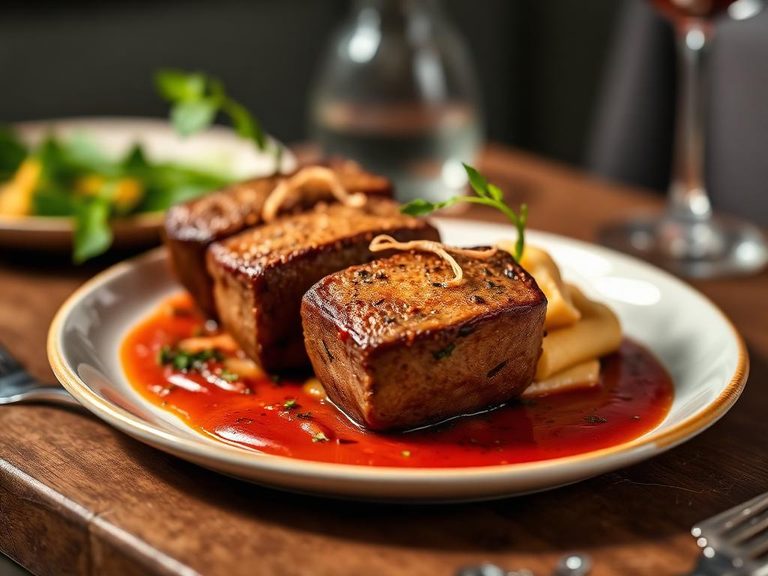
This is the lean, prized cut from the rear of the cow, broiled to a perfect sear. It boasts a buttery, melt-in-your-mouth texture with a clean, intensely beefy flavor. Nutritionally, it's a protein powerhouse, delivering nearly 30 grams of protein per 100 grams with minimal fat and zero carbohydrates.
Calorie split: 62% protein · 0% carbs · 38% fat
↓ Full nutrition💚 Why it's loved
People cherish beef tenderloin for its unmatched tenderness and luxurious, mild flavor that serves as a perfect canvas for seasonings. It's the centerpiece of celebratory meals and fine dining, symbolizing indulgence and culinary craftsmanship.
⚠️ Watch-outs & how to enjoy it better
The primary downside is its high cost, making it a special-occasion item for most. Its very low fat content means it can dry out quickly if overcooked, leading to a less enjoyable texture. To counteract this, use a meat thermometer, rest the steak after cooking, and consider a compound butter or sauce to add moisture and flavor.
Key benefits
- Exceptionally high in complete protein for muscle maintenance
- Rich source of heme iron, which is easily absorbed
- Provides significant B vitamins, especially B12 and B6
- Naturally low in carbohydrates and sugars
- Contains zinc and selenium for immune support
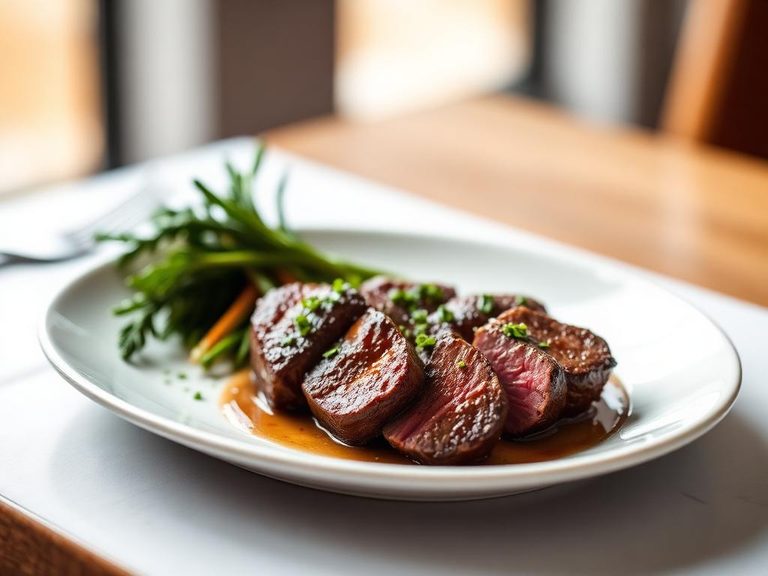
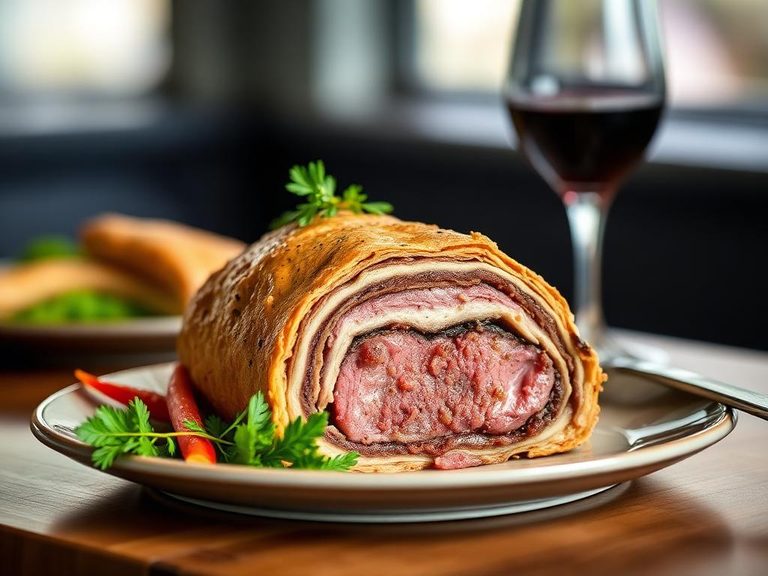
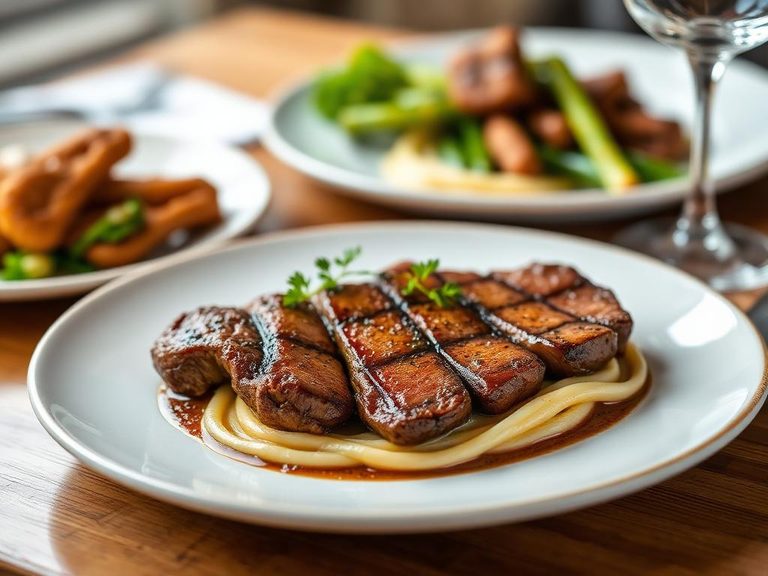
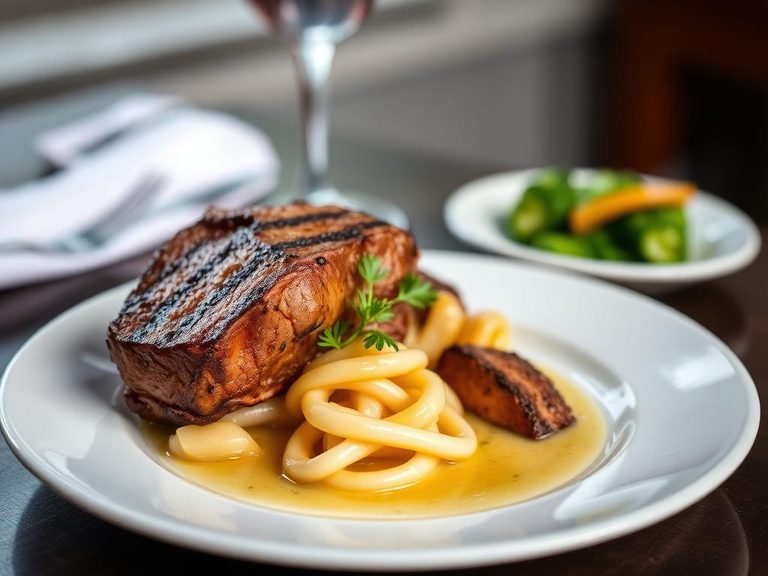
🍽️ Popular dishes
🌍 Where it's eaten
💡 Did you know?
The tenderloin is the least-worked muscle on the cow, running along the spine, which is why it's so tender but also so lean and relatively small, accounting for only about 2-3% of the total carcass weight.
Full nutrition (USDA data · scales with serving)
| Water | 62.7 g |
| Energy | 194 kcal |
| Energy | 812 kj |
| Protein | 29.1 g |
| Total lipid (fat) | 7.8 g |
| Ash | 1.2 g |
| Carbohydrate, by difference | 0.00 g |
| Fiber, total dietary | 0.00 g |
| Total Sugars | 0.00 g |
| Calcium, Ca | 21.0 mg |
| Iron, Fe | 1.8 mg |
| Magnesium, Mg | 25.0 mg |
| Phosphorus, P | 238 mg |
| Potassium, K | 386 mg |
| Sodium, Na | 62.0 mg |
| Zinc, Zn | 5.4 mg |
| Copper, Cu | 0.08 mg |
| Manganese, Mn | 0.01 mg |
| Selenium, Se | 36.6 ug |
| Vitamin C, total ascorbic acid | 0.00 mg |
| Thiamin | 0.08 mg |
| Riboflavin | 0.15 mg |
| Niacin | 8.5 mg |
| Pantothenic acid | 0.57 mg |
| Vitamin B-6 | 0.64 mg |
| Folate, total | 10.0 ug |
| Folic acid | 0.00 ug |
| Folate, food | 10.0 ug |
| Folate, DFE | 10.0 ug |
| Choline, total | 111 mg |
| Betaine | 14.5 mg |
| Vitamin B-12 | 1.4 ug |
| Vitamin B-12, added | 0.00 ug |
| Vitamin A, RAE | 0.00 ug |
| Retinol | 0.00 ug |
| Carotene, beta | 0.00 ug |
| Carotene, alpha | 0.00 ug |
| Cryptoxanthin, beta | 0.00 ug |
| Vitamin A, IU | 0.00 iu |
| Lycopene | 0.00 ug |
| Lutein + zeaxanthin | 0.00 ug |
| Vitamin E (alpha-tocopherol) | 0.40 mg |
| Vitamin E, added | 0.00 mg |
| Tocopherol, beta | 0.00 mg |
| Tocopherol, gamma | 0.00 mg |
| Tocopherol, delta | 0.00 mg |
| Vitamin K (phylloquinone) | 1.4 ug |
| Alcohol, ethyl | 0.00 g |
| Caffeine | 0.00 mg |
| Theobromine | 0.00 mg |
Fat & fatty acid profile (per 100g)
| Fatty acids, total saturated | 3.0 g |
| SFA 4:0 | 0.00 g |
| SFA 6:0 | 0.00 g |
| SFA 8:0 | 0.00 g |
| SFA 10:0 | 0.00 g |
| SFA 12:0 | 0.01 g |
| SFA 14:0 | 0.21 g |
| SFA 16:0 | 1.7 g |
| SFA 18:0 | 1.0 g |
| Fatty acids, total monounsaturated | 3.1 g |
| MUFA 16:1 | 0.23 g |
| MUFA 18:1 | 2.9 g |
| MUFA 20:1 | 0.00 g |
| MUFA 22:1 | 0.00 g |
| Fatty acids, total polyunsaturated | 0.28 g |
| PUFA 18:2 | 0.22 g |
| PUFA 18:3 | 0.02 g |
| PUFA 18:4 | 0.00 g |
| PUFA 20:4 | 0.04 g |
| PUFA 20:5 n-3 (EPA) | 0.00 g |
| PUFA 22:5 n-3 (DPA) | 0.00 g |
| PUFA 22:6 n-3 (DHA) | 0.00 g |
| Cholesterol | 83.0 mg |
Amino acid profile (per 100g)
| Tryptophan | 0.19 g |
| Threonine | 1.2 g |
| Isoleucine | 1.3 g |
| Leucine | 2.3 g |
| Lysine | 2.5 g |
| Methionine | 0.76 g |
| Cystine | 0.38 g |
| Phenylalanine | 1.1 g |
| Tyrosine | 0.93 g |
| Valine | 1.4 g |
| Arginine | 1.9 g |
| Histidine | 0.93 g |
| Alanine | 1.8 g |
| Aspartic acid | 2.6 g |
| Glutamic acid | 4.4 g |
| Glycine | 1.8 g |
| Proline | 1.4 g |
| Serine | 1.1 g |
| Hydroxyproline | 0.30 g |
FAQ
What's the difference between beef tenderloin and filet mignon?
Beef tenderloin is the entire long, tapered muscle. Filet mignon refers to the individual steaks cut from the thicker, center portion of the tenderloin, making it the most premium and uniform cut.
How should I cook it to avoid drying it out?
Due to its low fat, high heat and short cooking time are key. Sear it quickly in a very hot pan or grill it to your desired doneness (medium-rare is ideal), then let it rest for 5-10 minutes before slicing. Using a meat thermometer is the best way to ensure perfect results.
Is it a healthy choice?
Yes, it's an excellent source of high-quality protein and essential nutrients like iron and B12. Its low fat content makes it leaner than many other steak cuts, though it should still be enjoyed as part of a balanced diet.
Nutrient density (calculated · NRF9.3)
Nutrient Rich Foods index: beneficial nutrients (protein, fiber, vitamins, minerals) minus saturated fat, added sugar & sodium, per 100 kcal.
NRF9.3 index — Fulgoni, Keast & Drewnowski, 2009. Computed from USDA nutrients.
Weight-loss friendliness (composite index)
Energy density 1.94 kcal/g · 60% calories from protein · 0.0 g fiber · 0.0 g sugar per 100 g.
Composite of energy density (Rolls et al., 1999), protein & fiber satiety, minus sugar. A calculated heuristic — ranks satiety-per-calorie, not a clinical measure.
Dietary load (calculated from USDA values)
Potential renal acid load. Positive = acid-forming, negative = alkaline-forming.
Sodium-to-potassium ratio: 0.16 (lower is better — aim for ≤ 1)
Sodium:potassium per WHO potassium guidance. Computed from USDA nutrients.