

Beef, tenderloin, steak, separable lean only, trimmed to 1/8" fat, choice, raw
Whole food · Beef Products

Photo: Wikipedia
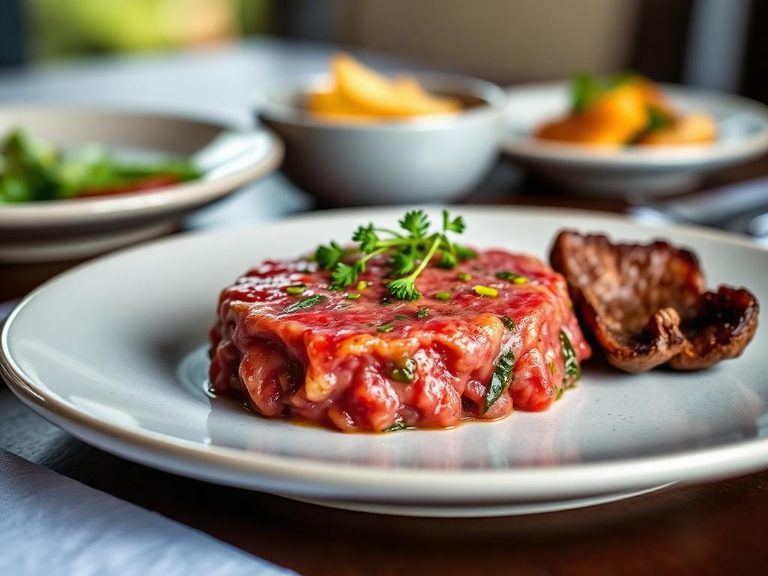
This is the pinnacle of beef: the tenderloin, a long, slender muscle from the loin that does very little work, resulting in an exceptionally fine-grained, buttery-soft texture. Trimmed of its outer fat cap, it's a lean, pure protein source with a mild, subtly sweet beef flavor that melts in the mouth. Nutritionally, it's a powerhouse of high-quality protein with minimal fat, making it a favorite for those seeking a clean, substantial meal.
Calorie split: 58% protein · 0% carbs · 42% fat
↓ Full nutrition💚 Why it's loved
People love it for its unparalleled tenderness and clean, rich flavor that serves as a perfect canvas for sauces or simply seasoned with salt and pepper. It's the celebratory cut of choice, synonymous with luxury and special occasions.
⚠️ Watch-outs & how to enjoy it better
Its extreme leanness means it can dry out and become tough if overcooked, requiring careful temperature control. For those monitoring cholesterol or saturated fat intake, it should be consumed in moderation; pair it with fiber-rich vegetables like roasted asparagus or a leafy salad to balance the meal.
Key benefits
- Exceptionally high in complete protein for muscle maintenance and satiety.
- Very low in carbohydrates, making it ideal for ketogenic and low-carb diets.
- A good source of essential minerals like zinc, selenium, and B vitamins, especially B12.
- Extremely tender and easy to digest due to its fine muscle fiber structure.
🍽️ Popular dishes
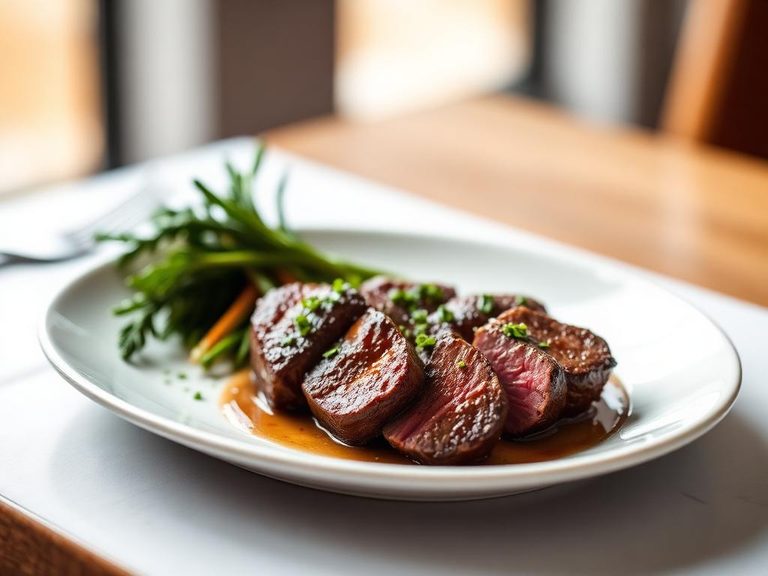
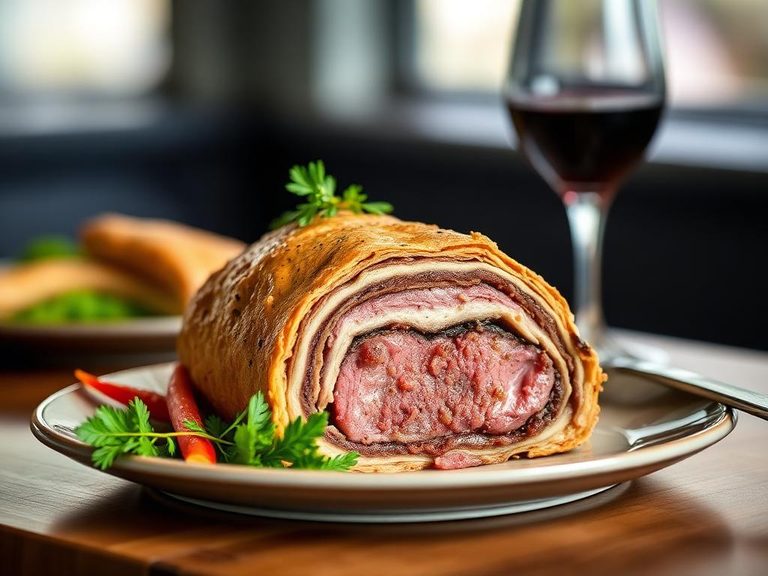
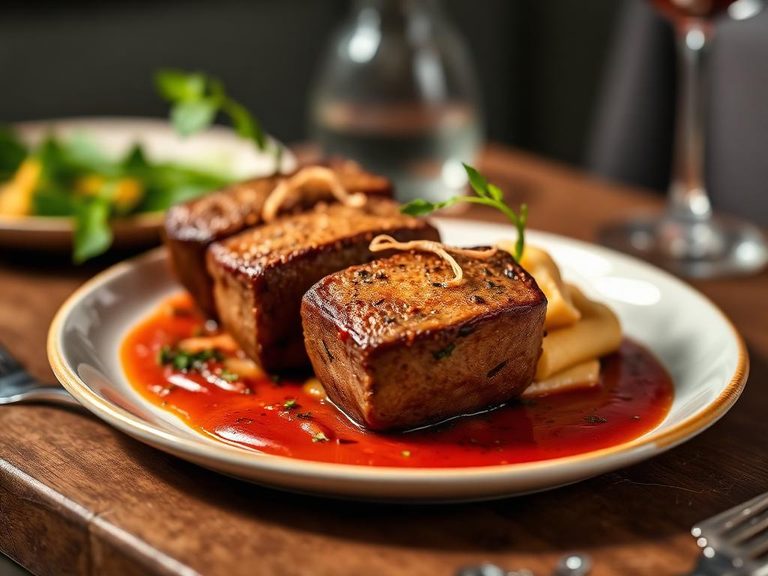
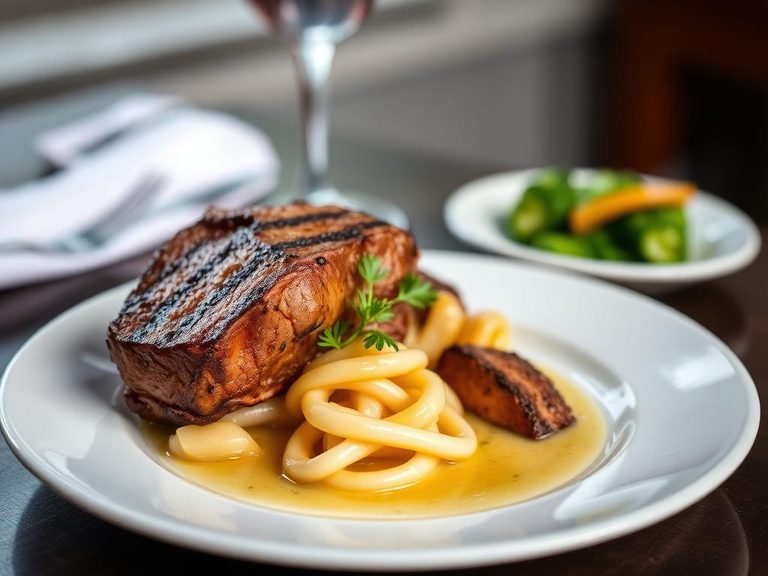
🌍 Where it's eaten
💡 Did you know?
The tenderloin is the most tender cut of beef because it's a non-weight-bearing muscle that runs along the spine, meaning it does almost no exercise.
Full nutrition (USDA data · scales with serving)
| Water | 70.2 g |
| Energy | 158 kcal |
| Energy | 663 kj |
| Protein | 22.2 g |
| Total lipid (fat) | 7.1 g |
| Ash | 1.1 g |
| Carbohydrate, by difference | 0.00 g |
| Fiber, total dietary | 0.00 g |
| Total Sugars | 0.00 g |
| Calcium, Ca | 28.0 mg |
| Iron, Fe | 1.6 mg |
| Magnesium, Mg | 23.0 mg |
| Phosphorus, P | 204 mg |
| Potassium, K | 340 mg |
| Sodium, Na | 57.0 mg |
| Zinc, Zn | 4.1 mg |
| Copper, Cu | 0.07 mg |
| Manganese, Mn | 0.01 mg |
| Selenium, Se | 25.4 ug |
| Vitamin C, total ascorbic acid | 0.00 mg |
| Thiamin | 0.06 mg |
| Riboflavin | 0.11 mg |
| Niacin | 7.5 mg |
| Pantothenic acid | 0.66 mg |
| Vitamin B-6 | 0.61 mg |
| Folate, total | 13.0 ug |
| Folic acid | 0.00 ug |
| Folate, food | 13.0 ug |
| Folate, DFE | 13.0 ug |
| Choline, total | 92.6 mg |
| Betaine | 13.6 mg |
| Vitamin B-12 | 1.2 ug |
| Vitamin B-12, added | 0.00 ug |
| Vitamin A, RAE | 0.00 ug |
| Retinol | 0.00 ug |
| Carotene, beta | 0.00 ug |
| Carotene, alpha | 0.00 ug |
| Cryptoxanthin, beta | 0.00 ug |
| Vitamin A, IU | 0.00 iu |
| Lycopene | 0.00 ug |
| Lutein + zeaxanthin | 0.00 ug |
| Vitamin E (alpha-tocopherol) | 0.33 mg |
| Vitamin E, added | 0.00 mg |
| Tocopherol, beta | 0.00 mg |
| Tocopherol, gamma | 0.00 mg |
| Tocopherol, delta | 0.00 mg |
| Vitamin K (phylloquinone) | 1.3 ug |
| Alcohol, ethyl | 0.00 g |
| Caffeine | 0.00 mg |
| Theobromine | 0.00 mg |
Fat & fatty acid profile (per 100g)
| Fatty acids, total saturated | 2.6 g |
| SFA 4:0 | 0.00 g |
| SFA 6:0 | 0.00 g |
| SFA 8:0 | 0.00 g |
| SFA 10:0 | 0.00 g |
| SFA 12:0 | 0.00 g |
| SFA 14:0 | 0.18 g |
| SFA 16:0 | 1.6 g |
| SFA 18:0 | 0.86 g |
| Fatty acids, total monounsaturated | 2.8 g |
| MUFA 16:1 | 0.22 g |
| MUFA 18:1 | 2.6 g |
| MUFA 20:1 | 0.00 g |
| MUFA 22:1 | 0.00 g |
| Fatty acids, total polyunsaturated | 0.31 g |
| PUFA 18:2 | 0.25 g |
| PUFA 18:3 | 0.02 g |
| PUFA 18:4 | 0.00 g |
| PUFA 20:4 | 0.04 g |
| PUFA 20:5 n-3 (EPA) | 0.00 g |
| PUFA 22:5 n-3 (DPA) | 0.00 g |
| PUFA 22:6 n-3 (DHA) | 0.00 g |
| Cholesterol | 66.0 mg |
Amino acid profile (per 100g)
| Tryptophan | 0.14 g |
| Threonine | 0.88 g |
| Isoleucine | 1.0 g |
| Leucine | 1.8 g |
| Lysine | 1.9 g |
| Methionine | 0.58 g |
| Cystine | 0.28 g |
| Phenylalanine | 0.87 g |
| Tyrosine | 0.70 g |
| Valine | 1.1 g |
| Arginine | 1.4 g |
| Histidine | 0.71 g |
| Alanine | 1.3 g |
| Aspartic acid | 2.0 g |
| Glutamic acid | 3.3 g |
| Glycine | 1.3 g |
| Proline | 1.1 g |
| Serine | 0.87 g |
| Hydroxyproline | 0.23 g |
FAQ
What's the best way to cook beef tenderloin to avoid drying it out?
High-heat searing followed by a short finish in a moderate oven (the 'reverse sear' or 'sear-roast' method) is ideal. Use a meat thermometer to pull it at 125-130°F (52-54°C) for medium-rare, and let it rest well before slicing.
How does 'choice' grade affect the tenderloin?
'Choice' is a USDA quality grade indicating good marbling (intramuscular fat). While tenderloin is naturally lean, choice grade ensures a bit more flavor and juiciness than 'select' grade, though less than 'prime'.
Is beef tenderloin the same as filet mignon?
Filet mignon is a specific steak cut from the narrow end of the tenderloin. All filet mignon comes from the tenderloin, but not all tenderloin is cut into filet mignon steaks; the larger center cut is often roasted whole as Chateaubriand.
Nutrient density (calculated · NRF9.3)
Nutrient Rich Foods index: beneficial nutrients (protein, fiber, vitamins, minerals) minus saturated fat, added sugar & sodium, per 100 kcal.
NRF9.3 index — Fulgoni, Keast & Drewnowski, 2009. Computed from USDA nutrients.
Weight-loss friendliness (composite index)
Energy density 1.58 kcal/g · 56% calories from protein · 0.0 g fiber · 0.0 g sugar per 100 g.
Composite of energy density (Rolls et al., 1999), protein & fiber satiety, minus sugar. A calculated heuristic — ranks satiety-per-calorie, not a clinical measure.
Dietary load (calculated from USDA values)
Potential renal acid load. Positive = acid-forming, negative = alkaline-forming.
Sodium-to-potassium ratio: 0.17 (lower is better — aim for ≤ 1)
Sodium:potassium per WHO potassium guidance. Computed from USDA nutrients.