

Beef, short loin, top loin, steak, separable lean only, trimmed to 1/8" fat, select, cooked, grilled
Whole food · Beef Products

Photo: Wikipedia
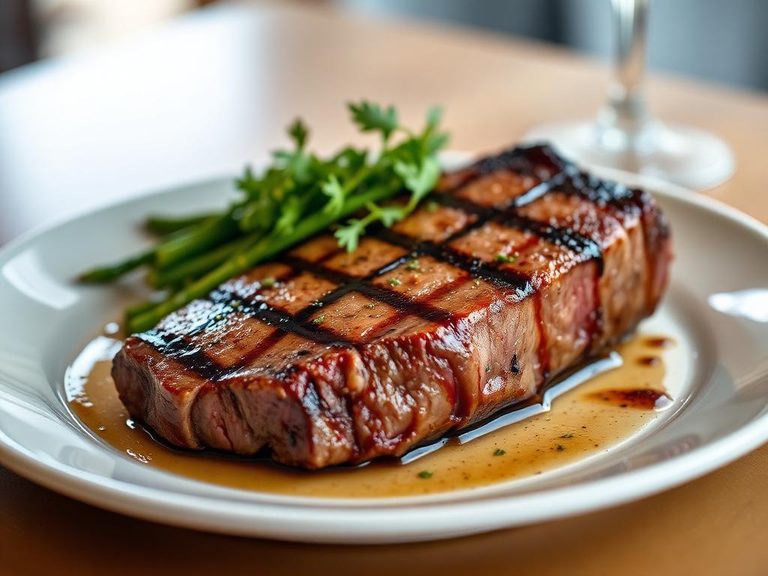
This is a premium cut of beef, specifically the top loin steak (often sold as a New York strip), trimmed of excess fat and grilled to a savory, slightly smoky finish. It boasts a firm yet tender texture with a rich, beefy flavor that is amplified by high-heat cooking. Nutritionally, it is a powerhouse of high-quality protein (nearly 30g per 100g) with a relatively low fat content, making it a lean, satisfying meal option.
Calorie split: 70% protein · 0% carbs · 30% fat
↓ Full nutrition💚 Why it's loved
People love it for its classic, robust beef flavor and satisfying chew that isn't too tough. Its versatility makes it a star in everything from simple grilled dinners to elegant steakhouse meals, embodying a sense of comfort and indulgence.
⚠️ Watch-outs & how to enjoy it better
As a red meat, it can be high in saturated fat and cholesterol, which some individuals may need to monitor. To counteract this, balance your meal with fiber-rich vegetables like roasted broccoli or a large salad, and practice portion control by sticking to a 4-6 ounce serving. Additionally, ensure it's cooked to a safe internal temperature (145°F for medium-rare) to avoid foodborne illness.
Key benefits
- Excellent source of high-quality, complete protein for muscle maintenance
- Low in carbohydrates, making it ideal for low-carb and keto diets
- Rich in essential minerals like iron, zinc, and selenium
- Provides B vitamins, particularly B12, crucial for nerve function
- Grilling method adds flavor without requiring added fats or oils
🍽️ Popular dishes
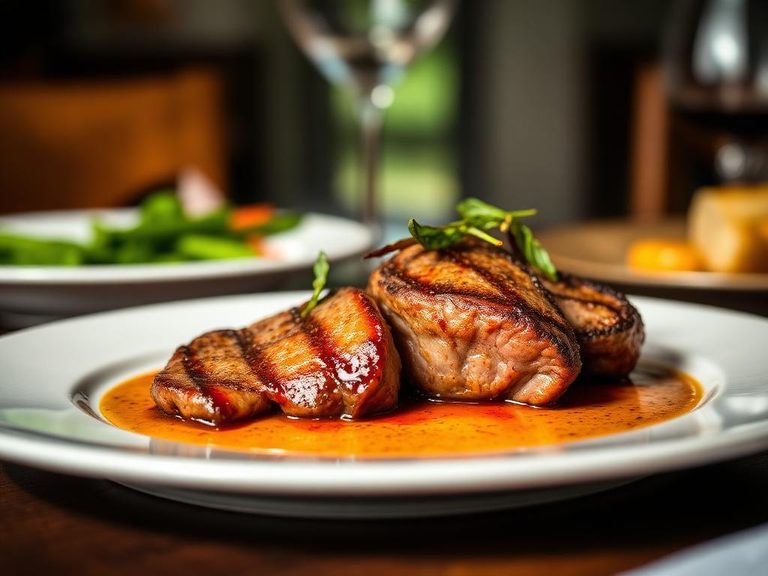
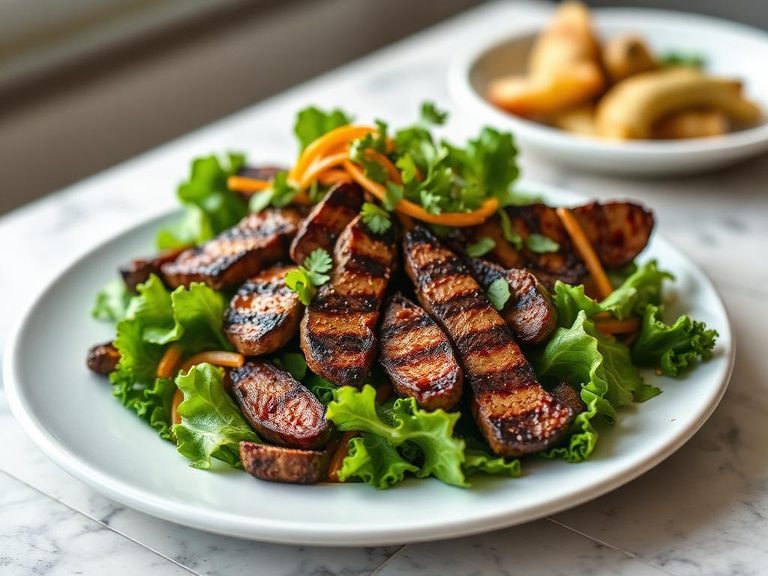
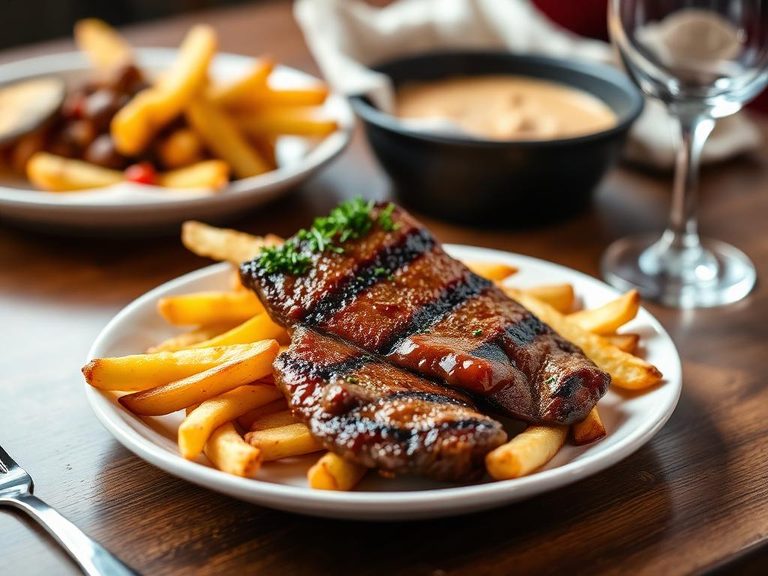

🌍 Where it's eaten
💡 Did you know?
The 'New York strip' name originated from the Delmonico's Steakhouse in New York City in the 19th century, where this cut from the short loin was a menu staple.
Full nutrition (USDA data · scales with serving)
| Water | 64.7 g |
| Energy | 177 kcal |
| Energy | 742 kj |
| Protein | 29.4 g |
| Total lipid (fat) | 5.7 g |
| Ash | 1.1 g |
| Carbohydrate, by difference | 0.00 g |
| Fiber, total dietary | 0.00 g |
| Total Sugars | 0.00 g |
| Calcium, Ca | 21.0 mg |
| Iron, Fe | 1.8 mg |
| Magnesium, Mg | 25.0 mg |
| Phosphorus, P | 239 mg |
| Potassium, K | 386 mg |
| Sodium, Na | 62.0 mg |
| Zinc, Zn | 5.4 mg |
| Copper, Cu | 0.08 mg |
| Manganese, Mn | 0.01 mg |
| Selenium, Se | 36.7 ug |
| Vitamin C, total ascorbic acid | 0.00 mg |
| Thiamin | 0.08 mg |
| Riboflavin | 0.16 mg |
| Niacin | 8.6 mg |
| Pantothenic acid | 0.58 mg |
| Vitamin B-6 | 0.65 mg |
| Folate, total | 10.0 ug |
| Folic acid | 0.00 ug |
| Folate, food | 10.0 ug |
| Folate, DFE | 10.0 ug |
| Choline, total | 112 mg |
| Betaine | 14.7 mg |
| Vitamin B-12 | 1.4 ug |
| Vitamin B-12, added | 0.00 ug |
| Vitamin A, RAE | 0.00 ug |
| Retinol | 0.00 ug |
| Carotene, beta | 0.00 ug |
| Carotene, alpha | 0.00 ug |
| Cryptoxanthin, beta | 0.00 ug |
| Vitamin A, IU | 0.00 iu |
| Lycopene | 0.00 ug |
| Lutein + zeaxanthin | 0.00 ug |
| Vitamin E (alpha-tocopherol) | 0.38 mg |
| Vitamin E, added | 0.00 mg |
| Tocopherol, beta | 0.00 mg |
| Tocopherol, gamma | 0.00 mg |
| Tocopherol, delta | 0.00 mg |
| Vitamin K (phylloquinone) | 1.3 ug |
| Alcohol, ethyl | 0.00 g |
| Caffeine | 0.00 mg |
| Theobromine | 0.00 mg |
Fat & fatty acid profile (per 100g)
| Fatty acids, total saturated | 2.2 g |
| SFA 4:0 | 0.00 g |
| SFA 6:0 | 0.00 g |
| SFA 8:0 | 0.00 g |
| SFA 10:0 | 0.00 g |
| SFA 12:0 | 0.01 g |
| SFA 14:0 | 0.15 g |
| SFA 16:0 | 1.3 g |
| SFA 18:0 | 0.75 g |
| Fatty acids, total monounsaturated | 2.3 g |
| MUFA 16:1 | 0.17 g |
| MUFA 18:1 | 2.1 g |
| MUFA 20:1 | 0.00 g |
| MUFA 22:1 | 0.00 g |
| Fatty acids, total polyunsaturated | 0.20 g |
| PUFA 18:2 | 0.16 g |
| PUFA 18:3 | 0.01 g |
| PUFA 18:4 | 0.00 g |
| PUFA 20:4 | 0.03 g |
| PUFA 20:5 n-3 (EPA) | 0.00 g |
| PUFA 22:5 n-3 (DPA) | 0.00 g |
| PUFA 22:6 n-3 (DHA) | 0.00 g |
| Cholesterol | 78.0 mg |
Amino acid profile (per 100g)
| Tryptophan | 0.19 g |
| Threonine | 1.2 g |
| Isoleucine | 1.3 g |
| Leucine | 2.3 g |
| Lysine | 2.5 g |
| Methionine | 0.77 g |
| Cystine | 0.38 g |
| Phenylalanine | 1.2 g |
| Tyrosine | 0.94 g |
| Valine | 1.5 g |
| Arginine | 1.9 g |
| Histidine | 0.94 g |
| Alanine | 1.8 g |
| Aspartic acid | 2.7 g |
| Glutamic acid | 4.4 g |
| Glycine | 1.8 g |
| Proline | 1.4 g |
| Serine | 1.2 g |
| Hydroxyproline | 0.31 g |
FAQ
Is this cut of beef lean or fatty?
This specific preparation is 'separable lean only, trimmed to 1/8" fat,' meaning it is a relatively lean cut compared to other steaks like ribeye, with about 5.73g of fat per 100g.
What is the best way to cook it to preserve its texture and flavor?
Grilling is ideal for developing a flavorful crust while keeping the interior juicy. For best results, bring the steak to room temperature before cooking, season generously, and use high heat for a short time.
How does this compare nutritionally to other steak cuts?
It is leaner than fattier cuts like ribeye or T-bone but similar in protein content. Its trimmed fat makes it a good choice for those seeking high protein with moderate fat intake.
Can I eat this if I'm on a low-sodium diet?
While this cut itself is naturally low in sodium, be mindful of added salt during seasoning or marination. Use herbs, spices, and citrus to flavor it instead of heavy salt.
Nutrient density (calculated · NRF9.3)
Nutrient Rich Foods index: beneficial nutrients (protein, fiber, vitamins, minerals) minus saturated fat, added sugar & sodium, per 100 kcal.
NRF9.3 index — Fulgoni, Keast & Drewnowski, 2009. Computed from USDA nutrients.
Weight-loss friendliness (composite index)
Energy density 1.77 kcal/g · 67% calories from protein · 0.0 g fiber · 0.0 g sugar per 100 g.
Composite of energy density (Rolls et al., 1999), protein & fiber satiety, minus sugar. A calculated heuristic — ranks satiety-per-calorie, not a clinical measure.
Dietary load (calculated from USDA values)
Potential renal acid load. Positive = acid-forming, negative = alkaline-forming.
Sodium-to-potassium ratio: 0.16 (lower is better — aim for ≤ 1)
Sodium:potassium per WHO potassium guidance. Computed from USDA nutrients.