

Beef, round, bottom round, steak, separable lean and fat, trimmed to 1/8" fat, choice, cooked, braised
Whole food · Beef Products
This is a lean, economical cut from the rear leg of the cow, known for its deep beefy flavor and firm texture when slow-cooked. When braised, the connective tissue melts into gelatin, transforming it from a potentially tough steak into a fork-tender, succulent dish. It's a protein powerhouse with virtually no carbohydrates, making it a staple for high-protein, low-carb diets.
Calorie split: 54% protein · 0% carbs · 46% fat
↓ Full nutrition💚 Why it's loved
People love it for its robust, pure beef flavor that shines in slow-cooked dishes and its remarkable ability to become tender and absorbent of sauces and seasonings. It's a versatile, budget-friendly workhorse in the kitchen, perfect for hearty, comforting meals.
⚠️ Watch-outs & how to enjoy it better
If cooked quickly (like grilling), it can be tough and chewy due to its lean nature and connective tissue. To counteract this, use moist-heat cooking methods like braising, stewing, or slow-roasting to break down the collagen. For portion control, a standard serving is about the size of a deck of cards.
Key benefits
- Excellent source of high-quality protein for muscle maintenance and repair.
- Naturally zero carbohydrates and sugar, ideal for ketogenic and low-carb diets.
- Rich in iron and B vitamins like B12, essential for energy and nerve function.
- A cost-effective cut that delivers great flavor and nutrition when cooked properly.
🍽️ Popular dishes
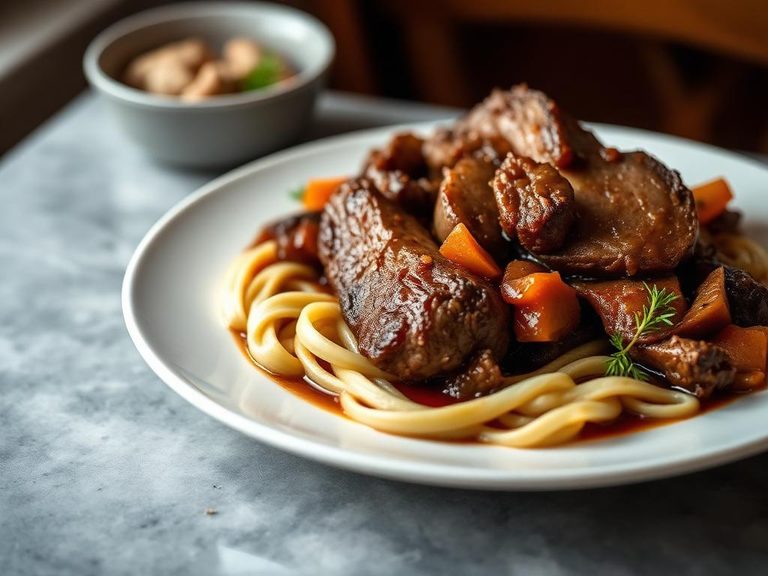
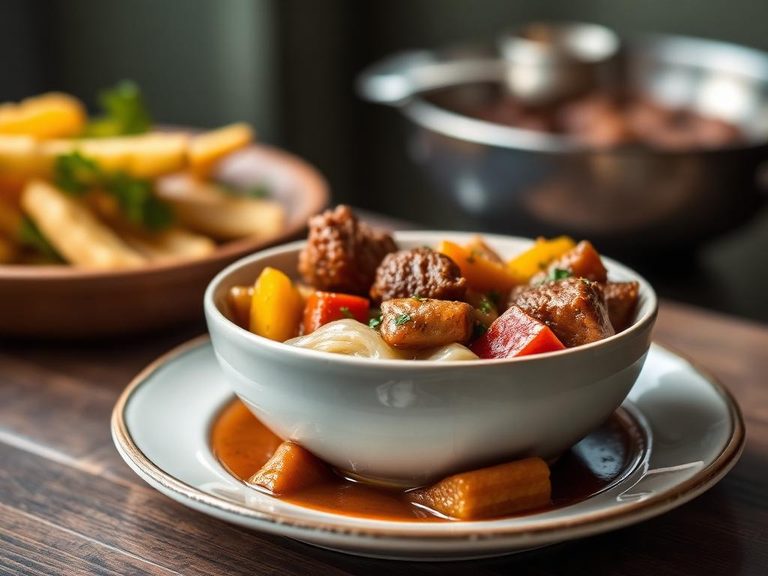
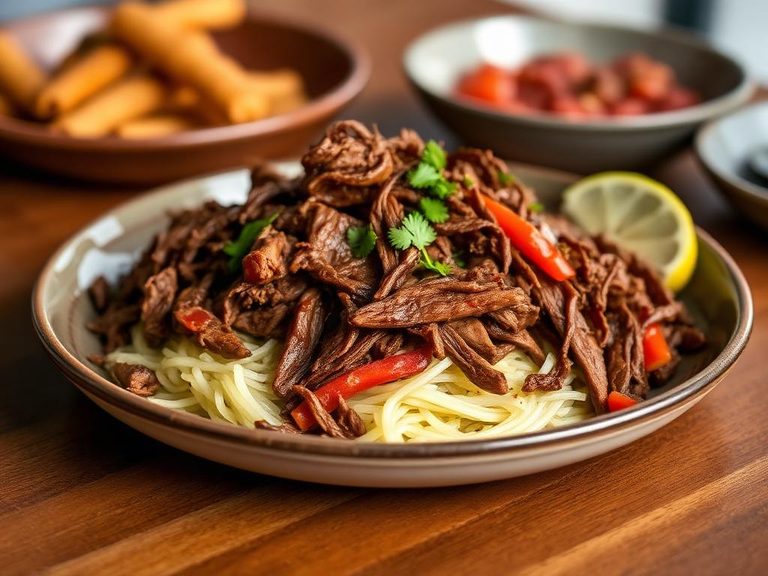
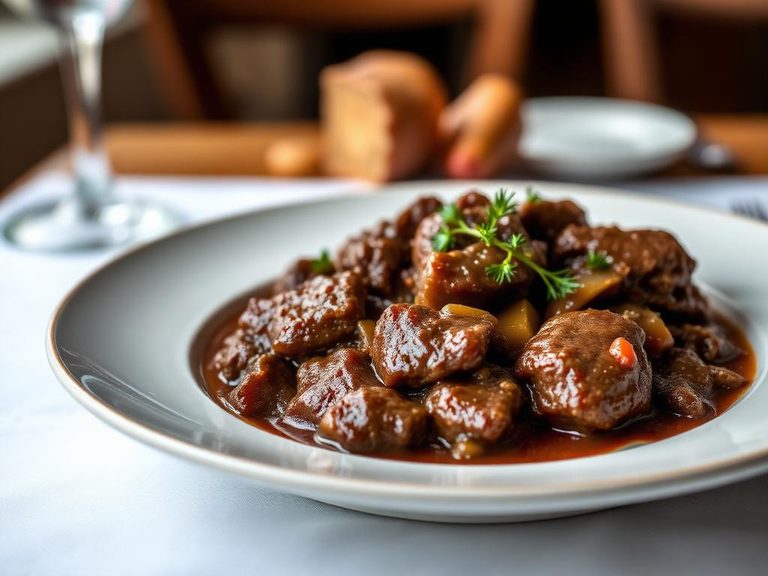
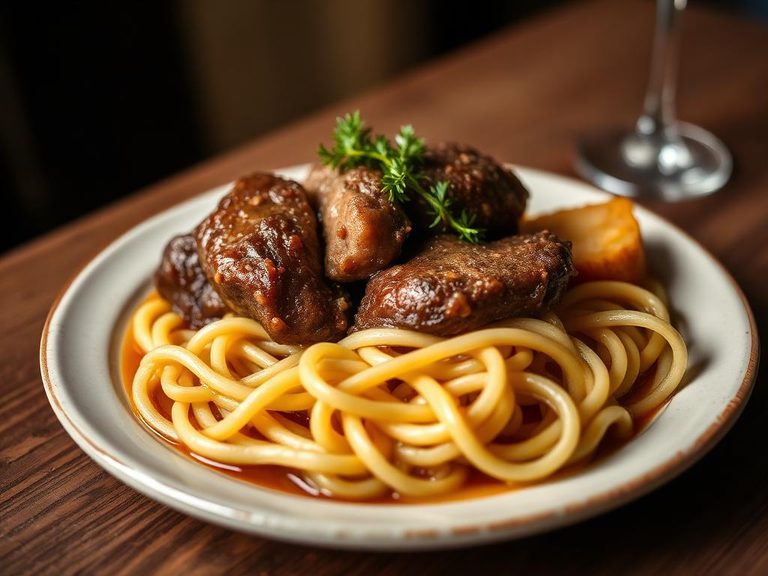
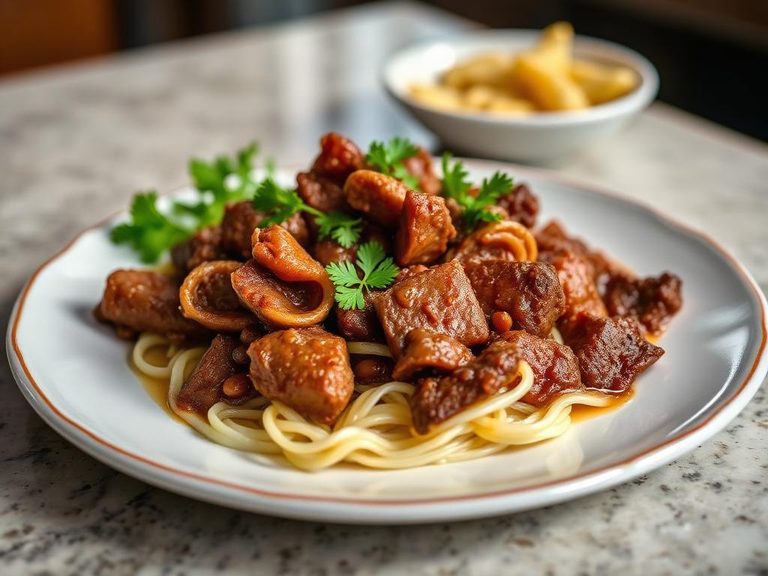
🌍 Where it's eaten
💡 Did you know?
The 'bottom round' comes from the same leg area that produces the 'eye of round' and 'top round'—it's essentially one large muscle group, with the bottom round being the outer portion that gets more work, giving it a slightly coarser grain.
Full nutrition (USDA data · scales with serving)
| Water | 54.3 g |
| Energy | 254 kcal |
| Energy | 1061 kj |
| Protein | 32.9 g |
| Total lipid (fat) | 12.6 g |
| Ash | 0.95 g |
| Carbohydrate, by difference | 0.00 g |
| Fiber, total dietary | 0.00 g |
| Total Sugars | 0.00 g |
| Calcium, Ca | 7.0 mg |
| Iron, Fe | 2.7 mg |
| Magnesium, Mg | 21.0 mg |
| Phosphorus, P | 199 mg |
| Potassium, K | 263 mg |
| Sodium, Na | 42.0 mg |
| Zinc, Zn | 5.4 mg |
| Copper, Cu | 0.07 mg |
| Manganese, Mn | 0.01 mg |
| Selenium, Se | 34.4 ug |
| Fluoride, F | 22.4 ug |
| Vitamin C, total ascorbic acid | 0.00 mg |
| Thiamin | 0.07 mg |
| Riboflavin | 0.18 mg |
| Niacin | 5.9 mg |
| Pantothenic acid | 0.65 mg |
| Vitamin B-6 | 0.43 mg |
| Folate, total | 10.0 ug |
| Folic acid | 0.00 ug |
| Folate, food | 10.0 ug |
| Folate, DFE | 10.0 ug |
| Choline, total | 125 mg |
| Betaine | 16.4 mg |
| Vitamin B-12 | 2.0 ug |
| Vitamin B-12, added | 0.00 ug |
| Vitamin A, RAE | 0.00 ug |
| Retinol | 0.00 ug |
| Carotene, beta | 0.00 ug |
| Carotene, alpha | 0.00 ug |
| Cryptoxanthin, beta | 0.00 ug |
| Vitamin A, IU | 0.00 iu |
| Lycopene | 0.00 ug |
| Lutein + zeaxanthin | 0.00 ug |
| Vitamin E (alpha-tocopherol) | 0.49 mg |
| Vitamin E, added | 0.00 mg |
| Tocopherol, beta | 0.00 mg |
| Tocopherol, gamma | 0.00 mg |
| Tocopherol, delta | 0.00 mg |
| Vitamin K (phylloquinone) | 1.7 ug |
| Alcohol, ethyl | 0.00 g |
| Caffeine | 0.00 mg |
| Theobromine | 0.00 mg |
Fat & fatty acid profile (per 100g)
| Fatty acids, total saturated | 4.8 g |
| SFA 4:0 | 0.00 g |
| SFA 6:0 | 0.00 g |
| SFA 8:0 | 0.00 g |
| SFA 10:0 | 0.03 g |
| SFA 12:0 | 0.03 g |
| SFA 14:0 | 0.37 g |
| SFA 16:0 | 3.0 g |
| SFA 18:0 | 1.4 g |
| Fatty acids, total monounsaturated | 5.4 g |
| MUFA 16:1 | 0.53 g |
| MUFA 18:1 | 4.8 g |
| MUFA 20:1 | 0.02 g |
| MUFA 22:1 | 0.00 g |
| Fatty acids, total polyunsaturated | 0.48 g |
| PUFA 18:2 | 0.33 g |
| PUFA 18:3 | 0.12 g |
| PUFA 18:4 | 0.00 g |
| PUFA 20:4 | 0.03 g |
| PUFA 20:5 n-3 (EPA) | 0.00 g |
| PUFA 22:5 n-3 (DPA) | 0.00 g |
| PUFA 22:6 n-3 (DHA) | 0.00 g |
| Cholesterol | 101 mg |
Amino acid profile (per 100g)
| Tryptophan | 0.22 g |
| Threonine | 1.3 g |
| Isoleucine | 1.5 g |
| Leucine | 2.6 g |
| Lysine | 2.8 g |
| Methionine | 0.85 g |
| Cystine | 0.42 g |
| Phenylalanine | 1.3 g |
| Tyrosine | 1.0 g |
| Valine | 1.6 g |
| Arginine | 2.1 g |
| Histidine | 1.0 g |
| Alanine | 2.0 g |
| Aspartic acid | 3.0 g |
| Glutamic acid | 4.9 g |
| Glycine | 2.0 g |
| Proline | 1.6 g |
| Serine | 1.3 g |
| Hydroxyproline | 0.34 g |
FAQ
What's the difference between bottom round and top round?
Bottom round is from the outer leg, slightly tougher with more connective tissue, making it ideal for braising. Top round is from the inner leg, a bit more tender, and can be used for both roasting and slicing for deli roast beef.
How do I prevent it from drying out?
The key is low-and-slow moist cooking. Braise it in liquid (broth, wine, tomatoes) at a low temperature (300-325°F / 150-160°C) until the internal temperature reaches 195-205°F (90-96°C) for maximum tenderness.
Can I grill this cut?
It's not recommended for grilling as a whole steak due to its leanness and toughness. If you want to grill, slice it thinly against the grain for quick-cooking applications like fajitas or stir-fries after marinating.
Nutrient density (calculated · NRF9.3)
Nutrient Rich Foods index: beneficial nutrients (protein, fiber, vitamins, minerals) minus saturated fat, added sugar & sodium, per 100 kcal.
NRF9.3 index — Fulgoni, Keast & Drewnowski, 2009. Computed from USDA nutrients.
Weight-loss friendliness (composite index)
Energy density 2.54 kcal/g · 52% calories from protein · 0.0 g fiber · 0.0 g sugar per 100 g.
Composite of energy density (Rolls et al., 1999), protein & fiber satiety, minus sugar. A calculated heuristic — ranks satiety-per-calorie, not a clinical measure.
Dietary load (calculated from USDA values)
Potential renal acid load. Positive = acid-forming, negative = alkaline-forming.
Sodium-to-potassium ratio: 0.16 (lower is better — aim for ≤ 1)
Sodium:potassium per WHO potassium guidance. Computed from USDA nutrients.