

Beef, round, bottom round, steak, separable lean and fat, trimmed to 0" fat, choice, cooked, braised
Whole food · Beef Products
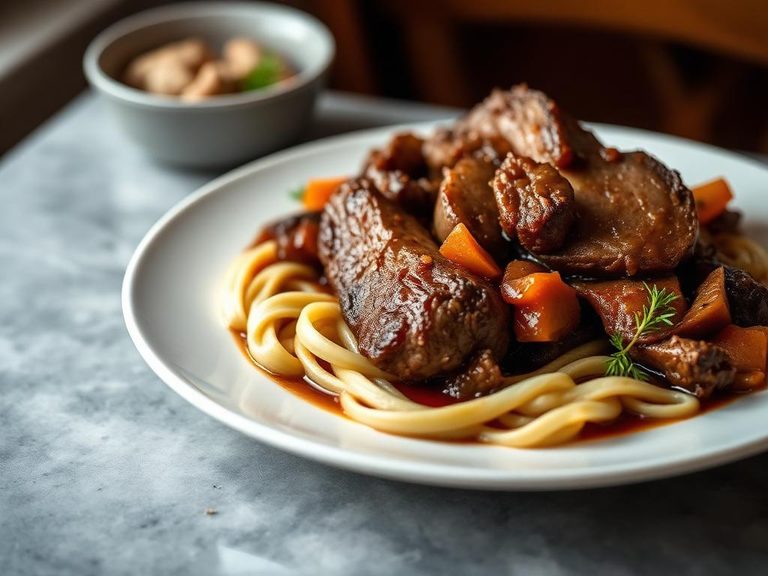
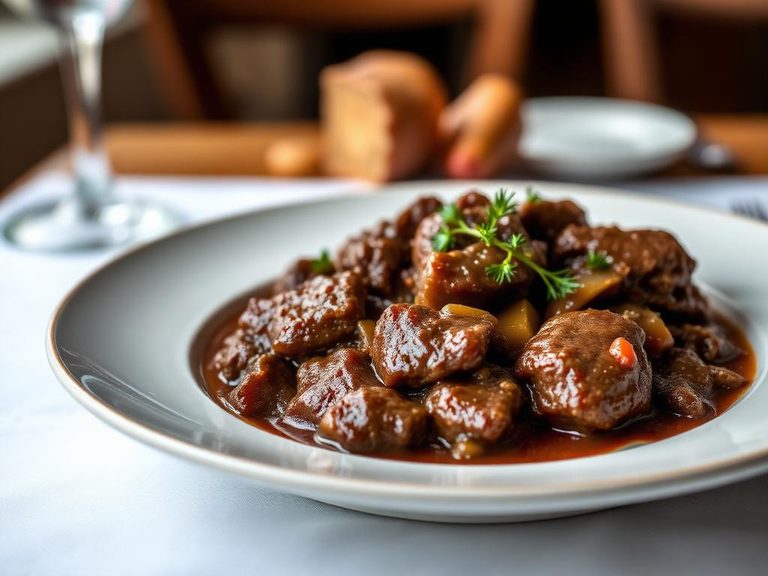
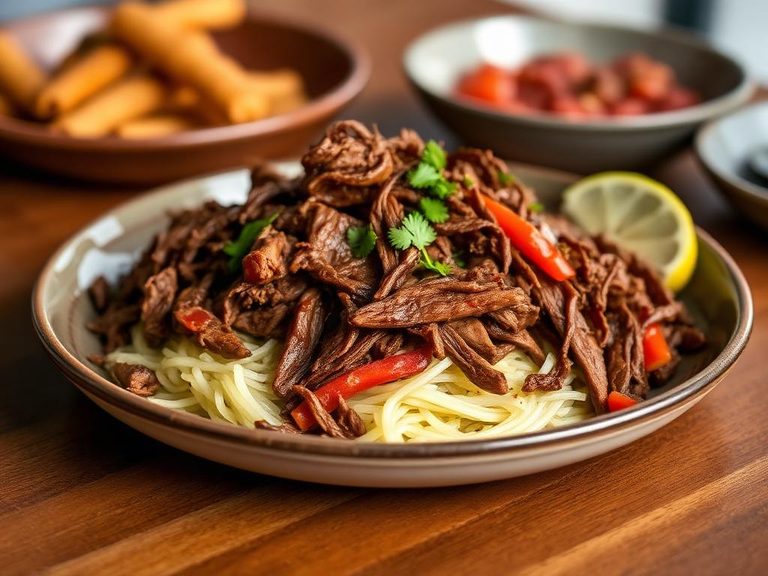
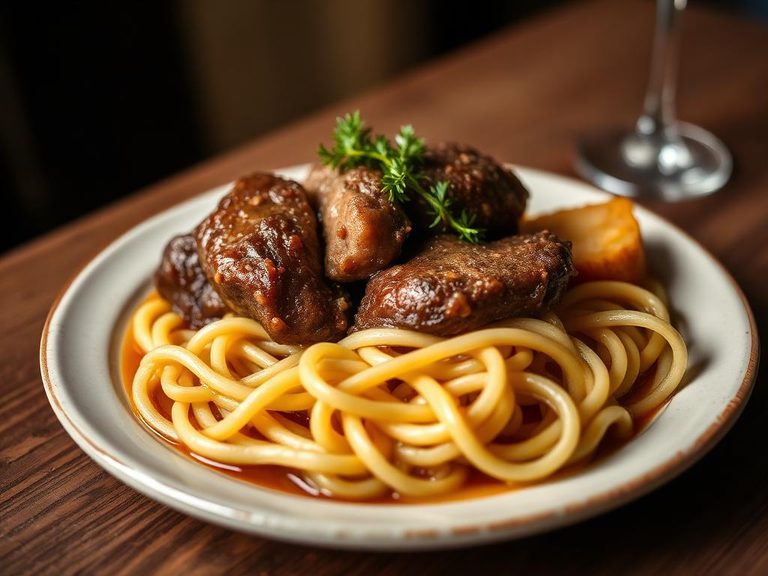
This is a lean, robust cut of beef from the rear leg, slow-braised until the tough fibers melt into a tender, deeply savory texture. With virtually zero fat and a high protein content, it's a powerhouse for muscle maintenance without the extra calories. The braising process infuses it with rich, beefy flavor, making it a satisfying and wholesome meal.
Calorie split: 59% protein · 0% carbs · 41% fat
↓ Full nutrition💚 Why it's loved
People love it for its deep, beefy flavor and satisfying tenderness when braised, offering a hearty, comforting meal. It's incredibly versatile, serving as a blank canvas for a variety of sauces, herbs, and global cuisines.
⚠️ Watch-outs & how to enjoy it better
This cut can be tough and dry if not cooked low and slow, requiring patience and proper technique. It's also high in cholesterol, so individuals monitoring their intake should be mindful of portion sizes and pair it with fiber-rich vegetables to balance the meal.
Key benefits
- Excellent source of high-quality protein for muscle repair and satiety
- Very low in fat and carbohydrates, ideal for lean protein goals
- Rich in iron and zinc, essential minerals for energy and immunity
- Slow-cooking method breaks down connective tissue for easier digestion
- Provides B vitamins, particularly B12, crucial for nerve function
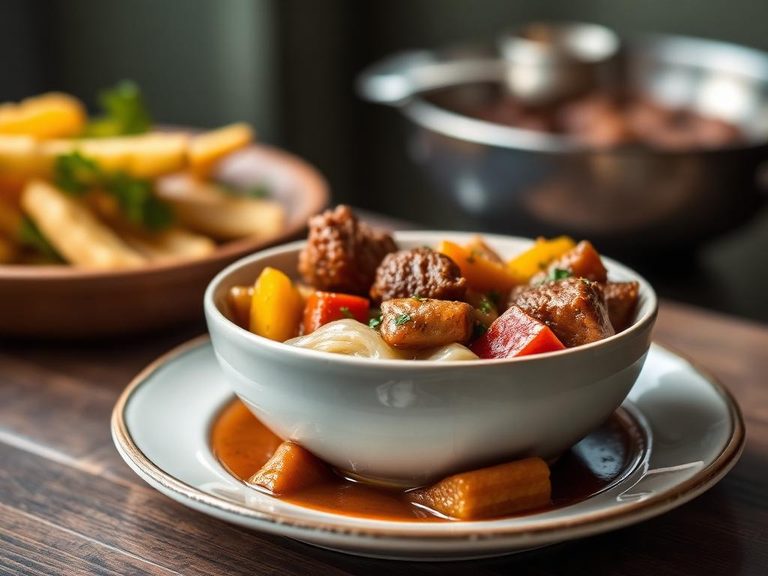
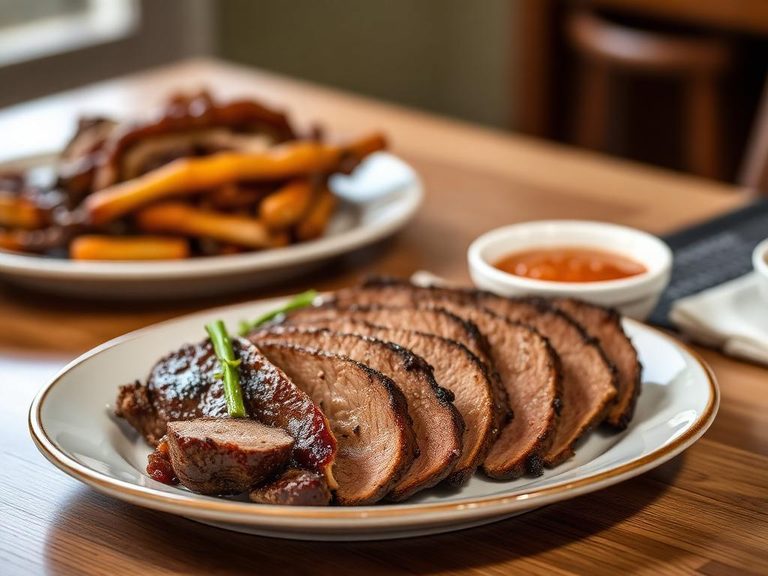
🍽️ Popular dishes
🌍 Where it's eaten
💡 Did you know?
The bottom round is one of the leanest cuts of beef, often used to make jerky because of its low fat content, which helps it dry evenly and last longer.
Full nutrition (USDA data · scales with serving)
| Water | 56.7 g |
| Energy | 230 kcal |
| Energy | 962 kj |
| Protein | 32.7 g |
| Total lipid (fat) | 10.0 g |
| Ash | 1.0 g |
| Carbohydrate, by difference | 0.00 g |
| Fiber, total dietary | 0.00 g |
| Total Sugars | 0.00 g |
| Calcium, Ca | 7.0 mg |
| Iron, Fe | 2.7 mg |
| Magnesium, Mg | 21.0 mg |
| Phosphorus, P | 199 mg |
| Potassium, K | 264 mg |
| Sodium, Na | 42.0 mg |
| Zinc, Zn | 5.4 mg |
| Copper, Cu | 0.07 mg |
| Manganese, Mn | 0.01 mg |
| Selenium, Se | 34.5 ug |
| Vitamin C, total ascorbic acid | 0.00 mg |
| Thiamin | 0.07 mg |
| Riboflavin | 0.18 mg |
| Niacin | 5.9 mg |
| Pantothenic acid | 0.64 mg |
| Vitamin B-6 | 0.43 mg |
| Folate, total | 10.0 ug |
| Folic acid | 0.00 ug |
| Folate, food | 10.0 ug |
| Folate, DFE | 10.0 ug |
| Choline, total | 125 mg |
| Betaine | 16.4 mg |
| Vitamin B-12 | 2.0 ug |
| Vitamin B-12, added | 0.00 ug |
| Vitamin A, RAE | 0.00 ug |
| Retinol | 0.00 ug |
| Carotene, beta | 0.00 ug |
| Carotene, alpha | 0.00 ug |
| Cryptoxanthin, beta | 0.00 ug |
| Vitamin A, IU | 0.00 iu |
| Lycopene | 0.00 ug |
| Lutein + zeaxanthin | 0.00 ug |
| Vitamin E (alpha-tocopherol) | 0.46 mg |
| Vitamin E, added | 0.00 mg |
| Tocopherol, beta | 0.00 mg |
| Tocopherol, gamma | 0.00 mg |
| Tocopherol, delta | 0.00 mg |
| Vitamin K (phylloquinone) | 1.6 ug |
| Alcohol, ethyl | 0.00 g |
| Caffeine | 0.00 mg |
| Theobromine | 0.00 mg |
Fat & fatty acid profile (per 100g)
| Fatty acids, total saturated | 3.6 g |
| SFA 4:0 | 0.00 g |
| SFA 6:0 | 0.00 g |
| SFA 8:0 | 0.00 g |
| SFA 10:0 | 0.01 g |
| SFA 12:0 | 0.01 g |
| SFA 14:0 | 0.27 g |
| SFA 16:0 | 2.2 g |
| SFA 18:0 | 1.1 g |
| Fatty acids, total monounsaturated | 4.2 g |
| MUFA 16:1 | 0.40 g |
| MUFA 18:1 | 3.8 g |
| MUFA 20:1 | 0.01 g |
| MUFA 22:1 | 0.00 g |
| Fatty acids, total polyunsaturated | 0.38 g |
| PUFA 18:2 | 0.28 g |
| PUFA 18:3 | 0.05 g |
| PUFA 18:4 | 0.00 g |
| PUFA 20:4 | 0.04 g |
| PUFA 20:5 n-3 (EPA) | 0.00 g |
| PUFA 22:5 n-3 (DPA) | 0.00 g |
| PUFA 22:6 n-3 (DHA) | 0.00 g |
| Cholesterol | 96.0 mg |
Amino acid profile (per 100g)
| Tryptophan | 0.21 g |
| Threonine | 1.3 g |
| Isoleucine | 1.5 g |
| Leucine | 2.6 g |
| Lysine | 2.8 g |
| Methionine | 0.85 g |
| Cystine | 0.42 g |
| Phenylalanine | 1.3 g |
| Tyrosine | 1.0 g |
| Valine | 1.6 g |
| Arginine | 2.1 g |
| Histidine | 1.0 g |
| Alanine | 2.0 g |
| Aspartic acid | 3.0 g |
| Glutamic acid | 4.9 g |
| Glycine | 2.0 g |
| Proline | 1.6 g |
| Serine | 1.3 g |
| Hydroxyproline | 0.34 g |
FAQ
How do I make bottom round steak tender?
The key is slow, moist cooking. Braise it in liquid (like broth or wine) at a low temperature (around 300°F/150°C) for 2-3 hours until it's fork-tender. Avoid high-heat methods like grilling, which can make it tough.
Is this cut suitable for a low-carb diet?
Yes, it's an excellent choice. It contains zero carbs and is high in protein, making it ideal for ketogenic or low-carb eating plans.
What's the best way to store cooked braised beef?
Store leftovers in an airtight container in the refrigerator for up to 4 days. For longer storage, freeze it for up to 3 months. Reheat gently in its cooking liquid to retain moisture.
Nutrient density (calculated · NRF9.3)
Nutrient Rich Foods index: beneficial nutrients (protein, fiber, vitamins, minerals) minus saturated fat, added sugar & sodium, per 100 kcal.
NRF9.3 index — Fulgoni, Keast & Drewnowski, 2009. Computed from USDA nutrients.
Weight-loss friendliness (composite index)
Energy density 2.30 kcal/g · 57% calories from protein · 0.0 g fiber · 0.0 g sugar per 100 g.
Composite of energy density (Rolls et al., 1999), protein & fiber satiety, minus sugar. A calculated heuristic — ranks satiety-per-calorie, not a clinical measure.
Dietary load (calculated from USDA values)
Potential renal acid load. Positive = acid-forming, negative = alkaline-forming.
Sodium-to-potassium ratio: 0.16 (lower is better — aim for ≤ 1)
Sodium:potassium per WHO potassium guidance. Computed from USDA nutrients.