

Brisket
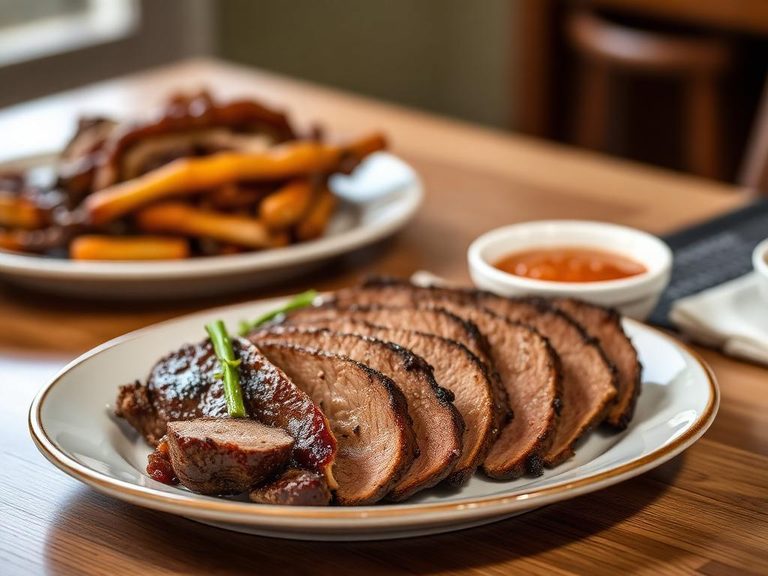
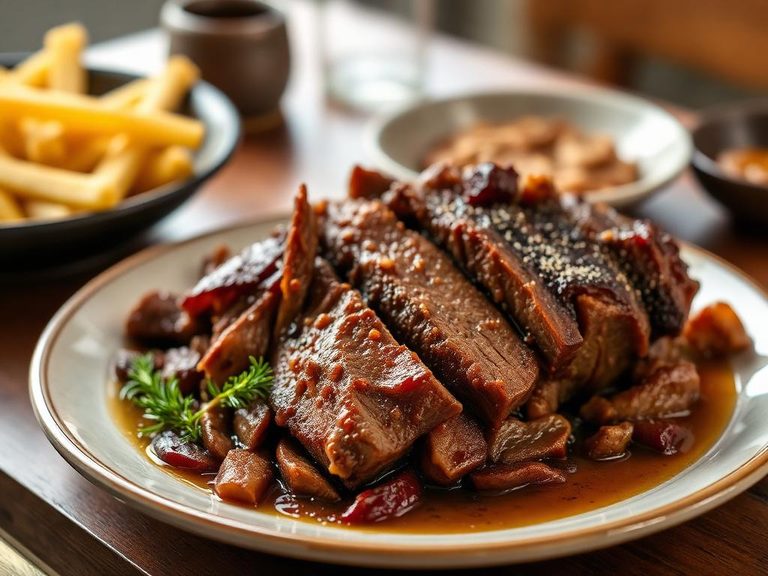
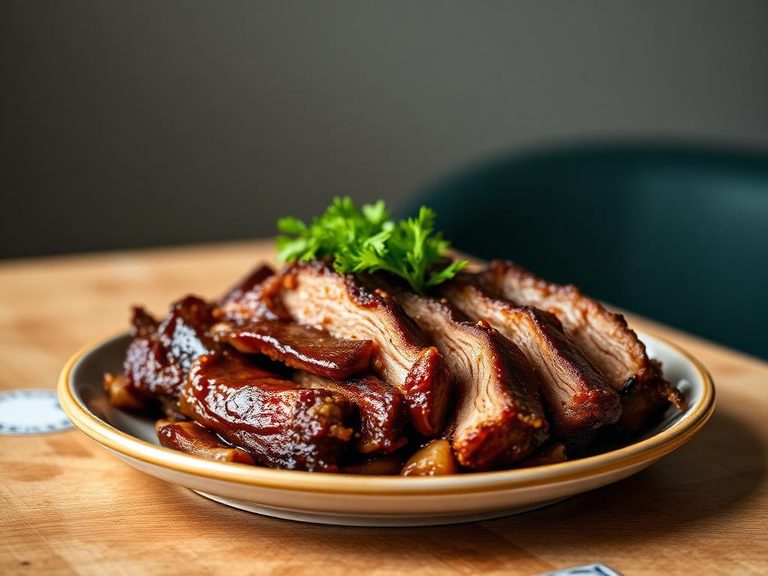
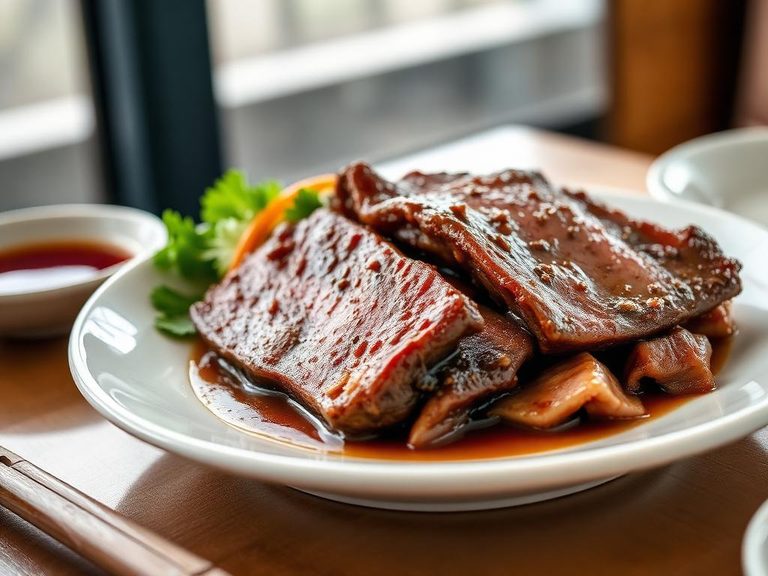
Brisket is a cut of beef from the lower chest of the cow, typically slow-cooked or smoked until tender. It is a staple of barbecue cuisine, especially in Texas, and is often seasoned with a simple rub of salt, pepper, and spices before a long, low-temperature cook.
🍽️ Nutrition at a glance
Brisket is a high-protein, high-fat dish with minimal carbohydrates. It is an excellent source of iron, zinc, and B vitamins, particularly B12, with a typical serving providing around 400-600 calories depending on the cut and preparation.
Nutrition breakdown
| Calories | 290 kcal |
| Protein | 28 g |
| Carbs | 0 g |
| Fat | 20 g |
| Fiber | 0 g |
| Sugar | 0 g |
| Sodium | 75 mg |
| Iron | 2.5 mg |
| Zinc | 6 mg |
| Vitamin B12 | 2.8 mcg |
| Niacin (B3) | 5 mg |
| Vitamin B6 | 0.4 mg |
| Phosphorus | 180 mg |
| Selenium | 25 mcg |
| Potassium | 300 mg |
Per 3 oz (85 g) · estimated, varies by recipe
💡 What's interesting
The cultural significance of brisket is deeply tied to American barbecue traditions, where it's often the centerpiece of community gatherings. Nutritionally, the slow-cooking process breaks down tough connective tissue into gelatin, which can aid in digestion and provide a rich mouthfeel.
🍽️ Related dishes


AI estimate may be inaccurate · Terms