

Beef, round, bottom round, roast, separable lean and fat, trimmed to 1/8" fat, select, cooked, roasted
Whole food · Beef Products

Photo: Wikipedia
This cut is the lean, flavorful heart of the beef round, roasted to a tender, juicy finish with a deep, beefy flavor and a firm, satisfying texture. It's a protein powerhouse, delivering a massive 26.77 grams of protein per 100g with virtually no carbohydrates. The trimmed fat provides just enough richness to keep the meat moist without excess calories.
Calorie split: 52% protein · 0% carbs · 48% fat
↓ Full nutrition💚 Why it's loved
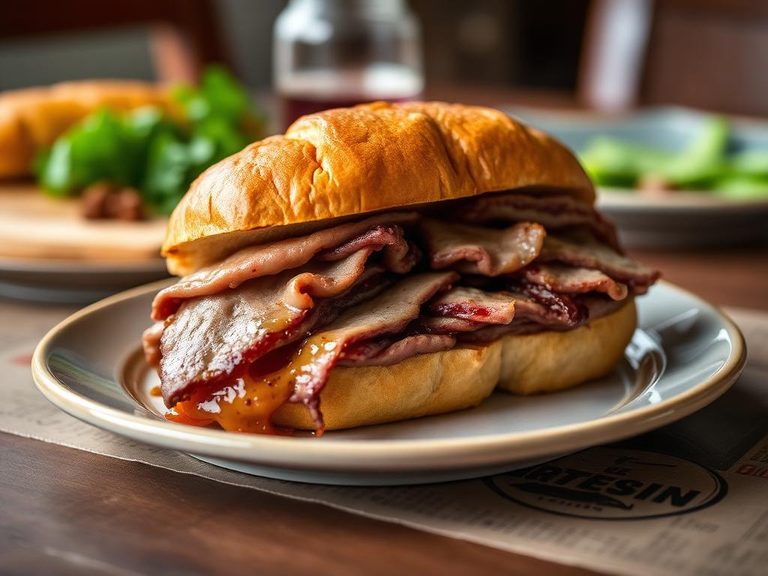
People love it for its robust, classic beef flavor and its versatility as the star of a Sunday roast or a hearty sandwich. It's a dependable, crowd-pleasing cut that delivers satisfying substance without being overly fatty.
⚠️ Watch-outs & how to enjoy it better
If overcooked, this lean cut can become dry and tough due to its low intramuscular fat. To counteract this, use a meat thermometer to pull it at 130-135°F (54-57°C) for medium-rare and let it rest thoroughly before slicing against the grain. Also, be mindful of sodium if it's pre-seasoned or served with salty gravies.
Key benefits
- Exceptionally high in complete protein for muscle maintenance and satiety.
- Very low in carbohydrates, making it ideal for keto and low-carb diets.
- A good source of iron and B vitamins, particularly B12.
- Leaner than many other roast cuts, offering a solid protein-to-fat ratio.
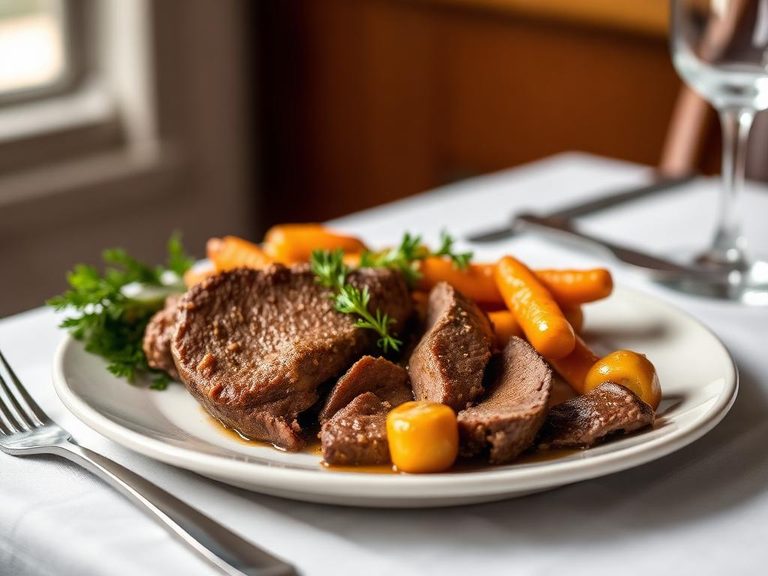
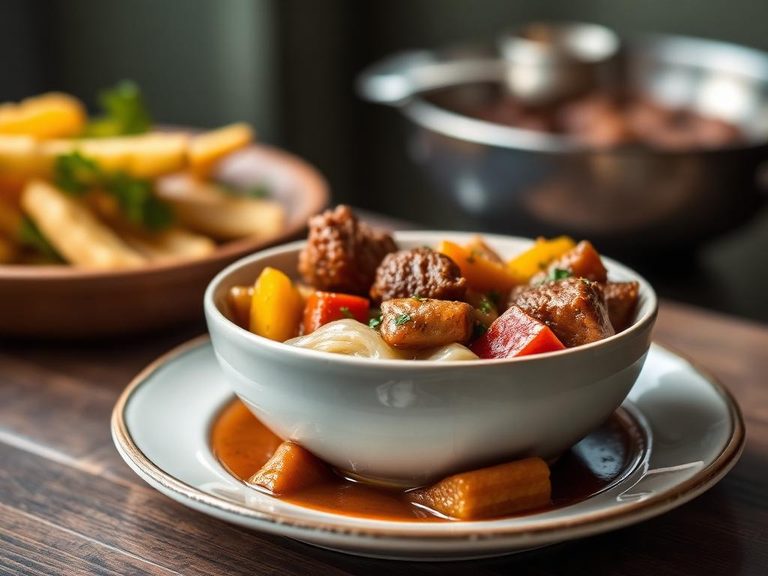
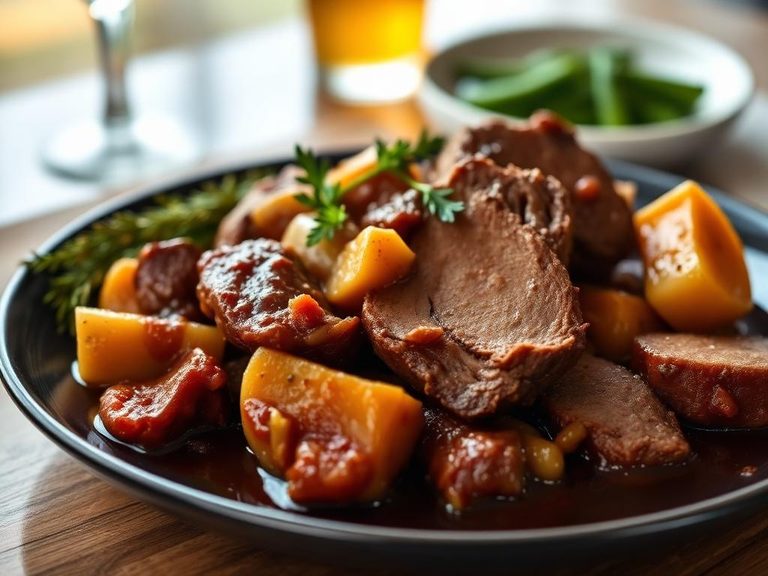
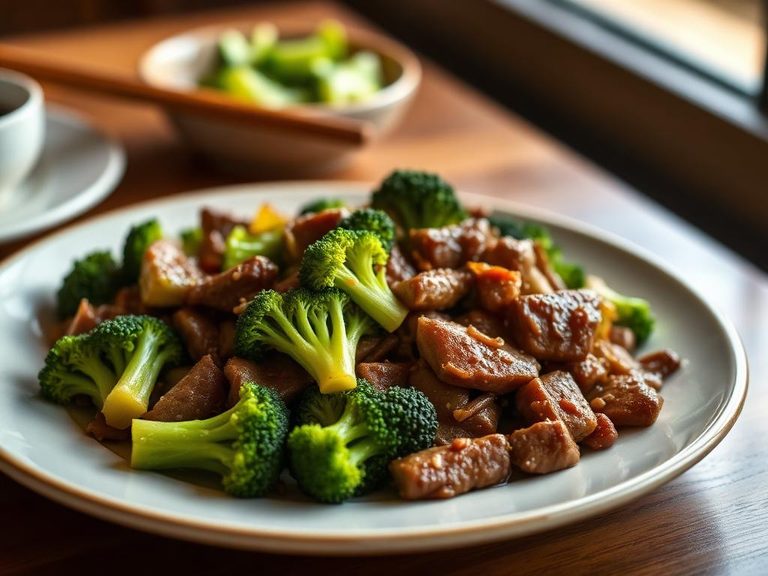
🍽️ Popular dishes
🌍 Where it's eaten
💡 Did you know?
The bottom round comes from the rear leg of the cow, an area that gets a lot of exercise, which is why the muscle fibers are long and lean—perfect for slow, moist cooking methods to break them down.
Full nutrition (USDA data · scales with serving)
| Water | 62.1 g |
| Energy | 212 kcal |
| Energy | 888 kj |
| Protein | 26.8 g |
| Total lipid (fat) | 10.8 g |
| Ash | 1.1 g |
| Carbohydrate, by difference | 0.00 g |
| Fiber, total dietary | 0.00 g |
| Total Sugars | 0.00 g |
| Calcium, Ca | 7.0 mg |
| Iron, Fe | 2.2 mg |
| Magnesium, Mg | 18.0 mg |
| Phosphorus, P | 170 mg |
| Potassium, K | 219 mg |
| Sodium, Na | 35.0 mg |
| Zinc, Zn | 4.6 mg |
| Copper, Cu | 0.07 mg |
| Manganese, Mn | 0.01 mg |
| Selenium, Se | 26.6 ug |
| Vitamin C, total ascorbic acid | 0.00 mg |
| Thiamin | 0.07 mg |
| Riboflavin | 0.13 mg |
| Niacin | 4.5 mg |
| Pantothenic acid | 0.53 mg |
| Vitamin B-6 | 0.35 mg |
| Folate, total | 8.0 ug |
| Folic acid | 0.00 ug |
| Folate, food | 8.0 ug |
| Folate, DFE | 8.0 ug |
| Choline, total | 102 mg |
| Betaine | 13.4 mg |
| Vitamin B-12 | 1.4 ug |
| Vitamin B-12, added | 0.00 ug |
| Vitamin A, RAE | 0.00 ug |
| Retinol | 0.00 ug |
| Carotene, beta | 0.00 ug |
| Carotene, alpha | 0.00 ug |
| Cryptoxanthin, beta | 0.00 ug |
| Vitamin A, IU | 0.00 iu |
| Lycopene | 0.00 ug |
| Lutein + zeaxanthin | 0.00 ug |
| Vitamin E (alpha-tocopherol) | 0.40 mg |
| Vitamin E, added | 0.00 mg |
| Tocopherol, beta | 0.00 mg |
| Tocopherol, gamma | 0.00 mg |
| Tocopherol, delta | 0.00 mg |
| Vitamin K (phylloquinone) | 1.4 ug |
| Alcohol, ethyl | 0.00 g |
| Caffeine | 0.00 mg |
| Theobromine | 0.00 mg |
Fat & fatty acid profile (per 100g)
| Fatty acids, total saturated | 4.1 g |
| SFA 4:0 | 0.00 g |
| SFA 6:0 | 0.00 g |
| SFA 8:0 | 0.00 g |
| SFA 10:0 | 0.02 g |
| SFA 12:0 | 0.02 g |
| SFA 14:0 | 0.32 g |
| SFA 16:0 | 2.6 g |
| SFA 18:0 | 1.2 g |
| Fatty acids, total monounsaturated | 4.6 g |
| MUFA 16:1 | 0.46 g |
| MUFA 18:1 | 4.2 g |
| MUFA 20:1 | 0.02 g |
| MUFA 22:1 | 0.00 g |
| Fatty acids, total polyunsaturated | 0.42 g |
| PUFA 18:2 | 0.29 g |
| PUFA 18:3 | 0.10 g |
| PUFA 18:4 | 0.00 g |
| PUFA 20:4 | 0.03 g |
| PUFA 20:5 n-3 (EPA) | 0.00 g |
| PUFA 22:5 n-3 (DPA) | 0.00 g |
| PUFA 22:6 n-3 (DHA) | 0.00 g |
| Cholesterol | 84.0 mg |
Amino acid profile (per 100g)
| Tryptophan | 0.18 g |
| Threonine | 1.1 g |
| Isoleucine | 1.2 g |
| Leucine | 2.2 g |
| Lysine | 2.3 g |
| Methionine | 0.71 g |
| Cystine | 0.35 g |
| Phenylalanine | 1.1 g |
| Tyrosine | 0.87 g |
| Valine | 1.4 g |
| Arginine | 1.8 g |
| Histidine | 0.87 g |
| Alanine | 1.7 g |
| Aspartic acid | 2.5 g |
| Glutamic acid | 4.1 g |
| Glycine | 1.7 g |
| Proline | 1.3 g |
| Serine | 1.1 g |
| Hydroxyproline | 0.29 g |
FAQ
What is the best way to cook bottom round roast to keep it tender?
For maximum tenderness, roast it to medium-rare (130-135°F internal temperature) and let it rest for 15-20 minutes before slicing thinly against the grain. Alternatively, braise it slowly in liquid for a pot roast.
Is bottom round roast a healthy choice?
Yes, it's an excellent source of protein and low in carbohydrates. It's leaner than many cuts, though it does contain some saturated fat. It's a great option for a balanced, protein-rich meal.
How does bottom round differ from top round?
Both are from the rear leg. The bottom round is slightly tougher and more flavorful due to more connective tissue, while the top round is a bit more tender and is often used for London Broil. The bottom round is ideal for slow roasting or braising.
Nutrient density (calculated · NRF9.3)
Nutrient Rich Foods index: beneficial nutrients (protein, fiber, vitamins, minerals) minus saturated fat, added sugar & sodium, per 100 kcal.
NRF9.3 index — Fulgoni, Keast & Drewnowski, 2009. Computed from USDA nutrients.
Weight-loss friendliness (composite index)
Energy density 2.12 kcal/g · 51% calories from protein · 0.0 g fiber · 0.0 g sugar per 100 g.
Composite of energy density (Rolls et al., 1999), protein & fiber satiety, minus sugar. A calculated heuristic — ranks satiety-per-calorie, not a clinical measure.
Dietary load (calculated from USDA values)
Potential renal acid load. Positive = acid-forming, negative = alkaline-forming.
Sodium-to-potassium ratio: 0.16 (lower is better — aim for ≤ 1)
Sodium:potassium per WHO potassium guidance. Computed from USDA nutrients.